Showing posts with label writing advice. Show all posts

Sunday, June 16, 2013

Big-Picture Problems to Look for in Your Novel

New edition of e-book and in print today.
by Jodie Renner, editor & author

Has anyone told you your almost-done story is too long, confusing, or just doesn't grab them? Here are some typical “big-picture” weaknesses to watch out for in your novel and correct before publishing it or pitching it to an agent. These types of glaring gaffes in writing, pacing, plot, or structure will bog down your story and could sink your reputation as a novelist. Fortunately, they can all be remedied at the revision and self-editing stages.

~ Overwriting. Not enough self-editing.
Today’s bestselling thrillers are mostly between 70,000 and 90,000 words long. Unless you’re an absolutely brilliant writer, and experts in the business have told you so, if your manuscript is over 95,000 words long, it definitely needs tightening up.

~ Meandering writing – the main story question / problem is fuzzy or buried. 
What’s the protagonist’s main goal and fear, and his main problem? This should be obvious early on and be the overriding driving force behind your whole story. Don’t let it get lost in meandering writing, too much backstory, frequent info dumps, too many characters, too many subplots, and unrelated plot details. 

~ One unrelated thing after another happens.
Don’t get caught up in “and then, and then, and then,” with a bunch of sub-stories or episodes that aren’t related to each other and don’t directly tie in with the main plot problem and story question. Your events and scenes need to be connected by cause and effect. Each scene should impact the following scenes and complicate future events. 

~ Dog’s breakfast 
A common problem is too many characters crowding the scenes with no elbow room, and readers getting confused and frustrated trying to remember who’s who. Or maybe you have too many subplots that veer off in different directions and confuse the issue. Or a convoluted story where many issues or subplots don’t tie in with the main character and their overarching problem. 

~ The main character is flat, unsympathetic, predictable, or wishy-washy.
Readers want a protagonist they can bond with and root for. Create a lead character who is smart, likeable, and charismatic, but with inner conflict and a few flaws.

~ A thin plot
This is where the premise / story line is obscure, with all kinds of unrelated happenings and way too much yak-yak dialogue that doesn’t have enough tension, conflict, or purpose. Also, often the issues and stakes aren’t serious enough. Anything that doesn’t directly relate to your major story problem, develop your characters, or drive the story forward should be cut. 

~ A predictable story line
Write in some twists, surprises, reversals. When a character has to make a decision or her actions cause repercussions, brainstorm for all possible consequences and choose one readers won’t be expecting. Add in reversals here and there that force a change in goals, actions, reactions, or consequences. Don’t overdo this, though, and be sure your reversal makes sense and is in character, or your readers will feel manipulated or cheated.

~ Flat scenes
When scenes are boring, it’s because there’s not enough conflict, tension, suspense and intrigue. Make sure every page has characters interacting, with action, dialogue, conflict and tension. Every scene needs a focal point or a “hot spot” – its own mini-climax. Also, be sure to start scenes late and end early. And don’t tie everything up with a neat little bow at the end. End with the protagonist in more trouble (most of the time), or with a cliffhanger.

~ La-la land
Everybody’s getting along so well. What’s wrong with that? It’s great in real life, but in fiction it’s the kiss of death. Why? Because it’s boring. Conflict is what drives fiction forward and keeps readers turning the pages.

~ Overkill: Nonstop action
Unrelenting chases, explosions, and violence, with a constant break-neck pace, can numb readers. Vary your pacing, and write in some quieter moments here and there for variety and breathing space between high-action scenes.

~ Plot holes
Watch for those actions, events, character reactions, and other details that just don’t make sense for one reason or another. Look for any inconsistencies, illogical details, or discrepancies. Make sure all your story questions are answered at some point.

These types of gaffes are often difficult for the author to see, so this is where your critique group or beta readers can be invaluable, especially if you specifically ask them to flag anything that doesn’t make sense for any reason. 

~ A sagging middle 
It’s easy to get bogged down in the middle and turn it into a muddle. If you’re losing interest or inspiration, go back to where the story really grabbed you, and consider what came between that and the scene you’re at now. Can you oomph up, change, or delete the scenes in between? 

~ No noticeable character arc
With the exception of action-adventure or military stories, most compelling novels show the main character undergoing change, caused by the adversity they’ve gone through and the resources they had to pull out of themselves to overcome adversity. They’ve developed and matured, and are now more confident and hopefully happier, which is satisfying to readers. 

~ An unsatisfying ending
This can be caused by a number of factors, such as: 

– The protagonist succeeds through coincidence, an Act of God, or help from a minor character. He should attain his goal through his own resourcefulness, cleverness, determination, courage, and inner strength.

– The ending is tragic, and the protagonist is unhappy. Unsatisfying and disappointing. Leave that for literary fiction. Or if you must make her lose or suffer in one way, make her win/gain in another way.

– Ending is too predictable. Brainstorm for possible ways to add a surprise twist at the end.

– Logic flaws – the ending doesn’t really make sense given the details supplied earlier.

– Things wrap up too suddenly. Don’t be in a hurry to finish your story – make sure all the story questions are addressed and all the elements of the ending make sense.

– Things dribbling on for too long after the resolution. Know when to stop.

The fix: To remedy these kinds of gaffes, be sure to enlist some savvy beta readers who read popular novels in your genre. Then contact a well-respected freelance editor with good credentials and references to go over your manuscript.

Readers and writers – Can you think of any other big-picture errors to watch out for at the revision stage?
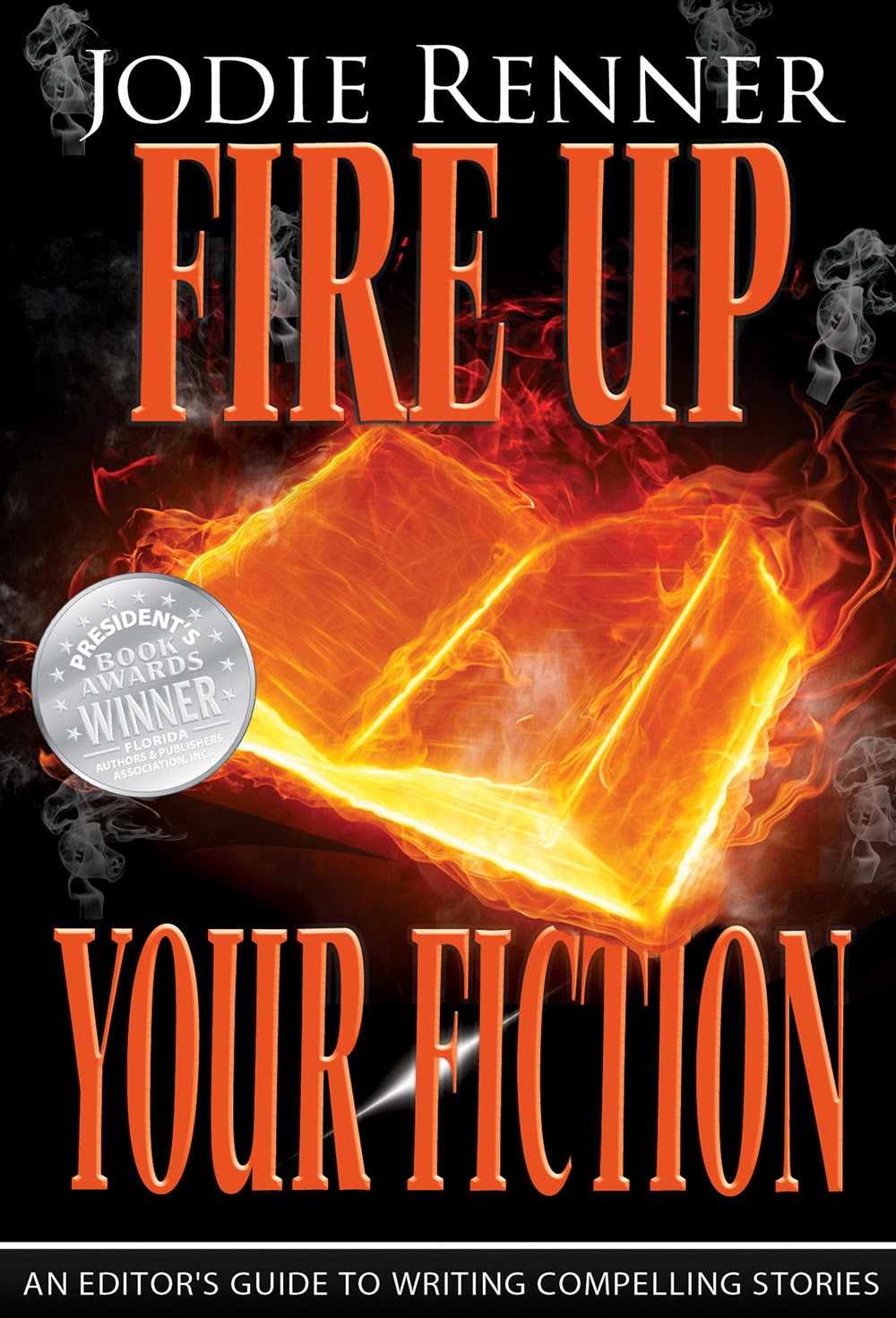


Jodie Renner has published two books to date in her series, An Editor’s Guide to Writing Compelling Fiction: Writing a Killer Thriller and Fire up Your Fiction (Style That Sizzles & Pacing for Power), which has won two book awards so far. Look for the third book in the series, out soon. For more info, please visit Jodie’s author website or editor website, her other blogs, The Kill Zone and Resources for Writers, or find her on Facebook, Twitter, and Google+. And sign up for her newsletter.


Friday, January 4, 2013

Done Is Better Than Perfect

by L.J. Sellers, author of provocative mysteries & thrillers

I recently read this Facebook post, which had dozens of Likes: A little advice, writers. Don't think you have to put a whole lot of words on paper every day. What I find is a few words today will encourage more tomorrow. The point is for those few to be brilliant.

I respectfully disagree… that is, if you want to make a living as novelist, or least sell moderately well. If you're writing just for your own pleasure, you can do whatever you want. But striving for a few brilliant words every day will not produce a finished novel, let alone a body of work.

I realize many writers have full-time jobs and kids at home to take care of. I did too, for most of my writing career. But I found that setting aside blocks of time in which I could write whole scenes for chapters worked better for me than trying to write a little something every day.

And brilliance? Why even think about it? Most readers aren't looking for brilliance; they just want a good story with interesting characters. So laboring over every word and every sentence is too paralyzing. If you want to produce something for people to read, then you have to finish the story.

Done is always better than perfect.

I'm not implying that I don't care about quality or craftsmanship. I definitely do. In the second, third, and fourth drafts, I polish my prose as much as I can. But I don’t worry about producing beautiful turns of phrase or poetic descriptions. As Elmore Leonard says, "If it sounds like writing, I rewrite it."

In my prose, I strive for clarity, readability, and rhythm. In my word count, I strive for consistent daily production while I write the first draft. Getting the whole story down in a short period of time is my goal—because it works. The longer it takes to write the first draft, the more I struggle with keeping the whole story in my head and making the timing work out.

I've known people who spent five or ten years writing the same novel and never finishing it. That must be purposeful. They must not want to finish because finishing means letting someone read it. And that’s scary. I understand.

But I want people to read my stories, and I don't care if no one ever calls my writing brilliant.

The woman who wrote the post may have thought she was being encouraging to authors. But telling writers to strive for a few brilliant words every day is bad advice on both levels… unless she was trying to thin out the market competition.

What do you think of that advice? What works to keep you motivated?

Tuesday, October 2, 2012

The Two Things Every Novel Needs


by James Scott Bell, bestselling author http://jamesscottbell.com/      

"Trouble is my business." – Raymond Chandler

So you want to be a writer. You want to sell your novel to a publisher, via an agent, or maybe you're thinking of going indie like 90% of sentient beings these days. Maybe you think if you do the latter, and do it fast, you'll rake in a boatload of easy lettuce.

Well, you won't. Unless your book has the two things every novel needs.

Without these two things, you will have no story. At least, no story most readers will care about. You might have an "experimental novel," and that's okay if you understand what experimental novel means. It means a novel that five people buy. (Please note: This may not matter to you, and that's perfectly fine with me. Experimental artists have given us some good stuff over the years. A lot of bad stuff, too. But if that's your corner of the artistic world, go for it. This is America, after all).

But if you want to sell your work and have a shot at generating income, you need to master these two elements.

They are Conflict and Suspense

Conflict
What is the goal of the novel? Is it to entertain? Teach? Preach? Stir up anger? Change the world? Make the author a lot of money?

It can be any of these things, but in the end, none of these objectives will work to their full potential unless they forge, in some way, a satisfying emotional experience for the reader

And what gets the reader hooked emotionally? Trouble. Readers are gripped by the terrible trials a character goes through. (There are psychological reasons for this that are beyond the scope of this post). 

That's where conflict comes in. While there are writers who say plot comes from character, let me say that's too simplistic. Character actually comes from plot. Why? Because true character is only revealed in crisis. Put your character into big trouble (plot) and then we'll see what he or she is made of (character). If you don't believe me, imagine a 400 page novel about Scarlett O'Hara where she just sits on the porch all day, sipping mint juleps and flirting. Gone With the Wind only takes off when she finds out Ashley is going to marry Melanie (trouble) and then the Civil War breaks out (big trouble!) 

Another way to think about it is this: we all wear masks in our lives. A major crisis forces us to take off the mask and reveal who we really are. That's the role of conflict in fiction: to rip the mask off the character. 

Now, this conflict must be of sufficient magnitude to matter to readers. That's why I teach that "death stakes" must be involved. Your Lead character must be facing death—which can be physical, professional or psychological.

Genre doesn't matter. In a literary novel like The Catcher in the Rye, it's psychological death. Holden Caulfield must find meaning in the world or he will "die inside." Psychological death is also the key to a category romance. If the two lovers do not get together, they will lose their soul mate. They will die inside and forever have diminished lives (that's the feeling you need to create. Think about it. Why was Titanic such a hit with teen girls? It wasn't because of the special effects!)

In The Silence of the Lambs, it's professional death on the line. Clarice Starling must help bring down Buffalo Bill in part by playing mind games with Hannibal Lecter. If she doesn't prevail, another innocent will die (physical death in the subplot) and Clarice's career will be over.

And in most thrillers, of course, you have the threat of physical death hanging over the whole thing.

That's why, novelist friend, trouble is indeed your business. Without sufficient conflict readers aren't going to care enough to finish the book.

Suspense

The second element is suspense, and I don't just mean in the suspense novel per se. Suspense means to "delay resolution so as to excite anticipation." Another way to say this is that it's the opposite of having a predictable story. If the reader keeps guessing what's going to happen, and is right, there is no great pleasure in reading the novel.

We've all had the wonderful experience of being so caught up in a story that we have to keep turning the pages. This is where writing technique can be studied and learned and applied. For example, there are various ways you can end a chapter so readers are compelled to read on. I call these "Read on Prompts," and it was one of the first things I personally studied when I started learning to write. I went to a used bookstore and bought a bunch of King, Koontz and Grisham. When I'd get to the end of a chapter I'd write in pencil on the page what they did to get me to read on. 

Invaluable.

Again, genre doesn't matter. You have to be able to excite anticipation and avoid predictability. Suspense technique helps you to do that.

I am so passionate about this that I wrote a book on the subject, and Writer's Digest Books published it.  

I could go on and on about this subject, but we don't want to overstuff one blog post. Suffice to say that if you were to concentrate almost exclusively on these two key elements for the next few months, your books will take a huge step toward that exalted "next level" everyone always talks about. Try it and see.     

JAMES SCOTT BELL is the author of the #1 bestseller for writers, Plot and Structure, and numerous thrillers, including Deceived, Try Dying and Watch Your Back. His novella One More Lie was the first independently published work to be nominated for a prestigious International Thriller Writers Award. Under the pen name K. Bennett, he is also the author of the Mallory Caine zombie legal thriller series, which begins with Pay Me in Flesh. He served as the fiction columnist for Writer's Digest magazine and has written highly popular craft books for Writer’s Digest Books, including : Revision and Self-Editing, The Art of War for Writers and Conflict and Suspense.
Website: http://jamesscottbell.com/


Saturday, September 1, 2012

Crazy Familes=Character Conflict


Guest post by mystery author Terry Ambrose

Are these my real parents? Have you ever asked yourself that question? If not, then perhaps you’re a member of a perfect family where nothing ever goes wrong or everyone is always understanding. If you do live in that wonderful world of family dynamics where nothing ever gets misconstrued, misspoken, or feelings hurt, I say “how nice for you.” But, as a writer, I find those types of family dynamics downright boring. There’s a boatload of material that can be used as the driving force behind a novel in family dynamics. And that driving force is, of course, conflict.

Conflict. The “C” word. Many writers hate it, but others embrace it with open arms. I say, “Yippie! I found the conflict between the characters!” Let me be clear, I hate conflict in my real life, but I love it in fiction. In fact, I’m on the hunt for it constantly. And that’s why I find the differences between generations so important. Love, hate, and guilt are equivalent to little plastic shovels and buckets in my writer’s sandbox. They’re among my tools to pull out and play with.

Right now, my mother-in-law is visiting us to escape the heat in the desert, where she lives year-round. This has become an annual visit that is filled with mother-daughter rituals, just like this one at the coffee pot the other day.

“Mom, I saved the last cup for you.”

“Oh no, dear, you take it.”

“You always have another cup. I’ve had mine. I’m done.”

“I can drink instant. You don’t like instant. I do. It’s okay.”

“But I don’t want another cup! I saved it for you!”

And so it went until my mother-in-law took that last cup of coffee. If I hadn’t been laughing so hard—in the other room like the big chicken that I am—I’d have been tempted to walk in front of both of them and finish it off myself. But that would have put me in the middle of things, so no thanks.

In real life, these friction points tend to be overlooked. True, they cause a build up of sensitive points that people either dwell on or avoid, but there’s generally a cap on the level of frustration. And then, there’s fiction.

Ah, yes, the fictional world. The world where emotions run high, people harbor grudges, and things (hopefully) go over the top. Being a mystery writer, I looked at this innocent incident from a different perspective. What if this same conversation became a daily routine? What if it masked a deeper conflict? Could the daily coffee argument serve as camouflage to prevent my characters from talking about deeper problems?

When I’m reading or reviewing a book, I look for those types of character dynamics. I subconsciously categorize the different ways in which the characters become obstacles for others and themselves. I give the author extra credit when the character’s inner conflict starts overpowering her dealings with others. For instance, when the daily coffee incident causes the character to do something that creates her own personal disaster, I say “bravo!” In most cases, that is. There are, however, times when I’ll take away those points.

Creating conflict is much like building a house. Lay a strong foundation and I’ll believe that a character will do almost anything—even to her own detriment. The reverse is also true and that’s why I’ll sometimes take points away from an author. If there’s no solid foundation, if the author simply throws a big conflict at the characters, I’m not going to find the conflict, or the story, credible.

One of the best opportunities fiction writers have to gather material about building conflict is when family members are around. The daily incidents, the little things that make you crazy, but that you dismiss, that can help lay the foundation for solid, escalating conflict in fiction.

Don’t get me wrong, I love my mother-in-law. I just wish she’d have taken the damn coffee right away. But then, if she had, I might not have had this post. So, there you go—family dynamics. For me, a great source of inspiration.

Where do you find your inspiration? Do you enjoy conflict in fiction? What kind? How much?

Monday, August 13, 2012

The Thesaurus is Your Friend – Really!


by Jodie Renner, editor, author, speaker 


Do you ever draw a blank when you’re trying to find just the right word to fit a situation in your fiction or nonfiction writing? It’s on the tip of your tongue but you just can’t think of it. That’s where the trusty thesaurus comes in. Look up the most ordinary or closest word to the one you need, and you’ll find similar words you can then use to narrow down to "le mot juste” – the one that perfectly expresses what you’re looking for.

The thesaurus sometimes gets a bad rap because of writers who get carried away trying to find a more original way to express something and end up replacing good, solid, concrete words with abstract or esoteric words that evoke no emotion and often annoy or confuse the reader. For example, using pretentious words like “abscise” instead of “cut” or “snip,” or “mendacious” instead of “dishonest” or “lying.” But if used judiciously, the thesaurus can be an indispensable guide for helping you enrich your language and imagery and write more powerfully—and keep the readers absorbed in your story. And by avoiding trite, blah, everyday words that have lost their power, you keep your imagery fresh and your story compelling. 

For example, check out how many ways you can say “walked” or “moved.” (Hint – look up the present tense – “walk” or “move.”) You can use an online thesaurus or go all-out and buy the best print one out there – J.I. Rodale’s The Synonym Finder, which, at a hefty 1361 pages long, is without a doubt the most comprehensive thesaurus in book form in the English language. (Thanks to Jessica Page Morrell for turning me on to this indispensable aid for writers.) 

For the verb “walked” for example, Rodale gives us a long list of great synonyms for the verb "walk" to help us capture just the right situation and tone. He just lists them, but here I’ve roughly categorized some of them to suit various situations, and changed them to past tense, to suit most novels and short stories. Can you think of words to add to any of these categories?

Drunk, drugged, wounded, ill: lurched, staggered, wobbled, shuffled, shambled

Urgent, purposeful, concerned, stressed: strode, paced, treaded, moved, went, advanced, proceeded, marched, stepped

Relaxed, wandering: strolled, sauntered, ambled, wandered, roamed, roved, meandered, rambled, traipsed

Rough terrain, hiking, tired: tramped, marched, trooped, slogged, trudged, plodded, hiked

Sneaking, stealth: sidled, slinked, minced, tiptoed, tread softly

Showing off: strutted, paraded

Other situations: waddled, galumphed (moved with a clumsy, heavy tread), shambled, wended

So in general, it’s best to avoid plain vanilla verbs like “walked” or “went” if you can find a more specific word to evoke just the kind of movement you’re trying to describe. But choose carefully! For example, I’d usually avoid show-offy words like “ambulate” and “perambulate” and “peregrinate” (!), or colloquial/slang/regional expressions like “go by shank’s mare” and “hoof it.” 

Also, some synonyms are too specific for general use, so they can be jarring if used in the wrong situations. I had two author clients who seemed to like to use “shuffled” for ordinary, healthy people walking around. To me, “shuffled” conjures up images of a patient moving down the hallway of a hospital, pushing their IV, or an old person moving around their kitchen in their slippers. Don’t have your cop or PI or CEO shuffling! Unless they’re sick or exhausted--or half-asleep. Similarly, I had a client years ago who was writing about World War II, and where he meant to have soldiers and officers "striding" across a room or grounds or battlefield, he had them "strutting." To me, you wouldn't say "he strutted" unless it was someone full of himself or showing off. It's definitely not an alternate word for "walked with purpose" as "he strode" is.

Similarly, be careful of having someone “march” into a room, unless they’re in the military or really fuming or determined. “Strode” captures that idea of a purposeful or determined walk better. And in a tense situation, don’t have your character “saunter” around. Sauntering implies a relaxed, carefree pace. So after you’ve found a few possible words in the thesaurus, it wouldn’t be a bad idea to also check the exact meaning in your dictionary. For that, I recommend Merriam-Webster’s Collegiate Dictionary (mine has 1622 pages).

Or try looking up the verb “look” in a good thesaurus. Here are some of the synonyms J.I. Rodale lists: see, visualize, behold, notice, take in, regard, observe, study, inspect, examine, contemplate, eye, check out, scrutinize, review, monitor, scan, view, survey, scout, sweep, watch, observe, witness, gaze, peer, glance, glimpse, ogle, leer, stare, goggle, gape, gawk, squint, take a gander, spy, peek, peep, steal a glance at, glare, glower, look down at, look daggers… (and the list goes on). Some of these, and others he lists, are too specific or archaic for general use in fiction, so again, choose carefully. Don’t use “behold” for “look” in your present-day thriller or mystery, for example! And “reconnoiter” works for military situations, but not for everyday use. Also, watch for eyes doing weird physical things, like "his eyes bounced around the room."

Also, don’t start using a bunch of fancy synonyms for “said.” Best to just use “he (or she) said” most of the time, as words like “postulated” and “uttered” and “articulated” can be laughable and distracting, whereas "said" gets the meaning across without drawing attention to itself.

Why not open your own Word file and call it “Thesaurus” or “Synonyms,” then start lists for the verbs you use most in your writing, like walk, move, look, run, etc. That way you can quickly find lots of variations and try them on for size.

Writers – do you have anything to add? Any suggestions for finding just the right word to capture the mood or tone of the scene? Readers – do you have any examples of words that stuck out in your reading because they just didn’t fit the situation?

For a related post, see my my post, "Tone and Mood - Choose Your Words Carefully," and my review of The Emotion Thesaurus, by Angela Ackerman and Becca Puglisi.

Copyright © Jodie Renner, August 2012

Jodie Renner is a freelance fiction editor and the award-winning author of three craft-of-writing guides in her series An Editor’s Guide to Writing Compelling Fiction: Captivate Your Readers, Fire up Your Fiction, and Writing a Killer Thriller, as well as two clickable time-saving e-resources, Quick Clicks: Spelling List and Quick Clicks: Word Usage. She has also organized two anthologies for charity, incl. Childhood Regained – Stories of Hope for Asian Child Workers. You can find Jodie at www.JodieRenner.com, www.JodieRennerEditing.com, her blog, http://jodierennerediting.blogspot.com/, and on Facebook and Twitter.  


Thursday, August 9, 2012

Three Mistakes You Don't Want to Make

Guest post by journalist and novelist Terry Ambrose

Marketing. It’s the job authors dread most right after completing a manuscript. Why so much dread? Beyond the fact that it can be incredibly time-consuming, there’s also the issue of results. What worked? How well did it work? How can I get more people to know about me and my book?

About two years ago, I took on a freelance writing assignment with Examiner.com to write about fiction in San Diego. That assignment later expanded into my National Crime Fiction column. I cover everything in crime fiction from events to author interviews to book reviews. Now that I’ve just released my first mystery novel, I look back on my two years of doing author interviews and book reviews and recognize some common differences between those that make it and those that struggle for any recognition at all. Let’s take a look at those differences.

The first difference is also the biggest cliche around, and the reason many readers consider self-published books “second rate.” Most new authors rush their book to publication. They take the mantra of “write a great book” far too lightly and think that because their best friend or their mom loved it, it’s going to be a bestseller. Overstated, perhaps, but close to true. How does a new writer make sure he’s got a good book? Solving this problem couldn’t be simpler—or harder.

Have. People. Read. It.

If you’re really serious about writing a great book, you’ll spend money on a good editor. If you can’t afford an editor, find more readers. Beta readers, i.e., people who will read and give good feedback, are critical to seeing what works and what doesn’t in a novel. The readers who count are those who are distanced from you or who are practiced in giving writing feedback. Find readers who have a good eye for detail and who are, above all, honest. Do this by widening your circle of readers until you’ve found ten people who have no reason to tell you nice things. In all likelihood, those ten people will give you diverse opinions, but at least you’ll see patterns.

Second, before publishing, think about the very basics of marketing. These basics can be summed up in three little words (sorry, another cliche), “less is more.” A good tag line (or log line) is critical. For me, mine became “Hawaii, mystery, and trouble almost too hot to handle.” That tag line goes on every email I send out. I recently heard from a publisher who said that many of their authors don’t include tag lines in their outgoing emails. Is it any surprise that the publisher was complaining their authors weren’t selling?

An author interview can be a great tool to attract readers. It can also be incredibly boring. Here’s a secret from the other side of the book review fence. Do what you can to make the interviewer’s job easier. I know, this sounds self-serving, but if I interview an author or review their book and the author has taken steps to make my life easier, I’m very willing to cover them again. You can make that interviewer’s life easier simply by providing great answers to questions.

Here are two different answers to the question of “why did you write Photo Finish?” 1) I’ve always enjoyed writing and thought it would be fun to write a mystery about a skip tracer and a con artist. 2) Early in my career I was a skip tracer. I never had to steal a car myself, but came pretty close. I also learned that skip tracers and con artists are very similar—both can be great liars—and can create great stories.

If I’m reading those responses, I’m going to gloss over #1, but give answer #2 serious consideration for a full or partial quote.

When I do author interviews, I always ask for a short summary of the book. This short summary should be 25−50 words. What happens when I get one that’s 100-200 words? I start cutting. Just hope I don’t leave out the important stuff.

Preventing someone else from butchering your summary is to have three versions at the ready. Those summaries, in 25, 50, and 100-word versions, should be strong and to the point. Use powerful verbs, not lots of adjectives and adverbs. There are times when I feel as though I should be writing marketing materials for authors that I interview and, believe me, that does not make me want to deal with them again.

Then there’s the author bio. This should also be written in a couple of different lengths. I’ve had writers send me page long bios telling me more than I ever wanted to know about their history. In one case, I think I pulled one or two sentences, shortened those, and still felt like I had nothing of real importance to tell readers.

The third most basic mistake that I see made is that authors don’t have a website with their own domain name for reviewers or potential readers to go for information about them. Your domain name and website are your online business card. So, buy your domain name, they’re cheap, and make sure it’s easy to say and to remember.

I know, there’s really nothing new in this post. There are no magic solutions to help you skyrocket to the top of the sales charts. Believe me, if I knew those solutions, I’d use them first, share later. But, the problems I’ve mentioned here are not uncommon. Mix and match any way you like and the bottom line is always the same. These things happen far too often.

Every time an author does an interview, or someone offers to write a review of an author’s book, it’s an opportunity to increase that author’s name recognition. So the question becomes, how do you want people to remember you?

What do you think? Have you had a bad interview or review experience either as an author or a reader? Do you think that new authors do a good job of marketing, or not?

Find out more about Terry and his books here. 

Wednesday, April 25, 2012

Punch Up Your Fight Scenes: Three Techniques To Knock Readers Out

by Tom Schreck, author of the Duffy Dombrowski Mysteries

My job as a world championship boxing judge gives me a unique perspective on sizing up literary fight scenes. I’m one of three people who decide who wins and who loses in fights with multi-million dollar purses. The boxing game isn’t kind—one loss sends a boxer to Palookaville, while a win means gargantuan paydays, endorsements and global recognition.

So, I’m not exaggerating when I say I have to know how to evaluate a fight.

That skill has helped me in my own mystery series, which, not coincidentally, features a pro boxer, Duffy Dombrowski, who works a day job as a social worker. Duffy fights in and out of the ring but unlike a lot of protagonists with fighting skills he loses his scuff ups almost as often as he wins.

Because of my job in the boxing business I had to make sure that my scenes were true to what really happens in the ring, the gym and out on the street. In the same way that a ring loss can have a fighter living Brando’s life in On the Waterfront, a poorly written fight scene can knock your mystery out and have acquisition editors giving you the ten count.

Here’s how you can keep your wordsmithing guard up and get your fight scenes off the ropes.

Think Less
Experienced fighters of all types are effective because their actions are reflexive. Joe Louis once said, “If you have to think about it it’s too late.” And the Brown Bomber was absolutely right.

Keep sentences short and on the action in fight scenes. Describe punches and blocks with an economy of words and keep the pace fast. Real life fights happen in a blink of an eye and fighters work at a different level of consciousness. They block a punch or throw a hook in the same way every time because they’ve trained their body for years to do just that.

Avoid long paragraphs that describe the fighters’ thought process or their fight strategy. Keep the action in the instant and make your narrative move as fast as the fighters.

Keep It Simple
If your goal is to nail the gritty realism of a fight keep the techniques the combatants utilize simple. Ask any master martial artist, pro fighter or even the new breed of ultimate fighter about what techniques work and they will tell you that it’s the basic moves executed perfectly.

So even though a jumping spinning axe kick followed by a reverse tiger’s claw to the victim’s Mastoid Process may sound cool you’re not going to win any reality points by over doing it. Instead go for exactly what a good cornerman tells his fighter: stiff jabs followed by hard crosses and the occasional hook.

Like all good writing you should look to make your verbs do the talking, not over the top adverbs and adjectives. Think of all the verbs that you can use for “punch” and use them to describe the type of punches that are thrown.

Write “He pushed a jab to my face,” not “His jab landed softly.” Stick to “I clubbed him to the top of his head,” rather than “I threw a looping punch to the top of his head.” Avoid the clichés to describe the action and find out how it really feels to get hit.

An expert fighter’s jabs feel like getting stabbed with a screwdriver. A body shot gives you the sense that someone squeezed your organs from the inside and a dinger to the temple will cause a flash of hot orange light that gets to you before the radiating pain spreads across your head and down your neck.

Know What Really Happens
Nothing kills a fight scene’s realism like a battle that just goes on too long or has one of its participants getting too beat up. Unless you want your prose to read like Tuesday Night’s WWE Pro Wrestling, don’t have two by fours broken over heads or fighters with broken ribs chasing the bad guys down after a 100 yard dash—it just can’t happen.

There’s a feeling you get when you get punched in the face and it’s different if it lands right on the nose, on the forehead or on the side of the head. A shot in the jaw will hurt in the ear and a hard blow to the ear will cause a sharp pain to run through your head. A punch to the stomach is different if it lands square in the breadbox, over the liver or just north to the solar plexus. The world famous kick to the groin is less effective in real life than you think because it’s actually a small target (make your own jokes) and even if you hit your target it takes a few minutes for the brain to register the pain there.

A shot to the head can hurt you more in the neck and the shoulders than in the ‘ol noggin. I got knocked down by a pro one time and I went down so fast that the punch didn’t have time to hurt my neck. I got up and felt a little drunk and uneasy. It’s a weird thing to explain but in some ways it wasn’t entirely unpleasant. That’s an experience you can only get from getting hit—or talking in depth to someone who gets hit on a regular basis.

Now, at the sound of the bell, get out off your corner, keep your hands up, protect yourself at all times and come out writing.

Tom Schreck has officiated the world heavyweight championship twice and is regularly seen judging bouts on Pay-Per-View, HBO and Showtime. He writes the Duffy Dombrowski Mysteries that feature a low level pro boxer who solves crimes. His newest release THE VEGAS KNOCKOUT, will be available on May 15. Visit tomschreck.com and “like” his fan page on Facebook at http://www.facebook.com/DuffyDombrowski for a chance to win a Kindle Fire.

Sunday, February 12, 2012

Some Dialogue Don’ts

by Jodie Renner, editor & author, @JodieRennerEd 

Real-life conversation is no excuse for confusing, irritating, distracting, or boring dialogue coming out of your fiction characters’ mouths. First off, these days you don’t want to frustrate or annoy your readers by trying to reproduce regional dialects exactly as they sound. Also, I’d be cautious about using the very latest slang expressions, which could backfire on you and end up dating your story within a year or two. That would not be cool! (Pun intended.) And overloading dialogue with in-your-face profanities can lose you readers. And finally, please, please, for all of us, leave out all the boring yadda-yadda blah-blah filler stuff!

Don’t mangle characters’ speech

Don’t make the mistake of trying to reproduce regional speech patterns phonetically. As Jack Bickham says, “There was a time, not so long ago, when fiction writers strove for authenticity in some of their stories by attempting to imitate regional and ethnic dialects and pronunciations by purposely misspelling words in their dialogue. Today such practices have fallen into disfavor.”

Why? Because it’s distracting and irritating. Not only that, it runs the risk of obscuring your intended meaning. All of which will result in taking your reader out of your story – the exact opposite effect you’re going for. Also, you could easily end up offending people from that region if you depict their everyday casual language as a kind of inferior, laughable sublanguage.

Here’s an example of what I mean, from an older story about slaves and the Civil War. The passage was narrated by a slave:

  “So dey jump on dey horses and gallop ‘way. An’ we ain’t see’d dem since. Dey friends say dey be kilt in one o’ de firs’ battles o’ de war. Dat be good lesson fo’ we, shure ‘nuf! Black folk ain’t gonna go off ta fight in a war. Life be tuff enuf here wid’ Massa an’ his whip, widout uder buckra be shootin’ at de menfolk an’ killin’ ‘em dead.”

And it went on like that for pages! Ouch!

So these days, phonetic spelling, misspelling words to show different pronunciations, the overuse of apostrophes to indicate missing letters (unpronounced sounds), and other deviations from standard North American speech are frowned upon by most editors, agents, and discerning readers, and may earn a rejection for your otherwise compelling story.

An occasional elision (dropped sound, indicated by an apostrophe) and plenty of regular contractions, with the odd regional word or expression thrown in, is usually enough to get your regional flavor across to your readers.

Don’t try to keep up with the very latest slang expressions
Many new authors try to appeal to their audience by using the latest slang expressions, especially in YA fiction. This is usually a mistake. The language is changing so fast, especially fad expressions, that what’s trendy or “in” today may be already dated by the time your short story or novel sees the light of day. The moral? Be careful with using cutting-edge street talk or just-coined slang expressions. It’s usually best to stick to slang expressions that have been around for at least a few years.


Don’t overdo the profanities
Another area where beginning writers mess up is in replicating every F-word in real life on their page, leaving many readers wincing. Profanities and obscenities can often slide by in real life, depending on the situation, but they usually jump out at us on the printed page, so use them judiciously, to get the general flavor, rather than on every line.

As Jack Bickham says, “Dirty talk often looks dirtier on the page than it actually is.” So save the worst of your swear words for those story situations where a strong curse word is really needed to convey the emotion.
Also, consider your genre. Readers of cozy mysteries, for example, are mostly women aged 60 and up, so best to use less graphic language in those stories. The odd “Damn!” or “Crap!” or "friggin/frickin'" will usually suffice.


Don’t reproduce actual conversations verbatim
By this I mean all the uhs and ums and ers and you knows and How are you? I’m fine, and you? Not to mention introducing people, chitchat about the weather, and other empty social niceties that lead up to (or follow) the real meat of the conversation. That’s a sure-fire recipe for putting your readers to sleep! And they won’t be eager to pick up your book again when they wake up. As Ingermanson and Economy say, “Dialogue is war!” You need tension on every page, including in your dialogue. So if it doesn’t drive the story forward, add conflict or tension, or contribute to character development, take it out.

So, oddball spelling, attempts at reproducing regional dialects phonetically, and heavy use of profanities all risk offending someone, whether it’s a member of a minority or someone who doesn’t like swearing. And the latest slang expressions may soon appear outdated and ridiculous. And really, empty blah blah is boring, isn’t it? So be wary of reproducing characters’ dialogue exactly as it sounds in real life—it could backfire on you.

What do you think? As a reader, how do you feel about the attempted reproduction of regional dialects in fiction? As a writer, how do you show the accent and expressions of a specific region? And how do you research expressions for a region you’ve never lived in or visited? Also how do you feel about stories peppered with obscenities? Are you okay with it, or do you find yourself wincing inwardly?

Resources:
Jack M. Bickham, The 38 Most Common Fiction Writing Mistakes      
Randy Ingermanson and Peter Economy, Writing Fiction for Dummies
and Jodie’s editing experience

Jodie Renner is a freelance fiction editor and the award-winning author of three craft-of-writing guides in her series An Editor’s Guide to Writing Compelling Fiction: Captivate Your Readers, Fire up Your Fiction, and Writing a Killer Thriller, as well as two clickable time-saving e-resources, Quick Clicks: Spelling List and Quick Clicks: Word Usage. She has also organized two anthologies for charity, incl. Childhood Regained – Stories of Hope for Asian Child Workers. You can find Jodie at www.JodieRenner.com, www.JodieRennerEditing.com, her blog, http://jodierennerediting.blogspot.com/, and on Facebook and Twitter

Sunday, January 15, 2012

Show Those Feelings — and Reactions!


by Jodie Renner, editor, author, & speaker        

One of the main reasons I put down a book is because it seems flat to me, the characters cardboard cutouts, the protagonist bland, bored and boring, or even cold and unfeeling. If the characters don’t seem to care about others or react to what’s happening to them, why should I?

Most fiction is character-driven, and to get into the story, we need to be able to identify closely with the protagonist. And we won’t do that unless they have some warmth and determination and hopes and dreams and insecurities and fears – and react to things! Then we feel and react too, along with them, and start to worry about them and cheer for their small victories. Once you have your readers fretting about your hero and rooting for him, they’re hooked.

As Jack M. Bickham says, “Fiction characters who only think are dead. It is in their feelings that the readers will understand them, sympathize with them, and care about their plight.”

So bring your characters to life by showing their deepest fears, worries, frustrations, hopes and jubilations. If readers see your hero pumped, scared, angry or worried, they’ll feel that way, too. And a reader who is feeling strong emotions is a reader who is turning the pages.


Jessica Page Morrell tells us that in fiction, the writer’s main responsibility is to “make the readers care; that is, bring us to tears or outrage or heart-thumping worry. Stories with emotional power engage the reader’s intellect, senses, and emotions as he sees and hears the unfolding action.”

Donald Maass wrote a whole book, The Fire in Fiction, dedicated to putting passion into your writing. In discussing your opening, he says, “Too many manuscripts begin at a distance from their protagonists, as if opening with a long shot like in a movie. That’s a shame. Why keep readers at arm’s length?”

He continues, “Novels are unique among art forms in their intimacy. They can take us inside a character’s heart and mind right away. And that is where your readers want to be. Go there immediately.”

And emotions take the reader into your story world, too. As Maass says, "It is the combination of setting details and the emotions attached to them that, together, make a place a living thing. Setting comes alive partly in its details and partly in the way that the story's characters experience it." 

So always take time to show the characters’ feelings, thoughts and reactions to what’s happening around them. Don’t let a stimulus go without a response, an action without a reaction. And as your characters respond, so do your readers.


But don’t go overboard with it — you don’t want your protagonist to come across as gushing or hysterical or neurotic. It’s important to strike a balance so the readers want to relate to and empathize with your main character, not get annoyed or disgusted with her and quit reading.
As Morrell says, “Emotions also help propel a story forward, but it’s not easy to strike the exact balance of emotions in each scene. No emotions on the page, no emotions in the reader.” BUT “Melodrama on the page and you inspire indifference in the reader.”

She continues, “Beginning writers often fall into the trap of overdoing with shrillness or silliness. Their characters have hair-trigger tempers and are forever howling in fury, throwing tantrums, and issuing ultimatums. On the flip side, sometimes beginners pen a sob story of misty-eyed sentiments or a way-too-cheerful and saccharine, gee-whillikers tale.”

But you don’t want to have a story that leaves readers “feeling nothing besides shades of boredom.” So how do we strike that balance? How do we as writers find the emotions to bring our characters to life, but also find a happy medium between flat, emotionless characters that bore us and hysterical drama queens that make us cringe?

Morrell advises, “Since emotions are embedded in the human condition, you need to find a way to portray jealousy, betrayal, grief, misery, rage – the whole gamut of strong emotions – with nuance yet believability.” Friends, beta readers and critique groups can be an invaluable help with this.

Jack M. Bickham advises us to consider how we’ve felt in similar circumstances, then over-write first, and revise down later. “I would much prefer to see you write too much of feeling in your first draft; you can always tone it down a bit later…. On the other hand, a sterile, chill, emotionless story, filled with robot people, will never be accepted by any reader.” He counsels writers to “avoid the impulse to play safe.”

In Part II of this article, we’ll discuss specific techniques on finding those emotions and striking a balance between showing too little and too much emotion.

Do you have any techniques for bringing out your characters’ reactions and feelings? And for ensuring that you don’t go off the deep end with it?

Resources: Jack M. Bickham, The 38 Most Common Fiction Writing Mistakes; Donald Maass, The Fire in Fiction; Jessica Page Morrell, Thanks, But This Isn’t For Us.

For more info, see "Appeal to the Senses -- and Emotions!" Jan. 10, 2012


Jodie Renner is a freelance fiction editor and the award-winning author of three craft-of-writing guides in her series An Editor’s Guide to Writing Compelling Fiction: Captivate Your Readers, Fire up Your Fiction, and Writing a Killer Thriller, as well as two clickable time-saving e-resources, Quick Clicks: Spelling List and Quick Clicks: Word Usage. She has also organized two anthologies for charity, incl. Childhood Regained – Stories of Hope for Asian Child Workers. You can find Jodie at www.JodieRenner.com, www.JodieRennerEditing.com, her blog, http://jodierennerediting.blogspot.com/, and on Facebook and Twitter.