Showing posts with label book marketing. Show all posts

Tuesday, February 11, 2014

"Loved your Book, but I'll Pass on the Free Copies!"

by A.M. Khalifa, thriller writer, Google+


Imagine you walk out of the cinema raving about how much you enjoyed the movie, only to find the director or even producer of the film walking up to you, thanking you for your vocal praise, and proposing something along the following:

“Given how much you've enjoyed my film, I'd like to offer you ten free tickets to give to your friends and family. People who you think may enjoy this film as much as you did.”

How would you react? I know what I would do, I would grab the opportunity. Free tickets, right?

For the oddest reason, the same principle doesn't seem to apply to books. Every time a reader has given me a particularly glowing review of my debut novel, Terminal Rage, and I've connected with them offering free copies to spread the love, they’ve balked at the suggestion. Even friends and acquaintances. It’s almost as if there’s something inherently dirty about evangelizing on behalf of a book, but it’s okay to do for a film or other content types.

My friend the talented writer and blogger Scott Whitmore says "there is a subtle difference between reviewing and promoting. I don’t mind reviewing a  book, but when you give me copies to hand out, now I’m part of your PR organization. Many may think: I really loved your book, and I said it in my review, but it isn't my job to physically move copies of it for you.”


Scott is on to something here, but I think it's also about the writer giving out the freebies. Or the perceived experience of the writer. If Lee Childs or Cormac McCarthy were to offer his readers free books for their contacts, I know I wouldn't dream of saying anything but a resounding yes, and then brag about it for the rest of my life.

With new writers, the psychology at work may be different. Perhaps the reader is unsure whether their taste is really on the money. Loving an indie book doesn't mean others will too, and if you promote it aggressively, only to discover that other people aren't as keen about it, you could risk your reputations as a taste maker. Whereas any odd book by an established writer seems like a safer bet, a great book by an unknown author is still laden with potential risk. The risk of being labeled as a lousy literary connoisseur among your peers.

But here is where it gets more interesting. I've found that without my intervention or offers of free books, readers who loved my novel eventually end up promoting it and recommending it to others, and coming back to tell me what they've done. What the hell?

As a new writer, selling books is buried way down on your list of priorities compared to your number one goal: to be read by as many people as possible. So giving away books left, right and center at a loss seems like a viable proposition to gain traction. That is until you realize it doesn't always work like that.

What if by giving away free books I am depriving readers of the challenge of getting their friends and family to get vested in their taste and vote with their money? It’s one thing to give someone a free book you've read and enjoyed, but a totally different challenge to recommend a book and ensure that it’s purchased, based on your good word. And maybe readers also feel cheated to have paid for the book, when the author is willing to give it away.

As much as being read is important, it seems that trying to trip-wire the basic principles of demand and supply may not be such a fancy proposal. What do you think?

Writers, do you find giving free copies to satisfied readers demystifies you as an author and somehow cheapens your brand? How about you, readers, is my analysis of the psychology of recommending books somehow accurate?

Sign up to my newsletter below to get:

 exclusive free fiction
 writing tips
 publishing insight
 Hollywood for writers: exciting insight on the film adaptation of Terminal Rage as it happens
 counter-terrorism scoops and analysis
 book giveaways and competitions

* indicates required field


My sizzling-hot #bestseller short story, The Jewish Neighbor is on sale for 99 cents on Amazon.


A.M. Khalifa's critically acclaimed debut novel, Terminal Rage, was recently described by Publishers Weekly as "dizzying, intricate, and entertaining."  He lives in Rome, Los Angeles, and Sydney, sometimes at the same time.

The ebook version of Terminal Rage is now on sale for $0.99 on Amazon.


Tuesday, January 28, 2014

Amazon's KDP Select: The Verdict from a Newbie Skeptic

by A.M. Khalifa, thriller writer, Google+

Have you read The Jewish Neighbor?

I've been dragging my feet and avoiding test driving Amazon's optional KDP Select program that gives writers a set of preferential marketing tools in return for a 90-day period exclusivity to the Kindle Store. Even while hearing writers I respect and admire like L.J. Sellers and Jodie Renner singing its praises

I chose to go the indie route to be the master of my writing career. So understandably, the mere mention of someone else exercising exclusivity over my work triggers an allergic reaction. I want my ebooks to be available to readers through all outlets like Kobo, Nook, Sony and Apple, and not just Amazon.

Having said that, I've always been attracted to KDP Select's free book promotion tool. Until quite recently, the high ranking attained on Amazon's bestseller lists during the free promotional period could be converted to paid sales after the promotion ends. But in their excellent resource for indie publishing, Write. Publish. Repeat, Sean Platt, Johnny B. Truant, and David Wright explain how in 2013 Amazon shuffled the rules of the free book promotion, which effectively broke this ability to convert high ranking to sales.

Despite that, I finally bit the bullet. I was curious enough to give KDP Select a shot with a recent novella I published, The Jewish Neighbor. I figured the only way to find out how Select really works is to try it. And since this piece had been lingering on my blog collecting digital dust for many months with little feedback, I had nothing to lose.

To cut a long story short, the results were outstanding. The book was downloaded thousands of times across all of Amazon's territories, but no where more than Amazon UK. It's about a Syrian woman who accepts an arranged marriage to an exile in London to escape the horrors of the civil war ravaging her country, only to find herself in an equally grim situation, with the only tenderness coming from the least expected person - her Jewish neighbor. So it made sense there would be keen interest from Britain. But I also broke ground in places like Amazon Germany, Canada, India and France, which was a first for me. 

Things got even more interesting after the free promotion ended. The Jewish Neighbor started climbing up the ranks in Amazon's paid bestseller categories in both the US and the UK. It hit number 500 of all of Amazon UK's paid kindle content, and then lodged itself as the number 1 bestseller in the inspirational romance category for at least a week. And also locked in second slot on Jewish-themed literature for a few days.

All in all, I sold more copies of that piece than my entire one year writing-career, across all of my titles. At one point I was selling thirty copies of The Jewish Neighbor every hour.

But it didn't stop there. This unexpected performance started funneling customers to my other titles. My overall sales spiked, including my flagship content, my debut novel, Terminal Rage. The daily sales average of that quadrupled compared to how it usually performs on any given day, no doubt as a result of the increased exposure.

So what's the verdict, from a new writer and a former skeptic like me? 

KDP Select is an incredibly powerful marketing tool for indie writers. But it's not for everyone and not for all your content. I don't think it makes strategic sense for a first time writer just wetting their feet to put their debut offering on KDP Select, denying themselves the opportunity to explore the overall landscape. The program seems better suited for writers with a larger body of work who can afford to make certain works exclusive to Amazon, without alienating users of other platforms.

In my case, hot on the heels of The Jewish Neighbor's success, I enrolled many of my other similar titles in the program, leaving out for now my full-length novel, Terminal RageI still like the unlimited free promotions you can do on Kobo, as opposed to Select's limitation to a maximum of five days free promotion every 90-day enrollment period. And I have to admit, I have a soft spot for Kobo and the openness of their platform. Unlike my perception of Nook, I don't want to discount them for dead just yet. Being the smallest of the three main players, they also try harder. At the Frankfurt Bookfair last October they were serving free crab cakes, chardonnay and awesome teal-colored tote bags that make me a huge hit with supermarket cashiers in Rome.  

Then again, I may wake up one day and realize that five days of KDP Select every 90 days are far more valuable than 365 on Kobo. I will keep you posted.

The way I see it, Kobo, Nook, Apple, Sony and Smashwords all have their niche segments of the market. But you can't be an indie writer today and fail to notice that Amazon is increasingly where it's at.

Writers, what have your experiences been with KDP Select, and if you've been on the fence like me, have I managed to sway you to at least try it once? And readers, have you discovered literary gems through free downloads?

Sign up to my newsletter below to get:

 exclusive free fiction
 writing tips
 publishing insight
 Hollywood for writers: exciting insight on the film adaptation of Terminal Rage as it happens
 counter-terrorism scoops and analysis
 book giveaways and competitions

* indicates required field


Special Offer! My sizzling-hot short story, The Egyptian Affair is available for free, for a limited period on Kobo.

A.M. Khalifa's critically acclaimed debut novel, Terminal Rage, was recently described by Publishers Weekly as "dizzying, intricate, and entertaining."  He lives in Rome, Los Angeles, and Sydney, sometimes at the same time.

The ebook version of Terminal Rage is now on sale for $0.99 on Amazon.


Tuesday, January 14, 2014

Cold Calling with your Book in Hand. Do you have the Stomach for it?

by A.M. Khalifa, thriller writer, Google+


In the world of indie publishing, digital is king, thanks in no small part to the publishing revolution spurred by Amazon. But for many of us writers, the notion of selling a physical book still carries a romantic, even irrational sense of accomplishment. Consider this: Although I make more money selling eBooks, I get more excited when I sell paperbacks. Perhaps the knowledge that someone out there preferred to hold, smell, feel and touch a copy of my book—even though a much cheaper and more convenient medium was available to them—is somehow comforting.

Getting your printed book in brick-and-mortar bookstores however is one of the most uphill challenges of publishing. The large chains are pretty much in intensive care with a bleak prognosis, and independent or small-published writers are at the bottom of their list of priorities. Even Barnes and Noble which has so far managed to hold on to dear life, only pays lip service to supporting indie writers. They have an opaque program that allegedly will stock the works of “local” authors in the relevant chains. But if you've ever tried to communicate with your local Barnes and Nobel to pursue that, you will have likely discovered that it’s a hit or miss and depends entirely on the mood and temperament of the Community Relations Manager you end up speaking to. Not to mention that the reigning Barnes and Noble culture looks down on print on demand books.

Which leaves small and independently owned book stores and mini chains as the most viable option. I am happy to report that I have had remarkable success getting my debut novel Terminal Rage stocked in a select number of bookstores in North American and Europe. In London for instance, I am proud to be stocked in all branches, save one, of the beautiful Edwardian mini chain, Daunt

The Chelsea branch of the mini-chain Daunt, London, UK

Figuring out the best way to get stocked in indie bookstores came after a bit of trial and error.

Because most of us in this business spend more time behind screens managing our digital empires and building and nurturing our tribes, we tend to also communicate primarily through electronic means. It's faster and more convenient.

When I first started querying indie bookstores electronically, I was overwhelmingly getting ignored or rejected, which was demoralizing. Then it dawned on me that on any given day, most indie bookstores probably field hundreds if not thousands of emails from new writers like me with the same idea. Each professing to be the next best thing.

So I tried something different. I started calling the bookstores to set my self slightly apart, and sure enough my success rate instantly shot up to about thirty percent acceptance.

You probably know where I am going with this: Ultimately, the most effective way to get your book picked up by indie bookstores is to go there in person, with your book in hand for a good, old fashioned face-to-face pitch. As a writer, if you are not willing to look a book buyer in the eye and get passionate about your writing, how do you expect them to do the same over email or a phone call?

Indie book stores are typically unique establishments owned and staffed by folks who are extremely passionate about books. Like Linda Nurick of Cellar Door Bookstore who plays an integral role in promoting reading and supporting local writers in her local community of Riverside, California. I have found that the best way to connect with them is in person, because they need to get excited about you as a writer as much as they need to appreciate your book. Assuming you have an excellent and professionally-produced book, my own results suggest that walking in an indie bookstore to cold call will net you extremely positive results.

However, there are a few things to take into consideration if you decide to give cold calling at indie bookstores a shot. First and foremost, research each and every store in advance. Some of them specifically request that you don’t show up unannounced, so respect their guidelines. Some small bookstores are often highly specialized in a limited number of genres which may not coincide with your masterpiece. And remember that for all brick-and-mortar stores, space is the number one premium. If a book store describes itself as "tiny", "cozy" or "small but mighty", it's most likely they have a minuscule and highly curated inventory with a limited appetite for risk. So it would probably be a waste of your time and theirs to try. 

Ultimately, I've found that the most receptive are the small- to medium-sized general bookstore that sell new books, with no outright guidelines against cold calling. With that said, even if you target your bookstores intelligently, there is still a chance they just may not be that into you. Don’t take it personally and move on.

Writers, what have your experiences been trying to get your books stocked in brick-and-mortar bookstores? And readers, do you proactively make recommendations to your local bookstores when you don’t find your favorite authors stocked?

Sign up to my newsletter below to get:

 exclusive free fiction
 writing tips
 publishing insight
 Hollywood for writers
 counter-terrorism scoops
 middle east analysis
 book giveaways and competitions
 exciting updates on the film adaptation of Terminal Rage as it happens
 free tickets for a party of four to an Elvis Presley concert*


* indicates required field


Special Offer! My sizzling-hot short story, The Jewish Neighbor is available for free, for a limited period exclusively on Amazon Kindle: amzn.com/B00HSN8O8M

While supplies last. Offers valid only in territories where time machines are legal.

A.M. Khalifa's debut novel, Terminal Rage, was recently described by Publishers Weekly as "dizzying, intricate, and entertaining." 

The ebook version of Terminal Rage is now on sale for $0.99 on Amazon.


Friday, May 17, 2013

An Open Letter to Authors


By Peg Brantley


This post originally appeared on my blog, Suspense Novelist. I'm trying to finish up the first draft of my new manuscript so I have another book to add to the many millions that are available. That's how crazy I really am.


Somewhere in the neighborhood of 1,000,000 books are published each year in the U.S. alone. That's more than 83,000 a month.  2,700 a day.

114 books a minute. Every minute. In the time it takes you to read and comment on this post, more than 1,000 books are likely to have been released.

Is it any wonder that it's difficult for new authors to get noticed?

The internet, which has given us wonderful things like Google and Amazon has also given us social networking opportunities like Facebook and Goodreads. There's Twitter and Pinterest and LinkedIn and new things popping up almost every day. As authors, we're are using these things like crazy to try and get the word out about our books.

There's nothing wrong with marketing ourselves. We all have to do a certain amount of promotion regardless of whether we're traditionally published or independently published. Doing nothing pretty much guarantees that your books will languish at the bottom of the pile. And the pile just keeps getting bigger.

Most of us are learning that a constant blast of "notice me" in any form is sure to backfire. But there's more than just the one-dimensional person who is only about Blatant Self Promotion, there are those who are so desperate to get attention they'll do almost anything, including buying followers on Twitter.

Are you kidding me?

There are so many Don't Go There possibilities we've all heard about. From writing fake reviews (positive for you and negative for an author you consider competition) to spreading rumors to calling yourself a "bestselling author" because your book hit the top 10 when it was free.

Here are some of my personal requests to all of my fellow authors:

1. DON'T ask me to vote for your book if I haven't read it. I'm constantly asked to vote for a book or a short story in one competition or another and I'm pretty darned sure the author knows I've never read anything they've ever written. They're desperate and I understand that, but don't ask me to sacrifice my honor for your fake moment of pride. Because it would be fake, wouldn't it?

2. DON'T offer to trade reviews with me. What if I don't like your book? Are you going to dis mine? And don't give me a great review, then send me your book expecting the same in return. That just feels sleazy. And once again, you could be asking me to basically lie.

3. DON'T ask me to "like" a review for a book I haven't read. I hereby announce that I will no longer trade my self-respect for one stupid "like" just because someone I truly do like asked me. And by the same token, don't ask me to say a bad review wasn't helpful for a book I haven't read. Between you and me, those bad reviews can be goldmines for sales. Something to think about.

4. DON'T ask me to "like" every Facebook page your mind can dream up. Some of you caught me unaware and it took me five or six pages before I finally realized you were in serious need of an intervention.

5. DON'T ask me to read your manuscript with the idea you can save money on an edit. I'm not an editor. You need to hire one. Sorry, but you do. And don't go cheap.

These are mostly Facebook and Amazon things, but I'm sure there are plenty of Twitter issues along the same lines.

As a new author, I appreciated the support of those who had gone before me, and I want to do the same. But desperate to the point of total crap doesn't cut it with me.

Authors—what have I missed? What requests or other things make you cringe?

Readers—have you come to be able to see through a lot of these ploys? Is there anything you trust any more?


Tuesday, September 4, 2012

25 Reasons to Self-Publish, Part I

By:  Kimberly Hitchens is the founder and owner of Booknook.biz, an ebook production company that has produced books for over 750 authors and imprints.

As part of our recent website overhaul--yes, still in progress, for those of you who've noticed--we're completely revamping our FAQ, Articles, Resources and Helpful Hints Sections.  One of the sections we're adding is our "25 Reasons to Self-Publish" list, which, in preview of the newly-revamped site (I swear, it is coming soon!), I'll be posting the first 13 today and the next 12 in my next scheduled post on the 18th.  So--ready?

25 Reasons to Self-Publish, Part I


1. "Thirty authors have sold more than 100,000 copies of their books through Amazon's Kindle self-publishing program, and a dozen have sold more than 200,000 copies, according to Amazon." Including indie big wigs like Darcie Chan, Michael Connelly, James Patterson and Kathryn Stockett. http://finance.yahoo.com/news/how-i-became-a-best-selling-author-.html  Wall Street Journal. December, 2011.  

2. As of April 2012, 145 self-published authors have sold more than 50,000 ebooks. And the Amazon CEO reported in his April 2012 annual shareholder newsletter that more than 1,000 KDP authors now each sell more than a thousand copies a month. A list of the 50,000 authors: http://selfpublishingsuccessstories.blogspot.com/  Self-Publishing Success Stories, May 2012.  

3. Jackie Collins explains her decision to self-publish to ebook. "And dealing with publishers, it might be fun just to deal with myself. I always say, "If you have faith in something, do it yourself." http://jackiecollins.com/jackies-blog/on-my-decision-to-self-publish/  

4. James Altucher explains why and how (step by step) he self-published. "Advances are quickly going to zero. Margins are going to zero for publishers.  There’s no financial benefit for going with a publisher if advances are going to zero and royalties are a few percentage points. The publishing industry does minimal editing. The time between book acceptance and release is too long (often a year or more). That's insane." http://www.jamesaltucher.com/2011/05/why-and-how-i-self-published-a-book/  

5. Stephanie Chandler outlines 12 Reasons to Self-Publish, including royalties and advance payments. "On average, traditional publishers pay authors around $1.25 per book in royalties. So if your book sells for $20, you earn just over a buck. You don’t have to be a mathematician to know that you have to sell a ton of books to actually make decent revenues with a traditional publisher. Conversely, when you publish yourself, your book printing and distribution costs might run around $4.00 per book. Sell a book for $20 and you earn $5 to $10 depending on the retail outlet, and $16 if you sell it yourself. Need I say more?" Regarding advance issues: "If you want to buy copies of your own books from your traditional publisher, expect to pay 40% to 50% off of the retail price. So if your book retails for $20, you will likely pay $10 per copy even though it costs the publisher just $2 or $3 to print your book. Yep, they make money off the authors too. When you self-publish, you buy your books at cost. The average author with a first-time book deal can expect to receive an advance of $5,000 to $15,000. Once your book is released, you won’t see another dime until you have earned back that advance–$1.25 at a time—until the advance is paid back in full." http://authoritypublishing.com/book-publishing/12-reasons-why-self-publishing-kicks-butt-over-traditional-publishing/  June 2011   

6. "Kerry Wilkinson's Jessica Daniel detective novels sell more than 250,000 copies on Kindle" http://www.guardian.co.uk/books/2012/feb/08/self-published-author-amazon-ebook  Guardian. February 2012.  

7. Self-publishing resources make self-publishing easy. "Five-year old publish-on-demand pioneer Lulu says it is doubling in size every year ... Lulu says it publishes 4,000 new titles each week and already has a catalogue of 232,000 books." http://www.guardian.co.uk/business/2008/feb/20/useconomy.booksnews  

8. Indie bookstores are now working with self-published authors: "In response to the growing number of self-published authors seeking shelf space at indie bookstores, savvy booksellers are establishing programs that clearly define their requirements and streamline the consignment process. Profitable programs range from a no-questions-asked spot in a store’s consignment section to an elaborate, tiered event option, including signings, readings, and publicity." http://news.bookweb.org/news/working-self-published-authors . Bookweb. April 2012.  

9. Publishers provide little-to-no marketing services for their authors. "Publishers claim they do a lot of marketing for you. That’s laughable."James Altucher's publisher claimed to have gotten him a review in The Financial Times, a segment about his book on CNBC, and an excerpt in thestreet.com. In reality, Altucher had a column in the Times and wrote his own review as a joke, had a weekly segment on CNBC and spoke about his book, and secured a spot on thestreet.com because he had recently sold them his last company. Why Every Entrepreneur Should Self-Publish a Book. http://techcrunch.com/2012/01/28/why-every-entrepreneur-should-self-publish-a-book/  TechCrunch. January 2012.  

10. Royalty specifics. Information taken directly from amazon.com and barnes&noble. Amazon Kindle Publishing Royalties: $2.99 and above:  70%, under $2.99:  35%  
Barnes & Noble Pubit Royalties: $2.99 and above: 65%, under $2.99:  40%  
i.e. A $2.99 book will result in $2.04 for the author (after Amazon's 30% cut and a small bandwidth charge).  50,000 ebooks sold at $2.99 pricing will generate $102,000 in royalties for the author.  

11. Sales numbers. "Abbott says Only the Innocent has been shifting more than 3,000 copies a day on Amazon. Contrast that with the 2,230 a day managed by last week's top-selling paperback, SJ Watson's Before I Go to Sleep." http://www.guardian.co.uk/books/2012/mar/04/self-publishing-ebooks-rachel-abbott  Guardian. March 2012.  

12. Timing of publication. "Traditional publishing can take 12 to 24 months to get your book published. Self-publishers who have a professionally edited manuscript can get their book to market in ten days!" http://www.thebusinessofwritingtoday.com/why-self-publish-the-tmc-factor  

13. Rise in worldwide consumption of ebooks. Australia, India, the U.K. and the U.S. are leading the world in e-book adoption rates, according to Bowker Market Research’s Global eBook Monitor, "The market for e-books is experiencing exponential growth internationally, with news each week of new e-readers and specialist e-tailers,” said Kelly Gallagher, vice-president, Bowker Market Research. “Publishers and retailers must adapt to a very changed landscape. This research is essential for effectively navigating that new landscape and creating successful business models.” http://www.bowker.com/en-US/aboutus/press_room/2012/pr_03272012.shtml  Bowker. March 2012.  

Had enough excitement for this week?  Meet me back here on the 18th for the reasons #14-25!  See you then, eBook Buckaroos!


Thursday, August 9, 2012

Three Mistakes You Don't Want to Make

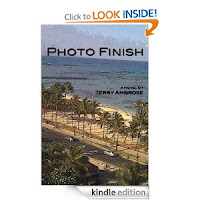
Guest post by journalist and novelist Terry Ambrose

Marketing. It’s the job authors dread most right after completing a manuscript. Why so much dread? Beyond the fact that it can be incredibly time-consuming, there’s also the issue of results. What worked? How well did it work? How can I get more people to know about me and my book?

About two years ago, I took on a freelance writing assignment with Examiner.com to write about fiction in San Diego. That assignment later expanded into my National Crime Fiction column. I cover everything in crime fiction from events to author interviews to book reviews. Now that I’ve just released my first mystery novel, I look back on my two years of doing author interviews and book reviews and recognize some common differences between those that make it and those that struggle for any recognition at all. Let’s take a look at those differences.

The first difference is also the biggest cliche around, and the reason many readers consider self-published books “second rate.” Most new authors rush their book to publication. They take the mantra of “write a great book” far too lightly and think that because their best friend or their mom loved it, it’s going to be a bestseller. Overstated, perhaps, but close to true. How does a new writer make sure he’s got a good book? Solving this problem couldn’t be simpler—or harder.

Have. People. Read. It.

If you’re really serious about writing a great book, you’ll spend money on a good editor. If you can’t afford an editor, find more readers. Beta readers, i.e., people who will read and give good feedback, are critical to seeing what works and what doesn’t in a novel. The readers who count are those who are distanced from you or who are practiced in giving writing feedback. Find readers who have a good eye for detail and who are, above all, honest. Do this by widening your circle of readers until you’ve found ten people who have no reason to tell you nice things. In all likelihood, those ten people will give you diverse opinions, but at least you’ll see patterns.

Second, before publishing, think about the very basics of marketing. These basics can be summed up in three little words (sorry, another cliche), “less is more.” A good tag line (or log line) is critical. For me, mine became “Hawaii, mystery, and trouble almost too hot to handle.” That tag line goes on every email I send out. I recently heard from a publisher who said that many of their authors don’t include tag lines in their outgoing emails. Is it any surprise that the publisher was complaining their authors weren’t selling?

An author interview can be a great tool to attract readers. It can also be incredibly boring. Here’s a secret from the other side of the book review fence. Do what you can to make the interviewer’s job easier. I know, this sounds self-serving, but if I interview an author or review their book and the author has taken steps to make my life easier, I’m very willing to cover them again. You can make that interviewer’s life easier simply by providing great answers to questions.

Here are two different answers to the question of “why did you write Photo Finish?” 1) I’ve always enjoyed writing and thought it would be fun to write a mystery about a skip tracer and a con artist. 2) Early in my career I was a skip tracer. I never had to steal a car myself, but came pretty close. I also learned that skip tracers and con artists are very similar—both can be great liars—and can create great stories.

If I’m reading those responses, I’m going to gloss over #1, but give answer #2 serious consideration for a full or partial quote.

When I do author interviews, I always ask for a short summary of the book. This short summary should be 25−50 words. What happens when I get one that’s 100-200 words? I start cutting. Just hope I don’t leave out the important stuff.

Preventing someone else from butchering your summary is to have three versions at the ready. Those summaries, in 25, 50, and 100-word versions, should be strong and to the point. Use powerful verbs, not lots of adjectives and adverbs. There are times when I feel as though I should be writing marketing materials for authors that I interview and, believe me, that does not make me want to deal with them again.

Then there’s the author bio. This should also be written in a couple of different lengths. I’ve had writers send me page long bios telling me more than I ever wanted to know about their history. In one case, I think I pulled one or two sentences, shortened those, and still felt like I had nothing of real importance to tell readers.

The third most basic mistake that I see made is that authors don’t have a website with their own domain name for reviewers or potential readers to go for information about them. Your domain name and website are your online business card. So, buy your domain name, they’re cheap, and make sure it’s easy to say and to remember.

I know, there’s really nothing new in this post. There are no magic solutions to help you skyrocket to the top of the sales charts. Believe me, if I knew those solutions, I’d use them first, share later. But, the problems I’ve mentioned here are not uncommon. Mix and match any way you like and the bottom line is always the same. These things happen far too often.

Every time an author does an interview, or someone offers to write a review of an author’s book, it’s an opportunity to increase that author’s name recognition. So the question becomes, how do you want people to remember you?

What do you think? Have you had a bad interview or review experience either as an author or a reader? Do you think that new authors do a good job of marketing, or not?

Find out more about Terry and his books here. 

Thursday, May 3, 2012

Do You Get What You Pay For?


By C.J. West
Suspense. Creativity. Action

Hitch had a great post this week about new authors and their quest to turn their manuscript into a published book. Being a publisher encompasses a whole lot more than writing and her post “Writing The Book Was Step Zero” was apt. There is editing, cover art, then marketing, which is an occupation unto itself.

When all that is done, a book that might have spent an eternity in a hundred different slush piles comes to market. The new writer sees a world of opportunity and braces for an onslaught of attention and what he hears most often is crickets. He feels isolated. Locked out of the market.

I’m reminded of a story from a few years ago. I’d been self-publishing for about 5 years. I had a book optioned for film and was excited about my prospects. I’d had enough bookstore doors slammed in my face to know that the industry wasn’t receptive to self-publishers, but I ventured off to Bouchercon eager to meet other readers and writers.


I met a well-respected reviewer and we chatted several times about panels. This person was impressed by a large e-book panel I moderated. When the show was over, I was included in a roundup of the event. But when I read my name, I was “self-published author C.J. West”.

Self-published. Like a warning label. Or a contagious disease.

None of the other authors mentioned was linked to a publisher. Just me. A friend suggested the publicity was a good thing. It felt like discrimination and I still think I would have been happier if my name had been omitted.

Fortunately all those gatekeepers who held new writers back have become much less important. Self-published authors can easily get books into the hands of readers.

But that means the slush pile has moved to Amazon.com.

It’s now up to readers to discern if a book is worth reading. Readers see a book description, a cover, and list a price. If a self-publisher is a good marketer, it becomes really hard to tell their book from one that’s traditionally published.

Until you open it.

In the last few months I’ve been hearing frustrated comments from readers about ninety-nine cent books. I know from personal experience that many of these books are really disappointing. Some readers who have been disappointed enough times steer clear of deeply-discounted novels altogether.


I think this is a sign that Kindle is hitting the mainstream reader. The early adopters were excited about the technology and embraced pioneer writers that brought them inexpensive stories. Many Kindlers still go out of their way to read self-published books and offer “kid-glove” reviews.

The mainstream reader expects a well-edited story that hangs together until the end. This isn’t true for a lot of self-published books and unless you know the author or carefully read the reviews, sometimes you are in for a huge disappointment. Please note the distinction between a book that you don’t enjoy and one that is full of grammatical errors, sloppy writing, and plot inconsistencies.

At the same time I’m seeing writers experiment with price increases to move away from the self-published crowd. For now, the $2.99 price dominates for new writers, but I wonder if readers will begin to think these books are worth avoiding.

Will we see a time when a majority of readers treat inexpensive books like they deserve a warning label?

Are you willing to pay an extra $7.00 for a book you know was professionally published?