
 |
| New edition of e-book and in print today. |
Has anyone told you your almost-done story is too long, confusing, or just doesn't grab them? Here are some typical “big-picture” weaknesses to watch out for in your novel and correct before publishing it or pitching it to an agent. These types of glaring gaffes in writing, pacing, plot, or structure will bog down your story and could sink your reputation as a novelist. Fortunately, they can all be remedied at the revision and self-editing stages.
~ Overwriting. Not enough self-editing.
Today’s bestselling thrillers are mostly between 70,000 and 90,000 words long. Unless you’re an absolutely brilliant writer, and experts in the business have told you so, if your manuscript is over 95,000 words long, it definitely needs tightening up.
~ Meandering writing – the main story question / problem is fuzzy or buried.
What’s the protagonist’s main goal and fear, and his main problem? This should be obvious early on and be the overriding driving force behind your whole story. Don’t let it get lost in meandering writing, too much backstory, frequent info dumps, too many characters, too many subplots, and unrelated plot details.
~ One unrelated thing after another happens.
Don’t get caught up in “and then, and then, and then,” with a bunch of sub-stories or episodes that aren’t related to each other and don’t directly tie in with the main plot problem and story question. Your events and scenes need to be connected by cause and effect. Each scene should impact the following scenes and complicate future events.
~ Dog’s breakfast
A common problem is too many characters crowding the scenes with no elbow room, and readers getting confused and frustrated trying to remember who’s who. Or maybe you have too many subplots that veer off in different directions and confuse the issue. Or a convoluted story where many issues or subplots don’t tie in with the main character and their overarching problem.
~ The main character is flat, unsympathetic, predictable, or wishy-washy.
Readers want a protagonist they can bond with and root for. Create a lead character who is smart, likeable, and charismatic, but with inner conflict and a few flaws.
~ A thin plot
This is where the premise / story line is obscure, with all kinds of unrelated happenings and way too much yak-yak dialogue that doesn’t have enough tension, conflict, or purpose. Also, often the issues and stakes aren’t serious enough. Anything that doesn’t directly relate to your major story problem, develop your characters, or drive the story forward should be cut.
~ A predictable story line
Write in some twists, surprises, reversals. When a character has to make a decision or her actions cause repercussions, brainstorm for all possible consequences and choose one readers won’t be expecting. Add in reversals here and there that force a change in goals, actions, reactions, or consequences. Don’t overdo this, though, and be sure your reversal makes sense and is in character, or your readers will feel manipulated or cheated.
~ Flat scenes
When scenes are boring, it’s because there’s not enough conflict, tension, suspense and intrigue. Make sure every page has characters interacting, with action, dialogue, conflict and tension. Every scene needs a focal point or a “hot spot” – its own mini-climax. Also, be sure to start scenes late and end early. And don’t tie everything up with a neat little bow at the end. End with the protagonist in more trouble (most of the time), or with a cliffhanger.
~ La-la land
Everybody’s getting along so well. What’s wrong with that? It’s great in real life, but in fiction it’s the kiss of death. Why? Because it’s boring. Conflict is what drives fiction forward and keeps readers turning the pages.
~ Overkill: Nonstop action
Unrelenting chases, explosions, and violence, with a constant break-neck pace, can numb readers. Vary your pacing, and write in some quieter moments here and there for variety and breathing space between high-action scenes.
~ Plot holes
Watch for those actions, events, character reactions, and other details that just don’t make sense for one reason or another. Look for any inconsistencies, illogical details, or discrepancies. Make sure all your story questions are answered at some point.
These types of gaffes are often difficult for the author to see, so this is where your critique group or beta readers can be invaluable, especially if you specifically ask them to flag anything that doesn’t make sense for any reason.
~ A sagging middle
It’s easy to get bogged down in the middle and turn it into a muddle. If you’re losing interest or inspiration, go back to where the story really grabbed you, and consider what came between that and the scene you’re at now. Can you oomph up, change, or delete the scenes in between?
~ No noticeable character arc
With the exception of action-adventure or military stories, most compelling novels show the main character undergoing change, caused by the adversity they’ve gone through and the resources they had to pull out of themselves to overcome adversity. They’ve developed and matured, and are now more confident and hopefully happier, which is satisfying to readers.
~ An unsatisfying ending
This can be caused by a number of factors, such as:
– The protagonist succeeds through coincidence, an Act of God, or help from a minor character. He should attain his goal through his own resourcefulness, cleverness, determination, courage, and inner strength.
– The ending is tragic, and the protagonist is unhappy. Unsatisfying and disappointing. Leave that for literary fiction. Or if you must make her lose or suffer in one way, make her win/gain in another way.
– Ending is too predictable. Brainstorm for possible ways to add a surprise twist at the end.
– Logic flaws – the ending doesn’t really make sense given the details supplied earlier.
– Things wrap up too suddenly. Don’t be in a hurry to finish your story – make sure all the story questions are addressed and all the elements of the ending make sense.
– Things dribbling on for too long after the resolution. Know when to stop.
The fix: To remedy these kinds of gaffes, be sure to enlist some savvy beta readers who read popular novels in your genre. Then contact a well-respected freelance editor with good credentials and references to go over your manuscript.
Readers and writers – Can you think of any other big-picture errors to watch out for at the revision stage?
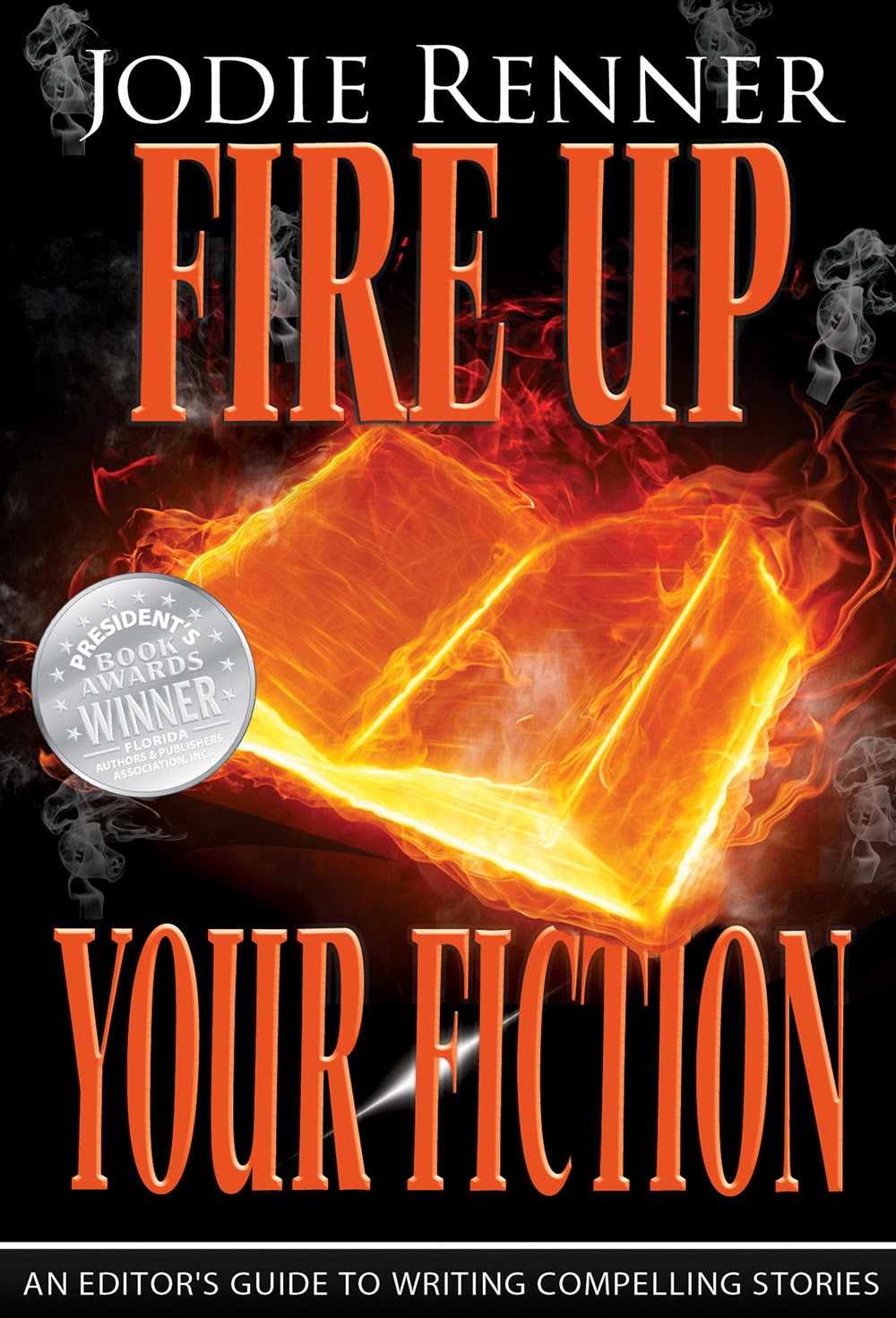
Jodie Renner has published two books to date in her series, An Editor’s Guide to Writing Compelling Fiction: Writing a Killer Thriller and Fire up Your Fiction (Style That Sizzles & Pacing for Power), which has won two book awards so far. Look for the third book in the series, out soon. For more info, please visit Jodie’s author website or editor website, her other blogs, The Kill Zone and Resources for Writers, or find her on Facebook, Twitter, and Google+. And sign up for her newsletter.


