Showing posts with label A.M. Khalifa. Show all posts

Monday, April 21, 2014

When multitasking is not your forté

by A.M. Khalifa, thriller writer, Google+

This is my last post as a regular contributor to Crime Fiction Collective for now. Thank you L.J., Peg and others for hosting me, and Jodie for inviting me in the first place. The experience has been tremendous, and I would strongly recommend group blogging as a fun and interactive way to engage with savvy readers and talented writers. But being the great multi-tasker that I am not, I am stepping aside to focus on reigning in my numerous wayward writing projects. I am working on the last installment in a collection of romantic suspense shorts about strong women struggling to find their place in life. And not one but two full length novels this year, one of which is the sequel to my critically acclaimed debut, Terminal Rage. I will be blogging erratically on my site, so you can join the conversation here. And you know how writers love seeing their email list swell, so do sign up below to my newsletter for periodic updates on my writing adventure.

I leave you with two short clips from London and Sydney exploring with members of the public what the title Terminal Rage conjures up in their mind.

Goodbye for now, but I am sure you will be seeing me around these parts, popping up every now and then. Thank you again for a wonderful run!


Sign up to my newsletter below to get:

 exclusive free fiction
 writing tips
 publishing insight
 Hollywood for writers: exciting insight on the film adaptation of Terminal Rage as it happens
 counter-terrorism scoops and analysis
 book giveaways and competitions

* indicates required field


My romantic suspense, The Italian Laundromat is currently discounted at 99 cents on Amazon!


A.M. Khalifa's critically acclaimed debut novel, Terminal Rage, was recently described by Publishers Weekly as "dizzying, intricate, and entertaining." 

Foreword Clarion says, "Khalifa manages to pull off something that is often difficult to do in the crime-thriller genre—he keeps the novel unpredictable and lays out a plot so twisted that the puzzle picture morphs as more pieces are added."

The ebook version of Terminal Rage is available for $2.99 on Amazon.

Tuesday, April 8, 2014

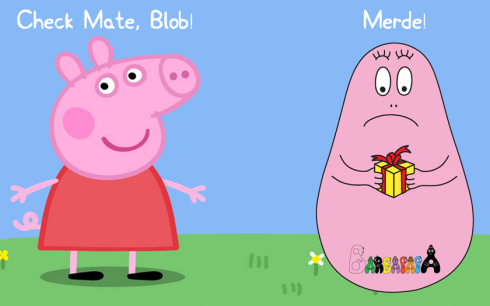
The Brave New World of Content and Copyright: How a little British Piggy Wiped the floor with a French Shapeshifter

by A.M. Khalifa, thriller writer, Google+

I am in London attending the second-most important book event of the year, the London Book Fair. The first being Frankfurt in October. Reliably, London is grey and wet, but not as cold as I had feared. I love this city and have fond memories here growing up, and as a post graduate student. The fair starts tomorrow, and I thought it fitting to pay homage to one of the UK's most successful cultural exports: Peppa Pig! A version of this post first appeared on my blog a few months ago, but it's still every bit as relevant. Next time I will report back from the fair. Enjoy!

barbapig

This is a cautionary tale. If you are a content producer of any sort, and still operating under the archaic copyright presumptions of the distant past, then you’re at risk of becoming extinct. And much sooner than you think, I’m afraid. If you are a writer, a film maker, or a musician, and anything in between, this applies to all of us who create culture for a living.

I have a four year old daughter who doesn’t watch much television because we decided from the outset against outsourcing our parenting duties to the networks. We do allow her to watch some DVDs and a few of her favorite shows on our tablets, under our supervision.

To simplify this story, let’s assume a couple of years ago she began watching two different shows which she liked equally.

The first is a French classic called Barbapapa, which started off as a series of children’s books written in the 1970s. The main characters are the Barbapapa family, who are most notable for their ability to shapeshift at will. The books evolved into a highly successful animated show, localized and licensed across the globe, along with a healthy merchandising system.

The second show is a more contemporary British creation called Peppa Pig, which revolves around a female pig, and her family and friends. Episodes feature day-to-day living with lighthearted flare, and a bit of signature British tongue-in-cheek for good measure. It's all very innocuous things like attending playgroup, going swimming, visiting her grandparents, going to the playground or riding bikes.

A a parent, I liked both shows for different reasons. Barbapapa has a beautifully nostalgic and vintage quality to it, but was well ahead of its time with deep messages of ecological responsibility. Peppa Pig is hugely entertaining, moderately educational, but most importantly, it does no harm. For a modern animation, that’s a huge plus.

As a content creator myself, I respect the hard work of creative artists and purchased a few original DVDs of both shows when my daughter was two and still getting into them. But in due course and as a result of changing viewing habits, we discovered episodes of both shows widely available on YouTube. So it was infinitely more convenient to watch them on our tablets, or even beam them from our mobile devices to our big screens, rather than the whole song-and-dance of finding the DVD, making sure it’s not scratched, wiping it clean—you get the picture.

Then something happened. About a year ago, every single episode of Barbapapa that was previously available on YouTube disappeared overnight. In its place was the infamous YouTube message that the “copyright holder of said content has requested that it be removed,” yadda, yadda, yadd. At roughly the same time, more high quality episodes of Peppa Pig started mushrooming, including hour-long compilations of the latest seasons. And this has continued until this day.

Being the delightful parents that we are, we purchased whatever Barbapapa DVDs we could get our hands on to appease the little one. I think you already know where this story is going.

Inevitably, my daughter lost interest in Barbapapa because it wasn’t readily available to watch on YouTube. Because mock it all you like, the whole YouTube/mobile device marriage is really made in heaven for the modern family on the run.

And inversely proportionate to her loss of interest in Barbapapa, was her increased obsession with Peppa Pig – and the formidable merchandising empire that came with it.

Here’s the fuzzy math of this whole thing. We probably own one or two Peppa Pig DVDs, which have been sucked into some black hole around the house, never to be found again. In other words, our net contribution to the Astley Baker Davies animation studio that produces Peppa Pig is about $15 in DVD purchases. On the other hand, we’ve probably been coerced to spend about five times as much on Barbapapa DVDs after they fell of the YouTube grid.

Now this is where the story gets more cautionary. Despite our paltry spending on Peppa Pig DVDs, the amount we’ve shelled out on Peppa Pig merchandise—figures, coloring books, bags, water cups, pajamas, t-shrits, shoes, and you wouldn’t even begin to imagine what else—is probably fifty times more than what we would have spent if we had purchased the entire library of Peppa Pig DVDs. And the future library for the next five years.

And what have we spent on the Barbapapa brand other than the DVDs? Nothing. Or practically nothing.

Peppa Pig: Game, set, match!

Two production companies targeting more or less the same age group. One operating with antiquated and aggressive philosophies to copyright as the linchpin of the financial engine of content, and the other one couldn’t care less about its content being pirated and distributed widely for free. I have this image of the makers of Peppa Pig sitting in a London boardroom secretly patting each other on the back for the genius hand of allowing the public to do their seeding for them. And in the process ensnaring generations of loyal fans and instilling in them a voracious appetite for anything and everything that can be pig-branded. Remember, this is not just limited to the English speaking world. Peppa pig is everywhere and in every language. The next time you see a child rushing to splash in muddy puddles in whichever corner of the globe you may be, now you know where that came from.

The moral of the story is this: Stop trying to fight piracy. It’s a futile, expensive, and polarizing endeavor. A lost cause, really.

Technology and our changing viewing and consumption habits are decades ahead of the narrow minds of the geriatric suits at the media corporations who are still deluding themselves that copyright is the be all and end all of generating income from the content you create.

As the music business has discovered the hard way, and the publishing industry is quickly learning, the future of the business side of producing content is going to be far less about monetizing content, and much more about cashing in on the rich layers of experiencing content, over and over again.

I believe the unit price of any piece of content is invariably going to shrink until its negligible or zero. Look at full-length electronic books now selling at 99 cents. Heed the lesson of software which went from thousands of dollars per license to free, or almost free aps. Consider that the most successful newspapers in the UK are distributed gratis to commuters. And of course everything about the music industry is a testament to this trend. Musicians now make most of their money on merchandising and live events, and are practically giving away music. One of the biggest players in the industry is Live Nation Entertainment – formed from the merger of an events promoter and a ticket seller.

The lesson here for any content creator is to sprint beyond our fixation and obsession as a society with copyright. In a world where massive technological advances have lowered the bar dramatically for anyone to operate as a content generator, we need to think of more creative ways to make money and be rewarded for our hard work. The singularity of the ‘content for money’ paradigm is not just shifting, it’s crumbling.

Writers, do you worry too much about copyright protection, or are you more focused on how to stay ahead of the curve when it comes to the future of your craft? And readers, are you taking advantage of more relaxed book copyright practices, like Amazon's Kindle Match program that allows writers and publishers to discount or offer for free the ebook version to customers who purchased the paperback edition?

Sign up to my newsletter below to get:

 exclusive free fiction
 writing tips
 publishing insight
 Hollywood for writers: exciting insight on the film adaptation of Terminal Rage as it happens
 counter-terrorism scoops and analysis
 book giveaways and competitions

* indicates required field


My romantic suspense novella, The Italian Laundromat is currently discounted at 99 cents on Amazon!


A.M. Khalifa's critically acclaimed debut novel, Terminal Rage, was recently described by Publishers Weekly as "dizzying, intricate, and entertaining." 

Foreword Clarion says, "Khalifa manages to pull off something that is often difficult to do in the crime-thriller genre—he keeps the novel unpredictable and lays out a plot so twisted that the puzzle picture morphs as more pieces are added."

The ebook version of Terminal Rage is available for $2.99 on Amazon.


Tuesday, March 25, 2014

Flight 370: When real life inspires fiction, and fiction inspires real life

by A.M. Khalifa, thriller writer, Google+


For the last two weeks the world has been glued to its screens as the confounding mystery of what happened to Malaysia Air Flight 370 unfolded. We empathized with the crew and passengers, and prayed their families got some closure. And up until it was announced on Monday that the plane likely crashed in the Indian Ocean, our obsession was fueled by the hope, albeit microscopic, that they may have still been alive as part or an elaborate conspiracy that involves anything from hijacking, theft, terrorism, to someone making a drastic political statement. Even as of writing this, and in the absence of finding any parts of the plane, there are still those disputing that it really crashed.

As a writer, the underlying mystery captured my interest on many levels. Planes don't just disappear from the sky unless they crash, or...Or what? Over the last two weeks we heard it all, haven't we? From bizarre science fiction allusions to shows like Lost and Fringe, to more grounded theories about this potentially being the boldest act of theft in the history of theft.

Real life mysteries like this inspire questions in the mind of any writer. Not just about the science and technology of landing and hiding a plane while evading detection - while that was still a faint hope - but also about a whole cast of characters potentially responsible for such an arcane affair. A new breed of sophisticated terrorists, shady transnational corporations, occult societies, and megalomaniac billionaires with secret agendas. Or perhaps a hostile government seeking to reverse-engineer the plane to get a leg up in the aeronautic race. Even a lone-wolf out to settle a score or for retribution.

But what really got  the writer side of my brain in full gear was how archaic and clumsy this whole investigation came across. I am not an expert in aeronautic design but I have a strong suspicion that the average modern family today owns gadgets that are more advanced than a modern jetliner when it comes to basic "where the hell did it go" technology. Every time I see those grainy, pixelated days-old satellite photos of suspected parts of the airplane - which of course no one can seem to find given the time lapsed between the photos surfacing and the search troops heading out to find them - I can't help but recall the HD quality, real time satellites chasing Will Smith in Enemy of the State. Whatever happened to the promise of that?

As a writer, I don't just keenly observe real life for story ideas. I am also programmed to question the status quo, and to use my creative instincts to think of how existing methods of doing something can be improved on using current technologies. Let alone that history is rife with examples of writers inspiring future innovations. The mobile phone and the touch screen tablet computer first appeared on Star Trek long before they became  integral parts of our modern lives. Jules Verne is credited with the advances in the design of the modern submarine. And Tim Berners-Lee, accredited for inventing the world wide web as we know it, was supposedly inspired by a 1964 short story by Arthur C. Clarke called Dial F For Frankenstein, about networked computers that eventually begin to learn to think autonomously.

Off the top of my head, I can think of at least a dozen things that can be quickly adapted to modern jetliners, to categorically surmount the problems of not knowing what happened to a plane before it disappeared, and then where to search for it after it goes off the grid. Here are just three.

Black boxes with longer battery lives
Let's start with the obvious. This one doesn't require a genius really. Why on earth in 2014 is the battery life of a black box ping signal still limited to 30 days? And get this, the leading manufacturer of black box technologies along with the airline industry are now looking to the future with a possibility of upgrading that to a whopping 90 days. It took more than two years to find the remnants of the Air France Flight 447 crash. With the advances in power technologies, like pacemakers and cochlear implants, it would seem elementary that the battery life of a black box should be stated in years, not days or months. The latest iPhone has a standby battery life of about eleven days. Which means, very crudely, with the batteries of just 33 iPhones daisy chained so one picks up when another one dies, you can  power a black box for at least one year.

Streaming video
Black boxes record the last two hours of the audio inside the cockpit, which provides critical information to investigators as to what happened before a crash. Wast it pilot error as in the case of Air France Flight 447, or possible pilot malicious intent as in the case of Egypt Air Flight 990? But with WiFi now more and more available on certain airlines and specific routes, what would it take to install streaming video that can't be deactivated by human intervention, live from a cockpit of each airplane in the sky, relayed via satellite? There's increasing speculation that Flight 370 may have become a zombie plane, where the crew and passengers were killed or rendered unconscious due to rapid decompression or smoke inhalation, leaving the plane to fly on autopilot for many hours before it ran out of fuel and crashed. But if you have eyes on the cockpit 24/7, air traffic control will know the instant something like this happens and can then take necessary action. Including piloting the plane remotely.

In fact, I would go a step further and install streaming video in the entire aircraft. I already hear some hearts stopping at the potential invasion of privacy concerns. But hear me out. We are living in an age where governments are blatantly spying on us, and a shocking number of hidden security cameras canvassing the public sphere in the name of monitoring and deterring crime. How much worse would it be to allow cameras in airplane cabins? As a passenger, your entire body can potentially be scanned or your body probed ahead of getting on a plane, so it's not such a big deal to be filmed while you're actually flying.This would preclude the unknown variables about what caused a certain passenger-instigated incident on a plane. And for those concerned about privacy, it could be mandated as law that once a plane touches ground safely, air traffic control are required to delete all in-cabin footage.

Make the entire plane a beacon riddled with communication devices
Part of the challenge of finding a downed plane that could have potentially been flying under the radar for many hours, is that there are very limited components of the plane that are communicating with the world. And then after a crash, it's essentially the black box that's speaking. But how about installing GPS enabled communication devices all over the plane that are in perpetual communication with air traffic control. That way, if the plane crashes and disintegrates into many constituent parts, you've increased your chances of finding the general location of the crash by communicating with more than that one black box. And of course if the plane hasn't crashed and is hiding somewhere, it would be a breeze to find it.

In fact, why is there just one black box, and have you seen how bulky these things are? Your average cell phone can store an incredible amount of data, and I am sure even slimmer chip-sized devices can do the same. How difficult would it be to embed the entire plane with tiny battery-powered devices that perform the same function of a black box of recording data, video and audio, and can communicate remotely if a plane crashes?

My heart goes out to the victims and families of Flight 370, but if anything good can come out of a tragedy, I hope this event is a wake up call for airplane manufacturers and major airlines to start thinking creatively and out of the box to innovate new technologies that would greatly diminish that dreaded black hole of information about what happens to a plane before and after it goes off the grid, which would ultimately make flying much safer.

Will they listen or heed any lessons from this tragedy? I truly hope so. But I get the impression that no matter how advanced planes become, the underlying communication and tracing technologies that keep track of a plane in the sky or after it goes AWOL have not evolved much since the 1970s with the introduction of the Boeing 747,  the first wide body airliner. This is possibly due to the extreme rarity of air traffic tragedies. In the end, unfortunately, it all comes down to economics. Any major innovation in plane tracking and tracing technology means additional costs that the beleaguered airline industry can hardly afford.

But tell that to the families of the crew and passengers of a plane that's been missing for more than two weeks.

Writers and readers, using your creative minds, what other innovations can you think of to make air travel safer, and to avoid a plane ever going missing?

Sign up to my newsletter below to get:

 exclusive free fiction
 writing tips
 publishing insight
 Hollywood for writers: exciting insight on the film adaptation of Terminal Rage as it happens
 counter-terrorism scoops and analysis
 book giveaways and competitions

* indicates required field


My romantic suspense novella, The Italian Laundromat is currently free on Amazon!


A.M. Khalifa's critically acclaimed debut novel, Terminal Rage, was recently described by Publishers Weekly as "dizzying, intricate, and entertaining." 

Foreword Clarion says, "Khalifa manages to pull off something that is often difficult to do in the crime-thriller genre—he keeps the novel unpredictable and lays out a plot so twisted that the puzzle picture morphs as more pieces are added."

The ebook version of Terminal Rage is available for $2.99 on Amazon.


Tuesday, March 11, 2014

Falling in love, one book at a time

by A.M. Khalifa, thriller writer, Google+

The Story Book, by William-Adolphe Bouguereau, Photo by Mary D. Keeler Bequest (Creative Commons)

Recently, Peg Brantley wrote a great piece on the various criteria that force her to abandon a book. For avid readers, book-dumping is sacrilegious. But as competition heats up in the book market, ditching a lousy one to make way for more inspired reading is something we’re all getting used to.

Peg’s post and the lively debate that ensued touched upon key things that every author should pay attention to, such as failure to capture a reader's interest immediately, unlikable characters, factual errors, and implausible plots.

Each one of us has a clear notion of what makes an unreadable book, and the infractions an author can commit to leave us no option but to eject them without a parachute. But what about the books we fall in love with? I don’t mean books we really like, but the sort of works that take over your life while you are reading them and then render you forever beholden to the author’s spell.

Love is the operative term here. When I am reading an amazing book, it feels like a passionate romance, rather than a one-night stand. And it has to be love at first sight—I've never fallen madly in love with a book that failed to excite me from the opening line. When I'm smitten in a relationship with a great book, I can’t wait to finish whatever it is I am doing to get back to it. It’s the first thing on my mind when I wake up, and the last thing I think of before going to bed. In some cases I may even dream about it.

The perfect book is like a highly addictive drug. You don't have to nudge yourself to read it. In my case, while I can't wait to find out what happens next, I start getting withdrawal symptoms when I know I've read more than what I have left. Like all powerful addictions, a great book leaves you longing for more. So you scour the universe for everything else this writer has penned, and every piece of news, gossip or social media murmurs about what they could possibly be working on next. You'll even snoop around for fan fiction if you are quite desperate. And of course you start evangelizing on behalf of the book and its writer, like it was your new religion.

Outstanding books rob you of your sense of time and reality, like a mystical or transcendental experience. They displace you from your physical reality and immerse you in the dimensions expertly crafted by the author. At the very least, you will connect with the characters and wish you were with them in the same room, or that you could speak to them, befriend them, even fall in love with them. And in some cases, your connection with a character is so profound, you almost start morphing into them. The Life of Pi by Yann Martel and IQ84 by Haruki Murakami are two such stories that had this effect on me.

Invariably, a truly sublime book is one that expands your horizons and introduces you to worlds, concepts and emotions you weren't familiar with before you picked it up, but with which you become obsessed. And I don’t necessarily mean that all great books have to be educational. But I think they have to show you things you wouldn't have otherwise been able to see on your own.

When you’ve finished reading a book that fundamentally absorbs you, your own life and reality will seem a little insipid by comparison. And you will feel nostalgic for the daily company of its leading characters. Like best friends or family members that have left you behind.

As a writer, I too aspire for my readers to fall in love instantaneously with my writing. To be addicted to, be transposed and surprised by my stories. I want to be able to write the sort of book that would keep a reader logged in my universe long after they've put it down. Maybe even one that could change a few lives in the process. It's a tall order, but it gives me something to strive for.

Fellow writers, is your writing informed and influenced by how your favorite books impacted you? And readers, what's your definition of a great book?

Sign up to my newsletter below to get:

 exclusive free fiction
 writing tips
 publishing insight
 Hollywood for writers: exciting insight on the film adaptation of Terminal Rage as it happens
 counter-terrorism scoops and analysis
 book giveaways and competitions

* indicates required field


My bestselling novella, The Jewish Neighbor is temporarilyt on sale on Amazon for $0.99.


A.M. Khalifa's critically acclaimed debut novel, Terminal Rage, was recently described by Publishers Weekly as "dizzying, intricate, and entertaining." 

Foreword Clarion says, "Khalifa manages to pull off something that is often difficult to do in the crime-thriller genre—he keeps the novel unpredictable and lays out a plot so twisted that the puzzle picture morphs as more pieces are added."

The ebook version of Terminal Rage is now on sale for $0.99 on Amazon.


Monday, February 24, 2014

What Would you Give up to be a Writer?

Note from A.M. Khalifa, thriller writer, Google+

I am always inspired by how compelling the desire to write and be a writer is. Like an obsession, once it takes hold of you, there's no stopping it. Everywhere I go I meet writers who are juggling other successful careers, trying to "make it" so they could quit everything else and focus on being an author. Some of us go even further and take bolder risks. Like my friend A.D. Starrling who quit being a full time doctor in England after many years of studying and training to give writing a real shot. She'll tell you all about it as my guest blogger this week. Enjoy!

By A.D. Starrling 

I grew up on the tropical island of Mauritius, where academic prowess is highly regarded. I come from a family of scientists and from a very young age, I was expected to compete and do my best. For my father, that meant winning. Being second was not good enough. I had a pretty stellar school career. I majored in the sciences and landed a state-funded scholarship for a medical degree at a British university. I graduated in the top of my year, secured my first choice pediatric rotation, and passed my specialist exams within three years.

But throughout my training, I secretly indulged in another passion I had: Writing.

My father was an avid book collector and would take me to dusty old bookshops in the capital from when I was four. In addition to instilling in me the drive for success, he also taught me to love books. I started writing at twelve, and by the time I left the island at the age of twenty, I had written several short stories, two novels, and was a third of the way into my third novel. All throughout my education and training, I kept telling myself that I would write full time when I retired from medicine.

With just a few years left before becoming a full-fledged consultant, I quit full-time medicine. I was not happy with the direction my life had taken and the changes happening in the National Health Service. I became an agency doctor, with flexible working hours, better money, and the ability to work all over the country.

Six months later, on a train journey to London, the three characters that would drive me back to my writing desk walked into my head and wouldn't stop talking to me. And that’s when it really hit me. Why wait until I retire? Writing is what I want to do now.

I researched the publishing industry and discovered it was fraught with difficulty, with plenty of rejections and setbacks to be had. There was no guarantee I would ever be published or be able to make a living from it. Back then, I rejected self-publishing, equating it in my mind with the stigma of vanity publishing.

Still, I was driven and decided to write for five or six years and query agents and publishers. If during that time the consistent feedback was that I was a bad or mediocre writer, I would return to medicine and write as a hobby.

In 2012, no one had convinced me that I was a bad or mediocre writer, but I hadn’t gotten anywhere either. The consistent message I was getting was that I was a great writer, but hadn’t found my voice or perfect genre. Then a short story I submitted to the British Fantasy Society Short Story competition made the shortlist. It would eventually become the first novel I published.

One day, I came across an article that would change my life. It was about an author I had never heard of before, a certain JA Konrath, who had attained mainstream success as a self-published author. I took another look at self-publishing and saw it in a different light. It was now not just acceptable, but increasingly the smarter route to take. I decided to go for it.

From that time onward, I began seeing myself as a full-time writer, who once dabbled in medicine. I work part-time in a Neonatal Intensive Care Unit and that door remains open for me. Medicine still pays the bills. But isn’t that the story of almost all indie writers? We are chasing the dream, and using our other skills to sustain ourselves until writing becomes our sole vocation.

My first book, Soul Meaning (Seventeen Book 1), was the winner of the Fantasy category of the National Indie Excellence Awards in 2013, a finalist in the adventure category of the same award, a finalist in the action-adventure category of the Next Generation Indie Book Awards 2013, and got honorable mention in the general fiction category at the Hollywood Book Festival 2013.

I am still filled with fear and doubts when it comes to my writing career. Am I crazy to give up years of studying and training and a near-certain future of professional success and material comfort to chase a passion? Maybe. But I couldn't live with myself if I didn't at least try.

I have a memo note stuck to the lamp on my desk. It says, “Who do you want to be?”

It’s the first thing I see every morning before I start writing.

The answer to that question is what drives me to carry on.

What about you, fellow authors, what have you given up and what risks are you taking to chase this writing dream? Indeed, what double, even triple lives are you leading? And readers, what drives and wakes you up every morning?

AD Starrling is the author of the award-winning and nominated supernatural thriller series Seventeen. She lives in England, where she spends her time writing fast-paced, action-packed thrillers, and juggling babies in the intensive care unit where she works as a part-time pediatrician.

Soul Meaning (Seventeen Book #1) and King’s Crusade (Seventeen Book #2) the e-books are currently available for sale on Amazon, with the paperbacks scheduled for release in March and April 2014.


More A.D. Starrling links:


Tuesday, February 11, 2014

"Loved your Book, but I'll Pass on the Free Copies!"

by A.M. Khalifa, thriller writer, Google+


Imagine you walk out of the cinema raving about how much you enjoyed the movie, only to find the director or even producer of the film walking up to you, thanking you for your vocal praise, and proposing something along the following:

“Given how much you've enjoyed my film, I'd like to offer you ten free tickets to give to your friends and family. People who you think may enjoy this film as much as you did.”

How would you react? I know what I would do, I would grab the opportunity. Free tickets, right?

For the oddest reason, the same principle doesn't seem to apply to books. Every time a reader has given me a particularly glowing review of my debut novel, Terminal Rage, and I've connected with them offering free copies to spread the love, they’ve balked at the suggestion. Even friends and acquaintances. It’s almost as if there’s something inherently dirty about evangelizing on behalf of a book, but it’s okay to do for a film or other content types.

My friend the talented writer and blogger Scott Whitmore says "there is a subtle difference between reviewing and promoting. I don’t mind reviewing a  book, but when you give me copies to hand out, now I’m part of your PR organization. Many may think: I really loved your book, and I said it in my review, but it isn't my job to physically move copies of it for you.”


Scott is on to something here, but I think it's also about the writer giving out the freebies. Or the perceived experience of the writer. If Lee Childs or Cormac McCarthy were to offer his readers free books for their contacts, I know I wouldn't dream of saying anything but a resounding yes, and then brag about it for the rest of my life.

With new writers, the psychology at work may be different. Perhaps the reader is unsure whether their taste is really on the money. Loving an indie book doesn't mean others will too, and if you promote it aggressively, only to discover that other people aren't as keen about it, you could risk your reputations as a taste maker. Whereas any odd book by an established writer seems like a safer bet, a great book by an unknown author is still laden with potential risk. The risk of being labeled as a lousy literary connoisseur among your peers.

But here is where it gets more interesting. I've found that without my intervention or offers of free books, readers who loved my novel eventually end up promoting it and recommending it to others, and coming back to tell me what they've done. What the hell?

As a new writer, selling books is buried way down on your list of priorities compared to your number one goal: to be read by as many people as possible. So giving away books left, right and center at a loss seems like a viable proposition to gain traction. That is until you realize it doesn't always work like that.

What if by giving away free books I am depriving readers of the challenge of getting their friends and family to get vested in their taste and vote with their money? It’s one thing to give someone a free book you've read and enjoyed, but a totally different challenge to recommend a book and ensure that it’s purchased, based on your good word. And maybe readers also feel cheated to have paid for the book, when the author is willing to give it away.

As much as being read is important, it seems that trying to trip-wire the basic principles of demand and supply may not be such a fancy proposal. What do you think?

Writers, do you find giving free copies to satisfied readers demystifies you as an author and somehow cheapens your brand? How about you, readers, is my analysis of the psychology of recommending books somehow accurate?

Sign up to my newsletter below to get:

 exclusive free fiction
 writing tips
 publishing insight
 Hollywood for writers: exciting insight on the film adaptation of Terminal Rage as it happens
 counter-terrorism scoops and analysis
 book giveaways and competitions

* indicates required field


My sizzling-hot #bestseller short story, The Jewish Neighbor is on sale for 99 cents on Amazon.


A.M. Khalifa's critically acclaimed debut novel, Terminal Rage, was recently described by Publishers Weekly as "dizzying, intricate, and entertaining."  He lives in Rome, Los Angeles, and Sydney, sometimes at the same time.

The ebook version of Terminal Rage is now on sale for $0.99 on Amazon.


Tuesday, January 28, 2014

Amazon's KDP Select: The Verdict from a Newbie Skeptic

by A.M. Khalifa, thriller writer, Google+

Have you read The Jewish Neighbor?

I've been dragging my feet and avoiding test driving Amazon's optional KDP Select program that gives writers a set of preferential marketing tools in return for a 90-day period exclusivity to the Kindle Store. Even while hearing writers I respect and admire like L.J. Sellers and Jodie Renner singing its praises

I chose to go the indie route to be the master of my writing career. So understandably, the mere mention of someone else exercising exclusivity over my work triggers an allergic reaction. I want my ebooks to be available to readers through all outlets like Kobo, Nook, Sony and Apple, and not just Amazon.

Having said that, I've always been attracted to KDP Select's free book promotion tool. Until quite recently, the high ranking attained on Amazon's bestseller lists during the free promotional period could be converted to paid sales after the promotion ends. But in their excellent resource for indie publishing, Write. Publish. Repeat, Sean Platt, Johnny B. Truant, and David Wright explain how in 2013 Amazon shuffled the rules of the free book promotion, which effectively broke this ability to convert high ranking to sales.

Despite that, I finally bit the bullet. I was curious enough to give KDP Select a shot with a recent novella I published, The Jewish Neighbor. I figured the only way to find out how Select really works is to try it. And since this piece had been lingering on my blog collecting digital dust for many months with little feedback, I had nothing to lose.

To cut a long story short, the results were outstanding. The book was downloaded thousands of times across all of Amazon's territories, but no where more than Amazon UK. It's about a Syrian woman who accepts an arranged marriage to an exile in London to escape the horrors of the civil war ravaging her country, only to find herself in an equally grim situation, with the only tenderness coming from the least expected person - her Jewish neighbor. So it made sense there would be keen interest from Britain. But I also broke ground in places like Amazon Germany, Canada, India and France, which was a first for me. 

Things got even more interesting after the free promotion ended. The Jewish Neighbor started climbing up the ranks in Amazon's paid bestseller categories in both the US and the UK. It hit number 500 of all of Amazon UK's paid kindle content, and then lodged itself as the number 1 bestseller in the inspirational romance category for at least a week. And also locked in second slot on Jewish-themed literature for a few days.

All in all, I sold more copies of that piece than my entire one year writing-career, across all of my titles. At one point I was selling thirty copies of The Jewish Neighbor every hour.

But it didn't stop there. This unexpected performance started funneling customers to my other titles. My overall sales spiked, including my flagship content, my debut novel, Terminal Rage. The daily sales average of that quadrupled compared to how it usually performs on any given day, no doubt as a result of the increased exposure.

So what's the verdict, from a new writer and a former skeptic like me? 

KDP Select is an incredibly powerful marketing tool for indie writers. But it's not for everyone and not for all your content. I don't think it makes strategic sense for a first time writer just wetting their feet to put their debut offering on KDP Select, denying themselves the opportunity to explore the overall landscape. The program seems better suited for writers with a larger body of work who can afford to make certain works exclusive to Amazon, without alienating users of other platforms.

In my case, hot on the heels of The Jewish Neighbor's success, I enrolled many of my other similar titles in the program, leaving out for now my full-length novel, Terminal RageI still like the unlimited free promotions you can do on Kobo, as opposed to Select's limitation to a maximum of five days free promotion every 90-day enrollment period. And I have to admit, I have a soft spot for Kobo and the openness of their platform. Unlike my perception of Nook, I don't want to discount them for dead just yet. Being the smallest of the three main players, they also try harder. At the Frankfurt Bookfair last October they were serving free crab cakes, chardonnay and awesome teal-colored tote bags that make me a huge hit with supermarket cashiers in Rome.  

Then again, I may wake up one day and realize that five days of KDP Select every 90 days are far more valuable than 365 on Kobo. I will keep you posted.

The way I see it, Kobo, Nook, Apple, Sony and Smashwords all have their niche segments of the market. But you can't be an indie writer today and fail to notice that Amazon is increasingly where it's at.

Writers, what have your experiences been with KDP Select, and if you've been on the fence like me, have I managed to sway you to at least try it once? And readers, have you discovered literary gems through free downloads?

Sign up to my newsletter below to get:

 exclusive free fiction
 writing tips
 publishing insight
 Hollywood for writers: exciting insight on the film adaptation of Terminal Rage as it happens
 counter-terrorism scoops and analysis
 book giveaways and competitions

* indicates required field


Special Offer! My sizzling-hot short story, The Egyptian Affair is available for free, for a limited period on Kobo.

A.M. Khalifa's critically acclaimed debut novel, Terminal Rage, was recently described by Publishers Weekly as "dizzying, intricate, and entertaining."  He lives in Rome, Los Angeles, and Sydney, sometimes at the same time.

The ebook version of Terminal Rage is now on sale for $0.99 on Amazon.


Tuesday, January 14, 2014

Cold Calling with your Book in Hand. Do you have the Stomach for it?

by A.M. Khalifa, thriller writer, Google+


In the world of indie publishing, digital is king, thanks in no small part to the publishing revolution spurred by Amazon. But for many of us writers, the notion of selling a physical book still carries a romantic, even irrational sense of accomplishment. Consider this: Although I make more money selling eBooks, I get more excited when I sell paperbacks. Perhaps the knowledge that someone out there preferred to hold, smell, feel and touch a copy of my book—even though a much cheaper and more convenient medium was available to them—is somehow comforting.

Getting your printed book in brick-and-mortar bookstores however is one of the most uphill challenges of publishing. The large chains are pretty much in intensive care with a bleak prognosis, and independent or small-published writers are at the bottom of their list of priorities. Even Barnes and Noble which has so far managed to hold on to dear life, only pays lip service to supporting indie writers. They have an opaque program that allegedly will stock the works of “local” authors in the relevant chains. But if you've ever tried to communicate with your local Barnes and Nobel to pursue that, you will have likely discovered that it’s a hit or miss and depends entirely on the mood and temperament of the Community Relations Manager you end up speaking to. Not to mention that the reigning Barnes and Noble culture looks down on print on demand books.

Which leaves small and independently owned book stores and mini chains as the most viable option. I am happy to report that I have had remarkable success getting my debut novel Terminal Rage stocked in a select number of bookstores in North American and Europe. In London for instance, I am proud to be stocked in all branches, save one, of the beautiful Edwardian mini chain, Daunt

The Chelsea branch of the mini-chain Daunt, London, UK

Figuring out the best way to get stocked in indie bookstores came after a bit of trial and error.

Because most of us in this business spend more time behind screens managing our digital empires and building and nurturing our tribes, we tend to also communicate primarily through electronic means. It's faster and more convenient.

When I first started querying indie bookstores electronically, I was overwhelmingly getting ignored or rejected, which was demoralizing. Then it dawned on me that on any given day, most indie bookstores probably field hundreds if not thousands of emails from new writers like me with the same idea. Each professing to be the next best thing.

So I tried something different. I started calling the bookstores to set my self slightly apart, and sure enough my success rate instantly shot up to about thirty percent acceptance.

You probably know where I am going with this: Ultimately, the most effective way to get your book picked up by indie bookstores is to go there in person, with your book in hand for a good, old fashioned face-to-face pitch. As a writer, if you are not willing to look a book buyer in the eye and get passionate about your writing, how do you expect them to do the same over email or a phone call?

Indie book stores are typically unique establishments owned and staffed by folks who are extremely passionate about books. Like Linda Nurick of Cellar Door Bookstore who plays an integral role in promoting reading and supporting local writers in her local community of Riverside, California. I have found that the best way to connect with them is in person, because they need to get excited about you as a writer as much as they need to appreciate your book. Assuming you have an excellent and professionally-produced book, my own results suggest that walking in an indie bookstore to cold call will net you extremely positive results.

However, there are a few things to take into consideration if you decide to give cold calling at indie bookstores a shot. First and foremost, research each and every store in advance. Some of them specifically request that you don’t show up unannounced, so respect their guidelines. Some small bookstores are often highly specialized in a limited number of genres which may not coincide with your masterpiece. And remember that for all brick-and-mortar stores, space is the number one premium. If a book store describes itself as "tiny", "cozy" or "small but mighty", it's most likely they have a minuscule and highly curated inventory with a limited appetite for risk. So it would probably be a waste of your time and theirs to try. 

Ultimately, I've found that the most receptive are the small- to medium-sized general bookstore that sell new books, with no outright guidelines against cold calling. With that said, even if you target your bookstores intelligently, there is still a chance they just may not be that into you. Don’t take it personally and move on.

Writers, what have your experiences been trying to get your books stocked in brick-and-mortar bookstores? And readers, do you proactively make recommendations to your local bookstores when you don’t find your favorite authors stocked?

Sign up to my newsletter below to get:

 exclusive free fiction
 writing tips
 publishing insight
 Hollywood for writers
 counter-terrorism scoops
 middle east analysis
 book giveaways and competitions
 exciting updates on the film adaptation of Terminal Rage as it happens
 free tickets for a party of four to an Elvis Presley concert*


* indicates required field


Special Offer! My sizzling-hot short story, The Jewish Neighbor is available for free, for a limited period exclusively on Amazon Kindle: amzn.com/B00HSN8O8M

While supplies last. Offers valid only in territories where time machines are legal.

A.M. Khalifa's debut novel, Terminal Rage, was recently described by Publishers Weekly as "dizzying, intricate, and entertaining." 

The ebook version of Terminal Rage is now on sale for $0.99 on Amazon.


Tuesday, December 17, 2013

Help someone you don't know just because you believe in them

by A.M. Khalifa, thriller writer, Google+

Pierre-Auguste Renoir [Public domain], via Wikimedia Commons
Browsing the Twittersphere, I recently stumbled upon a young London-based singer-songwriter who had posted on YouTube some of her original songs and a few ingenious mash-ups of cover songs. She’s only twenty-one but has an amazing voice and presence. The sort of talent that screams “I’m the next big thing.”

Instinctively, I tweeted her and said something along the lines of, “Are you just doing your thing, or are you looking for a record deal?” She responded with humility saying she’s in her last year of college but was actively looking for contacts in the industry. Without thinking twice, I proceeded to connect her to a friend of mine who works as a senior talent manager at a Los Angeles-based entertainment company founded by Jay-Z and connected to Sony Music and Universal Music Group.

As it happened, my friend was in London the same time I wrote to him, so they met in person and so far things are looking extremely promising for her. Her life may change dramatically as a result of this serendipitous chain of events. All I asked of her is to pay it forward one day. And of course to send me front row seats to the Grammys when she’s accepting her award at some point in the not too distant future.

Why am I telling you this?

As a new writer, my focus is often to foster relationships that may somewhat benefit my writing career. There is nothing wrong with that mindset, but if that’s all I am doing it could ultimately harden my heart and turn me into a calculative self-serving machine. All the advice on the business side of indie publishing seems to say the same thing: To invest my time and energy in the activities and relationships that will pay off. There is an 80/20 rule out there that I’m still trying to get my head around. Even when I seemingly reach out to do selfless acts like promoting fellow writers I admire and respect, it’s often with the implicit expectation they will do the same for me. Again, it’s fair and symbiotic, but it can’t be the only outlook.

Sometimes it’s soul-quenching to support someone simply because I believe in them. To undertake a totally selfless act based on the desire to help a talented, hard-working person who deserves it. And to put my money where my mouth is when it comes to my commitment to support and enhance the arts. In this case, rather than lament the sorry state of music produced today, I wanted to actively play a role in helping someone with raw talent to get a fighting chance to prove it to the world.

Mind you, I am not confusing this with karma, because even that is not entirely altruistic. There is nothing wrong with helping someone expecting the universe to look out for me one day, but it doesn't taste quite as gratifying as helping someone simply because I believe in them.

I am still relatively obscure as a writer as I am only just getting started in this gig. But so far, I've been fortunate to have mostly come across people who sought to help me because they believed in me. Even within the realm of strictly professional relationships where money is exchanged for services, most of the people I have hired have ended up becoming solid friends and genuine supporters who look after my best interest because they think I merit it.

I therefore feel it’s incumbent upon me to repay this kindness with people who equally deserve it, in whatever line of work they may be.

Fellow writers, were you the recipients of selfless kindness along your career from someone who believed in your work, and how has that affected your life? Readers, do you actively promote your favorite writers because of your belief in their work, over and above buying and reading their books?

Sign up to my newsletter below to get:

exclusive free fiction
 writing tips
 publishing insight
 Hollywood for writers
 counter-terrorism scoops
 middle east analysis
 book giveaways and competitions
 exciting updates on the film adaptation of Terminal Rage as it happens
 dancing, talking unicorns delivered to your doorstep*


* indicates required


While supplies last. Offers valid only in territories where unicorns are legal. Limit one unicorn per subscriber.

A.M. Khalifa's debut novel, Terminal Rage, was recently described by Publishers Weekly as "dizzying, intricate, and entertaining." 

The ebook version of Terminal Rage is now on sale for $2.99 on Amazon.

Tuesday, December 3, 2013

Music and Writing: a Harmonious Match, or an Off-Pitch Proposition?

by A.M. Khalifa, thriller writer, Google+

Christof Unterberger, Austrian Cellist and Film Music Composer
You may not immediately associate music with fiction, but in my world, music plays an integral role. Often when I write particularly visual or emotional scenes I hear music in my mind. I also write better when I have music playing in the background. For instance, the soundtrack of the film Rush, as scored by Eric Clapton, is the perfect mood-setter when I am writing about fallen heroes, conflicted protagonists, or psychologically charged scenes. Music touches me on many levels and unclogs my creative pores. Other writers may find this process distracting, but listening to music while I write invites an additional dimension to what I create and amplifies the state of hypnosis that is creativity.

But it doesn't stop there. I have gone a step further to involve music in my writing.

I work in the film industry. My friend Christof Unterberger is a talented and successful film composer and cellist. He is also my musical partner in crime. Almost every project I have produced in the last six years has been touched and elevated by his music. As with any creative partnership, Christof is also interested in my writing.

When I started working on my debut novel Terminal Rage, Christof was only the second person after my wife to know about it and to read the synopsis. He started composing small vignettes, spontaneously and inspired only by the little he knew of the story. And he nailed it. The musical pieces he composed back then were so reflective of the essence of my thriller, and so sublime and cinematic, that I started listening to them as I was writing. As a result, my writing and writing regimen improved. My story inspired his music, and his music inspired my writing - cyclical and symbiotic creativity at its very best.

Now that Terminal Rage has been published and Christof has read it, we are doing something even more daring. We are composing a soundtrack for the book. One piece for every chapter. You can listen to the entire sequence here.

I believe we are breaking new ground with this derivative work, which we plan to sell as a companion product once all thirty-two chapters have been scored.

Here is the opening sequence of the Soundtrack, which sets the tone for the entire work:


And this piece is from an action-packed chapter in the book at the halfway mark. Notice how the music is layered and develops subtly:


Finally, here is a sample of a more emotional,  melancholic chapter towards the end:


What intrigues me about this process, is that people who've read the book connect emotionally with the music almost immediately. They appreciate it as a bonus and unexpected layer of the story that expands and enhances their experience with my work.

Mind you, Christof is a highly sought-after film composer, and time is his most precious commodity. Working on the "book" soundtrack of Terminal Rage is a labor of love for him that comes with no material benefit in the short run. He just fell in love with the story and decided to score some amazing music to it while we wait for the film version. Talking of which, can you guess who will score the music to the film adaptation of Terminal Rage, one day? I joke with Christof and say: Alexander Despalt of course!

As a new and independent writer, thinking out of the box and innovating ideas is an essential component of setting myself apart and building my brand. It's not enough to follow the script dictated by the archaic traditional publishing universe we have all inherited.

Readers: Do you hear music in your minds when you connect with a good story? And are you able to read with music in the background? Writers, what do you think of my literary musical experience: does it add value to a book?

As a special promotion for thriller and music aficionados, if you buy the paperback edition of Terminal Rage before January 1, 2014 and let me know about it on my site www.amkhalifa.com, you will find a copy of the Terminal Rage CD in your mailbox sometime early next year!


A.M. Khalifa, author of international thrillers, writes exhilarating, contemporary stories pulsating with life and unforgettable characters. His debut novel, Terminal Rage, is a layered thrill ride that moves seamlessly from inside a nerve-wracking hostage situation to far-flung locations across the world, challenging readers to stay ahead of its unpredictable plot.

The ebook version of Terminal Rage is now on sale for $2.99 on AmazonBarnes and Noble, and Kobo