Showing posts with label book promotion. Show all posts

Sunday, March 16, 2014

Ride the Tide of Group Promos!

by Jodie Renner, editor & author

Savvy indie authors are quickly discovering the power of increasing book sales and visibility by collaborating with other authors in various ways. Here are four different avenues to explore that all work surprisingly well.

1. Create or join a Facebook group "event."

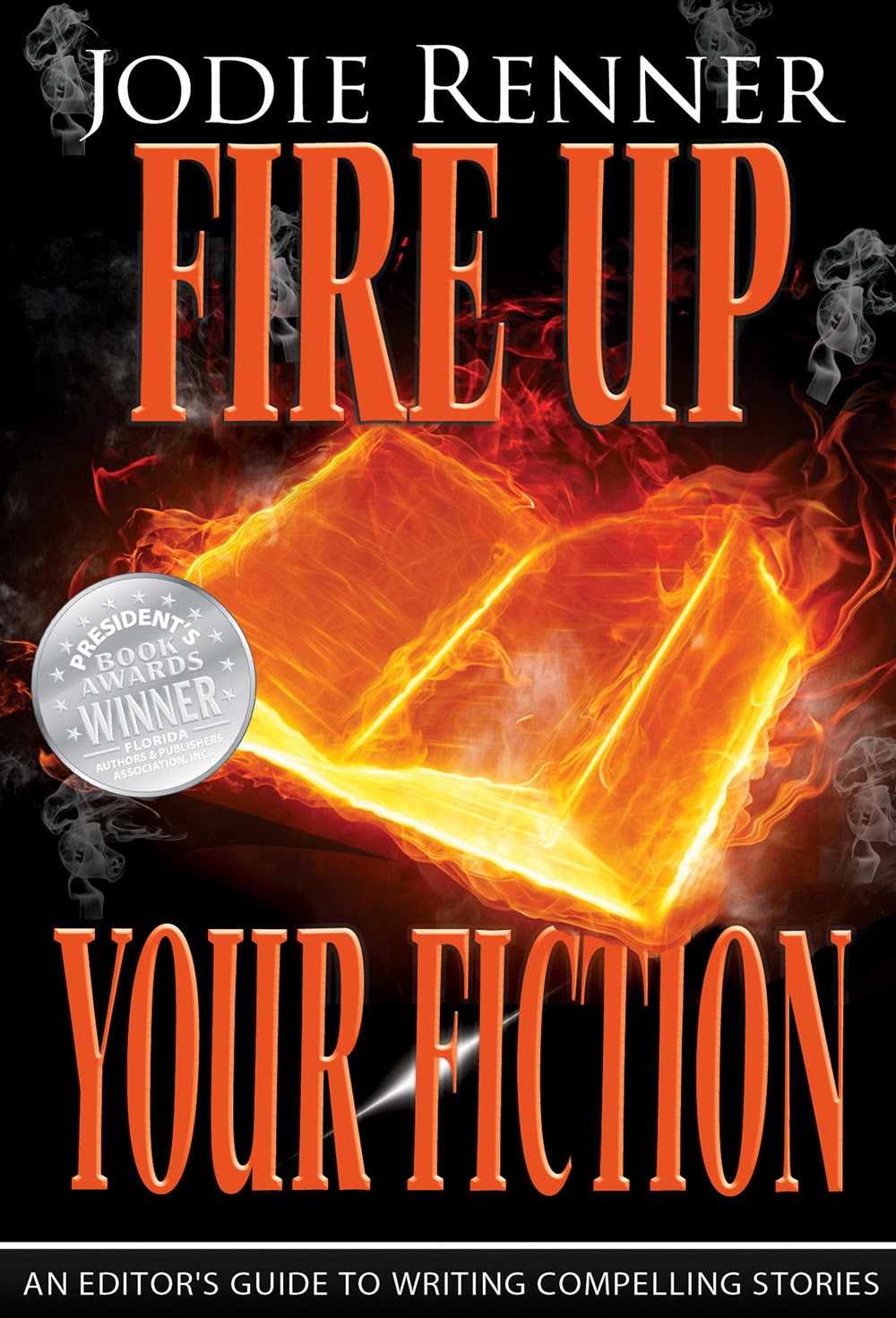
Not long ago, a complete stranger contacted me to ask if I’d like to add my writing guide Fire up Your Fiction (which, until recently, was titled Style That Sizzles & Pacing for Power) to a group promo he had planned to put 15 books, all related to writing, publishing, and promoting books, on sale for 99 cents each for one day.

I was flattered, and after checking out the organizer and the other books on the list, was eager to jump in, especially since I'd just changed the title of the book and it has won several honors recently.

Bryan Cohen turned out to be not only a nice person, but a creative, skilled and enthusiastic organizer, with lots of great promo ideas that really worked well. He created a Facebook page for the event as well as a page on his website, and enlisted us all to help promote it on our blogs and on Facebook, Twitter, Google+, etc. He asked us for possible giveaways and offered attendees/participants a chance to win prizes for sharing the event on Facebook and Twitter.

As a result of this great promo on February 28, which Bryan named "March to a Bestseller," all 15 participants had a significant increase in book sales, ratings on Amazon, and visibility. For a few hours of responding to readers on the event page on Facebook (my “shift”) and promoting the event on my blog and in social media, my sales for Fire up Your Fiction increased that day by about 20 times the normal daily average.


As well, the Amazon rating for the book rose to #1 in “writing skills” and #4 in two other categories and stayed there for a few days. And because the title was now at the top of the first page on Amazon, it was immediately visible to new readers doing a search for writing guides. which boosted sales to people who didn't know about the promo.


All in all, by participating in this group promo, besides increased sales, I gained a lot of new readers who hadn’t heard of my books before, with very little effort and no expense. And as a side benefit, my sales were also up on my other book, Writing a Killer Thriller, and more people signed up for my newsletter and blog. I received the benefit of exposure to new readers that I wouldn’t have been able to achieve on my own. And conversely, through my updates to 4,000 Facebook friends, my tweets to 1,300 Twitter followers, and my blog post on the event, I helped others in the group reach new readers and increase their book sales and exposure.

2. Join with other similar authors to create a boxed e-book set.

For a brilliant, highly successful example of the power of group promos, recently 12 mystery/thriller writers (Michele Scott, JF Penn, J Carson Black, Joshua Graham, Allan Leverone, Vincent Zandri, Carol Davis Luce, Diane Capri, Cheryl Bradshaw, M A Comley, Aaron Patterson & Ellie Ann, and Linda Prather) got together to combine 10 full-length novels and 2 long novellas into a “boxed” e-book set they’ve called Deadly Dozen, and priced it on Amazon-Kindle at only 99 cents -- for all 12 e-books combined!

The authors obviously aren’t doing this for immediate big bucks in royalty income – at .99 per sale, with 35% to the authors, that makes about 35 cents divided by 12 = less than 4 cents per author per sale! And I can only imagine the income tax nightmare! (Or maybe they’ve got that all figured out.) But each author is gaining significant visibility and recognition for their name and their title, and I’m sure they’re also all seeing increased sales in their other books.

This group did some clever, very effective advance publicity to arouse curiosity and anticipation, and their e-book set was then published on Feb. 12. By March 12, just one month later, it had reached the New York Times and USA Today bestselling lists! As of March 15, it’s ranked #24 of all Kindle books on Amazon.com, #2 in Kindle mysteries, and #5 in Kindle thrillers.

3. Explore other ways to gain recognition.

Some other great ways to get your name and book(s) out there are by writing interesting guest blog posts -- be sure to offer some kind of value to the readers -- Q&A interviews on blogs or in magazines, and presenting to writers' groups. In each case, other people will also promote your post or topic for you.

For example, someone else I didn’t know and hadn’t heard of (till then) recently contacted me about presenting a webinar at a virtual conference. This entailed quite a learning curve for me, as I’d never presented a webinar, and in fact have only viewed a few. In addition, they were suggesting using PowerPoint (with me talking in the corner), which I’ve never used before. We quickly agreed on a topic I’m very familiar with from my editing and writing, “Spark up Your Stories – Adding Tension, Suspense, & Intrigue.” That part was a breeze, as I drew material from my book,  Writing a Killer Thriller and my editing of thrillers, but the technological side of it all has been a real learning curve, starting with figuring out what equipment to purchase (a webcam – my PC doesn’t have one – and a headset with a microphone).

But now that I’ve got the techie stuff (almost) down and the Cyber Symposium for Editors & Writers is advertised, I will again get to benefit from the promotion efforts of everyone else involved with the virtual conference. So my own webinar could easily attract many participants from well outside my normal social media circles.

The take-away for me from both of my recent group events is to be open to people who contact me, even if I’ve never heard of them before, and don’t shy away from stepping outside your comfort zone!

4. Use the spin-off from book contests.

Finally, last week I found out that my book Fire up Your Fiction (Style That Sizzles) is a finalist in the ForeWord Reviews Book of the Year Awards, with the final winners to be announced June 27 at the annual American Library Association Conference. So ForeWord Reviews is now doing publicity for this book, and in addition, I’ve signed up to have this book displayed in their booth at the ALA conference in Las Vegas. This means more promotion of my book by others – and in this case by a well-respected, prestigious organization!

Other book awards Fire up Your Fiction has received (Silver medal in the FAPA President's Book Awards, Honorable Mention from Writer's Digest) have also increased its exposure and sales. And it looks like I'm a finalist in another book contest: IndieReader.com just posted a great review of Fire up Your Fiction on the first page of their website!

So indie authors, once you’ve written the best book you can and it's edited, revised and polished, with a professional-looking cover, be sure to develop a good social network and a positive, friendly  presence on social media – you never know what opportunities might come your way out of the blue! And be open to them! Chance favors the prepared mind!

 And if you think it's ready, it wouldn't hurt to enter it in a book contest or two.

Do you have any other great group promo ideas to tell us about? Anything that's worked for you or others? Share it in the comments below!

Jodie Renner has published two books to date in her series, An Editor’s Guide to Writing Compelling Fiction: Writing a Killer Thriller and Fire up Your Fiction (Style That Sizzles & Pacing for Power), which has been awarded two book honors and is a finalist for two more. Look for the third book in the series, Captivate Your Readers, out in mid to late 2014. For more info, please visit Jodie’s author website or editor website, her other blogs, The Kill Zone and Resources for Writers, or find her on Facebook, Twitter, and Google+. And sign up for her newsletter.

Friday, February 7, 2014

When Famous Author Promos Backfire

A conversation between Peg Brantley and L.J. Sellers

L.J.: You mentioned in our last conversation how much you liked Michael Connelly’s Mickey Haller series, and it reminded me that I’d recently encountered something surprising with that series. A promotional website posted a link on my Facebook page to the author’s short story, The Switchblade. (Which was odd and made me wonder if his publisher had hired them.)

More important, I went to Amazon to check out the short story and discovered that it has almost all one-star reviews. I was stunned! I read several, and they all have the same complaints: The story doesn’t have a real conclusion, and the ebook serves mostly as a promotion for Connelly’s next book, The Gods of Guilt. Both the short story and the novel are selling well, so was it effective? And even so, was it worth alienating some readers?

Peg: My guess would be no, soooo not worth it. I have become a huge fan of Michael Connelly and have to wonder what his publisher was thinking. By the way, while I’ve read a lot of mixed reviews on sites like DorothyL and For Mystery Addicts about The Gods of Guilt, but I enjoyed it.

But Connelly isn’t the only author who might be suffering repercussions from this new marketing tactic. I recently downloaded what I thought was a short story by Dean Koontz, another of my favorites. I was completely turned off when at some point (it was moving rather slowly for a short story) I figured out it was simply a marketing promotion for his next book. I never finished it. And it still leaves a bitter taste in my mouth.

L.J.: Readers hate that! Which makes me wonder whether the author knew what his publisher planned and if he had any say in the matter. I like to think that he didn’t and that he’s not happy about the situation. I know that publishers sometimes encourage (pressure?) authors to write short stories as between-book promos. And sometimes they want their authors to participate in new programs and formats.

Thomas & Mercer asked me to publish my last Jackson story as a serial because they were launching the new program and needed material for it. But it was my choice and I said no, that I would rather wait for a traditional release because that's what my readers expected and I didn't want to alienate even a few. Other publishers don’t give their authors as much control, which is why I would never sign with anyone but Amazon.

Peg: As you know I’m self-published and love the control it gives me. I establish content and cover and price and marketing. It isn’t always easy, but I don’t ever have to risk a publisher who is so focused on the bottom line they forget the reader. The future. The next book. If I have a win, it’s all mine, but so are my losses. I’ve watched you and others with Amazon and know they’d be my first choice as a publisher if I ever wanted to have a foot in both camps. I can’t see Amazon ever doing something that would be such a career game-changer without the full support of an author. Kudos to both them and you regarding the serial program.

L.J.: After I saw the one-star reviews with comments that said they would never buy another Connelly book, I thought, He should leave his publisher and go indie. Connelley has so many readers and so much clout that he could sign a deal with Ingram to get his self-pubbed print books into stores and make more money both in print and digital. If he had only his own profit to worry about—and not be concerned about Hatchette’s bottom line—he could be very successful as an indie and never have to participate in gimmicky promotions that piss off readers.

Peg: I totally agree! But I’m betting he has another consideration: What about his agent? Those bonds get sticky. I know they do. Maybe that’s another discussion?

L.J.: Lots of indie and hybrid authors have agents, who often secure foreign rights or negotiate contracts with new-age publishers and distributors. But with Connelly's Harry Bosch series finally debuting on Amazon Prime, maybe the author will feel empowered to make a break from his legacy publisher (Hachette). Maybe Amazon Publishing will be able to lure him away.

Readers: What do you think about these promotions? Has it made you drop an author?
Writers: How do you make short stories work as a promotion for your other books?

Tuesday, January 28, 2014

Amazon's KDP Select: The Verdict from a Newbie Skeptic

by A.M. Khalifa, thriller writer, Google+

Have you read The Jewish Neighbor?

I've been dragging my feet and avoiding test driving Amazon's optional KDP Select program that gives writers a set of preferential marketing tools in return for a 90-day period exclusivity to the Kindle Store. Even while hearing writers I respect and admire like L.J. Sellers and Jodie Renner singing its praises

I chose to go the indie route to be the master of my writing career. So understandably, the mere mention of someone else exercising exclusivity over my work triggers an allergic reaction. I want my ebooks to be available to readers through all outlets like Kobo, Nook, Sony and Apple, and not just Amazon.

Having said that, I've always been attracted to KDP Select's free book promotion tool. Until quite recently, the high ranking attained on Amazon's bestseller lists during the free promotional period could be converted to paid sales after the promotion ends. But in their excellent resource for indie publishing, Write. Publish. Repeat, Sean Platt, Johnny B. Truant, and David Wright explain how in 2013 Amazon shuffled the rules of the free book promotion, which effectively broke this ability to convert high ranking to sales.

Despite that, I finally bit the bullet. I was curious enough to give KDP Select a shot with a recent novella I published, The Jewish Neighbor. I figured the only way to find out how Select really works is to try it. And since this piece had been lingering on my blog collecting digital dust for many months with little feedback, I had nothing to lose.

To cut a long story short, the results were outstanding. The book was downloaded thousands of times across all of Amazon's territories, but no where more than Amazon UK. It's about a Syrian woman who accepts an arranged marriage to an exile in London to escape the horrors of the civil war ravaging her country, only to find herself in an equally grim situation, with the only tenderness coming from the least expected person - her Jewish neighbor. So it made sense there would be keen interest from Britain. But I also broke ground in places like Amazon Germany, Canada, India and France, which was a first for me. 

Things got even more interesting after the free promotion ended. The Jewish Neighbor started climbing up the ranks in Amazon's paid bestseller categories in both the US and the UK. It hit number 500 of all of Amazon UK's paid kindle content, and then lodged itself as the number 1 bestseller in the inspirational romance category for at least a week. And also locked in second slot on Jewish-themed literature for a few days.

All in all, I sold more copies of that piece than my entire one year writing-career, across all of my titles. At one point I was selling thirty copies of The Jewish Neighbor every hour.

But it didn't stop there. This unexpected performance started funneling customers to my other titles. My overall sales spiked, including my flagship content, my debut novel, Terminal Rage. The daily sales average of that quadrupled compared to how it usually performs on any given day, no doubt as a result of the increased exposure.

So what's the verdict, from a new writer and a former skeptic like me? 

KDP Select is an incredibly powerful marketing tool for indie writers. But it's not for everyone and not for all your content. I don't think it makes strategic sense for a first time writer just wetting their feet to put their debut offering on KDP Select, denying themselves the opportunity to explore the overall landscape. The program seems better suited for writers with a larger body of work who can afford to make certain works exclusive to Amazon, without alienating users of other platforms.

In my case, hot on the heels of The Jewish Neighbor's success, I enrolled many of my other similar titles in the program, leaving out for now my full-length novel, Terminal RageI still like the unlimited free promotions you can do on Kobo, as opposed to Select's limitation to a maximum of five days free promotion every 90-day enrollment period. And I have to admit, I have a soft spot for Kobo and the openness of their platform. Unlike my perception of Nook, I don't want to discount them for dead just yet. Being the smallest of the three main players, they also try harder. At the Frankfurt Bookfair last October they were serving free crab cakes, chardonnay and awesome teal-colored tote bags that make me a huge hit with supermarket cashiers in Rome.  

Then again, I may wake up one day and realize that five days of KDP Select every 90 days are far more valuable than 365 on Kobo. I will keep you posted.

The way I see it, Kobo, Nook, Apple, Sony and Smashwords all have their niche segments of the market. But you can't be an indie writer today and fail to notice that Amazon is increasingly where it's at.

Writers, what have your experiences been with KDP Select, and if you've been on the fence like me, have I managed to sway you to at least try it once? And readers, have you discovered literary gems through free downloads?

Sign up to my newsletter below to get:

 exclusive free fiction
 writing tips
 publishing insight
 Hollywood for writers: exciting insight on the film adaptation of Terminal Rage as it happens
 counter-terrorism scoops and analysis
 book giveaways and competitions

* indicates required field


Special Offer! My sizzling-hot short story, The Egyptian Affair is available for free, for a limited period on Kobo.

A.M. Khalifa's critically acclaimed debut novel, Terminal Rage, was recently described by Publishers Weekly as "dizzying, intricate, and entertaining."  He lives in Rome, Los Angeles, and Sydney, sometimes at the same time.

The ebook version of Terminal Rage is now on sale for $0.99 on Amazon.


Thursday, February 23, 2012

Do You Know How To Sell?

by C.J. West
Last week I attended a webinar on e-book marketing and was really struck by something the presenter said. “Amazon knows how to sell stuff and they don’t care if they sell your book or James Patterson’s book or a toaster.”

Amazon is a marketing machine and they flex their muscle for big guys and little guys alike.

The immediate contrast for me was Smashwords. Don’t get me wrong, I love Smashwords. They convert and distribute books amazingly well. But I’m thinking of the Smashwords storefront. It doesn’t sizzle. At all. If you buy something from Smashwords, it’s because the author sent you there on a mission. You bought the book because you really wanted it. You weren’t sold.


A few weeks back I told you about the owner of a small store who turned her back on me to sell a customer something by one of the industry heavyweights. Four different books actually. Her reputation with the customer was too important for her to take a risk on me. The only way she would sell one of my books was if I brought the customer to her store to purchase it.

This model does not work. If I have to find the customer, bring them to the store, and sell them the book, what on earth do I need the store for?

At that point in the seminar I realized two things.

First, Amazon can help me reach well beyond my established audience.

Second, I’m the Smashwords of author marketing. Bear with me and I’ll show you what I mean.

There are two groups of people who buy my books. People who have read my work and their friends. My audience has grown steadily, but it takes time to read a book. Sometimes readers have a novel on their TBR pile for a year before reading. By the time they read and recommend that one, I’ve written three more.

When I say I’m the Smashwords of author marketing, I mean that I’m selling books to people who have already been convinced to buy. I could sell them my books at Smashwords or even in that little indie bookstore because they really want a particular book and they are going out (electronically or physically) to get it.


To be successful, we need to captivate folks who are casually browsing. Most authors have turned their books face out on a store bookshelf, but what have you done to make your books stand out on the digital bookshelf?

This week I’ve made great strides and I’ll share some of the things I’ve done.

The most important real estate I own is twelve pages on Amazon that describe my books and allow readers to buy them. This week I revved up the copy on all twelve pages with quotes and improved the readability.

Next, I evaluated my keywords and categories. I discovered that some had been entered incorrectly. Some of my keywords were laughable in SEO circles. I fixed those and by doing that I hope to improve the chances of being found. Remember, when readers are searching millions of times, any minor improvement can mean a perceptible change in sales.

In the next few weeks I’ll be evaluating my covers. I’m thinking about rebranding my entire line of books, but haven’t pulled the trigger yet. We’ve all heard dozens of times how important covers are, but until this week I never realized how much my covers could be holding me back. Covers need to captivate the casual browser and mine just don’t do that.

Finally, the most important thing was to run an Amazon KDP free book promotion. Last week I gave away Addicted To Love for 5 days. It hit #2 in the Free Kindle Store. Since my last blog here at CFC, I have “sold” over 65,000 copies of that book alone.

In the coming months I hope to shed the marketing doldrums and add a whole lot more sizzle.

What have you done to make your books stand out?


CJ is giving away 12 Kindle Fire e-readers this year and will be offering several free books. If you’d like to be advised of his free book promotions sign up for his newsletter or enter the Kindle Fire contest at www.22wb.com.

Friday, November 18, 2011

Re-Branding: Without The Sex Club

By L.J. Sellers, author of provocative mysteries & thrillers
I rarely use this forum to talk about my books, but recently I made a decision about my series that involves the broader topics of branding and reader perception.

In this evolving industry, writers must adapt quickly as well as continuously search for new ways to reach new readers. In that mode, I’ve decided to re-brand my Detective Jackson series by listing Secrets to Die For as the primary book and creating a new cover for it.
 
The first book on my Jackson list used to be The Sex Club, a title I've come to believe turns away as many readers as it draws in. The story has served me well, and thousands of readers have loved it. It will always be a favorite, and I'll continue to sell it. When I only had a few books on the market, it was an important part of my work.

But now that I'm about to launch my 10th book, and I'm poised to reach a huge new audience, I've decided I don't want The Sex Club to be the first thing new readers see about me. I don't want to be defined—and possibly rejected—by this title.

I considered simply changing the name, but thousands of people have read it—and loved it—and I'm not willing to annoy my faithful readers who might buy the story again with a new title, not realizing they've already read it. And a new title wouldn’t alter the content, which is equally disturbing to some conservative readers.

So I’m moving The Sex Club into my standalone thriller column. The truth is when I wrote the novel, it was intended to be a standalone with dual protagonists. Then at some point, it occurred to me the detective would make a great series character. When I wrote Secrets to Die For three years later, I based it on the Jackson character, thinking I’d try to make a series of it. So Secrets is really the first book I intended as the start of a series. Of course, readers can begin with either one.

In simple terms, this is a very competitive market with ebooks selling for $.99 and $2.99, and I can’t afford to alienate thousands of potential readers with one little word.

This has been a huge undertaking. I'm not only creating a whole new website, I also had to make a change in my "titles list" and republish each of my ebooks. I've also had to redo my bio everywhere it's posted online! And I'm sure I haven't found them all yet.

But with millions of new people joining the e-reading revolution, I think this move makes sense. What do think of this re-branding decision? Brilliant or cowardly? Worthwhile or waste of time?

Friday, April 29, 2011

Book Promotion and Reader Trust

by L.J. Sellers

Authors may feel pressured to invent new ways to promote their work, but unfortunately, some tactics are less ethical than others. We’ve all heard complaints from readers about five-star reviews written by the author’s family, but now some novelists have taken Amazon-ranking manipulation to a new level by gifting books to readers.

What’s wrong with giving away books? Nothing, in theory. I’ve given away hundreds of copies of my novels, both print and digital. But when an author gifts a book through Amazon, the transaction counts as a sale, and a lot of sales all at once can push a book higher in the rankings. Better visibility then results in more sales. I understand the motivation to do this, yet it strikes me as deceptive. The practice leads readers to purchase the book based on the assumption that many other readers have already done so. If readers knew the author was the main buyer of those copies, they might make a different decision.

So what is ethical and what is not? Having a friend or two read your book and post good reviews on various forums seems fine. For myself, I rarely solicit reviews, I’ve never asked anyone to post a review they didn’t fully support, and none of my family members have ever posted reviews of my novels. (At least not that I know about. If they’re posting anonymously, it might explain a few things. :) But having friends post five-star reviews of a book they didn’t read or didn’t like is not okay. Directly giving away copies of your books in any format is great promotion and lots of fun, but buying your own books to manipulate rankings is probably not a good idea.

As a guideline, I believe anything that would make a reader feel manipulated or lied to should be avoided. A lot of book promotion falls into a huge gray area of social networking and doesn’t have clear boundaries. For example, it's typically okay to talk about your books if someone else brings them up, but readers hate it when writers sidetrack a discussion to talk about their own novels. They get annoyed when writers anonymously start discussions about their work. Writers can openly start discussions about their work...if they've been participating in the forum long enough to make friends. It's a delicate social balance.

Some readers have become super sensitive to this trend. Last month, a reader started a thread about my Jackson books, just because she loved the series and wanted to share her discovery. Another forum participant immediately assumed I, or someone connected to me, had initiated the thread. I’ve never done that and the participant had no reason to believe I would, but clearly, enough authors engage in that sort of thing to make all of us look bad. I was delighted when other participants defended both me and my series, but the incident made me aware that writers as a group are developing a problem with reader trust.

Here’s another gray area: When is it okay to add someone to your email database? I’ve always assumed that if readers contact me about my novels or enter a contest to win a book, they'll expect me to add them to my newsletter file. Once they receive my mailing, which only goes out to announce new releases, they can immediately unsubscribe. Yet, this is not a clear area, and some readers may not want to be emailed without explicit permission. I’m still grappling with the ethics of this tactic.

This subject could be endless, so I’ll only bring up one more point. Writers who use Facebook and Twitter to exclusively promote their work do themselves more harm than good. It’s spam. Sending people you don’t really know invitations to read your work is also spam.

I’m not perfect, and I’ve made mistakes along the way. This post is intended to not only encourage authors to be ethical in their promotion but also to let readers know their trust is important to me.

Readers: What else do you consider annoying or unethical?
Writers: What has been your experience with these situations?

L.J. Sellers writes the bestselling Detective Jackson mysteries and standalone thrillers