By L.J. Sellers, author of provocative mysteries & thrillers
Net neutrality is a simple concept—we all have equal access to the internet. Yet the underlying structure is complex, and recent FCC proposals could negatively affect us all. Particularly authors who depend on internet exposure to make a living.
The latest proposal: The FCC wants to allow networks and carriers (Comcast!) to create fast lanes, in which certain content providers who pay for the privilege are given preferential treatment. Internet service providers (ISPs) have wanted this for a long time because it gives them the ability to speed up or slow down traffic to certain websites and increase their profit.
Essentially, those who can pay (Google, YouTube, Amazon) will get faster service and more internet visibility, and those who can’t (individuals, startups, artists) will be left with crumbs. Even without digging into specific examples, this seems inherently wrong. According to an article in the Huffington Post, “the net effect will be to tie creators to a small number of large platforms, reduce the choice and leverage of independent artists relative to corporate media, and make it harder for new or marginalized voices to be heard.”
And when you consider that Comcast is about to merge with Time Warner to become a major ISP and is the only ISP available in certain areas, the idea of giving Comcast even more control of the internet seems like a really bad idea. Concentrating power in the hands of a few is always dangerous.
This isn't just about myself as an author/entrepreneur, but as a consumer with a curious intellect who wants to be able to access a vast array of ideas on the internet—with equal speed.
The FCC seems to have lost its mind on both decisions. My personal opinion it that it should block the merger and drop the fast-lane idea. Consumers, who depend on the internet for information, social networking, and many purchases (books!), need a choice of providers and a level playing field.
Showing posts with label Amazon. Show all posts
Friday, April 25, 2014
Has the FCC Lost Its Mind?
Labels:
Amazon,
Comcast,
fast lanes,
FCC,
Google,
merger,
net neutrality,
Time Warner,
YouTube
Thursday, April 3, 2014
Shameless Self Promotion
Every once in a while we, as authors, have to do this. We spend countless hours alone with a computer and so we get excited when good things happen and we like to share them. I have been struggling for nearly five months to get my first audio book completed and released. Now it's time to let the world know.
I decided to go the independent route and have it done in a studio with a professional narrator. It seemed like a good idea at the time. I'm not complaining about that choice. In fact, it was a wonderful experience. I sat for several days listening to the the narrator as she read and stopping her when necessary to fix things. I learned a lot and gained a new respect for narrators. The whole process was totally fascinating.
After meeting every day in the studio from early morning to late night, the narrator left and I stayed with the engineer to finish it up. Then I joined my family for Thanksgiving dinner, thrilled with what we had accomplished.
However, when I submitted it to ACX (Amazon's audio division) they rejected it because it wasn't mastered quite right. At that time I had no idea what that really meant. It took me another four months to get the audio mastered correctly and re-submitted to ACX. Some of the time delay was just bad luck. (The original engineer was hospitalized and out of commission for some time.) ACX said they would review it and get back to me. I was told the process would take ten days to two weeks. Three weeks later, I was about to call back to see if I needed to go back to the drawing board, when I discovered it had been released for two days and I had already sold quite a few copies. Yay!
So, today my first book, The Advocate, is available on Amazon, Audible, and iTunes. Now I have the other four books in production, although I have chosen to take a different route this time for many reasons.
Teresa Burrell
Author of The Advocate series
I decided to go the independent route and have it done in a studio with a professional narrator. It seemed like a good idea at the time. I'm not complaining about that choice. In fact, it was a wonderful experience. I sat for several days listening to the the narrator as she read and stopping her when necessary to fix things. I learned a lot and gained a new respect for narrators. The whole process was totally fascinating.
After meeting every day in the studio from early morning to late night, the narrator left and I stayed with the engineer to finish it up. Then I joined my family for Thanksgiving dinner, thrilled with what we had accomplished.
However, when I submitted it to ACX (Amazon's audio division) they rejected it because it wasn't mastered quite right. At that time I had no idea what that really meant. It took me another four months to get the audio mastered correctly and re-submitted to ACX. Some of the time delay was just bad luck. (The original engineer was hospitalized and out of commission for some time.) ACX said they would review it and get back to me. I was told the process would take ten days to two weeks. Three weeks later, I was about to call back to see if I needed to go back to the drawing board, when I discovered it had been released for two days and I had already sold quite a few copies. Yay!
So, today my first book, The Advocate, is available on Amazon, Audible, and iTunes. Now I have the other four books in production, although I have chosen to take a different route this time for many reasons.
Teresa Burrell
Author of The Advocate series
Labels:
ACX,
Amazon,
Audible,
iTunes,
narrator,
thanksgiving,
The Advocate
Friday, February 28, 2014
Jackson Goes to Germany
by L.J. Sellers, author of provocative mysteries & thrillers
The most exciting thing in publishing now is the ability to easily reach readers around the world. My royalty statements from Thomas & Mercer include payments from the UK, Canada, Germany, and Australia. The statement also has label-lines for China, Japan, Brazil, India, and Mexico. These are all places where Amazon has launched online Kindle stores, and I know it’s only a matter of time before I start seeing sales in those markets too. The amounts are small, but I love that people in Brazil may soon be reading my Detective Jackson series.
Even more exciting, the series will launch in the German language next month. The first book, The Sex Club, has been retitled Gefahrliche Tugend, which translates to Dangerous Virtue, and will be released March 4. I have a friend who reads in German and will let me know what she thinks of the translation.
My German editor is very excited about the series and thinks it will be a bestseller. I already belong to the International Association of Crime Writers (just because I like the way it sounds), but how fun it will be to someday add “international bestseller” to my bio.
I’m happy to report that Amazon Crossing decided to keep all the original covers—with slight modifications to comply with local marketing regulations. Which tells me that we did a good job with the covers and that they have a universal appeal.
On a similar note, I recently heard from a reader who asked when my series would be available in Spanish. That seems like an even bigger market, and I plan to suggest to my publisher that they consider more translations. For now though, Secrets to Die For (Jackson #2) is currently being translated into German and will likely release in that language this summer.
As long as I’m blatantly talking about my books, I might as well share that my publisher recently sent me a plaque and encased copy of Secrets to Die For—because I passed 100,000 copies sold. They had it on sale for $.99 in both the US and UK for a long time!
Readers: Do you ever read books in another language?
Writers: Have you released books in the German market? Or considered a Spanish version?
The most exciting thing in publishing now is the ability to easily reach readers around the world. My royalty statements from Thomas & Mercer include payments from the UK, Canada, Germany, and Australia. The statement also has label-lines for China, Japan, Brazil, India, and Mexico. These are all places where Amazon has launched online Kindle stores, and I know it’s only a matter of time before I start seeing sales in those markets too. The amounts are small, but I love that people in Brazil may soon be reading my Detective Jackson series.
Even more exciting, the series will launch in the German language next month. The first book, The Sex Club, has been retitled Gefahrliche Tugend, which translates to Dangerous Virtue, and will be released March 4. I have a friend who reads in German and will let me know what she thinks of the translation.
My German editor is very excited about the series and thinks it will be a bestseller. I already belong to the International Association of Crime Writers (just because I like the way it sounds), but how fun it will be to someday add “international bestseller” to my bio.
I’m happy to report that Amazon Crossing decided to keep all the original covers—with slight modifications to comply with local marketing regulations. Which tells me that we did a good job with the covers and that they have a universal appeal.
On a similar note, I recently heard from a reader who asked when my series would be available in Spanish. That seems like an even bigger market, and I plan to suggest to my publisher that they consider more translations. For now though, Secrets to Die For (Jackson #2) is currently being translated into German and will likely release in that language this summer.
As long as I’m blatantly talking about my books, I might as well share that my publisher recently sent me a plaque and encased copy of Secrets to Die For—because I passed 100,000 copies sold. They had it on sale for $.99 in both the US and UK for a long time!
Readers: Do you ever read books in another language?
Writers: Have you released books in the German market? Or considered a Spanish version?
Friday, February 21, 2014
Keywords: What Are They Good For?
Another conversation between L.J. Sellers and Peg Brantley... and you!
Peg: There are a few words that strike terror in my heart. Two of them are "SEO" and "keywords." I've read articles, looked at online lists, brainstormed so hard that what's left of my brain flew out the window, and even purchased software. And someone recommends switching categories. Like what? Switch my police procedural to what? Tender romance? I recently changed my keywords on each of my books. How important are they?
L.J: Recent discussions between Thomas & Mercer authors say they’re not as important as they have been in the past. And I’ve noticed that whenever I read articles or paid-advice about keywords, the information always seems to be geared toward nonfiction, where they seem to be more important. I believe that’s because in nonfiction there are more possibilities for categorizing the topics.
Fiction seems to be less complicated. Advice I’ve read recently suggests keywords should simply be the genre, sub-genre, sub-sub-genre, (thriller, international thriller, police procedural), then a few broad topics that readers might search for to find your book (FBI agents, survivalists, hackers).
Peg: So keywords have gone from being the darlings to the stepchildren? Ugh. Like choosing between butter and margarine… Can I forget about them then? Or do they still play some kind of supporting role in my book sales?
L.J.: I’m sure there are authors who still swear by keywords, but I’ve experimented with them in books' metadata, in Amazon’s 7 allowed keywords, and in books' descriptions. None of it made a difference. Except for genre. After listing a main critical category—such as police procedural—I chose a less crowded one such as international thriller. That allows The Trigger to make the top-100 with fewer sales and remain visible to readers.
In another author forum, someone mentioned that the new trick is to stick as many keywords as possible into the space between commas. Like this: love romance sweet love NA young couple summer love may to december love, literary romance romantic suspense passion couples intimacy, ….. and so on. But key phrases should match user searches, so I’m not sure how effective that is.
Another author commented that she had updated and added keywords, and her rankings went down. Which could be coincidental, or maybe fewer readers could find her book because she’d deleted or changed her most effective key/search word without realizing it. With seven possibilities, you would have to be methodical about experimenting with them one at a time and documenting results.
For those who want a thorough discussion, M. Louise Louisa Locke has written a series of blogs on the subject.
Writers, have you gained some expertise you'd like to share regarding keywords?
Readers, how often do you actually search Amazon using a keyword?
Peg: There are a few words that strike terror in my heart. Two of them are "SEO" and "keywords." I've read articles, looked at online lists, brainstormed so hard that what's left of my brain flew out the window, and even purchased software. And someone recommends switching categories. Like what? Switch my police procedural to what? Tender romance? I recently changed my keywords on each of my books. How important are they?
L.J: Recent discussions between Thomas & Mercer authors say they’re not as important as they have been in the past. And I’ve noticed that whenever I read articles or paid-advice about keywords, the information always seems to be geared toward nonfiction, where they seem to be more important. I believe that’s because in nonfiction there are more possibilities for categorizing the topics.
Fiction seems to be less complicated. Advice I’ve read recently suggests keywords should simply be the genre, sub-genre, sub-sub-genre, (thriller, international thriller, police procedural), then a few broad topics that readers might search for to find your book (FBI agents, survivalists, hackers).
Peg: So keywords have gone from being the darlings to the stepchildren? Ugh. Like choosing between butter and margarine… Can I forget about them then? Or do they still play some kind of supporting role in my book sales?
L.J.: I’m sure there are authors who still swear by keywords, but I’ve experimented with them in books' metadata, in Amazon’s 7 allowed keywords, and in books' descriptions. None of it made a difference. Except for genre. After listing a main critical category—such as police procedural—I chose a less crowded one such as international thriller. That allows The Trigger to make the top-100 with fewer sales and remain visible to readers.
In another author forum, someone mentioned that the new trick is to stick as many keywords as possible into the space between commas. Like this: love romance sweet love NA young couple summer love may to december love, literary romance romantic suspense passion couples intimacy, ….. and so on. But key phrases should match user searches, so I’m not sure how effective that is.
Another author commented that she had updated and added keywords, and her rankings went down. Which could be coincidental, or maybe fewer readers could find her book because she’d deleted or changed her most effective key/search word without realizing it. With seven possibilities, you would have to be methodical about experimenting with them one at a time and documenting results.
For those who want a thorough discussion, M. Louise Louisa Locke has written a series of blogs on the subject.
Writers, have you gained some expertise you'd like to share regarding keywords?
Readers, how often do you actually search Amazon using a keyword?
Labels:
Amazon,
categories,
keywords,
L.J. Sellers,
Peg Brantley,
sales ranking,
SEO,
Thomas & Mercer
Friday, January 31, 2014
Ebook Boxed Sets: Good Idea or No?
A conversation between L.J. Sellers and Peg Brantley. Join us in the comments section!
Peg: After my first book was published in early 2012, I became aware of a different kind of marketing tool—boxed sets for ebooks. I couldn’t wait until I had at least three books out so that would be an option for me to gain readers and new sales. Well, now I have three books. They’re not a series but they do have common geography and overlapping characters, so they would probably work as a set. And then I noticed that L.J. had never offered a set and I wondered what she thought of the idea.
L.J: I was just getting ready to combine the first three Jackson books in a set when I received an offer from Thomas & Mercer. I signed the contract and let go of control. Later, when I suggested to my marketer that we create a boxed set featuring the first book of several authors' series, she said Amazon didn’t offer those. Her reason was that their data indicated customers didn’t read all the way through longer ebook files, and that “wasn’t a good customer experience.” I guess it depends on how many novels you include and whether the books are similar enough in content and quality to hold a reader’s interest. But I’m still curious to know if a boxed set from a single author could expand sales and/or readership.
Peg: That’s interesting. As far as single author experiences go, look at Wool by Hugh Howey. I admit I was a bit surprised that my ebook seemed to go on and on, but I loved the story. And, although it wasn’t a boxed set, I devoured all of Michael Connelly’s Lincoln Lawyer series one right after the other before his latest release. So I’m not sure I agree with Amazon’s statement about longer ebook files not being a good customer experience.
L.J: Just because Amazon doesn’t offer boxed sets doesn’t mean it isn’t a good idea. Other writers have collaborated to create such offerings. Recently for example, Joe Konrath and five other authors released a boxed set of horror stories. It’s been in the top 300, and is currently at #803 in the whole Kindle store, so it’s selling hundreds of copies a day. But they’ve priced it at $.99, so no one’s making money on it. But they may be gaining new readers, and/or they may plan to increase the price very shortly. All six of those authors have many other books on the market, so they can afford to have one novel as a promotional giveaway. Not everyone can do that and still make a living.
Peg: That sounds intriguing. I like the idea of multiple-author boxed sets. Each author would likely pull in a few different readers who would then be exposed to different writers and their styles. And doesn’t selling hundreds of copies a day sort of bury the idea that it isn’t a good customer experience?
L.J.: Not necessarily. Buying a product is only the first step. And most people who read digitally buy many more books than they will ever consume. If those readers only get through one or two of the six stories, then the other authors don’t benefit.
But to a certain extent, you’re right. Just because Amazon labels it “not a good experience” doesn’t mean it’s a bad experience for consumers, who still get a great deal on ebooks. Amazon just has very high standards! We authors, on the other hand, tend to focus on sales as a measure of a book’s success. Still, I want people to read my novels, not just buy them. I think limiting a boxed set to three might the perfect middle ground.
Readers: Do you buy these sets? Do you read all the way through?
Writers: What has your experience been?
Peg: After my first book was published in early 2012, I became aware of a different kind of marketing tool—boxed sets for ebooks. I couldn’t wait until I had at least three books out so that would be an option for me to gain readers and new sales. Well, now I have three books. They’re not a series but they do have common geography and overlapping characters, so they would probably work as a set. And then I noticed that L.J. had never offered a set and I wondered what she thought of the idea.
L.J: I was just getting ready to combine the first three Jackson books in a set when I received an offer from Thomas & Mercer. I signed the contract and let go of control. Later, when I suggested to my marketer that we create a boxed set featuring the first book of several authors' series, she said Amazon didn’t offer those. Her reason was that their data indicated customers didn’t read all the way through longer ebook files, and that “wasn’t a good customer experience.” I guess it depends on how many novels you include and whether the books are similar enough in content and quality to hold a reader’s interest. But I’m still curious to know if a boxed set from a single author could expand sales and/or readership.
Peg: That’s interesting. As far as single author experiences go, look at Wool by Hugh Howey. I admit I was a bit surprised that my ebook seemed to go on and on, but I loved the story. And, although it wasn’t a boxed set, I devoured all of Michael Connelly’s Lincoln Lawyer series one right after the other before his latest release. So I’m not sure I agree with Amazon’s statement about longer ebook files not being a good customer experience.
L.J: Just because Amazon doesn’t offer boxed sets doesn’t mean it isn’t a good idea. Other writers have collaborated to create such offerings. Recently for example, Joe Konrath and five other authors released a boxed set of horror stories. It’s been in the top 300, and is currently at #803 in the whole Kindle store, so it’s selling hundreds of copies a day. But they’ve priced it at $.99, so no one’s making money on it. But they may be gaining new readers, and/or they may plan to increase the price very shortly. All six of those authors have many other books on the market, so they can afford to have one novel as a promotional giveaway. Not everyone can do that and still make a living.
Peg: That sounds intriguing. I like the idea of multiple-author boxed sets. Each author would likely pull in a few different readers who would then be exposed to different writers and their styles. And doesn’t selling hundreds of copies a day sort of bury the idea that it isn’t a good customer experience?
L.J.: Not necessarily. Buying a product is only the first step. And most people who read digitally buy many more books than they will ever consume. If those readers only get through one or two of the six stories, then the other authors don’t benefit.
But to a certain extent, you’re right. Just because Amazon labels it “not a good experience” doesn’t mean it’s a bad experience for consumers, who still get a great deal on ebooks. Amazon just has very high standards! We authors, on the other hand, tend to focus on sales as a measure of a book’s success. Still, I want people to read my novels, not just buy them. I think limiting a boxed set to three might the perfect middle ground.
Readers: Do you buy these sets? Do you read all the way through?
Writers: What has your experience been?
Labels:
Amazon,
boxed sets,
ebooks,
Joe Konrath,
L.J. Sellers,
Peg Brantley,
promotion,
Thomas & Mercer
Tuesday, January 28, 2014
Amazon's KDP Select: The Verdict from a Newbie Skeptic
by A.M. Khalifa, thriller writer, Google+
Having said that, I've always been attracted to KDP Select's free book promotion tool. Until quite recently, the high ranking attained on Amazon's bestseller lists during the free promotional period could be converted to paid sales after the promotion ends. But in their excellent resource for indie publishing, Write. Publish. Repeat, Sean Platt, Johnny B. Truant, and David Wright explain how in 2013 Amazon shuffled the rules of the free book promotion, which effectively broke this ability to convert high ranking to sales.
I've been dragging my feet and avoiding test driving Amazon's optional KDP Select program that gives writers a set of preferential marketing tools in return for a 90-day period exclusivity to the Kindle Store. Even while hearing writers I respect and admire like L.J. Sellers and Jodie Renner singing its praises.
I chose to go the indie route to be the master of my writing career. So understandably, the mere mention of someone else exercising exclusivity over my work triggers an allergic reaction. I want my ebooks to be available to readers through all outlets like Kobo, Nook, Sony and Apple, and not just Amazon.
Having said that, I've always been attracted to KDP Select's free book promotion tool. Until quite recently, the high ranking attained on Amazon's bestseller lists during the free promotional period could be converted to paid sales after the promotion ends. But in their excellent resource for indie publishing, Write. Publish. Repeat, Sean Platt, Johnny B. Truant, and David Wright explain how in 2013 Amazon shuffled the rules of the free book promotion, which effectively broke this ability to convert high ranking to sales.
Despite that, I finally bit the bullet. I was curious enough to give KDP Select a shot with a recent novella I published, The Jewish Neighbor. I figured the only way to find out how Select really works is to try it. And since this piece had been lingering on my blog collecting digital dust for many months with little feedback, I had nothing to lose.
To cut a long story short, the results were outstanding. The book was downloaded thousands of times across all of Amazon's territories, but no where more than Amazon UK. It's about a Syrian woman who accepts an arranged marriage to an exile in London to escape the horrors of the civil war ravaging her country, only to find herself in an equally grim situation, with the only tenderness coming from the least expected person - her Jewish neighbor. So it made sense there would be keen interest from Britain. But I also broke ground in places like Amazon Germany, Canada, India and France, which was a first for me.
Things got even more interesting after the free promotion ended. The Jewish Neighbor started climbing up the ranks in Amazon's paid bestseller categories in both the US and the UK. It hit number 500 of all of Amazon UK's paid kindle content, and then lodged itself as the number 1 bestseller in the inspirational romance category for at least a week. And also locked in second slot on Jewish-themed literature for a few days.
All in all, I sold more copies of that piece than my entire one year writing-career, across all of my titles. At one point I was selling thirty copies of The Jewish Neighbor every hour.
But it didn't stop there. This unexpected performance started funneling customers to my other titles. My overall sales spiked, including my flagship content, my debut novel, Terminal Rage. The daily sales average of that quadrupled compared to how it usually performs on any given day, no doubt as a result of the increased exposure.
All in all, I sold more copies of that piece than my entire one year writing-career, across all of my titles. At one point I was selling thirty copies of The Jewish Neighbor every hour.
But it didn't stop there. This unexpected performance started funneling customers to my other titles. My overall sales spiked, including my flagship content, my debut novel, Terminal Rage. The daily sales average of that quadrupled compared to how it usually performs on any given day, no doubt as a result of the increased exposure.
So what's the verdict, from a new writer and a former skeptic like me?
KDP Select is an incredibly powerful marketing tool for indie writers. But it's not for everyone and not for all your content. I don't think it makes strategic sense for a first time writer just wetting their feet to put their debut offering on KDP Select, denying themselves the opportunity to explore the overall landscape. The program seems better suited for writers with a larger body of work who can afford to make certain works exclusive to Amazon, without alienating users of other platforms.
In my case, hot on the heels of The Jewish Neighbor's success, I enrolled many of my other similar titles in the program, leaving out for now my full-length novel, Terminal Rage. I still like the unlimited free promotions you can do on Kobo, as opposed to Select's limitation to a maximum of five days free promotion every 90-day enrollment period. And I have to admit, I have a soft spot for Kobo and the openness of their platform. Unlike my perception of Nook, I don't want to discount them for dead just yet. Being the smallest of the three main players, they also try harder. At the Frankfurt Bookfair last October they were serving free crab cakes, chardonnay and awesome teal-colored tote bags that make me a huge hit with supermarket cashiers in Rome.
Then again, I may wake up one day and realize that five days of KDP Select every 90 days are far more valuable than 365 on Kobo. I will keep you posted.
The way I see it, Kobo, Nook, Apple, Sony and Smashwords all have their niche segments of the market. But you can't be an indie writer today and fail to notice that Amazon is increasingly where it's at.
Writers, what have your experiences been with KDP Select, and if you've been on the fence like me, have I managed to sway you to at least try it once? And readers, have you discovered literary gems through free downloads?
Sign up to my newsletter below to get:
★ exclusive free fiction
★ writing tips
★ publishing insight
★ Hollywood for writers: exciting insight on the film adaptation of Terminal Rage as it happens
★ counter-terrorism scoops and analysis
★ book giveaways and competitions
* indicates required field

A.M. Khalifa's critically acclaimed debut novel, Terminal Rage, was recently described by Publishers Weekly as "dizzying, intricate, and entertaining." He lives in Rome, Los Angeles, and Sydney, sometimes at the same time.
The ebook version of Terminal Rage is now on sale for $0.99 on Amazon.
★ exclusive free fiction
★ writing tips
★ publishing insight
★ Hollywood for writers: exciting insight on the film adaptation of Terminal Rage as it happens
★ counter-terrorism scoops and analysis
★ book giveaways and competitions
* indicates required field

A.M. Khalifa's critically acclaimed debut novel, Terminal Rage, was recently described by Publishers Weekly as "dizzying, intricate, and entertaining." He lives in Rome, Los Angeles, and Sydney, sometimes at the same time.
The ebook version of Terminal Rage is now on sale for $0.99 on Amazon.
Friday, January 17, 2014
Can Subscription Services Work for Ebooks?
by L.J. Sellers, author of provocative mysteries & thrillers
Modeling the success of Netflix, entrepreneurs have launched subscription services for ebooks. Scribd, Oyster, and Entitle are competing for customers willing to pay a monthly fee in exchange for access to a library of ebooks.
I started to write “an unlimited supply” of ebooks, but that’s not true. None of the services has anywhere near full access to all the ebooks published, with catalogs of only around 100,000 or less, and several major legacy publishers are not participating at all.
Both Scribd and Oyster let their subscribers read all they want for $8.99 and $9.95, respectively. But Entitle has a different model that lets you buy—and actually own—only two books a month for $14.99.
I have two questions: Will enough readers—and publishers—engage in these services to make them successful? And, how do writers get paid? Nothing I’ve read so far about the ebook subscription service mentions how writers get their share. As for the first question, I’m skeptical. The services don’t include new releases by popular authors, and not enough selection in general. Also, many books on the open market are free or $.99—at least for limited periods of time—so even $10 a month is too much for bargain hunters who, say, read a book a week.
One article discusses how publishers get paid, and it’s after the fact. Payment also depends on how much of the book a reader consumes. With Scribd, if the reader consumes more than 10 percent but less than 50 percent, it counts for a tenth of a sale. Above 50 percent, it is a full sale. For Osyter, anything more than ten percent is considered read/consumed and earns a fee from the publisher.
So if the publisher only gets a tenth of sale, then the author must only get a tenth of the royalty. I’m guessing here, because no one talks about this. Some of the major publishers and ebook distributors have joined, but Penguin Random House and Simon & Schuster are staying out.
And then there’s Amazon Prime, which also includes a subscription ebook service, letting readers borrow only one book a month (from a library of 350,000). But industry insiders say that Amazon is gearing up to launch a full-fledged competitor. If that happens, I believe Amazon will be open and fair about how authors will be compensated. It’s just how they interact with writers. They'll also have a much bigger library of ebooks.
The other big issue is the data. The reason these companies know when a consumer has read enough of the book to earn a fee is because they’re tracking that data. Which could be a wealth of information for authors. Some findings so far:
I imagine this kind of information will just keep coming. As authors, it could be tempting to start modeling our stories on the data. But what does that mean for creativity? And how dependable is the data, considering that ebook-subscription users don't represent a real cross-section of readers (print, digital, and audio.)
Readers: Do you belong to one of these services, or does it interest you?
Writers: Given a choice, would you enroll your books in these services?
Modeling the success of Netflix, entrepreneurs have launched subscription services for ebooks. Scribd, Oyster, and Entitle are competing for customers willing to pay a monthly fee in exchange for access to a library of ebooks.
I started to write “an unlimited supply” of ebooks, but that’s not true. None of the services has anywhere near full access to all the ebooks published, with catalogs of only around 100,000 or less, and several major legacy publishers are not participating at all.
Both Scribd and Oyster let their subscribers read all they want for $8.99 and $9.95, respectively. But Entitle has a different model that lets you buy—and actually own—only two books a month for $14.99.
I have two questions: Will enough readers—and publishers—engage in these services to make them successful? And, how do writers get paid? Nothing I’ve read so far about the ebook subscription service mentions how writers get their share. As for the first question, I’m skeptical. The services don’t include new releases by popular authors, and not enough selection in general. Also, many books on the open market are free or $.99—at least for limited periods of time—so even $10 a month is too much for bargain hunters who, say, read a book a week.
One article discusses how publishers get paid, and it’s after the fact. Payment also depends on how much of the book a reader consumes. With Scribd, if the reader consumes more than 10 percent but less than 50 percent, it counts for a tenth of a sale. Above 50 percent, it is a full sale. For Osyter, anything more than ten percent is considered read/consumed and earns a fee from the publisher.
So if the publisher only gets a tenth of sale, then the author must only get a tenth of the royalty. I’m guessing here, because no one talks about this. Some of the major publishers and ebook distributors have joined, but Penguin Random House and Simon & Schuster are staying out.
And then there’s Amazon Prime, which also includes a subscription ebook service, letting readers borrow only one book a month (from a library of 350,000). But industry insiders say that Amazon is gearing up to launch a full-fledged competitor. If that happens, I believe Amazon will be open and fair about how authors will be compensated. It’s just how they interact with writers. They'll also have a much bigger library of ebooks.
The other big issue is the data. The reason these companies know when a consumer has read enough of the book to earn a fee is because they’re tracking that data. Which could be a wealth of information for authors. Some findings so far:
- The longer the mystery, the more likely readers will jump to the end to find out who did it.
- Readers are 25 percent more likely to finish books that are broken up into shorter chapters.
I imagine this kind of information will just keep coming. As authors, it could be tempting to start modeling our stories on the data. But what does that mean for creativity? And how dependable is the data, considering that ebook-subscription users don't represent a real cross-section of readers (print, digital, and audio.)
Readers: Do you belong to one of these services, or does it interest you?
Writers: Given a choice, would you enroll your books in these services?
Labels:
Amazon,
ebook subscription services,
Entitle,
Oyster,
Scribd
Tuesday, January 14, 2014
Cold Calling with your Book in Hand. Do you have the Stomach for it?
by A.M. Khalifa, thriller writer, Google+
In the world of indie publishing, digital is king, thanks in no small part to the publishing revolution spurred by Amazon. But for many of us writers, the notion of selling a physical book still carries a romantic, even irrational sense of accomplishment. Consider this: Although I make more money selling eBooks, I get more excited when I sell paperbacks. Perhaps the knowledge that someone out there preferred to hold, smell, feel and touch a copy of my book—even though a much cheaper and more convenient medium was available to them—is somehow comforting.
Figuring out the best way to get stocked in indie bookstores came after a bit of trial and error.
Because most of us in this business spend more time behind screens managing our digital empires and building and nurturing our tribes, we tend to also communicate primarily through electronic means. It's faster and more convenient.
When I first started querying indie bookstores electronically, I was overwhelmingly getting ignored or rejected, which was demoralizing. Then it dawned on me that on any given day, most indie bookstores probably field hundreds if not thousands of emails from new writers like me with the same idea. Each professing to be the next best thing.
Getting your printed book in brick-and-mortar bookstores however is one of the most uphill challenges of publishing. The large chains are pretty much in intensive care with a bleak prognosis, and independent or small-published writers are at the bottom of their list of priorities. Even Barnes and Noble which has so far managed to hold on to dear life, only pays lip service to supporting indie writers. They have an opaque program that allegedly will stock the works of “local” authors in the relevant chains. But if you've ever tried to communicate with your local Barnes and Nobel to pursue that, you will have likely discovered that it’s a hit or miss and depends entirely on the mood and temperament of the Community Relations Manager you end up speaking to. Not to mention that the reigning Barnes and Noble culture looks down on print on demand books.
Which leaves small and independently owned book stores and mini chains as the most viable option. I am happy to report that I have had remarkable success getting my debut novel Terminal Rage stocked in a select number of bookstores in North American and Europe. In London for instance, I am proud to be stocked in all branches, save one, of the beautiful Edwardian mini chain, Daunt.
![]() |
| The Chelsea branch of the mini-chain Daunt, London, UK |
Figuring out the best way to get stocked in indie bookstores came after a bit of trial and error.
Because most of us in this business spend more time behind screens managing our digital empires and building and nurturing our tribes, we tend to also communicate primarily through electronic means. It's faster and more convenient.
When I first started querying indie bookstores electronically, I was overwhelmingly getting ignored or rejected, which was demoralizing. Then it dawned on me that on any given day, most indie bookstores probably field hundreds if not thousands of emails from new writers like me with the same idea. Each professing to be the next best thing.
So I tried something different. I started calling the bookstores to set my self slightly apart, and sure enough my success rate instantly shot up to about thirty percent acceptance.
You probably know where I am going with this: Ultimately, the most effective way to get your book picked up by indie bookstores is to go there in person, with your book in hand for a good, old fashioned face-to-face pitch. As a writer, if you are not willing to look a book buyer in the eye and get passionate about your writing, how do you expect them to do the same over email or a phone call?
Indie book stores are typically unique establishments owned and staffed by folks who are extremely passionate about books. Like Linda Nurick of Cellar Door Bookstore who plays an integral role in promoting reading and supporting local writers in her local community of Riverside, California. I have found that the best way to connect with them is in person, because they need to get excited about you as a writer as much as they need to appreciate your book. Assuming you have an excellent and professionally-produced book, my own results suggest that walking in an indie bookstore to cold call will net you extremely positive results.
However, there are a few things to take into consideration if you decide to give cold calling at indie bookstores a shot. First and foremost, research each and every store in advance. Some of them specifically request that you don’t show up unannounced, so respect their guidelines. Some small bookstores are often highly specialized in a limited number of genres which may not coincide with your masterpiece. And remember that for all brick-and-mortar stores, space is the number one premium. If a book store describes itself as "tiny", "cozy" or "small but mighty", it's most likely they have a minuscule and highly curated inventory with a limited appetite for risk. So it would probably be a waste of your time and theirs to try.
You probably know where I am going with this: Ultimately, the most effective way to get your book picked up by indie bookstores is to go there in person, with your book in hand for a good, old fashioned face-to-face pitch. As a writer, if you are not willing to look a book buyer in the eye and get passionate about your writing, how do you expect them to do the same over email or a phone call?
Indie book stores are typically unique establishments owned and staffed by folks who are extremely passionate about books. Like Linda Nurick of Cellar Door Bookstore who plays an integral role in promoting reading and supporting local writers in her local community of Riverside, California. I have found that the best way to connect with them is in person, because they need to get excited about you as a writer as much as they need to appreciate your book. Assuming you have an excellent and professionally-produced book, my own results suggest that walking in an indie bookstore to cold call will net you extremely positive results.
However, there are a few things to take into consideration if you decide to give cold calling at indie bookstores a shot. First and foremost, research each and every store in advance. Some of them specifically request that you don’t show up unannounced, so respect their guidelines. Some small bookstores are often highly specialized in a limited number of genres which may not coincide with your masterpiece. And remember that for all brick-and-mortar stores, space is the number one premium. If a book store describes itself as "tiny", "cozy" or "small but mighty", it's most likely they have a minuscule and highly curated inventory with a limited appetite for risk. So it would probably be a waste of your time and theirs to try.
Ultimately, I've found that the most receptive are the small- to medium-sized general bookstore that sell new books, with no outright guidelines against cold calling. With that said, even if you target your bookstores intelligently, there is still a chance they just may not be that into you. Don’t take it personally and move on.
Writers, what have your experiences been trying to get your books stocked in brick-and-mortar bookstores? And readers, do you proactively make recommendations to your local bookstores when you don’t find your favorite authors stocked?
Sign up to my newsletter below to get:
★ exclusive free fiction
★ writing tips
★ publishing insight
★ Hollywood for writers
★ counter-terrorism scoops
★ middle east analysis
★ book giveaways and competitions
★ exciting updates on the film adaptation of Terminal Rage as it happens
★ free tickets for a party of four to an Elvis Presley concert*

A.M. Khalifa's debut novel, Terminal Rage, was recently described by Publishers Weekly as "dizzying, intricate, and entertaining."
The ebook version of Terminal Rage is now on sale for $0.99 on Amazon.
★ exclusive free fiction
★ writing tips
★ publishing insight
★ Hollywood for writers
★ counter-terrorism scoops
★ middle east analysis
★ book giveaways and competitions
★ exciting updates on the film adaptation of Terminal Rage as it happens
★ free tickets for a party of four to an Elvis Presley concert*

A.M. Khalifa's debut novel, Terminal Rage, was recently described by Publishers Weekly as "dizzying, intricate, and entertaining."
The ebook version of Terminal Rage is now on sale for $0.99 on Amazon.
Friday, November 29, 2013
Boxed E-Book Sets: Easy to Set up – Big Potential!
Guest post by Ian Graham, thriller writer After a month-long march complete with heralding trumpets and marching pikemen carrying signs of sales, the calendar finally rests on Black Friday and the holiday shopping season has arrived. The internet is replete with advertisements for incredible bargains, and Amazon’s Kindle Store is no exception. Every season, entrepreneurial authors looking to lift their visibility and boost book sales come up with new and interesting ways to attract reader attention, and this year, more than any other, seems to be the year of the boxed set.
All over the Kindle-verse, sets featuring multiple books packaged together are popping up. Some sets feature two or more titles from a single author, while others feature titles by different authors, but with a common theme such as romance, crime, horror, or politics. Last month, Allan Leverone, Steven Konkoly, and I decided to have a go at our own boxed set, and the Black Ops Bundle, Volume 1 was born of our efforts. Jodie contacted me about sharing our book-bundling venture with CFC readers & writers.
As is true with any book project, the behind-the-scenes work is just as important as the final product. Here are some quick points to think about if you're considering taking this avenue yourself and a bit about what we’ve learned along the way.
1) How many authors will be involved?
Whether you already have a group of author friends you’re going to work with or you’re planning on approaching other authors, this should probably be one of the first things to be decided. When we first began talking about our boxed set, we decided that a small number of authors would be best. There are boxed sets available that have as many as nine authors featured, but the minimal amount of space allotted to each author on the cover design doesn't do much for any one individual in terms of visibility, and may, in fact, do a disservice to that author’s brand. Additionally, as with anything, the more people involved, the more opinions there will be on every step of the process, potentially making the planning and design phases very complicated. So, less is more.
2) How will you price your boxed set?
Prices for boxed sets do not seem to go much higher than five or six dollars, with the emphasis on value. Many sets are priced much lower, several as low as .99. The more authors you have involved, the smaller each slice of the pie will become. Splitting royalties nine or ten different ways hardly seems worthwhile for any one individual, even if sales climb into the thousands. Of course, the reverse side of this is if you have multiple titles available and plan to feature older works by each author. In this case, perhaps the chance at gaining additional readership by being placed in a set with other authors is more important than profit.
For the Black Ops Bundle, we decided to go with a middle price point of $3.99. This means a reader can purchase three well-reviewed, full-length novels for a little over a dollar each, which is an incredible value. Additionally, at this lower price, someone who has read one of the books featured in the set and liked it may not think too much about re-purchasing it for the other two books. In an effort to trip the all-important Amazon algorithms, we are planning several promotions throughout the month of December that will temporarily lower the price in the hopes of catching a larger profit from the increased visibility after the promotion ends.
3) Who will handle the publishing of the set and take on the paperwork burden?
If you’re planning on only featuring books from one author, then this point doesn't really affect you, but if a multiple-author boxed set is what you have your eye on, this is vitally important. Combining products by multiple individuals means dealing with multiple individual businesses, each with their own tax liabilities. Unfortunately, Amazon does not have a feature that allows for multiple payees, so one person will have to publish the boxed set through their vendor account and take on the burden of paying the other authors involved. This means that the income from the boxed set, for tax purposes, will be placed on the publisher and whatever business entity they have set up.
If all authors involved live in the United States, this isn’t a particularly difficult issue. Once the publisher is decided upon, each author should submit an IRS Form W-9 to that person so they can be easily, and properly, identified when it comes time to file taxes. To avoid paying taxes on all of the income associated with the boxed set, the publisher will need to file a Form 1099 on each individual author, which will list the amount of money paid to that author and shift that amount from the publisher's income column to the expense column, and will make the individual author responsible for paying any taxes associated with that amount of money.
If you're not in the United States, or if you're dealing with authors located in more than one country, I would recommend seeking the advice of each country's taxing authority or a qualified professional accountant.
Authors, I hope you have found this post informative and helpful. Please take a moment to leave a comment and let me know.
Readers, I hope you'll check out the Black Ops Bundle, Volume 1, featuring three well-reviewed, full-length political thrillers. Slán Abhaile!
Ian Graham is the author of one novel and two short story collections in the Black Shuck political thriller series featuring former IRA volunteer turned American patriot, Declan McIver. The first full-length novel in the series, VEIL OF CIVILITY, has received praise from professional reviewers in both North America and the United Kingdom, and was chosen as e-thriller.com’s Thriller of the Month for September 2013. To learn more about the Black Shuck thriller series or to connect with Ian, visit www.iangrahamthrillers.com.
Friday, July 19, 2013
When Bad Things Turn Out Well
by L.J. Sellers, author of provocative mysteries & thrillers
We discovered water in our bathroom wall recently, and the damage was extensive. My initial reactions were to first blame myself: How could I let this happen? Next, to be stressed about the time and cost of the repair.
Fortunately, my hairdresser (love this woman!) reminded me that insurance pays for things like this. The transition will be inconvenient and annoying, but in the end, the bathroom will be essentially remodeled for about the price of the deductible. A nice outcome.
I'm trying to keep that in mind as I go through a similar situation in my writing career. With my latest book, a standalone thriller, my editor wants me to make a major plot change, one that I disagree with. My initial reactions were the same as they were for the water problem—a sense of failure, then stress about a negative outcome.
But the more I think about it, the more I realize this could turn well. My beta readers (including a professional) love the story the way it is, and I'm not inclined to cut a plot element that ratchets up the tension on a global level. So, as much as I love publishing with Thomas & Mercer, I'm going indie with this one.
Even though I call it a standalone, the book features Agent Dallas—introduced in Crimes of Memory (Jackson #8)—and will launch a new series. Although publishing with Amazon has been great for my career, it's not a bad idea to diversify and keep some control of my work.
Additionally, I'll be able to bring the book to market sooner on my own, and I'll earn a higher royalty. So this could turn out like the bathroom situation—more benefits than drawbacks.
In the meantime, I have to get my head back into indie mode and start thinking about marketing again. This transition will also be a lot of work and at times frustrating, but ideas are coming to me, and I think my wonderful readers will support me.
What do you think? Am I crazy for sticking with the story instead of the publisher? If you're one of my readers, will you try the new book?
We discovered water in our bathroom wall recently, and the damage was extensive. My initial reactions were to first blame myself: How could I let this happen? Next, to be stressed about the time and cost of the repair.
Fortunately, my hairdresser (love this woman!) reminded me that insurance pays for things like this. The transition will be inconvenient and annoying, but in the end, the bathroom will be essentially remodeled for about the price of the deductible. A nice outcome.
I'm trying to keep that in mind as I go through a similar situation in my writing career. With my latest book, a standalone thriller, my editor wants me to make a major plot change, one that I disagree with. My initial reactions were the same as they were for the water problem—a sense of failure, then stress about a negative outcome.
But the more I think about it, the more I realize this could turn well. My beta readers (including a professional) love the story the way it is, and I'm not inclined to cut a plot element that ratchets up the tension on a global level. So, as much as I love publishing with Thomas & Mercer, I'm going indie with this one.
Even though I call it a standalone, the book features Agent Dallas—introduced in Crimes of Memory (Jackson #8)—and will launch a new series. Although publishing with Amazon has been great for my career, it's not a bad idea to diversify and keep some control of my work. Additionally, I'll be able to bring the book to market sooner on my own, and I'll earn a higher royalty. So this could turn out like the bathroom situation—more benefits than drawbacks.
In the meantime, I have to get my head back into indie mode and start thinking about marketing again. This transition will also be a lot of work and at times frustrating, but ideas are coming to me, and I think my wonderful readers will support me.
What do you think? Am I crazy for sticking with the story instead of the publisher? If you're one of my readers, will you try the new book?
Sunday, May 19, 2013
Revise and Republish?
The Increasing Fluidity of Books & Publishingby Jodie Renner, fiction editor and craft-of-fiction writer
If you’re an indie author with e-books on Amazon, have you revised and re-uploaded any of your e-books, in response to negative reviews or other feedback? Or even just to add improvements or additions you thought of yourself? I do, quite regularly. And it seems to me that many authors, including high-profile ones, who are receiving similar negative reviews for a book should be considering doing this. What do you think?
With more and more authors publishing their own books as e-books, and even publishers releasing increasing numbers of e-books, which can be updated as often as the author/publisher chooses, how does that impact the content of the books? I’m thinking that using this privilege can’t help but improve the book, and the overall quality of e-books available.
Can and should we use reviews and other feedback to constantly (or occasionally) update or revise our books? Why or why not?
Would you or do you alter/tweak/revise/change your book because of many similar reviews?
And if you do revise your book because of negative reviews, what do you do about the fact that the reviews are still there, even though the issues have been addressed and hopefully fixed? Would you respond to the well-thought-out ones you felt had a good point and tell them you’ve made some changes based on their review?
And will more and more traditional publishers with digital imprints start tweaking their books based on informative, thoughtful reviews? Or on many negative reviews with basically the same objections? Will individual e-books then be in a constant state of flux, based on feedback and current trends?
I’ve heard of authors changing the ending to please a majority of readers who objected to the way their book ended. What about changing other aspects of a book that would require more extensive revisions? What if a lot of faithful followers found one of your protagonists too hard-edged or whiny or sarcastic or whatever? Would you go back to that book and tweak your characterization and their dialogue, etc. to make them more sympathetic and appealing? Or what if lots of readers complained about a major plot hole? Would you go in and fix it, in hopes of stopping the flood of bad reviews?
If your novel is solely an e-book at this stage, it’s quick and easy to upload a newer, better version after making the revisions. But then you have some people who have the original version and others who are buying the improved product.
I’ve published two craft-of-fiction e-books on Amazon-Kindle (with more to come) and have updated and expanded both of them several times, which is a wonderful feature and option/privilege, I think, especially for writers who are still honing their craft and learning from their mistakes.
Since I published my first e-book, Writing a Killer Thriller, in July 2012, I’ve added two chapters

and revised the whole thing. In the last few days, I added another chapter and deleted one near the end that was too repetitive, a summary that basically reiterated points made in the rest of the book. I just republished this most recent version, and a new cover, and am working on two more new chapters for the book. This approach would have been unheard of ten years ago, but I’m grateful to have the control to be able to do this with my “learning” first book.
Then I’ll ask Amazon to notify earlier buyers so they can upgrade for free. I’m also publishing the new chapters on the blog of my new, author website, so people who’ve bought earlier versions of the e-book can just read the new chapters there. And I’m planning to publish the new, expanded version in print soon. And I assume I can keep the same title...?
(As an aside, when I first published this e-book, I enabled Digital Rights Management and have since been told that was a mistake so I didn’t do it with my second book. Does anyone know if there’s a way I can disable that? It doesn’t seem possible.)
And what about if your book is already in print? Say you’ve published with a POD house like CreateSpace, like I did, for my Style That Sizzles & Pacing for Power book (available as an e-book, too). Do you consider re-issuing a second edition? All my comments for Style that Sizzles have been positive (29 reviews to date, with an overall rating of 4.9 stars out of 5), but I’m considering publishing a newer, improved second edition. Am I getting carried away here? When do you say, “Enough, already,” and move on?
*Update, February 2014: I updated Style That Sizzles and retitled it Fire up Your Fiction.*
Writers - Do you revise your e-books to address issues that readers feel detract from the overall positive impact of the book?
Should we embrace increased reader involvement/interaction? Or would that just be opening a can of worms?
Readers & Reviewers - Do you appreciate it when writers revise based on your input? Do you enjoy the extra involvement of being a beta reader or active reviewer?
Do you even check back occasionally to see if writers have revised their book based on similar negative reviews by you and others? Would you like to see authors comment under your review if they've addressed your concerns?
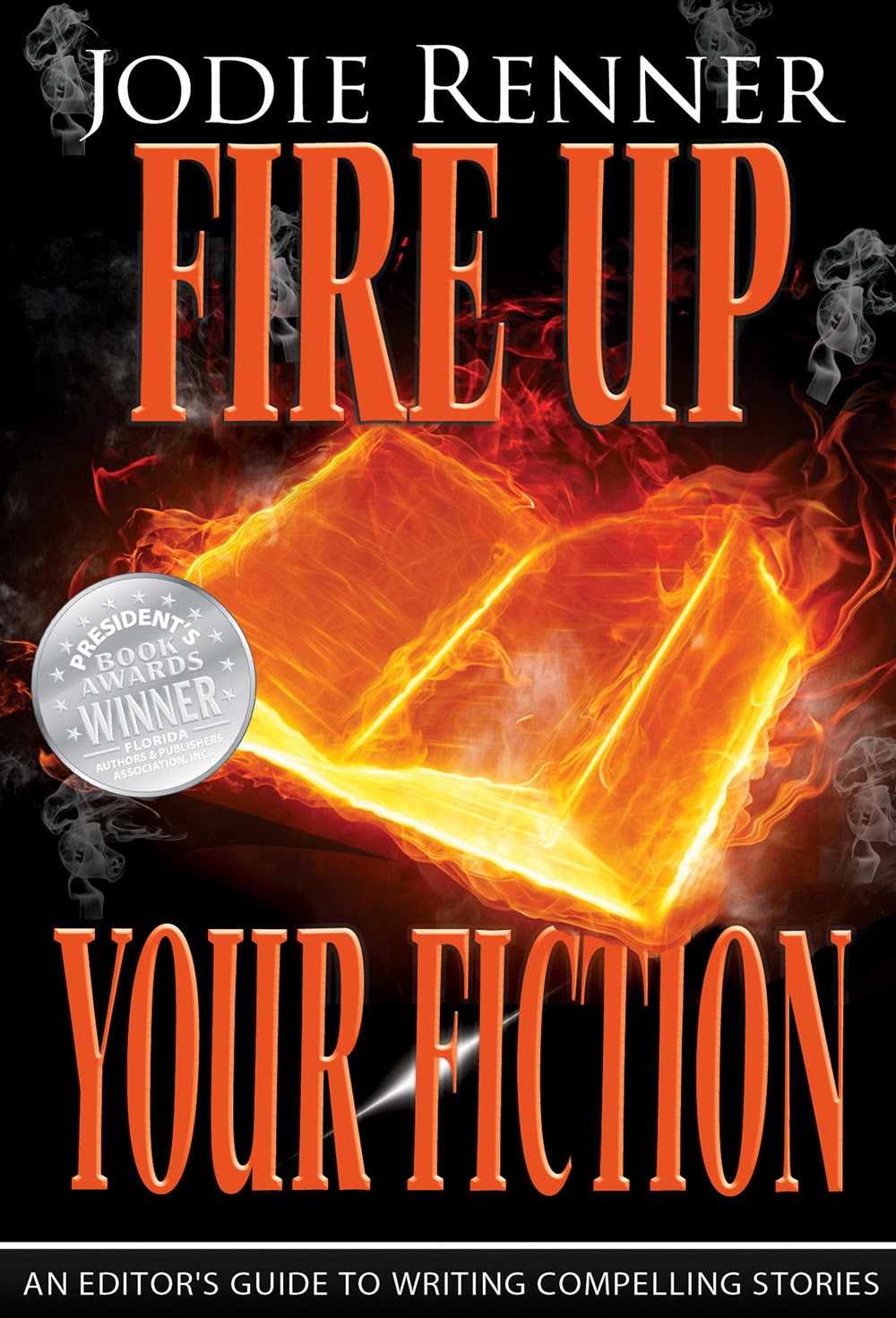
Jodie Renner has published two books to date in her series, An Editor’s Guide to Writing Compelling Fiction: Writing a Killer Thriller and Fire up Your Fiction (Style That Sizzles & Pacing for Power), which has won two book awards so far. Look for the third book in the series, out soon. For more info, please visit Jodie’s author website or editor website, her other blogs, The Kill Zone and Resources for Writers, or find her on Facebook, Twitter, and Google+. And sign up for her newsletter.
.
Friday, May 17, 2013
An Open Letter to Authors
By Peg Brantley
This post originally appeared on my blog, Suspense Novelist. I'm trying to finish up the first draft of my new manuscript so I have another book to add to the many millions that are available. That's how crazy I really am.
Somewhere in the neighborhood of 1,000,000 books are published each year in the U.S. alone. That's more than 83,000 a month. 2,700 a day.114 books a minute. Every minute. In the time it takes you to read and comment on this post, more than 1,000 books are likely to have been released.
Is it any wonder that it's difficult for new authors to get noticed?
The internet, which has given us wonderful things like Google and Amazon has also given us social networking opportunities like Facebook and Goodreads. There's Twitter and Pinterest and LinkedIn and new things popping up almost every day. As authors, we're are using these things like crazy to try and get the word out about our books.
There's nothing wrong with marketing ourselves. We all have to do a certain amount of promotion regardless of whether we're traditionally published or independently published. Doing nothing pretty much guarantees that your books will languish at the bottom of the pile. And the pile just keeps getting bigger.
Most of us are learning that a constant blast of "notice me" in any form is sure to backfire. But there's more than just the one-dimensional person who is only about Blatant Self Promotion, there are those who are so desperate to get attention they'll do almost anything, including buying followers on Twitter.
Are you kidding me?
There are so many Don't Go There possibilities we've all heard about. From writing fake reviews (positive for you and negative for an author you consider competition) to spreading rumors to calling yourself a "bestselling author" because your book hit the top 10 when it was free.
Here are some of my personal requests to all of my fellow authors:
1. DON'T ask me to vote for your book if I haven't read it. I'm constantly asked to vote for a book or a short story in one competition or another and I'm pretty darned sure the author knows I've never read anything they've ever written. They're desperate and I understand that, but don't ask me to sacrifice my honor for your fake moment of pride. Because it would be fake, wouldn't it?
2. DON'T offer to trade reviews with me. What if I don't like your book? Are you going to dis mine? And don't give me a great review, then send me your book expecting the same in return. That just feels sleazy. And once again, you could be asking me to basically lie.
3. DON'T ask me to "like" a review for a book I haven't read. I hereby announce that I will no longer trade my self-respect for one stupid "like" just because someone I truly do like asked me. And by the same token, don't ask me to say a bad review wasn't helpful for a book I haven't read. Between you and me, those bad reviews can be goldmines for sales. Something to think about.
4. DON'T ask me to "like" every Facebook page your mind can dream up. Some of you caught me unaware and it took me five or six pages before I finally realized you were in serious need of an intervention.
5. DON'T ask me to read your manuscript with the idea you can save money on an edit. I'm not an editor. You need to hire one. Sorry, but you do. And don't go cheap.
These are mostly Facebook and Amazon things, but I'm sure there are plenty of Twitter issues along the same lines.
As a new author, I appreciated the support of those who had gone before me, and I want to do the same. But desperate to the point of total crap doesn't cut it with me.
Authors—what have I missed? What requests or other things make you cringe?
Readers—have you come to be able to see through a lot of these ploys? Is there anything you trust any more?
Tuesday, April 30, 2013
Should Authors Review Other Authors?
By Andrew E. Kaufman
It’s an interesting question, one I often think about after
reading a book. Should I or shouldn’t I?
Since becoming an author, I’ve left very few reviews on
Amazon, and during the past year I made the decision to stop completely. There
were several reasons for this. True, I’m
a reader just like anyone else, but am I a typical reader?
No. Not really.
For me, it started feeling like an ethical issue. Since I
write what I read, most of the books I enjoy (or don’t) are in the same genre
as mine. That means the authors I read are competing for the same market share, and leaving a review on Amazon feels like a conflict of interest. If I leave a bad review, it could easily be
interpreted as an act of bad intent.
And even If I leave a favorable review, readers might
suspect that I did it as a favor to the author, and if that happens, have I
done that person a service or disservice by leaving one? Just as much of a concern, have I done myself the same, possibly even damaging my own credibility as an author?
Another part of this involves my personal feelings: quite
honestly, I have a hard time leaving a bad review for an author—as one myself,
I know how deep the sting can feel from a bad review, and I find it
difficult to inflict that on a colleague. This is not to say that they shouldn’t
get a poor review for writing a lousy book; I’m just not sure whether I’m the
one who should leave it.
Giving an author a blurb review is something different—with
those, it’s clear that I’m doing it as a favor, but even then I’m
hesitant due to time constraints and also because I wonder whether they actually
help readers reach a decision on whether to make a purchase.
Also of concern is that as an author, I have a whole
different set of standards while judging a book. My interests are often far
more of a technical nature, nitpicky things,
and because of that I tend to scrutinize a work more
needlessly than for the average reader. When I read, it’s hard to pull off my
writer’s hat and put on the reading one—the two are so intricately intertwined
these days. I worry that the things I’m critical of would be of no interest the
average reader, and in stating them, it could have negative effects for a book that most people would find perfectly enjoyable.
Not everyone agrees with me on this. Some authors regularly
leave reviews on Amazon—and really, there is no right or wrong answer to this question.
It’s all about personal choices.
Contrary to what some may believe, Amazon doesn't discourage or pull
reviews from authors based on that criterion, so they are free to review
all they’d like. The only reason they would do so is if there appears to be a
financial interest or gain on either side. This could be caused by
something as innocent as me sending a birthday gift to the author, or something
as obvious as having co-written something with him or her. Having said that, besides the co-authoring
part, this would apply to anyone, whether they're an author or not.
So what do you think, troops?
Readers, do you have a problem seeing reviews from authors?
And authors, do you or don’t you? If so (or not) why (or why
not?).
Labels:
Amazon,
Amazon authors,
Andrew E Kaufman,
Kindle Book Reviews,
readers
Friday, April 12, 2013
Gaming the Amazon System
by L.J. Sellers, author of provocative mysteries & thrillers
Writers are by nature creative people, and while pursuing marketing and success, they can be quite inventive. But some practices are more like gaming the system, and it's hard to tell where the line is between clever and deceitful.
The newest trend I've noticed is the republishing of the same book. What I see happening is that familiar books that were competitive on Amazon's crime fiction list, dropped off the list, then came roaring back with a new pub date and a high profile.
What's the advantage in unpublishing an ebook and republishing it? If you price it at $.99 and list it on a bunch of promotional sites and newsletters—or do an Amazon giveaway—the book will jump in sales and get picked up by the algorithm. And because the publishing date is new, the book will likely get ranked in the "hot new releases" list...despite the fact that it was available for years and has a hundred reviews. The reviews stay attached to the print version (which stays published), then the author just emails Amazon and asks them to link the print version with the "new" ebook.
Thus, several of the top "hot new releases" on Amazon's police procedural list are not new at all. This seems like gaming the system, and now that I've mentioned it, I'm sure more authors will try it. But I suspect Amazon will catch on and find a way to stop it.
And maybe they should. The practice seems deceptive. We all have the ability to upload new versions of our stories at any time without unpublishing them, so there's no good reason to click that unpublish button. (Or none that I can think of.) But in the digital world, unpublishing is just a matter of pausing, or taking the file off the market for a while, so in theory, you could keep your book "new" all the time.
What do you think of this practice? And if I'm wrong about what's going on, tell me.
Writers are by nature creative people, and while pursuing marketing and success, they can be quite inventive. But some practices are more like gaming the system, and it's hard to tell where the line is between clever and deceitful.
The newest trend I've noticed is the republishing of the same book. What I see happening is that familiar books that were competitive on Amazon's crime fiction list, dropped off the list, then came roaring back with a new pub date and a high profile.
What's the advantage in unpublishing an ebook and republishing it? If you price it at $.99 and list it on a bunch of promotional sites and newsletters—or do an Amazon giveaway—the book will jump in sales and get picked up by the algorithm. And because the publishing date is new, the book will likely get ranked in the "hot new releases" list...despite the fact that it was available for years and has a hundred reviews. The reviews stay attached to the print version (which stays published), then the author just emails Amazon and asks them to link the print version with the "new" ebook.
Thus, several of the top "hot new releases" on Amazon's police procedural list are not new at all. This seems like gaming the system, and now that I've mentioned it, I'm sure more authors will try it. But I suspect Amazon will catch on and find a way to stop it.
And maybe they should. The practice seems deceptive. We all have the ability to upload new versions of our stories at any time without unpublishing them, so there's no good reason to click that unpublish button. (Or none that I can think of.) But in the digital world, unpublishing is just a matter of pausing, or taking the file off the market for a while, so in theory, you could keep your book "new" all the time.
What do you think of this practice? And if I'm wrong about what's going on, tell me.
Labels:
Amazon,
gaming the system,
hot new releases,
unpublishing
Subscribe to:
Posts (Atom)


