Showing posts with label KDP Select. Show all posts

Tuesday, January 28, 2014

Amazon's KDP Select: The Verdict from a Newbie Skeptic

by A.M. Khalifa, thriller writer, Google+

Have you read The Jewish Neighbor?

I've been dragging my feet and avoiding test driving Amazon's optional KDP Select program that gives writers a set of preferential marketing tools in return for a 90-day period exclusivity to the Kindle Store. Even while hearing writers I respect and admire like L.J. Sellers and Jodie Renner singing its praises

I chose to go the indie route to be the master of my writing career. So understandably, the mere mention of someone else exercising exclusivity over my work triggers an allergic reaction. I want my ebooks to be available to readers through all outlets like Kobo, Nook, Sony and Apple, and not just Amazon.

Having said that, I've always been attracted to KDP Select's free book promotion tool. Until quite recently, the high ranking attained on Amazon's bestseller lists during the free promotional period could be converted to paid sales after the promotion ends. But in their excellent resource for indie publishing, Write. Publish. Repeat, Sean Platt, Johnny B. Truant, and David Wright explain how in 2013 Amazon shuffled the rules of the free book promotion, which effectively broke this ability to convert high ranking to sales.

Despite that, I finally bit the bullet. I was curious enough to give KDP Select a shot with a recent novella I published, The Jewish Neighbor. I figured the only way to find out how Select really works is to try it. And since this piece had been lingering on my blog collecting digital dust for many months with little feedback, I had nothing to lose.

To cut a long story short, the results were outstanding. The book was downloaded thousands of times across all of Amazon's territories, but no where more than Amazon UK. It's about a Syrian woman who accepts an arranged marriage to an exile in London to escape the horrors of the civil war ravaging her country, only to find herself in an equally grim situation, with the only tenderness coming from the least expected person - her Jewish neighbor. So it made sense there would be keen interest from Britain. But I also broke ground in places like Amazon Germany, Canada, India and France, which was a first for me. 

Things got even more interesting after the free promotion ended. The Jewish Neighbor started climbing up the ranks in Amazon's paid bestseller categories in both the US and the UK. It hit number 500 of all of Amazon UK's paid kindle content, and then lodged itself as the number 1 bestseller in the inspirational romance category for at least a week. And also locked in second slot on Jewish-themed literature for a few days.

All in all, I sold more copies of that piece than my entire one year writing-career, across all of my titles. At one point I was selling thirty copies of The Jewish Neighbor every hour.

But it didn't stop there. This unexpected performance started funneling customers to my other titles. My overall sales spiked, including my flagship content, my debut novel, Terminal Rage. The daily sales average of that quadrupled compared to how it usually performs on any given day, no doubt as a result of the increased exposure.

So what's the verdict, from a new writer and a former skeptic like me? 

KDP Select is an incredibly powerful marketing tool for indie writers. But it's not for everyone and not for all your content. I don't think it makes strategic sense for a first time writer just wetting their feet to put their debut offering on KDP Select, denying themselves the opportunity to explore the overall landscape. The program seems better suited for writers with a larger body of work who can afford to make certain works exclusive to Amazon, without alienating users of other platforms.

In my case, hot on the heels of The Jewish Neighbor's success, I enrolled many of my other similar titles in the program, leaving out for now my full-length novel, Terminal RageI still like the unlimited free promotions you can do on Kobo, as opposed to Select's limitation to a maximum of five days free promotion every 90-day enrollment period. And I have to admit, I have a soft spot for Kobo and the openness of their platform. Unlike my perception of Nook, I don't want to discount them for dead just yet. Being the smallest of the three main players, they also try harder. At the Frankfurt Bookfair last October they were serving free crab cakes, chardonnay and awesome teal-colored tote bags that make me a huge hit with supermarket cashiers in Rome.  

Then again, I may wake up one day and realize that five days of KDP Select every 90 days are far more valuable than 365 on Kobo. I will keep you posted.

The way I see it, Kobo, Nook, Apple, Sony and Smashwords all have their niche segments of the market. But you can't be an indie writer today and fail to notice that Amazon is increasingly where it's at.

Writers, what have your experiences been with KDP Select, and if you've been on the fence like me, have I managed to sway you to at least try it once? And readers, have you discovered literary gems through free downloads?

Sign up to my newsletter below to get:

 exclusive free fiction
 writing tips
 publishing insight
 Hollywood for writers: exciting insight on the film adaptation of Terminal Rage as it happens
 counter-terrorism scoops and analysis
 book giveaways and competitions

* indicates required field


Special Offer! My sizzling-hot short story, The Egyptian Affair is available for free, for a limited period on Kobo.

A.M. Khalifa's critically acclaimed debut novel, Terminal Rage, was recently described by Publishers Weekly as "dizzying, intricate, and entertaining."  He lives in Rome, Los Angeles, and Sydney, sometimes at the same time.

The ebook version of Terminal Rage is now on sale for $0.99 on Amazon.


Sunday, November 24, 2013

Thanks, Amazon, for Promoting My Books for Free!

Jodie's backyard today.
by Jodie Renner, editor & author

Follow Jodie on Twitter.

I can’t afford a publicist, and I'm too busy to do a lot of marketing and promoting of my two books, so I’m really glad I self-published on Amazon, as they’re doing a great job of promoting my books for free.

Amazon, today's leader in book publishing and sales, has a few policies that can be annoying for authors. For example, their policy of highlighting negative reviews drives me up the wall. But overall, my book sales have benefitted far more from some of the other features Amazon provides for their authors & publishers. When it comes to marketing and promoting - and selling - books, they definitely know what they’re doing (far more than I do), so I feel like I have a savvy publicist looking out for me and helping me sell my books.

First, for you newbie authors considering self-publishing your first book, here’s a quick run-down:

- It’s free and easy to publish your e-book on Amazon – and fast (12 hours). But get it edited or at least proofread first, and if you don’t know much about formatting, get it formatted, too. And hire a professional to design your cover.

- If you price your e-book between $2.99 and $9.99, you get 70% royalties on every sale. If you price it above $9.99 or below $2.99, you get 35%. You can change the price any time you like, to offer discounts to boost sales.

For more detailed info on publishing your book on Amazon, see my article, “Pros, Cons, & Steps for Publishing Your Book on Amazon.”

Why I stay with Kindle Direct Publishing:

Earlier on, as an experiment, I made one of my books available on Smashwords and elsewhere, which meant I couldn’t enroll that book in KDP Select, so I lost the benefits of that. Unfortunately, I made very few sales through Smashwords, so it wasn't worth it. If your books are selling well through these other channels, then go for it. Since mine wasn’t, I went back to exclusivity with Amazon and Kindle (KDP Select), and am glad I did.

Here are some of the benefits of KDP Select:

- Lending program. Readers can “borrow” my books from the Kindle Owners Lending Library (KOLL), and I get around $2 for each borrow (fluctuates).

- Free Promos: I can offer the book for free, for up to 5 days for every 90 days.

- Kindle Countdown Deals. I can take advantage of the excellent Kindle Countdown Deals, where the e-book goes on sale for varying prices (chosen by me) for a specific period of time, decided by me, and Kindle shows readers the normal price and how many hours are left at each sale price. I decided to start my Style That Sizzles & Pacing for Power, with a regular price of $3.99, at .99 for 2 days, then $1.99 for 2 days, then $2.99 for 2 days, then back to the normal price. My sales rose significantly as a result of this countdown deal, as did my ranking on Amazon, for that period and a few days after it. And we get to maintain the 70% royalty during this promotion, even when the price goes below $2.99, which is great! And we can monitor sales in real time, to see how the book is selling at each price point.

And readers can check out the Kindle Countdown Deals website regularly, to see a categorized list of books that are discounted.

- Amazon’s Kindle Matchbook Program. If you purchase the print version, or have bought it at any time in the past, you can buy the e-book for a reduced price or even free.

- Amazon’s free promotions. Amazon promotes my book with various features, appearing under other similar books, such as “Customers who bought this item also bought,” “More items to consider,” and “Customers with Similar Searches Purchased” features, and also by their email promos of books, tailored to the kinds of books each customer has ordered in the past. Your book may also appear in Shopping Cart Recommendations, “Frequently Bought Together,” and many other places on the Amazon website.

- Audiobooks through ACX. Amazon has introduced some discounts for readers who purchase both the book and the audiobook. For more on this, see some recent posts here on CFC: "A Movie in My Head: The Fast-Growing World of Audiobooks" by Basil Sands, "Audiobooks Are Here to Stay (At Least for A While)," By Teresa Burrell, and "Listening vs. Reading" by Jenny Hilborne.

Kindle’s “WhisperSync for Voice and Immersion Reading” feature:

You can use ACX to produce a digital audiobook version of your book, and to enable your book for the new Whispersync for Voice functionality, which allows customers to switch seamlessly between reading the Kindle book and listening to the professionally-narrated audiobook across devices without losing their place. And customers with Kindle Fire HD devices can listen to the professional narration as the words of the e-book are highlighted on the screen. Both excellent features!

Also, when customers buy your Kindle book, they can purchase your audiobook at a discounted price.

And you can earn royalties of up to 90% on your audiobook when it’s created and distributed using ACX.

Overall, I'm so glad Amazon-Kindle is doing most of the heavy lifting for me, when it comes to marketing and promoting my books!

Writers and readers: Have I missed some features or programs provided by Amazon or Kindle?

Authors: Have you found it more advantageous to publish across several platforms, not just Amazon-Kindle? Or, how has Amazon helped your book sales? How about other initiatives that have boosted your sales? Share your success stories with us!

Related articles:

Basic Formatting of Your Manuscript

Pros, Cons, & Steps for Publishing Your Book on Amazon 


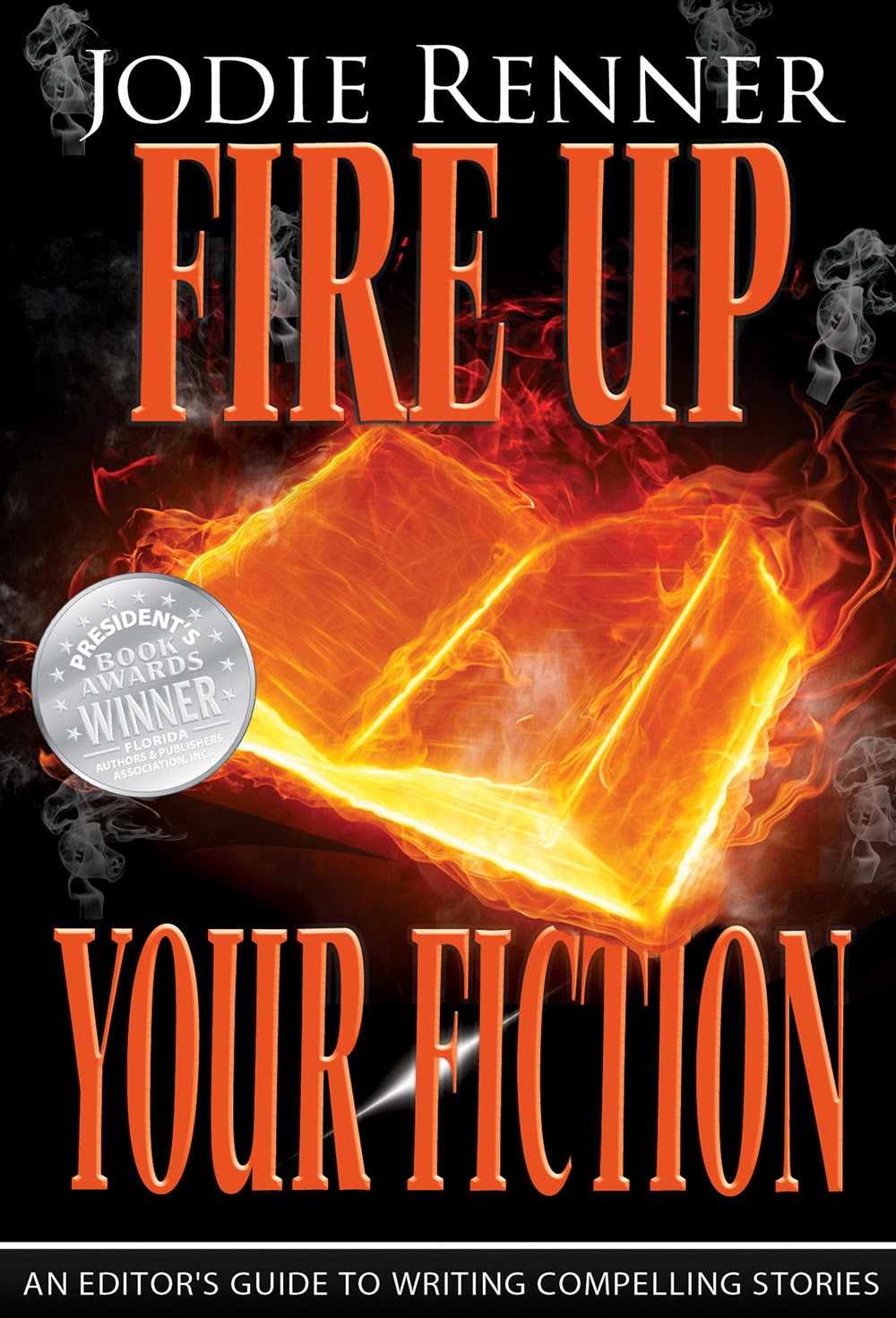
Jodie has published two books to date in her series, An Editor’s Guide to Writing Compelling Fiction: Writing a Killer Thriller and Fire up Your Fiction (Style That Sizzles & Pacing for Power), which has won two book awards so far. Look for the third book in the series, out soon. For more info, please visit Jodie’s author website or editor website, her other blogs, Resources for Writers and The Kill Zone, or find her on Facebook, Twitter, and Google+. And sign up for her newsletter.  
.

Thursday, May 17, 2012

My Advice To Microsoft

By C.J. West
Author of The End of Marking Time

Last week I was talking to my friend Libby Fischer Hellman about the Microsoft investment in the Nook business. On Libby’s blog, Ruth Harris, Rebecca Crowley, and I join her in penning an open letter to Microsoft on how best to push the Nook business forward.

I want to expand on some of the things Libby and I talked about that could help Microsoft turn the Nook into a viable competitor for Kindle. I think we all agree that a healthy market is a good thing and that Barnes & Noble for whatever reason just doesn’t know how to sell electronic books as well as Amazon.

Affiliates

The most glaring place that Amazon outshines Barnes & Noble is in affiliates. The Amazon Associates program allows anyone to register and then send traffic to Amazon. When a book is purchased, the site referring the traffic is awarded a small commission. Sites like E-Reader News Today, Pixel of Ink, and eReader IQ make a fortune on affiliate links. Because they are rewarded, they send their traffic to Amazon. 

Because of these sites, the community around Amazon is richer and more rewarding for readers and that makes more readers choose a Kindle over a Nook.

Indie Authors

Amazon has embraced indie authors in ways that Barnes & Noble has not. Compare the KDP Select Program and Nook First. KDP Select welcomes everyone. Authors can make their titles free and it is up to them to promote their own free book and find readers. Amazon relies on automation to scale the program and they reward the indie author and the reader with a platform that connects them both. The community (affiliates) also gets in the act because everyone likes free books and there are financial rewards for participation by the affiliates. 

Nook First is Barnes & Noble’s answer. To be admitted an author must submit  an application to a board that reviews selections. B&N will promote accepted books on their website, but the program can never scale the way KDP Select can and it is exclusivity means that the vast majority of authors cannot participate. B&N is excluding thousands of authors who are out hawking their books every single day.

These two programs are only the tip of the iceberg when it comes to author relations, but they are representative of the philosophy of each, B&N is stuck in the bestseller mentality and Amazon is embracing the tidal wave of indie authorship.

How can Microsoft help?

Microsoft Word and EPUB

Millions of authors use Microsoft Word to author their books. It is simple to create a PDF file of any work by saving the manuscript as a PDF file. Since Microsoft owns the most popular writing platform, they could really enhance the Nook business by making a simple and powerful conversion product  from Word to EPUB. Formatting books for electronic publication has become a business unto itself. If Microsoft could make it simple to create an EPUB file, authors would be more inclined to publish on Nook. 

I think right now for most authors Kindle is the preferred platform because that is where the readership is. If Microsoft could make publication on Nook easier, they would be able to make some inroads with Kindle only authors. A side bonus to this is that authors could ship their books to (author) friends who have Nooks, so they could read the book comfortably during the review process.

Nook for Windows

Microsoft also owns the most popular desktop operating system giving them access to millions of computer users who are also readers. One of the hurdles to buying electronic books is the cost of the reader.  Amazon has a free e-book reader Kindle for PC. By creating a product with a better user experience than Kindle for PC, Microsoft could sway casual e-book readers to choose Nook books over Kindle books.

Microsoft could and should include this product as an update to every operating system the produce and should make it standard for any new system sold. 

It will be interesting to see what Microsoft’s financial muscle and technical savvy can do to lift the Nook brand. I foresee a heavyweight fight if Microsoft truly embraces digital publishing and takes it to Amazon head on. 

PS.  This week I released Thugbook, my first standalone short story on Amazon.com. Click over and dive into a new kind of social network. It's killer.


Wednesday, May 16, 2012

Is the Free Ride Really Over?


By Andrew E. Kaufman, Author of Psychological Thrillers


I’m hearing a lot of talk lately among 
authors that the Amazon Select program is losing steam and no longer spurring the kinds of sales it once did. Many are reporting diminished numbers and poor results after their free giveaways. Rumors are spreading from blog to blog that on May 1st, Amazon abruptly changed its algorithms (The “customers also bought” section) so that free books are now given only ten percent weight in the rankings, in effect making ten free downloads really only equal to one sale. Also, borrowed books supposedly no longer count as sales where rankings are concerned.
  
I don’t know if all this is true, but a lot of people seem  pretty upset. Authors are complaining that Amazon wants them to give away their books for free with no benefit to sales. They're threatening to withdraw their work from KDP Select and upload them to Smashwords.  Others are trying to decide whether to stick it out with a wait-and-see attitude. 

Many have benefited greatly from the Select program. I am one of them. My sales are still going strong, and I haven’t seen the diminished numbers others are reporting. I feel fortunate for that, but my suspicion is that while the free promos may have given me a good bump at the outset, what’s happening now is something entirely different. I never stopped promoting once the giveaways ended, and I've never relied on the Select program to carry me forever. I'm not saying that others have; I'm simply recounting my own experience.

But in the back of my mind, I've always wondered just how long the Select Effect would last. When it began, it seemed like a mad free-for-all, literally, and suddenly the market was flooded with free books. It only seemed logical that eventually, consumers might feel overwhelmed by it all, that they would grow tired, and yes, that the value of e-books might become diluted. After all, there are so many books and so little time to read them all. There’s no telling how many free books are sitting on Kindles now—and even worse, how many of them will ever actually be read. 

I’m not a gloom-and-doom person, and I suspect that even if my sales weren’t doing well, I wouldn’t be one of those complaining right now. I still choose to see the glass as half full. Many authors are forgetting that even if they give away a lot of books and don’t see an immediate boost in sales, those are seeds that have been planted, and they’re getting the benefit of gaining new readers they never had before. I’ve learned that in this business, too fast never lasts, and that slow and steady wins the race. It’s how I’ve built my audience over the years. Besides that, there’s still the Kindle Owners' Lending Library, and at least for me, it’s been like having extra books up for sale—money in my pocket I wouldn’t normally have.

The thing is, I don’t think the Select program was ever intended to carry authors forever; I think it was intended to give them exposure, help get their books into new readers’ hands, and ultimately, help them grow their readerships, and I still think it’s doing that. What happens after is really up to the authors. It’s not Amazon’s job to do all the work so our books can sell—it’s ours—and it's not much to ask if we meet them half way.

The truth is, the free ride really isn’t over because in fact, one was never offered.

Thursday, February 23, 2012

Do You Know How To Sell?

by C.J. West
Last week I attended a webinar on e-book marketing and was really struck by something the presenter said. “Amazon knows how to sell stuff and they don’t care if they sell your book or James Patterson’s book or a toaster.”

Amazon is a marketing machine and they flex their muscle for big guys and little guys alike.

The immediate contrast for me was Smashwords. Don’t get me wrong, I love Smashwords. They convert and distribute books amazingly well. But I’m thinking of the Smashwords storefront. It doesn’t sizzle. At all. If you buy something from Smashwords, it’s because the author sent you there on a mission. You bought the book because you really wanted it. You weren’t sold.


A few weeks back I told you about the owner of a small store who turned her back on me to sell a customer something by one of the industry heavyweights. Four different books actually. Her reputation with the customer was too important for her to take a risk on me. The only way she would sell one of my books was if I brought the customer to her store to purchase it.

This model does not work. If I have to find the customer, bring them to the store, and sell them the book, what on earth do I need the store for?

At that point in the seminar I realized two things.

First, Amazon can help me reach well beyond my established audience.

Second, I’m the Smashwords of author marketing. Bear with me and I’ll show you what I mean.

There are two groups of people who buy my books. People who have read my work and their friends. My audience has grown steadily, but it takes time to read a book. Sometimes readers have a novel on their TBR pile for a year before reading. By the time they read and recommend that one, I’ve written three more.

When I say I’m the Smashwords of author marketing, I mean that I’m selling books to people who have already been convinced to buy. I could sell them my books at Smashwords or even in that little indie bookstore because they really want a particular book and they are going out (electronically or physically) to get it.


To be successful, we need to captivate folks who are casually browsing. Most authors have turned their books face out on a store bookshelf, but what have you done to make your books stand out on the digital bookshelf?

This week I’ve made great strides and I’ll share some of the things I’ve done.

The most important real estate I own is twelve pages on Amazon that describe my books and allow readers to buy them. This week I revved up the copy on all twelve pages with quotes and improved the readability.

Next, I evaluated my keywords and categories. I discovered that some had been entered incorrectly. Some of my keywords were laughable in SEO circles. I fixed those and by doing that I hope to improve the chances of being found. Remember, when readers are searching millions of times, any minor improvement can mean a perceptible change in sales.

In the next few weeks I’ll be evaluating my covers. I’m thinking about rebranding my entire line of books, but haven’t pulled the trigger yet. We’ve all heard dozens of times how important covers are, but until this week I never realized how much my covers could be holding me back. Covers need to captivate the casual browser and mine just don’t do that.

Finally, the most important thing was to run an Amazon KDP free book promotion. Last week I gave away Addicted To Love for 5 days. It hit #2 in the Free Kindle Store. Since my last blog here at CFC, I have “sold” over 65,000 copies of that book alone.

In the coming months I hope to shed the marketing doldrums and add a whole lot more sizzle.

What have you done to make your books stand out?


CJ is giving away 12 Kindle Fire e-readers this year and will be offering several free books. If you’d like to be advised of his free book promotions sign up for his newsletter or enter the Kindle Fire contest at www.22wb.com.

Thursday, February 9, 2012

Is It Time To Abandon Print?

by C.J. West
Last week I finally made the move and enrolled three of my books in KDP Select. This weekend my new book, Addicted To Love, will be free in the Kindle Store until Valentine’s Day.

For those of you who aren’t familiar with KDP Select, it’s an Amazon program that allows authors to make their e-books free on the Amazon website. Enrolled e-books are available for Prime members to borrow free. The authors receive a fee per borrow that’s determined at the end of the month based on how many books are borrowed. The catch for authors is that the e-book must be exclusive to Amazon for 90 days.

I’ve had excellent response to free books in the past and I hope this one will be bigger than anything I’ve done on my own. The reasons that a free book on Amazon reaches so many people go well beyond the fact that Amazon is the biggest book retailer in the world. Sites like EreaderIQ, Pixel of Ink, Ereader News Today, Kindle Nation Daily and others redisplay data from Amazon’s catalog. They reach out to a wide readership and let them know about free and bargain books that look interesting and Amazon provides the platform to deliver all those free books.

These sites above have all helped me by promoting my work.
How does this compare to my bookstore experience?
On my walk today I remembered a time when I was signing in an independent bookstore and a customer came up to the owner and asked what she could recommend in suspense. I was standing about 10 feet away with 5 titles spread out in front of me. One of my books had recently been optioned into development as a feature film. I’d known the owner of the store for a few years, coming back to sign a the store with each new release.

I was stunned when she walked past me and showed the woman books by brand name, bestselling authors on the shelf off to my left. The woman walked out with four books without ever speaking with me.

It’s hard to blame the store owner  for not recommending me. She hadn’t read my work even though I’d given her a copy personally. The scenario illustrates the difference between print and electronic books. In print, the bestselling authors are not only well known, but they also have a price advantage because they print and ship so many books.

On the digital shelf I can offer readers a book that is 50% less, sometimes 90% less than offerings by more recognizable names. That’s why I sell 100 e-books for every print copy I sell.

I asked myself today if I should give up on print completely.  That would remove one more headache from my plate and wouldn’t affect my sales in any appreciable way.

I came up with two reasons to keep printing books on paper. The first is mom. She loves talking about me and my books. She carries them around in her trunk and sells them to anyone who reads. She’s almost 70 and she’s not going to open a website and start linking to Amazon. Could I take that away from mom? I think not.

The second reason to stick with print is who is buying them. I sell signed trade paperbacks from my website and ship them all over. When the orders come in I recognize most the names. These are people that I’ve never met in person for the most part, but they have been supporting me online for years. I can’t write a book and not make it available to my most loyal supporters.

From a purely business perspective, cutting print would mean one less cover to produce. A whole lot less accounting at the end of the year and no orders to place or books to ship. I could spend a bit more time writing or marketing e-books.

But this is one decision I’m not ready to make.

Are you still attached to dead tree books?

Monday, December 26, 2011

Moving Toward Amazon Only

by L.J. Sellers, bestselling author of provocative mysteries & thrillers

I suspect that blogging during the week after Christmas will be a lot like going into the office at this time—eerily quiet, with only a few other diehards around. But I'm trying to keep the site live during the break, so I'll be posting all week and running some favorites. But to start with, here's a recent (and updated) post from my own blog.

And the craziness continues! Last week The Sex Club, which is selling well again (after the giveaway), was suddenly being discounted on Amazon from $2.99 to $.99. Which means, I was suddenly making a third of the money. After cursing loud and long, I tracked down the culprit. Kobo was selling the title at $.99—even though I requested the retailer take it down two weeks ago.

I asked for the takedown because I had enrolled The Sex Club in the Kindle Select program and it requires exclusivity. So the fact that it was still selling there could have gotten me kicked out of the program. I did everything possible to correct it—including sending a legal "cease and desist" letter—but retailers are notoriously slow about taking down books, especially if they’re selling. (After 10 days, they finally removed it.)

I distribute to Kobo, Sony, Apple, and various other retailers through INgrooves, and this was not the first time I’ve had to deal with the discounting issue. For those not familiar, here’s the short version: Amazon will not be underpriced. If a competitor puts an ebook on sale, Amazon matches the price. This can be a serious problem for authors who make most of their money from Amazon and need to control what price their books sell for on Amazon.

When I starting losing money on Amazon, I see my mortgage payment for the next month disappearing. Which led me to finally withdraw all my books from INgrooves. The small amount of money I make from other retailers is offset by the profit I lose from the discounting issue.

My only hesitation, as always, was readers. I want them to have full access to my books, regardless of their e-reader device. But I’m running a small publishing business (Spellbinder Press), and I have to make smart business decisions. I have to be able to track and predict profit.
 
Also, I have to remind readers that my most of my ebooks are available for purchase from my website.
Other writers tell me I should upload to Smashwords as my distributor, but that doesn’t fix the discounting issue. And I’m tired of continuously having to scan the other retailers to ensure they’re not undercutting my ability to make a living from Kindle sales.

Pulling my books from INgrooves leaves me with ebooks available only on Kindle and Nook. But what I sell on B&N/Nook every month won’t even pay my cell phone bill.

After I see my first bonus payment from Amazon for enrolling in the Select program, I’ll have to decide whether keeping my Detective Jackson books on B&N is actually worth it. I predict I’ll be exclusive to Amazon by the end of the next year. Some people may see this as a sell out. But I have to make a living, and I’m worth more than minimum wage.

Readers: Can you sympathize with this decision?
Writers: How do you deal with the discounting issue?

Friday, December 16, 2011

Amazon's KDP Select Results


By L.J. Sellers, author of provocative mysteries & thrillers
When Amazon asked me to enroll a few books its KDP Select program, I went along. Like many other authors, because of Kindle Direct Publishing, I now have readers and I’m able to make a small living. So I’m deeply grateful, and even loyal, to Amazon. I don’t necessarily like the 90-exclusivity requirement of the new program, but I don’t sell enough of certain titles in other venues for it to be a financial consideration.

So I enrolled three books out of ten, and promptly listed two for back-to-back, five-day giveaways, the main perk of the program.

The results were better than expected. First, I gave away The Suicide Effect, my lowest-selling book. Between the US and UK, in five days, I had 34,888 downloads. A stunning number for a book with suicide in the title. The book is now #61 in the entire Kindle store and actually selling for the first time. I know this effect is temporary, but still awesome. The bonus is that I have an excerpt of The Baby Thief in the back, and I sold several hundred of that title during the giveaway, and it's selling better than ever too.

I also gave away The Sex Club, a book that’s already had a lot of exposure. In addition to the 23,868 ebooks downloaded so far, I’ve also seen a bump in the sales of my other Detective Jackson novels…even though The Sex Club is no longer listed as part of my series. (I recently blogged about that decision.)

So it’s been a good move for me. Ironically, two weeks ago I announced to my husband that I was giving up writing novels and looking for an office job...because I was working too hard and making too little money in this crazy industry. The power of Amazon!

Those three titles won’t be available on Nook, Kobo, or any other e-reader for at least 90 days, but I can live with that. I haven’t enrolled my Detective Jackson books in the program, and I don’t plan to. I want readers everywhere to have access to them.

I may never really know the full effect of this promotion. Many of those people will never read either story. Many may not read them for six months or more. But with so much exposure to my writing, it’s inevitable that I’ll pick up thousands of new readers. I’ve already had several people contact me and say something like, “I just started your book, but the writing is so good, I bought everything you have.” When you’re selling ebooks for $.99 and $2.99, it’s not a big commitment for a reader.

I’m sharing this information because many of my writer friends have contacted me to ask about my participation. How can I not recommend it?

But I’m leery of putting all my books in the program. Amazon would have to sweeten the deal considerably, such as by offering me a contract and/or promotional support. But I’m not holding my breath. I’ve worked myself into this position without any help from agents or publishers so far, and I suspect I’ll be indie for the long haul.

What do you think about this program? Have you participated?