Showing posts with label indie authors. Show all posts

Monday, February 24, 2014

What Would you Give up to be a Writer?

Note from A.M. Khalifa, thriller writer, Google+

I am always inspired by how compelling the desire to write and be a writer is. Like an obsession, once it takes hold of you, there's no stopping it. Everywhere I go I meet writers who are juggling other successful careers, trying to "make it" so they could quit everything else and focus on being an author. Some of us go even further and take bolder risks. Like my friend A.D. Starrling who quit being a full time doctor in England after many years of studying and training to give writing a real shot. She'll tell you all about it as my guest blogger this week. Enjoy!

By A.D. Starrling 

I grew up on the tropical island of Mauritius, where academic prowess is highly regarded. I come from a family of scientists and from a very young age, I was expected to compete and do my best. For my father, that meant winning. Being second was not good enough. I had a pretty stellar school career. I majored in the sciences and landed a state-funded scholarship for a medical degree at a British university. I graduated in the top of my year, secured my first choice pediatric rotation, and passed my specialist exams within three years.

But throughout my training, I secretly indulged in another passion I had: Writing.

My father was an avid book collector and would take me to dusty old bookshops in the capital from when I was four. In addition to instilling in me the drive for success, he also taught me to love books. I started writing at twelve, and by the time I left the island at the age of twenty, I had written several short stories, two novels, and was a third of the way into my third novel. All throughout my education and training, I kept telling myself that I would write full time when I retired from medicine.

With just a few years left before becoming a full-fledged consultant, I quit full-time medicine. I was not happy with the direction my life had taken and the changes happening in the National Health Service. I became an agency doctor, with flexible working hours, better money, and the ability to work all over the country.

Six months later, on a train journey to London, the three characters that would drive me back to my writing desk walked into my head and wouldn't stop talking to me. And that’s when it really hit me. Why wait until I retire? Writing is what I want to do now.

I researched the publishing industry and discovered it was fraught with difficulty, with plenty of rejections and setbacks to be had. There was no guarantee I would ever be published or be able to make a living from it. Back then, I rejected self-publishing, equating it in my mind with the stigma of vanity publishing.

Still, I was driven and decided to write for five or six years and query agents and publishers. If during that time the consistent feedback was that I was a bad or mediocre writer, I would return to medicine and write as a hobby.

In 2012, no one had convinced me that I was a bad or mediocre writer, but I hadn’t gotten anywhere either. The consistent message I was getting was that I was a great writer, but hadn’t found my voice or perfect genre. Then a short story I submitted to the British Fantasy Society Short Story competition made the shortlist. It would eventually become the first novel I published.

One day, I came across an article that would change my life. It was about an author I had never heard of before, a certain JA Konrath, who had attained mainstream success as a self-published author. I took another look at self-publishing and saw it in a different light. It was now not just acceptable, but increasingly the smarter route to take. I decided to go for it.

From that time onward, I began seeing myself as a full-time writer, who once dabbled in medicine. I work part-time in a Neonatal Intensive Care Unit and that door remains open for me. Medicine still pays the bills. But isn’t that the story of almost all indie writers? We are chasing the dream, and using our other skills to sustain ourselves until writing becomes our sole vocation.

My first book, Soul Meaning (Seventeen Book 1), was the winner of the Fantasy category of the National Indie Excellence Awards in 2013, a finalist in the adventure category of the same award, a finalist in the action-adventure category of the Next Generation Indie Book Awards 2013, and got honorable mention in the general fiction category at the Hollywood Book Festival 2013.

I am still filled with fear and doubts when it comes to my writing career. Am I crazy to give up years of studying and training and a near-certain future of professional success and material comfort to chase a passion? Maybe. But I couldn't live with myself if I didn't at least try.

I have a memo note stuck to the lamp on my desk. It says, “Who do you want to be?”

It’s the first thing I see every morning before I start writing.

The answer to that question is what drives me to carry on.

What about you, fellow authors, what have you given up and what risks are you taking to chase this writing dream? Indeed, what double, even triple lives are you leading? And readers, what drives and wakes you up every morning?

AD Starrling is the author of the award-winning and nominated supernatural thriller series Seventeen. She lives in England, where she spends her time writing fast-paced, action-packed thrillers, and juggling babies in the intensive care unit where she works as a part-time pediatrician.

Soul Meaning (Seventeen Book #1) and King’s Crusade (Seventeen Book #2) the e-books are currently available for sale on Amazon, with the paperbacks scheduled for release in March and April 2014.


More A.D. Starrling links:


Monday, February 3, 2014

Indie Publishing – Lessons Learned & Still Learning

by Jodie Renner, editor, author, speaker

Once we take the plunge to self-publish our books, it's the start of a never-ending learning process as we try to keep on top of new developments and learn through trial and error. Mainly, we all want to avoid (too many) negative reviews and sell lots of books, right? And find the time to promote while writing the next book!

Still trying to decide which route to go? Check out my blog post, Pros, Cons, & Steps for Publishing Your Own Book on Amazon.

I published my first book myself on Amazon in July 2012, and it’s been a steep learning curve since then. Here are some tips I’ve learned from working with other authors and writing & publishing my own nonfiction books, which other newbie indie publishers can learn from, and some pitfalls to avoid. And a few relatively new initiatives you might want to try.

~ Get your book critiqued and edited before publishing. Get some savvy reader friends to tell you where it excited and intrigued them and where it dragged. Then revise and get a professional critique and/or edit. Even editors need an editor.

~ Get your book properly formatted before publishing it. Weird formatting is annoying to readers.

~ Get a professional cover design and some opinions on it before publishing. I’ve seen some really awful or just blah cover designs on Amazon that have to be hurting sales. Post two or three possible cover designs on Facebook or your blog and get readers to vote on which one they like best. That also involves readers and creates anticipation for the book, both pluses.  

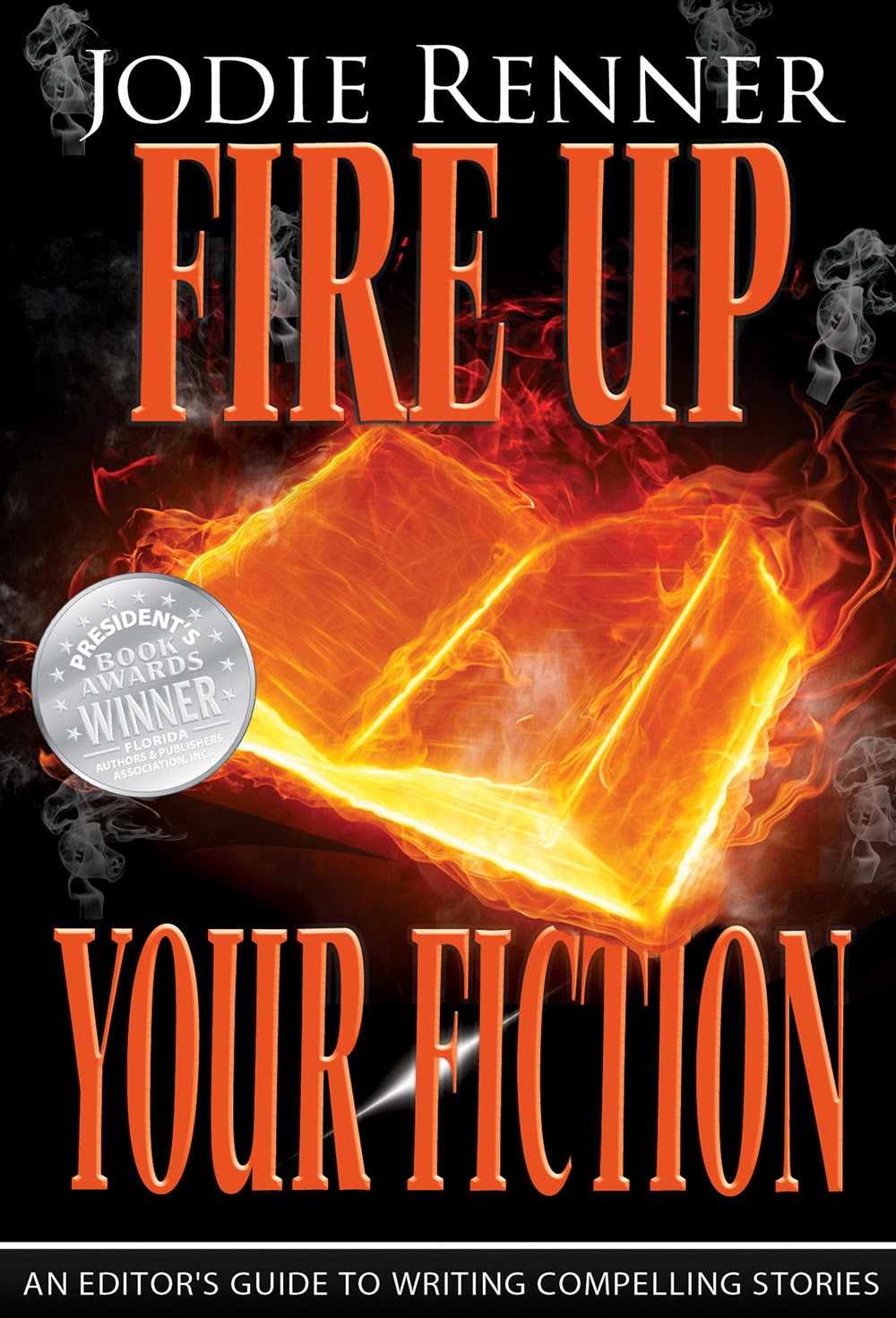
~ Be sure your title grabs readers and also tells them what your book is about (especially important for nonfiction). I've recently decided I should have chosen a different title for my Style That Sizzles & Pacing for Power, as I don’t think it immediately tells a potential reader what the book is about. So after the book has been out for almost a year and a half, I’ve decided to change the title to Fire up Your Fiction (thanks to John Kurtze for suggesting I take that from the title of my recent blog post, “Fire up Your Fiction with Foreshadowing”). I’m keeping the same cover design and also making it very clear in the first few pages that it’s the same book. I hope I
get to keep all my great reviews on Amazon (64, average of 4.8 stars) with the new title! Not to mention the two awards this book has received.
To learn from that mistake of mine, take your time choosing just the right title before publishing. Brainstorm a lot of possibilities and run them past trusted, savvy friends.  

~ To change the title of a book that's already published on Amazon, don't create a new listing. Just go into your existing book and click on "Change book details" and change the title there. That way you get to keep all your reviews and links! (I added this point later after I made the mistake of creating a new listing on Amazon-Kindle and they told me I couldn't transfer the reviews because the two books had different titles. So I changed the title in the existing listing, then deleted the new one I'd created, to avoid confusion. And of course the fact that it's the same book, just with a different title, is noted in the description and on the back cover and in the first pages, inside the book!

~ Get your own “real” ISBN for your books, rather than a CreateSpace-assigned ISBN. Because I’m changing the title of my Style That Sizzles book, I need to get a new ISBN for it. But for several other very good reasons, notably increased distribution and visibility offered by the IBPA and IngramSpark (more below), I need a universally accepted ISBN, not the limited free one CreateSpace assigns. So now I have to go through that whole process again and wait for the new ISBN before I can re-release my book under the new title.

~ To save time and money, try to  have your self-published e-books and print books formatted in a form that is editable by you. Because chances are high that you and/or your readers will find at least a few typos, inconsistencies, or other errors. This means you may need to learn more about formatting.

~ If you revise and improve your published book, notify Amazon right away. If you request it, they’ll send out an email to everyone who bought the original (slightly flawed) e-book, and those people can all upload the revised version instantly and for free. I got busy and didn’t do that last June when I did a substantial revision of my first e-book, Writing a Killer Thriller, adding lots of original stuff and expanding the book by almost 4 times, so I still received a few “outdated” negative reviews after that, based on the original version. 

~ Ignore any negative reviews you receive, especially on Goodreads! Fortunately, I haven’t personally had any bad experiences around this, but I’ve certainly heard of authors being raked over the coals by readers after they responded to negative reviews – even one unfortunate one going viral a year or two ago. Do not respond to negative reviews by readers!

~ Joining Amazon KDP can really help sales of your e-books, as they do a lot of free promoting and marketing for you. See my post on that HERE.

~ If your book is revised, edited, polished, and getting great reviews, consider entering it in some book contests. Here’s a long, detailed list of Book Contests for Indie Authors. Since there are so many to choose from, it’s probably best to pass on the ones that cost over $70 per title, unless you feel the status would be worth it. And I’d go for the ones that provide a written review, from which you can take quotes to share on your website, blog, and on social media. Or just learn from. I’ve won two awards (FAPA & Writer's Digest) for my Style That Sizzles & Pacing for Power (soon to be retitled Fire up Your Fiction), and those awards have definitely increased my sales.


~ Consider joining the Independent Book Publishers Association (IBPA). I just recently heard about them from someone at the SDSU Writers’ Conference in San Diego, where I presented two workshops. After I got home, I checked out their website and decided to join. It looks to me like I’ll be getting a lot of benefits for the $129 annual fee, more than I’ve gotten from any other editors’ or writers’ group memberships. The IBPA Benefits Handbook they sent me is 56 pages long and includes education, support, and discounts on book awards, digital and print publishing, distribution, and marketing.

From their website: “As the largest not-for-profit trade association in the industry, the Independent Book Publishers Association (IBPA) advances the professional interests of authors and independent publishers in the U.S. and around the world. The Independent Book Publishers Association’s (IBPA’s) mission is to advocate for, support, and educate our members and to improve the standards of independent publishing. In addition to longstanding cooperative marketing and education programs, IBPA delivers valuable discounts and networking opportunities to members.”

~ Consider registering your book(s) with IngramSpark, which looks really beneficial for increasing the distribution of both print and e-copies of your books. Costs $49 for both ($37.50 for IBPA members). I’m in the process of registering with them for my Sizzles book, but need to wait for my new ISBN before I can complete the process (which is taking longer because I’m Canadian). Of course, that means the e-book will no longer be in the Amazon KDP program, so will lose those benefits... Maybe I should see if I can just do the print book on IngramSpark, and keep the e-book on KDP...? So much to learn, so little time!

“IngramSpark is Ingram Content Group’s new Publish-on-Demand platform that enables the delivery of content worldwide to readers in print and electronic formats. The service, which is tailored to the specific needs of the small independent publisher, streamlines the sales, account setup, content management, and customer support activities through a self-service, online platform. It’s free to set up an account.” 

~ A new distribution service for indie authors to check out. I’m also thinking about enrolling one of my books in the new IndieReader In-Store (IRIS) program, “the first indie (Author) to indie (Bookstore) distribution service,” for more visibility and increased distribution and sales. This recent initiative was discussed recently here at CFC. Just another option to consider... And let’s see if anyone else jumps in to offer something similar for indie authors.

~ Finally, there are a lot of websites that promote indie books. So many the list could be its own blog post!

Have any of you had experiences to share about Amazon, Smashwords, Lightning Source, Goodreads, book contests, IBPA, IngramSpark, or the IndieReader IRIS program? Or any other initiatives for publishing, distributing, or marketing independently published books? Can you share your wisdom with the rest of us struggling along the path to self-publishing enlightenment and increased sales? Any tips gratefully accepted!


Jodie Renner has published two books to date in her series, An Editor’s Guide to Writing Compelling Fiction: Writing a Killer Thriller and Fire up Your Fiction (formerly titled Style That Sizzles & Pacing for Power), which has won two awards to date. Her third book in the series will be out soon. For more info, please visit Jodie’s author website or editor website, her other blogs, Resources for Writers and The Kill Zone, or find her on Facebook, Twitter, and Google+. To be the first to hear when Jodie's next book is out and to receive links to valuable, timely blog posts, sign up for her newsletter here.

Tuesday, December 3, 2013

Music and Writing: a Harmonious Match, or an Off-Pitch Proposition?

by A.M. Khalifa, thriller writer, Google+

Christof Unterberger, Austrian Cellist and Film Music Composer
You may not immediately associate music with fiction, but in my world, music plays an integral role. Often when I write particularly visual or emotional scenes I hear music in my mind. I also write better when I have music playing in the background. For instance, the soundtrack of the film Rush, as scored by Eric Clapton, is the perfect mood-setter when I am writing about fallen heroes, conflicted protagonists, or psychologically charged scenes. Music touches me on many levels and unclogs my creative pores. Other writers may find this process distracting, but listening to music while I write invites an additional dimension to what I create and amplifies the state of hypnosis that is creativity.

But it doesn't stop there. I have gone a step further to involve music in my writing.

I work in the film industry. My friend Christof Unterberger is a talented and successful film composer and cellist. He is also my musical partner in crime. Almost every project I have produced in the last six years has been touched and elevated by his music. As with any creative partnership, Christof is also interested in my writing.

When I started working on my debut novel Terminal Rage, Christof was only the second person after my wife to know about it and to read the synopsis. He started composing small vignettes, spontaneously and inspired only by the little he knew of the story. And he nailed it. The musical pieces he composed back then were so reflective of the essence of my thriller, and so sublime and cinematic, that I started listening to them as I was writing. As a result, my writing and writing regimen improved. My story inspired his music, and his music inspired my writing - cyclical and symbiotic creativity at its very best.

Now that Terminal Rage has been published and Christof has read it, we are doing something even more daring. We are composing a soundtrack for the book. One piece for every chapter. You can listen to the entire sequence here.

I believe we are breaking new ground with this derivative work, which we plan to sell as a companion product once all thirty-two chapters have been scored.

Here is the opening sequence of the Soundtrack, which sets the tone for the entire work:


And this piece is from an action-packed chapter in the book at the halfway mark. Notice how the music is layered and develops subtly:


Finally, here is a sample of a more emotional,  melancholic chapter towards the end:


What intrigues me about this process, is that people who've read the book connect emotionally with the music almost immediately. They appreciate it as a bonus and unexpected layer of the story that expands and enhances their experience with my work.

Mind you, Christof is a highly sought-after film composer, and time is his most precious commodity. Working on the "book" soundtrack of Terminal Rage is a labor of love for him that comes with no material benefit in the short run. He just fell in love with the story and decided to score some amazing music to it while we wait for the film version. Talking of which, can you guess who will score the music to the film adaptation of Terminal Rage, one day? I joke with Christof and say: Alexander Despalt of course!

As a new and independent writer, thinking out of the box and innovating ideas is an essential component of setting myself apart and building my brand. It's not enough to follow the script dictated by the archaic traditional publishing universe we have all inherited.

Readers: Do you hear music in your minds when you connect with a good story? And are you able to read with music in the background? Writers, what do you think of my literary musical experience: does it add value to a book?

As a special promotion for thriller and music aficionados, if you buy the paperback edition of Terminal Rage before January 1, 2014 and let me know about it on my site www.amkhalifa.com, you will find a copy of the Terminal Rage CD in your mailbox sometime early next year!


A.M. Khalifa, author of international thrillers, writes exhilarating, contemporary stories pulsating with life and unforgettable characters. His debut novel, Terminal Rage, is a layered thrill ride that moves seamlessly from inside a nerve-wracking hostage situation to far-flung locations across the world, challenging readers to stay ahead of its unpredictable plot.

The ebook version of Terminal Rage is now on sale for $2.99 on AmazonBarnes and Noble, and Kobo

Tuesday, May 28, 2013

Anne Allen on 12 Things NOT to Do When Self-Publishing

By:  Kimberly Hitchens is the founder and owner of Booknook.biz, an ebook production company that has produced over 2,000 books for over 1800 authors and imprints.

Today, I would normally be boring you with formatting "stuff," or relaying various and sundry disputes over publishing versus self-publishing, but I stumbled over this blog from Anne R. Allen (author of Food and Love and The Gatsby Game, amongst others), whose site is recognized as one of the Best Writing Sites by Writer's Digest, which is saying something.

Anne writes about the "12 things not to do" when self-publishing, and I think her list is worthwhile reading for any newbie, or even any traditionally pubbed-author switching over to self-publishing for the first time.  I am particularly fond of her advice for #1:  don't publish your first novel before you've written your second.

I'd sit here and regurgitate everything she said, and make myself sound smart, but you should hop on over to her blog and read it in its original place and from its original author.  I highly recommend this article (and don't skip over #3, her sage wisdom about ensuring that you use professional cover design and formatting!!  ;-)  You can read Anne's article, in full, here:  How Not to Self-Publish: 12 Things for New Indies to Avoid

Thanks, and see you next time.


Sunday, May 19, 2013

Revise and Republish?

The Increasing Fluidity of Books & Publishing

by Jodie Renner, fiction editor and craft-of-fiction writer   

If you’re an indie author with e-books on Amazon, have you revised and re-uploaded any of your e-books, in response to negative reviews or other feedback? Or even just to add improvements or additions you thought of yourself? I do, quite regularly. And it seems to me that many authors, including high-profile ones, who are receiving similar negative reviews for a book should be considering doing this. What do you think? 

With more and more authors publishing their own books as e-books, and even publishers releasing increasing numbers of e-books, which can be updated as often as the author/publisher chooses, how does that impact the content of the books? I’m thinking that using this privilege can’t help but improve the book, and the overall quality of e-books available.

Can and should we use reviews and other feedback to constantly (or occasionally) update or revise our books? Why or why not?

Would you or do you alter/tweak/revise/change your book because of many similar reviews?

And if you do revise your book because of negative reviews, what do you do about the fact that the reviews are still there, even though the issues have been addressed and hopefully fixed? Would you respond to the well-thought-out ones you felt had a good point and tell them you’ve made some changes based on their review?

And will more and more traditional publishers with digital imprints start tweaking their books based on informative, thoughtful reviews? Or on many negative reviews with basically the same objections? Will individual e-books then be in a constant state of flux, based on feedback and current trends?

I’ve heard of authors changing the ending to please a majority of readers who objected to the way their book ended. What about changing other aspects of a book that would require more extensive revisions? What if a lot of faithful followers found one of your protagonists too hard-edged or whiny or sarcastic or whatever? Would you go back to that book and tweak your characterization and their dialogue, etc. to make them more sympathetic and appealing? Or what if lots of readers complained about a major plot hole? Would you go in and fix it, in hopes of stopping the flood of bad reviews?

If your novel is solely an e-book at this stage, it’s quick and easy to upload a newer, better version after making the revisions. But then you have some people who have the original version and others who are buying the improved product. 

I’ve published two craft-of-fiction e-books on Amazon-Kindle (with more to come) and have updated and expanded both of them several times, which is a wonderful feature and option/privilege, I think, especially for writers who are still honing their craft and learning from their mistakes.

Since I published my first e-book, Writing a Killer Thriller, in July 2012, I’ve added two chapters
and revised the whole thing. In the last few days, I added another chapter and deleted one near the end that was too repetitive, a summary that basically reiterated points made in the rest of the book. I just republished this most recent version, and a new cover, and am working on two more new chapters for the book. This approach would have been unheard of ten years ago, but I’m grateful to have the control to be able to do this with my “learning” first book.

Then I’ll ask Amazon to notify earlier buyers so they can upgrade for free. I’m also publishing the new chapters on the blog of my new, author website, so people who’ve bought earlier versions of the e-book can just read the new chapters there. And I’m planning to publish the new, expanded version in print soon. And I assume I can keep the same title...?

(As an aside, when I first published this e-book, I enabled Digital Rights Management and have since been told that was a mistake so I didn’t do it with my second book. Does anyone know if there’s a way I can disable that? It doesn’t seem possible.)

And what about if your book is already in print? Say you’ve published with a POD house like CreateSpace, like I did, for my Style That Sizzles & Pacing for Power book (available as an e-book, too). Do you consider re-issuing a second edition? All my comments for Style that Sizzles have been positive (29 reviews to date, with an overall rating of 4.9 stars out of 5), but I’m considering publishing a newer, improved second edition. Am I getting carried away here? When do you say, “Enough, already,” and move on?

*Update, February 2014: I updated Style That Sizzles and retitled it Fire up Your Fiction.*

Writers - Do you revise your e-books to address issues that readers feel detract from the overall positive impact of the book?

Should we embrace increased reader involvement/interaction? Or would that just be opening a can of worms?

Readers & Reviewers - Do you appreciate it when writers revise based on your input? Do you enjoy the extra involvement of being a beta reader or active reviewer?

Do you even check back occasionally to see if writers have revised their book based on similar negative reviews by you and others? Would you like to see authors comment under your review if they've addressed your concerns?


Jodie Renner has published two books to date in her series, An Editor’s Guide to Writing Compelling Fiction: Writing a Killer Thriller and Fire up Your Fiction (Style That Sizzles & Pacing for Power), which has won two book awards so far. Look for the third book in the series, out soon. For more info, please visit Jodie’s author website or editor website, her other blogs, The Kill Zone and Resources for Writers, or find her on Facebook, Twitter, and Google+. And sign up for her newsletter.
.


Friday, May 10, 2013

Boycotting Agent-Focused Conferences

by L.J. Sellers, author of provocative mysteries & thrillers

Every year I think about going to Thrillerfest, but this time my reason for not attending is different. In the past, it was always a financial issue—an expensive conference and an expensive flight. But now that I can afford it, I've decided to pass for ideological reasons that recently become more pressing. The short answer: Agentfest, a sub-conference within the larger gathering.


Last year, I was invited to teach a workshop at Willamette Writers conference, and I turned it down because the conference is focused on writers pitching to agents. Agentfest is the same thing: hopeful authors trying to sign contracts with agents. This choice, of course, is for the author to make, but I can't, in good conscience, support a program that encourages new authors to sign with agents. (For established authors, it's a different decision.)

I don’t have anything against agents personally. But their role in publishing has become mostly obsolete. Yet, the 15% forever commission hasn’t changed. What has changed is how they earn it. Now many agents are helping their clients self-publish by performing tasks that authors can do for themselves or contract to professionals for a flat fee.

This practice seems unscrupulous. And that perception has been supported by recent blog revelations. Barry Eisler posted about the nasty reaction of agents to his self-publishing talk, where he sought to empower writers with specific information about the changes in publishing.

And David Gaughran recently blogged about the pitiful performance of Argo Navis, a digital distributor favored by agents who steer their clients into those contracts. Agents talk about how the Argo Navis distributor is a guarantee of quality independent publishing because it only deals with books submitted by agents. Yet, according to Gaughran's research, Argo Navis books don't sell. Hundreds of real indie authors sell more books in an hour than agent-supported Argo Navis clients do in a month. And the distributor takes 30%...in addition to the 15% paid to agents and the 30% to the retailer.

I would discourage authors from signing with an agent who makes self-publishing deals. I encourage authors to take charge of their careers and self-publish…in a way that allows them to keep most of the profits.

So for me, it doesn't feel right to attend—and spend money on—a conference that matches new authors with agents who may steer them into bad financial decisions, which, in my opinion, includes most contracts with traditional publishing as well. Especially now that big publishing owns the most notorious author-scamming vanity presses out there. 

The main reader part of the Thrillerfest conference takes place on the last two days, and it would be great fun to hang out with thriller writers and readers. But spending my money on Thrillerfest indirectly supports Agentfest, and I just can't do it.

I would love to see Thrillerfest drop the agent portion of the conference. Many of the conference founders are now self-publishing, and it surprises and disappoints me that they still offer the old model to new writers. I hope it's only a matter of time before agent-based conferences become obsolete. They're a disservice to authors.

Readers, writers: What do you think?

Wednesday, February 6, 2013

How Much Should an e-book Cost?


By Andrew E. Kaufman

It seems to be a question that has yet to find an answer, with about as many theories as there are books.

Back in the days of paperbacks and hard covers (remember those?) it seemed the price for a novel was pretty standard—they weren’t all the same, but at least they hovered in the same neighborhood. Since the advent of the e-book, however, it seems anything goes. The scale is frenetic, to say the least, with prices falling on average anywhere between free and about $12.99.

As an author, I find it disconcerting, and as a reader, even more so. While shopping for books, I often shake my head at some of the prices—and I also wonder: what makes one book worth more than another? Amazon tried to level the field by setting a fixed price for e-books, putting them all at a reasonable $9.99, and even taking a loss on profits, but then legacy publishing fell into an uproar and put an end to it.

So now the question remains: what makes one book worth more than another? Should they be based on prior sales? The author’s reputation? If those were the criteria, one might expect each book to be as good as the last, and that’s simply seldom the case. How about the length of a book? More pages no longer equate to more paper, but they still mean more work—should the author and publisher be compensated accordingly?

Of course, I’m just throwing out variables here, and really, I don’t know if there’s a reasonable answer. I suppose the logical theory from an economic standpoint would be that a book is only worth as much as people are willing to pay for it, but these days, even that answer seems a bit vague, because most readers have different standards on what they’re willing to pay. Some base their price cap on how much they can afford, others on how much of a risk they’re willing to take on a new author. Then there are those who set a firm cutoff point and won’t go over a certain price no matter who the author is. Yet another variable (as if there weren’t already enough) is the pricing on indie books vs. traditionally published ones. Some readers are still uncertain about paying a higher price for the former.

But whether independent or mainstream, it seems authors and publishers are just as uncertain on the matter. One might think that finding the magic price point were as complex as charting a quantum theory. I decided to take an informal survey of Amazon’s top 12 bestsellers to illustrate my point. Here’s what I found:

1. Safe Haven (Nicholas Sparks): $6.64
2. American Sniper (Chris Kyle, Scott McEwen, Jim Defelice): $8.99
3. Wait for Me (Elizabeth Naughton) .99
4. Crazy Little Thing ( Tracy Brogan) $3.99
5. Gone Girl (Gillian Flynn) $12.99
6. House of Evidence (Victor Ingolfsson) $4.99
7. Collide (Gail McHugh) $3.99
8. Hopeless (Colleen Hoover)  $3.99
9. Beautiful Creatures (Kami Garcia, Margaret Stohl) $5.80
10. The Pain Scale (Tyler Ditts) $1.99
11. Alex Cross, Run (James Patterson) $12.74
12. Rush (Maya Banks) $7.99

See what I mean? All over the map.

I suppose prices will eventually settle once the market does—or at least, I hope so—but in the meantime, what do you think? How much are you willing to pay for an e-book, and how do you arrive at that decision?

Wednesday, November 14, 2012

Why I'm Leaving the World of Indie

By Andrew E. Kaufman


I recently made a very big decision in my career as an author. I’ve signed publishing deals with Thomas & Mercer and 47North (the Amazon-owned imprints dedicated to mystery/thrillers and horror/sci-fi/fantasy).

 After making the announcement, people began asking the inevitable--they wanted to know why I'm surrendering my status as an indie author.

It’s a good question, one I asked myself a lot before signing the deal. I’ve always been very proud of my indie status and of the movement itself because it's given me and countless others a chance to live the dream after facing years of rejection from traditional publishers.

But even though the conditions will change, I know the thinking behind them won’t. I realized this when Alan Turkus called to congratulate me on our partnership. He told me that their philosophy is to treat authors as customers, not as clients. That resonated very strongly with me, because it's a new way of doing business, something that before now has not been a common practice among traditional publishers.

And it isn't just talk. From day one, I’ve been treated in ways I know many of my traditionally published counterparts have not been. The lines of communication have been clear and open, and my input is extremely valuable to them. I feel like an active participant in my publishing process, something that as an indie author has always been very important me.

Another reason I made this move is because my goal has always been to take my publishing career to the next level, but as an indie author there’s only so much I can do to grow my readership. The publishing business is changing at break-neck speed, but it’s actually the indie portion that’s changing the fastest. With self-published books flooding the market at an alarming rate, it’s getting harder to sell them. Amazon has the marketing resources to help me reach a wider audience—something traditional publishers can’t do--while at the same time, take a significant load off my shoulders, so I can dedicate more time writing and less to promoting.

And then there are my readers, who are as important to me as the work itself. Amazon became the world's largest bookseller by putting their customers first, and I know they'll treat my audience with the same degree of care and respect that I do.

I'm very excited about this opportunity, but even more excited  to see another new and viable route for others like me who have struggled so hard to get their work into readers' hands.

Andrew E. Kaufman is the bestselling author of The Lion, the Lamb, the Hunted and While the Savage Sleeps. For more information about his work, please visit his website at: www.andrewekaufman.com

Tuesday, November 6, 2012

Bookstores to Authors: "Meh."

by L.J. Sellers, author of provocative mysteries & thrillers

I’ve read several articles lately about how bookstores—both chain and independents—refuse to carry books released by Amazon Publishing. As an author, I gave up on bookstores long ago, because with the exception of a few locals, they’ve never supported me. I understand that. Bookstores have physical limitations and can only stock so many items, most of which are published by large publishing houses.

But when they refuse to stock books by known bestselling authors or by celebrities like Penny Marshall—merchandise that certainly will produce a profit—it seems counterproductive, especially since many bookstores are struggling just to stay afloat.

There's another issue here. Bookstores’ support of traditional-only publishers also sends this broad message: “We don’t care whether authors make money.” The reason authors sign with Amazon Publishing is because it treats them with respect and offers generous terms that allow authors to make a living. Hundreds of other authors have also left Big Publishing to go indie because they want to be fairly compensated for their work (among other issues).

Based on my own experience with a small press, combined with everything I read and hear from authors who have signed big publishing contracts, it’s fair to say that traditional publishers offer such stingy terms that most novelists have to hold jobs in addition to writing just to survive. Only a handful of mega sellers make a real living from their work. So when bookstores support traditional-only publishers (and the old business model) and shun Amazon and indie authors, they’re displaying indifference toward authors, the very people who produce the content they profit from.

I can hear bookstore owners saying, “And when authors sign with Amazon, they’re displaying indifference toward bookstores.” True enough. But many authors who sign with Amazon have never been carried by bookstores and owe them no loyalty. And the bestselling authors who have been on store shelves in the past, then sign with Amazon for a better future, will still make more money even with the loss of physical sales. So they’re acting in their own self-interest and who can blame them?

Bookstores would probably make the same claim, but I question that. Refusing to stock one particular publisher’s books, even though those books will make money for the store, seems like a personal decision, made more out of spite than good business sense.

Because Amazon is not going away…but bookstores might.