
by A.M. Khalifa, thriller writer, Google+
I am in London attending the second-most important book event of the year, the London Book Fair. The first being Frankfurt in October. Reliably, London is grey and wet, but not as cold as I had feared. I love this city and have fond memories here growing up, and as a post graduate student. The fair starts tomorrow, and I thought it fitting to pay homage to one of the UK's most successful cultural exports: Peppa Pig! A version of this post first appeared on my blog a few months ago, but it's still every bit as relevant. Next time I will report back from the fair. Enjoy!
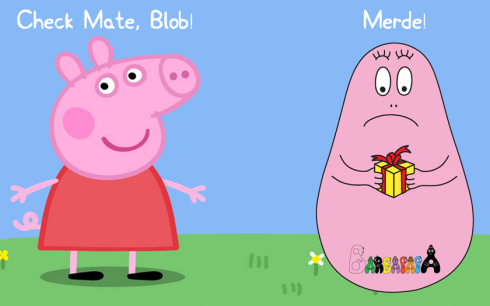
This is a cautionary tale. If you are a content producer of any sort, and still operating under the archaic copyright presumptions of the distant past, then you’re at risk of becoming extinct. And much sooner than you think, I’m afraid. If you are a writer, a film maker, or a musician, and anything in between, this applies to all of us who create culture for a living.
I have a four year old daughter who doesn’t watch much television because we decided from the outset against outsourcing our parenting duties to the networks. We do allow her to watch some DVDs and a few of her favorite shows on our tablets, under our supervision.
To simplify this story, let’s assume a couple of years ago she began watching two different shows which she liked equally.
The first is a French classic called Barbapapa, which started off as a series of children’s books written in the 1970s. The main characters are the Barbapapa family, who are most notable for their ability to shapeshift at will. The books evolved into a highly successful animated show, localized and licensed across the globe, along with a healthy merchandising system.
The second show is a more contemporary British creation called Peppa Pig, which revolves around a female pig, and her family and friends. Episodes feature day-to-day living with lighthearted flare, and a bit of signature British tongue-in-cheek for good measure. It's all very innocuous things like attending playgroup, going swimming, visiting her grandparents, going to the playground or riding bikes.
A a parent, I liked both shows for different reasons. Barbapapa has a beautifully nostalgic and vintage quality to it, but was well ahead of its time with deep messages of ecological responsibility. Peppa Pig is hugely entertaining, moderately educational, but most importantly, it does no harm. For a modern animation, that’s a huge plus.
As a content creator myself, I respect the hard work of creative artists and purchased a few original DVDs of both shows when my daughter was two and still getting into them. But in due course and as a result of changing viewing habits, we discovered episodes of both shows widely available on YouTube. So it was infinitely more convenient to watch them on our tablets, or even beam them from our mobile devices to our big screens, rather than the whole song-and-dance of finding the DVD, making sure it’s not scratched, wiping it clean—you get the picture.
Then something happened. About a year ago, every single episode of Barbapapa that was previously available on YouTube disappeared overnight. In its place was the infamous YouTube message that the “copyright holder of said content has requested that it be removed,” yadda, yadda, yadd. At roughly the same time, more high quality episodes of Peppa Pig started mushrooming, including hour-long compilations of the latest seasons. And this has continued until this day.
Being the delightful parents that we are, we purchased whatever Barbapapa DVDs we could get our hands on to appease the little one. I think you already know where this story is going.
Inevitably, my daughter lost interest in Barbapapa because it wasn’t readily available to watch on YouTube. Because mock it all you like, the whole YouTube/mobile device marriage is really made in heaven for the modern family on the run.
And inversely proportionate to her loss of interest in Barbapapa, was her increased obsession with Peppa Pig – and the formidable merchandising empire that came with it.
Here’s the fuzzy math of this whole thing. We probably own one or two Peppa Pig DVDs, which have been sucked into some black hole around the house, never to be found again. In other words, our net contribution to the Astley Baker Davies animation studio that produces Peppa Pig is about $15 in DVD purchases. On the other hand, we’ve probably been coerced to spend about five times as much on Barbapapa DVDs after they fell of the YouTube grid.
Now this is where the story gets more cautionary. Despite our paltry spending on Peppa Pig DVDs, the amount we’ve shelled out on Peppa Pig merchandise—figures, coloring books, bags, water cups, pajamas, t-shrits, shoes, and you wouldn’t even begin to imagine what else—is probably fifty times more than what we would have spent if we had purchased the entire library of Peppa Pig DVDs. And the future library for the next five years.
And what have we spent on the Barbapapa brand other than the DVDs? Nothing. Or practically nothing.
Peppa Pig: Game, set, match!
Two production companies targeting more or less the same age group. One operating with antiquated and aggressive philosophies to copyright as the linchpin of the financial engine of content, and the other one couldn’t care less about its content being pirated and distributed widely for free. I have this image of the makers of Peppa Pig sitting in a London boardroom secretly patting each other on the back for the genius hand of allowing the public to do their seeding for them. And in the process ensnaring generations of loyal fans and instilling in them a voracious appetite for anything and everything that can be pig-branded. Remember, this is not just limited to the English speaking world. Peppa pig is everywhere and in every language. The next time you see a child rushing to splash in muddy puddles in whichever corner of the globe you may be, now you know where that came from.
The moral of the story is this: Stop trying to fight piracy. It’s a futile, expensive, and polarizing endeavor. A lost cause, really.
Technology and our changing viewing and consumption habits are decades ahead of the narrow minds of the geriatric suits at the media corporations who are still deluding themselves that copyright is the be all and end all of generating income from the content you create.
As the music business has discovered the hard way, and the publishing industry is quickly learning, the future of the business side of producing content is going to be far less about monetizing content, and much more about cashing in on the rich layers of experiencing content, over and over again.
I believe the unit price of any piece of content is invariably going to shrink until its negligible or zero. Look at full-length electronic books now selling at 99 cents. Heed the lesson of software which went from thousands of dollars per license to free, or almost free aps. Consider that the most successful newspapers in the UK are distributed gratis to commuters. And of course everything about the music industry is a testament to this trend. Musicians now make most of their money on merchandising and live events, and are practically giving away music. One of the biggest players in the industry is Live Nation Entertainment – formed from the merger of an events promoter and a ticket seller.
The lesson here for any content creator is to sprint beyond our fixation and obsession as a society with copyright. In a world where massive technological advances have lowered the bar dramatically for anyone to operate as a content generator, we need to think of more creative ways to make money and be rewarded for our hard work. The singularity of the ‘content for money’ paradigm is not just shifting, it’s crumbling.
Writers, do you worry too much about copyright protection, or are you more focused on how to stay ahead of the curve when it comes to the future of your craft? And readers, are you taking advantage of more relaxed book copyright practices, like Amazon's Kindle Match program that allows writers and publishers to discount or offer for free the ebook version to customers who purchased the paperback edition?
I am in London attending the second-most important book event of the year, the London Book Fair. The first being Frankfurt in October. Reliably, London is grey and wet, but not as cold as I had feared. I love this city and have fond memories here growing up, and as a post graduate student. The fair starts tomorrow, and I thought it fitting to pay homage to one of the UK's most successful cultural exports: Peppa Pig! A version of this post first appeared on my blog a few months ago, but it's still every bit as relevant. Next time I will report back from the fair. Enjoy!
This is a cautionary tale. If you are a content producer of any sort, and still operating under the archaic copyright presumptions of the distant past, then you’re at risk of becoming extinct. And much sooner than you think, I’m afraid. If you are a writer, a film maker, or a musician, and anything in between, this applies to all of us who create culture for a living.
I have a four year old daughter who doesn’t watch much television because we decided from the outset against outsourcing our parenting duties to the networks. We do allow her to watch some DVDs and a few of her favorite shows on our tablets, under our supervision.
To simplify this story, let’s assume a couple of years ago she began watching two different shows which she liked equally.
The first is a French classic called Barbapapa, which started off as a series of children’s books written in the 1970s. The main characters are the Barbapapa family, who are most notable for their ability to shapeshift at will. The books evolved into a highly successful animated show, localized and licensed across the globe, along with a healthy merchandising system.
The second show is a more contemporary British creation called Peppa Pig, which revolves around a female pig, and her family and friends. Episodes feature day-to-day living with lighthearted flare, and a bit of signature British tongue-in-cheek for good measure. It's all very innocuous things like attending playgroup, going swimming, visiting her grandparents, going to the playground or riding bikes.
A a parent, I liked both shows for different reasons. Barbapapa has a beautifully nostalgic and vintage quality to it, but was well ahead of its time with deep messages of ecological responsibility. Peppa Pig is hugely entertaining, moderately educational, but most importantly, it does no harm. For a modern animation, that’s a huge plus.
As a content creator myself, I respect the hard work of creative artists and purchased a few original DVDs of both shows when my daughter was two and still getting into them. But in due course and as a result of changing viewing habits, we discovered episodes of both shows widely available on YouTube. So it was infinitely more convenient to watch them on our tablets, or even beam them from our mobile devices to our big screens, rather than the whole song-and-dance of finding the DVD, making sure it’s not scratched, wiping it clean—you get the picture.
Then something happened. About a year ago, every single episode of Barbapapa that was previously available on YouTube disappeared overnight. In its place was the infamous YouTube message that the “copyright holder of said content has requested that it be removed,” yadda, yadda, yadd. At roughly the same time, more high quality episodes of Peppa Pig started mushrooming, including hour-long compilations of the latest seasons. And this has continued until this day.
Being the delightful parents that we are, we purchased whatever Barbapapa DVDs we could get our hands on to appease the little one. I think you already know where this story is going.
Inevitably, my daughter lost interest in Barbapapa because it wasn’t readily available to watch on YouTube. Because mock it all you like, the whole YouTube/mobile device marriage is really made in heaven for the modern family on the run.
And inversely proportionate to her loss of interest in Barbapapa, was her increased obsession with Peppa Pig – and the formidable merchandising empire that came with it.
Here’s the fuzzy math of this whole thing. We probably own one or two Peppa Pig DVDs, which have been sucked into some black hole around the house, never to be found again. In other words, our net contribution to the Astley Baker Davies animation studio that produces Peppa Pig is about $15 in DVD purchases. On the other hand, we’ve probably been coerced to spend about five times as much on Barbapapa DVDs after they fell of the YouTube grid.
Now this is where the story gets more cautionary. Despite our paltry spending on Peppa Pig DVDs, the amount we’ve shelled out on Peppa Pig merchandise—figures, coloring books, bags, water cups, pajamas, t-shrits, shoes, and you wouldn’t even begin to imagine what else—is probably fifty times more than what we would have spent if we had purchased the entire library of Peppa Pig DVDs. And the future library for the next five years.
And what have we spent on the Barbapapa brand other than the DVDs? Nothing. Or practically nothing.
Peppa Pig: Game, set, match!
Two production companies targeting more or less the same age group. One operating with antiquated and aggressive philosophies to copyright as the linchpin of the financial engine of content, and the other one couldn’t care less about its content being pirated and distributed widely for free. I have this image of the makers of Peppa Pig sitting in a London boardroom secretly patting each other on the back for the genius hand of allowing the public to do their seeding for them. And in the process ensnaring generations of loyal fans and instilling in them a voracious appetite for anything and everything that can be pig-branded. Remember, this is not just limited to the English speaking world. Peppa pig is everywhere and in every language. The next time you see a child rushing to splash in muddy puddles in whichever corner of the globe you may be, now you know where that came from.
The moral of the story is this: Stop trying to fight piracy. It’s a futile, expensive, and polarizing endeavor. A lost cause, really.
Technology and our changing viewing and consumption habits are decades ahead of the narrow minds of the geriatric suits at the media corporations who are still deluding themselves that copyright is the be all and end all of generating income from the content you create.
As the music business has discovered the hard way, and the publishing industry is quickly learning, the future of the business side of producing content is going to be far less about monetizing content, and much more about cashing in on the rich layers of experiencing content, over and over again.
I believe the unit price of any piece of content is invariably going to shrink until its negligible or zero. Look at full-length electronic books now selling at 99 cents. Heed the lesson of software which went from thousands of dollars per license to free, or almost free aps. Consider that the most successful newspapers in the UK are distributed gratis to commuters. And of course everything about the music industry is a testament to this trend. Musicians now make most of their money on merchandising and live events, and are practically giving away music. One of the biggest players in the industry is Live Nation Entertainment – formed from the merger of an events promoter and a ticket seller.
The lesson here for any content creator is to sprint beyond our fixation and obsession as a society with copyright. In a world where massive technological advances have lowered the bar dramatically for anyone to operate as a content generator, we need to think of more creative ways to make money and be rewarded for our hard work. The singularity of the ‘content for money’ paradigm is not just shifting, it’s crumbling.
Writers, do you worry too much about copyright protection, or are you more focused on how to stay ahead of the curve when it comes to the future of your craft? And readers, are you taking advantage of more relaxed book copyright practices, like Amazon's Kindle Match program that allows writers and publishers to discount or offer for free the ebook version to customers who purchased the paperback edition?
Sign up to my newsletter below to get:
★ exclusive free fiction
★ writing tips
★ publishing insight
★ Hollywood for writers: exciting insight on the film adaptation of Terminal Rage as it happens
★ counter-terrorism scoops and analysis
★ book giveaways and competitions
* indicates required field

A.M. Khalifa's critically acclaimed debut novel, Terminal Rage, was recently described by Publishers Weekly as "dizzying, intricate, and entertaining."
★ exclusive free fiction
★ writing tips
★ publishing insight
★ Hollywood for writers: exciting insight on the film adaptation of Terminal Rage as it happens
★ counter-terrorism scoops and analysis
★ book giveaways and competitions
* indicates required field
A.M. Khalifa's critically acclaimed debut novel, Terminal Rage, was recently described by Publishers Weekly as "dizzying, intricate, and entertaining."
Foreword Clarion says, "Khalifa manages to pull off something that is often difficult to do in the crime-thriller genre—he keeps the novel unpredictable and lays out a plot so twisted that the puzzle picture morphs as more pieces are added."
The ebook version of Terminal Rage is available for $2.99 on Amazon.
The ebook version of Terminal Rage is available for $2.99 on Amazon.


