Showing posts with label revising. Show all posts

Sunday, May 19, 2013

Revise and Republish?

The Increasing Fluidity of Books & Publishing

by Jodie Renner, fiction editor and craft-of-fiction writer   

If you’re an indie author with e-books on Amazon, have you revised and re-uploaded any of your e-books, in response to negative reviews or other feedback? Or even just to add improvements or additions you thought of yourself? I do, quite regularly. And it seems to me that many authors, including high-profile ones, who are receiving similar negative reviews for a book should be considering doing this. What do you think? 

With more and more authors publishing their own books as e-books, and even publishers releasing increasing numbers of e-books, which can be updated as often as the author/publisher chooses, how does that impact the content of the books? I’m thinking that using this privilege can’t help but improve the book, and the overall quality of e-books available.

Can and should we use reviews and other feedback to constantly (or occasionally) update or revise our books? Why or why not?

Would you or do you alter/tweak/revise/change your book because of many similar reviews?

And if you do revise your book because of negative reviews, what do you do about the fact that the reviews are still there, even though the issues have been addressed and hopefully fixed? Would you respond to the well-thought-out ones you felt had a good point and tell them you’ve made some changes based on their review?

And will more and more traditional publishers with digital imprints start tweaking their books based on informative, thoughtful reviews? Or on many negative reviews with basically the same objections? Will individual e-books then be in a constant state of flux, based on feedback and current trends?

I’ve heard of authors changing the ending to please a majority of readers who objected to the way their book ended. What about changing other aspects of a book that would require more extensive revisions? What if a lot of faithful followers found one of your protagonists too hard-edged or whiny or sarcastic or whatever? Would you go back to that book and tweak your characterization and their dialogue, etc. to make them more sympathetic and appealing? Or what if lots of readers complained about a major plot hole? Would you go in and fix it, in hopes of stopping the flood of bad reviews?

If your novel is solely an e-book at this stage, it’s quick and easy to upload a newer, better version after making the revisions. But then you have some people who have the original version and others who are buying the improved product. 

I’ve published two craft-of-fiction e-books on Amazon-Kindle (with more to come) and have updated and expanded both of them several times, which is a wonderful feature and option/privilege, I think, especially for writers who are still honing their craft and learning from their mistakes.

Since I published my first e-book, Writing a Killer Thriller, in July 2012, I’ve added two chapters
and revised the whole thing. In the last few days, I added another chapter and deleted one near the end that was too repetitive, a summary that basically reiterated points made in the rest of the book. I just republished this most recent version, and a new cover, and am working on two more new chapters for the book. This approach would have been unheard of ten years ago, but I’m grateful to have the control to be able to do this with my “learning” first book.

Then I’ll ask Amazon to notify earlier buyers so they can upgrade for free. I’m also publishing the new chapters on the blog of my new, author website, so people who’ve bought earlier versions of the e-book can just read the new chapters there. And I’m planning to publish the new, expanded version in print soon. And I assume I can keep the same title...?

(As an aside, when I first published this e-book, I enabled Digital Rights Management and have since been told that was a mistake so I didn’t do it with my second book. Does anyone know if there’s a way I can disable that? It doesn’t seem possible.)

And what about if your book is already in print? Say you’ve published with a POD house like CreateSpace, like I did, for my Style That Sizzles & Pacing for Power book (available as an e-book, too). Do you consider re-issuing a second edition? All my comments for Style that Sizzles have been positive (29 reviews to date, with an overall rating of 4.9 stars out of 5), but I’m considering publishing a newer, improved second edition. Am I getting carried away here? When do you say, “Enough, already,” and move on?

*Update, February 2014: I updated Style That Sizzles and retitled it Fire up Your Fiction.*

Writers - Do you revise your e-books to address issues that readers feel detract from the overall positive impact of the book?

Should we embrace increased reader involvement/interaction? Or would that just be opening a can of worms?

Readers & Reviewers - Do you appreciate it when writers revise based on your input? Do you enjoy the extra involvement of being a beta reader or active reviewer?

Do you even check back occasionally to see if writers have revised their book based on similar negative reviews by you and others? Would you like to see authors comment under your review if they've addressed your concerns?
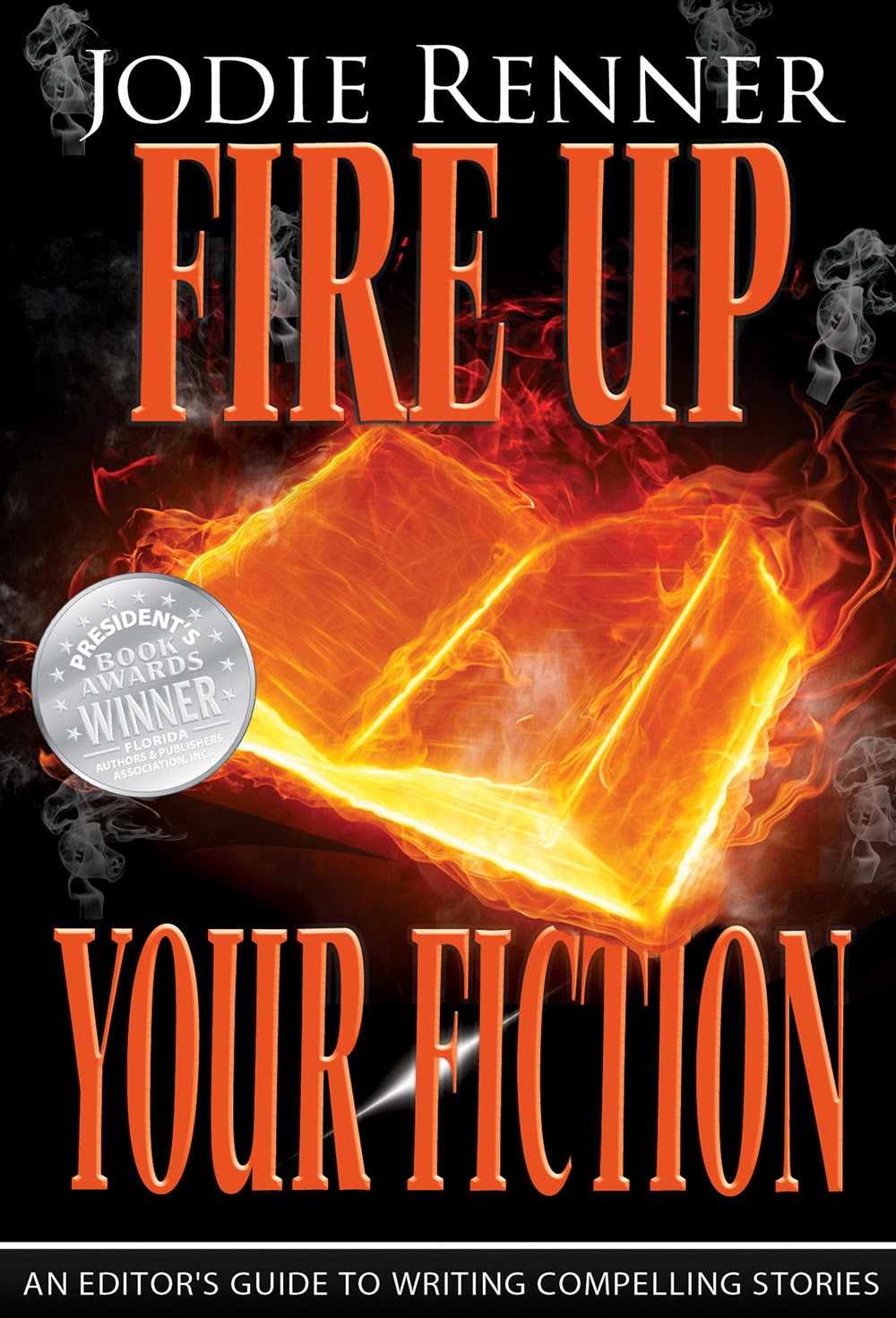


Jodie Renner has published two books to date in her series, An Editor’s Guide to Writing Compelling Fiction: Writing a Killer Thriller and Fire up Your Fiction (Style That Sizzles & Pacing for Power), which has won two book awards so far. Look for the third book in the series, out soon. For more info, please visit Jodie’s author website or editor website, her other blogs, The Kill Zone and Resources for Writers, or find her on Facebook, Twitter, and Google+. And sign up for her newsletter.
.


Monday, May 21, 2012

Cut the Clutter and Streamline Your Writing, Part III


by Jodie Renner, editor, author, speaker    
 

In Part I of this series, I gave some tips and examples for streamlining your writing to make your message more accessible and compelling. In Part II, we saw some specific examples of words and phrases to cut or reduce, to write more powerfully.

Here, we continue to explore ways to cut out the deadwood by avoiding repetitions and convoluted phrasing and going for clear, concise writing. Remember, it’s about direct communication and carrying your reader along with the story. Don’t muddle your message with a lot of extra words that just clutter up the sentence and hamper the free flow of ideas.

Avoid repetitions and redundancies in all their forms: two words meaning the same thing; saying something in five or six words when you can express it with one or two; and phrases or sentences that keep saying the same thing over and over in different ways.
 

Redundant Phrases. Avoid this kind of “repetitive redundancy”:

Repetitive phrase:                 Concise equivalent:

basic fundamentals                 fundamentals

honest truth                             truth

future plans                             plans

regular routine                         routine

past history                              history

final outcome                          outcome

extremely unique                     unique

repeat again                             repeat

totally unanimous                    unanimous

sudden impulse                       impulse

unexpected surprise                surprise

overused cliché                       cliché

What’s the problem? It’s obvious — the only kind of truth is honest truth, an impulse is sudden, repeat means to do something again, a surprise is by nature unexpected, and so on.

Cut out the deadwood, words that restate what is obvious by the rest of the sentence, words that just repeat what you’ve already said, words that are just adding clutter to your sentence. For example, the phrases in brackets are redundant here:

We passed an abandoned house [that nobody lived in] on a deserted street [with no one around].

At this [point in] time, [the truth is that] complaints are increasing [in number], but I don’t see that as a problem [to be solved].

Cluttering your sentences with too many unnecessary words can subliminally irritate your reader. Here a few examples of this “little word pile-up” tendency:

Instead of:                              Use:

in spite of the fact that            although

as a result of                            because

came in contact with                met

at this point in time                  now

during the time that                 while

he is a man who                        he

make use of                              use

with reference to                      about


Here are some examples, altered and disguised from my fiction editing, of trimming excess words:

Before: He was shooting off his mouth in the bar last night telling everybody that he was going to find the bastard that ratted on him.

After: He was shooting off his mouth in the bar last night about finding the bastard that ratted on him.

Before: Jennifer ran along the tunnel and up the stone steps to the walkway. She hesitated for only a moment at the top in order to jam the hand gun she was holding into her waistband and give her time to figure out where to run.

After: Jennifer ran along the tunnel and up the stone steps to the walkway. At the top, she stopped to jam the gun into her waistband and figure out where to run.


Finally, avoid convoluted phrasing and leave out unnecessary little details that just serve to distract the reader, who wonders for an instant why they’re there and if they’re significant:

Before: He had arrived at the coffee machine and was punching the buttons on its front with an outstretched index finger when a voice from behind him broke him away from his thoughts.

After: He was punching the buttons on the coffee machine when a voice behind him broke into his thoughts.

In the first example, we have way too much minute detail. What else would he be punching the buttons with besides his finger? And we don’t need to know which finger or that it’s outstretched. Everybody does it pretty much the same. Avoid having minute details like this that just clutter up your prose.


Before: The officer was indicating with a hand gesture a door that was behind and off to the right of McKay. Angular snarl stuck to his face, he swung his head around to look in the direction the other officer was pointing.

After: The officer gestured to a door behind McKay. Snarling, he turned to look behind him.


Before: “Bastards. Why am I always the last to know?” Pivoting, the detective walked in the direction of the station's front desk with a purposeful, nearly aggressive, gait.  He shoved himself bodily through the swinging door and locked eye contact with the uniformed officer on reception duty.
 
After: “Bastards. Why am I always the last to know?” Pivoting, the detective marched toward the front desk. He slammed through the swinging door and glared at the officer on reception duty.

Copyright © Jodie Renner, May 2012


Also, see my article entitled “Clear, Concise, Powerful Nonfiction Writing.”


Next: Resist the Urge to Explain (RUE), and One Plus One Equals One-Half


 Jodie Renner is a freelance fiction editor and the award-winning author of three craft-of-writing guides in her series An Editor’s Guide to Writing Compelling Fiction: Captivate Your Readers, Fire up Your Fiction, and Writing a Killer Thriller, as well as two clickable time-saving e-resources, Quick Clicks: Spelling List and Quick Clicks: Word Usage. She has also organized two anthologies for charity, incl. Childhood Regained – Stories of Hope for Asian Child Workers. You can find Jodie at www.JodieRenner.com, www.JodieRennerEditing.com, her blog, http://jodierennerediting.blogspot.com/, and on Facebook and Twitter.

Monday, October 24, 2011

Heightening the Suspense, Part III

by Jodie Renner, editor & author                 

In Part I of this series, I discussed the definition, elements and stages of suspense in fiction. In Part II, I listed some general, "big-picture" techniques for creating and heightening suspense in your novel. Here, in part III, you'll find some

Specific Techniques to Ratchet up the Suspense:

-      Use the setting to create anxiety and suspense. This is the equivalent of ominous music, harsh lighting, strange camera angles, or nasty weather in a scary movie. This applies to both indoor and outdoor settings, of course. Also, appeal to all senses, not just the visual… breaking glass, a dripping faucet, footsteps on the stairs, a crash in the basement, rumbling of thunder, a sudden cold draft, an animal brushing the skin in the dark, a freezing cold, blinding blizzard, a putrid smell coming from the basement…

-      Create a tense mood, with fast pacing: Thrillers and other suspense fiction generally need an ominous mood, tight writing, and breathless pacing throughout most of the novel, with “breathers” in between the tensest scenes.

-      Use compelling, vivid sensory imagery. “Show, don’t tell.” Invoke all five senses to take us right there with the protagonist, vividly experiencing and reacting to whoever/whatever is challenging or threatening her.

-      Raise the stakes. As the author of a thriller or other crime fiction, keep asking yourself, “How can I make things worse for the protagonist?” As the challenges get more difficult and the difficulties more insurmountable, we worry more and more about whether he can beat the ever-increasing odds against him, and suspense grows. And as a bonus, “Increasing pressure leads to increasing insight into the character.” (Wm. Bernhardt)

-      Add a ticking clock. Adding time pressure is another excellent way to increase suspense. Lee Child is a master at this, a great example being his thriller 61 Hours. Or how about those great MacGyver shows, where he had to devise ways to defuse the bomb before it exploded and killed all kinds of innocent people? Or the TV series, 24, with agent Jack Bauer?

-      Create obstacles and complications. The hero’s plans get thwarted; his gun jams or falls into a river during a scuffle; he’s stuck in traffic on a bridge; he’s kicked off the case; her car breaks down; her cell phone battery dies just when she needs it most; the power goes out, leaving the room in total darkness; a truck blocks the only way out of the alley… You get the picture. Think Jack Reacher, Lucy Kincaid, Elvis Cole or Stephanie Plum in any number of escapades. The character has to use inner resources to find a way around these obstacles or out of this dilemma.

-      Incapacitate your hero. Your heroine is given a drug that makes her dizzy and hallucinating; your hero breaks his leg and can’t escape or give chase; she’s bound and gagged; he’s blinded by sand in his eyes…

-      Create a critical turning point. Which way did the bad guys go? Should she open that door or not? Who to believe? Go up the stairs or down? Answer the phone or let it ring?

-      Make the ordinary seem ominous. Zoom in on an otherwise benign object, like that half-empty glass on the previously spotless kitchen counter or the fresh mud on those boots in the hallway, and imbue it with extra meaning. Who was here? When? Why?

-      Plant something out of place in a scene. Or even something just slightly off, just enough to create a niggling doubt in the mind of the reader. An address book with pages torn out, a whimpering dog, a phone off the hook, an open window, wet footprints on the entranceway floor, an overturned lamp, a half-eaten breakfast in an empty house, etc.
     
But of course, you can’t keep up tension nonstop, as it’s tiring for readers and will eventually numb them. You need to intersperse tense, nail-biting scenes with more leisurely, relaxed scenes that provide a bit of reprieve before the next sensory onslaught begins. 

Copyright Jodie Renner 2011
Resources:
Hallie Ephron, The Everything Guide to Writing Your First Novel
Jack M. Bickham, The 38 Most Common Fiction Writing Mistakes
Jessica Page Morrell, Thanks, But This Isn’t For Us

Jodie Renner, a freelance fiction editor specializing in thrillers and other fast-paced fiction, has published two books to date in her series, An Editor’s Guide to Writing Compelling Fiction: WRITING A KILLER THRILLER and STYLE THAT SIZZLES & PACING FOR POWER (Silver Medalist in the FAPA Book Awards, 2013). Both titles are available in e-book and paperback. For more info, please visit Jodie’s author website or editor website, or find her on Facebook or Twitter.