Showing posts with label writing a thriller. Show all posts

Sunday, March 3, 2013

Chatting with Thriller Authors Joe Moore and Lynn Sholes, Pt. II


Interview by Jodie Renner of the co-authors of The Blade and other thrillers.

See yesterday's Part I – The Challenges and Rewards of Co-Authoring a Novel.                                  

Part II – HONING YOUR CRAFT and INDIE PUBLISHING
JR: Learning to write compelling fiction of the caliber you two accomplish must take years of study and practice – as well as talent, of course! Do either of you ever go back and read your earliest writings?  What’s your reaction?
Lynn: Yuck. Yes. When I first decided to take writing seriously, I wrote a book called TALISMAN ROSE, mostly to see if I could sustain about 100,000 words. I wrote it on a typewriter, which convinced me to get a computer and printer. Well, I discovered that I could write my way through 100,000 words. But that manuscript rests in a box I never intend to show anyone, high in the closet. Every time I write a book, I learn something new. Sometimes I look back in horror and slap my forehead asking myself, Did you really do that?

JR: Did you have any mentors who helped you learn your craft?
Lynn: Hundreds.  Let me explain. One day my husband commented on how many books I have on shelves and suggested I get rid of some of them.  I asked him to follow me, and I led him out to the garage and asked him to look at all the stuff (probably called it junk) he had—all the drills and wrenches, saws, screwdrivers, etc. and politely suggested that he clear out some of that. He was mortified. “But those are my tools,” he said. I answered, “Exactly. That’s what my books are to me. My tools.” There are tons of times I have had a scene in my head but have had no personal experience related to what I wanted to write—like a fistfight, or a car chase, or holding someone I loved in my arms as they bled out and died.  That’s when I go to my shelves and see how other authors handled that kind of scene.  I study the passages for sentence structure, rhythm, word choice, punctuation—all things related to the craft the author used.  I read as many as I can find.  That builds my repertoire that I pick and choose from when I write that scene I had in my head.  Essentially, I have the cream of the crop writers as my mentors and they are available 24/7.

JR: Back to your most recent thriller, THE BLADE – as I was editing it, I could really visualize it as a box-office hit movie. As I mentioned in Part I, I really loved your characters Maxine Decker and Kenny Gates. And Reverend Applewhite was so creepy! If it was made into a movie, who would you choose to play Maxine, Kenny and Applewhite?
Joe: I see Naomi Watts as Maxine, Jude Law as Kenny, and Brian Cox as Applewhite.
Lynn: Maxine –Julianna Moore, Kenny – Hugh Jackman, Applewhite – Tommy Lee Jones or William H. Macy?

JR: You two have published a lot of novels! And they’re selling very well. Do you have any advice you’d give to writers trying to break into the industry?
Joe: There are no shortcuts. No silver bullets. No secret handshakes. Just write the best book you can and once you’re done, find an experienced freelance editor who specializes in your genre, like Jodie Renner, to go over it with a fine-toothed comb while you start planning the next one.
JR: Thanks, Joe! And I agree about the importance of finding an editor who specializes in your genre. A nonfiction editor or someone who doesn’t even read your genre for pleasure is not a good choice to help you fine-tune and polish your novel to captivate readers and garner great reviews.

JR: Joe, as you mentioned in your recent post on The Kill Zone blog, this is your first venture into indie publishing. Joe and Lynn, what are some of the advantages and disadvantages of going the indie route? Do you find that authors are doing more and more of the work that publishers used to do?
Joe: With the advent of indie publishing, writers have become a self-contained business and must handle most or all of the facets of sales and marketing. It takes away from writing time, but it’s also liberating and fulfilling. And with publishing The Blade ourselves, we enjoyed the direct contact and ongoing back-and-forth communication with you as our editor.
Lynn: I have found that more is expected from writers now than when my first book came out in 1991, especially in the marketing and promotion arenas. But the entire publishing industry has gone through tremendous change.

JR: And it’s continuing to change. I find more and more of my clients are choosing to publish their novels themselves, and are enjoying the control they have over the process – not to mention more frequent payments! Personally, I love that I can go in and update my e-books on Amazon-Kindle, and in 12 hours or less, the new version is up there for sale!

Thanks for dropping by Crime Fiction Collective, Lynn and Joe. Readers are in for a real treat with this fast-paced roller-coaster ride! Kudos to you both on collaborating together to create a stellar novel! I enjoyed playing a small part in the final editing.
And I can’t wait to see what you two come up with next…

Readers and writers - Do you have any questions for Lynn and Joe?
 
Lynn Sholes & Joe Moore are the international bestselling authors of THE GRAIL CONSPIRACY (#1 Amazon Kindle bestseller), THE LAST SECRET, THE HADES PROJECT, THE 731 LEGACY, THE PHOENIX APOSTLES (#1 Amazon Kindle bestseller), and their latest, THE BLADE. Their thrillers have been translated into 24 languages including Chinese, Russian and Greek. Visit them at: http://www.sholesmoore.com.
 

Jodie Renner is a freelance fiction editor specializing in thrillers and other crime fiction, and she also writes craft-of-fiction articles and books. Jodie’s website: www.JodieRennerEditing.com. Jodie’s books: Writing a Killer Thriller and Style that Sizzles & Pacing for Power.
 

Saturday, March 2, 2013

Chatting with Thriller Authors Joe Moore and Lynn Sholes, Pt. I

Interview by Jodie Renner of the co-authors of The Blade and other thrillers    

Part I – The Challenges and Rewards of Co-Authoring a Novel    
A few months ago, I had the privilege of editing The Blade, an excellent thriller by Lynn Sholes and Joe Moore. This was my first experience working with two authors simultaneously on one book, and I worried that it might be too complicated, but the collaboration went very smoothly! I can’t imagine co-authoring a book, so I was curious about how the process works for them. – Jodie Renner

JR: Welcome to Crime Fiction Collective, Lynn and Joe. Your new thriller, The Blade, has only been out on Amazon for two weeks and it has already garnered several glowing 5-star reviews. It promises to be a huge hit, and I feel honored to have worked with two such talented authors on the final tweaks and polishing of this riveting international thriller.
So how did you two end up co-writing, anyway?
Lynn: Joe and I belonged to the same writing critique group that met every week.  During the middle of each session we’d take a break and we’d all chat.  Sometimes we’d share ideas about other projects we’d like to do.  I had this idea about a book I wanted to write, but it wasn’t in my comfort range because of the genre.  Joe thought it was a great idea, and after a year or so, he finally threatened me that if I didn’t write the book, then he would.  We decided to give co-writing a whirl.
That produced THE GRAILCONSPIRACY, our first collaboration, which did very well. It was ForeWord Magazine’s book of the year and an international bestseller. So far, it’s been translated into 24 languages.
JR: Really? That’s impressive! Congratulations!
 
JR: What about the logistics of it all? How do two people write fiction together?
Lynn: I can only vouch for what Joe and I do. At first it was very difficult, not because we disagreed on anything, but rather because our styles and voices were so different. Joe wrote male action-adventure with a very bold voice. I wrote historical fiction with a more lyrical voice. So blending took a lot of work, but we stayed with it. As a matter of fact, friends are always guessing which line one of us wrote. They’re usually wrong, but we never tell. As far as the mechanical process, we do outlining and brainstorming so we know the story. Either of us could write it. Then whoever feels they have the best handle on a scene takes on the first draft of that scene. We send it back and forth for revisions. Using Dropbox makes it easier. We drop a file in the shared Dropbox folder and voilà! The other picks it up.
JR: Dropbox – hmmm… I’ll have to find out more about that…
 
JR: For The Blade, I love your main characters, Maxine Decker and Kenny Gates, and their story was fascinating! And multi-faceted! Not to mention whisking readers to all those interesting locations. Where do your ideas come from?
Joe: An idea that sparks a story can come from anywhere, anytime. Movies, newspapers, magazines, other books. What we look for is the seed that grabs our attention. Our first book written together came from an article in Discover Magazine about a cup found by an archeologist in Israel. He believed it was the Holy Grail and subsequently discovered that traces of blood residue were present. Could it have been the blood of Christ? What if someone used the DNA to clone Christ? The result was our first thriller written together, THE GRAIL CONSPIRACY. An article I stumbled across on the Internet about the Germans working on an atomic bomb at the end of WWII prompted our latest thriller, THE BLADE.

JR: Do you revise as you go along or when the novel is complete?
Joe: Because there are two of us and we exchange drafts of each chapter many times, the revision process is ongoing, with the final one after input from our editor. By the way, Jodie, we liked your process of editing in sections as we go along. That way we could change future sections before you got to them, based on suggestions on earlier sections.
 
JR: Some authors write long chapters and some write short ones.  You seem to favor short chapters.  Can you explain why you use that technique?
Joe: Most of our chapters average 1000 words. We do that to keep the reader turning the pages. If they see that the next chapter is only a couple of pages long, they will decide to read just one more. And then one more.
 
JR: Do you ever have writer’s block? If so, how do you handle it?
Lynn: Because Joe and I write together, I don’t think we’ve ever had writer’s block. Having a brainstorming partner tends to prevent that. Of course we have plot issues we have to work out, but not true writer’s block. One thing we have learned is that when you come to a stumbling block and don’t feel you are writing the best that you can, write through it and something will eventually pop up. That’s the beauty of knowing that there comes a time that is devoted to revision.
 
JR: It’s obvious from reading The Blade that you are both not only accomplished writers, but passionate about producing compelling, suspenseful fiction. What do you love most about writing?
Joe: Entering into the “zone” where you lose track of time and place as the words flow freely.

JR: The “zone” – ahh, that coveted place all authors wish for every day…  

Readers and writers - do you have any questions for Lynn and Joe about their process or novels?
Part II of this interview, Learning the Craft and Indie Publishing, appears here tomorrow, March 3. See y’all there!

Lynn Sholes & Joe Moore are the international bestselling authors of THE GRAIL CONSPIRACY (#1 Amazon Kindle bestseller), THE LAST SECRET, THE HADES PROJECT, THE 731 LEGACY, THE PHOENIX APOSTLES (#1 Amazon Kindle bestseller), and their latest, THE BLADE. Their thrillers have been translated into 24 languages including Chinese, Russian and Greek. Visit them at: http://www.sholesmoore.com.
 

Jodie Renner is a freelance fiction editor specializing in thrillers and other crime fiction,  and she also writes craft-of-fiction articles and books. Jodie’s website: www.JodieRennerEditing.com. Jodie’s books: Writing a Killer Thriller and Style that Sizzles & Pacing for Power.

Monday, February 11, 2013

Research and Realism

I'm busy traveling today, so my two-time client and all-round great guy, thriller and horror writer Allan Leverone, is filling in here at CFC for me today. Take it away, Al!
- Jodie Renner, freelance editor and craft-of-fiction writer


RESEARCH & REALISM, by Allan Leverone

As a genre author, my goal is to immerse the reader in the story. I want you turning the pages late into the night, knowing you should put the book down and go to bed but unable to force yourself to do so. I want you so involved in my fictional world that if the phone rings, you don’t even want to take your nose out of the book for three seconds to check the caller ID.

That’s my goal. And without putting words in anyone else’s mouth (or on anyone else’s keyboard), I think it’s probably a pretty safe bet that’s the goal of everyone who writes fiction.

In other words, I want to achieve a measure of realism you will accept as a reader. Since I’m only expert in a small number of subjects (people who know me might suggest that number is zero), a certain percentage of my time as an author must be spent in research.

I hate research.

Let me clarify: I like learning new things but don’t enjoy doing research for research’s sake. When I’m writing, I would much rather be writing than researching. I want to learn enough about a subject to ensure that you, as a reader, are not forced out of the story by a lack of realism in the writing.

My new thriller, Parallax View, is set late in the Cold War, in 1987, and action takes place inside the Kremlin, as well as in East and West Germany and the United States. The plot revolves around a secret communique, written by Soviet General Secretary Mikhail Gorbachev, to be delivered to U.S. President Ronald Reagan by beautiful and clever CIA clandestine ops specialist Tracie Tanner. A shadowy cabal is determined to ensure that communique never reaches the White House, and the chase is on.

As I mentioned before, there aren’t many subjects on which I could be considered an expert. What few subjects there are do not include KGB operations. Or CIA operations, for that matter. I’ve never been to the Kremlin. Never met Mikhail Gorbachev, although most of a couple of chapters in PARALLAX VIEW is spent inside his head.

To prepare for writing the book, I could have immersed myself in research; the subjects were certainly fascinating enough. But doing so could have meant taking years to write this one novel, rather than months, with only a minimal net gain in realism, if that. The stark reality of being a genre author early in the 21st century is that taking years to write a single book is not economically feasible.

So what’s the solution?

God bless the Internet. Instead of studying scholarly tomes on the history and construction of the Kremlin, instead of spending thousands of dollars I can’t spare to fly to Moscow (although I would love to do so some day), I was able to go online and inside of an hour’s time spent on the right websites, gain sufficient knowledge to allow me to write scenes with (hopefully) enough realism to keep the reader immersed in Tracie Tanner’s and Mikhail Gorbachev’s world, rather than our own.

The same thing goes for Soviet sniper gear. Soviet cigarettes, televisions, monitoring equipment. All these things required research, which I was able to do online in significantly less time than it would have taken twenty or thirty years ago. And my editor, Jodie Renner, collaborated by keeping an eye out for any possible discrepancies for the time period of the novel.
Another example: Ramstein Air Base in West Germany. Never been there. If you served in the United States military during the mid-1980s and your tour of duty took you through Ramstein, you may not recognize the base from its appearance in PARALLAX VIEW.

But here’s the point: you’re reading fiction. Ramstein Air Base is going to look like what I need it to look like to advance the story. My goal as a writer is to draw you into the fictional world through steadily increasing tension, and through characters who live and breathe and become real to you. If you’re looking for a detailed historical account of the Cold War, you should probably look elsewhere. If you’re interested in a detailed description of U.S. military bases in Europe during the Reagan years, you should probably look elsewhere.

But through the magic of the Internet, any writer can become well-enough versed in almost any subject to enable him or her to write compelling fiction. Because, after all, the cliché says authors should “write what you know.” With the web at your fingertips, you can now “know” almost anything.

That’s my opinion. What’s yours? Is it cutting corners to do all of your research online? Copping out? Are only ex-Soviet Red Army snipers capable of writing about Russian sniper activity?


Allan Leverone is the author of the Amazon Top-25 bestselling thriller, THE LONELY MILE, as well as four other novels, including the brand-new PARALLAX VIEW. He's an air traffic controller in the real world and lives with his family in Londonderry, New Hampshire. Connect on Facebook, Twitter @AllanLeverone, and at http://www.allanleverone.com/.
Click on these titles to go to Allan's novels on Amazon: Parallax View, Revenant, Paskagankee, The Lonely Mile, and Final Vector.

Monday, November 5, 2012

RESOURCES FOR CRIME WRITERS - BOOKS

by Jodie Renner, freelance editor


To continue my series on resources for crime writers, here's a list of craft and other resource books for writers of thrillers, mysteries, and other crime fiction. For a list of organizations, conferences, and some blogs related to crime fiction, see my recent post, Some Great Resources for Crime Fiction Writers and Readers.


BOOKS ON WRITING THRILLERS, MYSTERIES, AND OTHER CRIME FICTION:

“HOW TO WRITE A THRILLER,” from Amazon, list with links:

How to Write a Damn Good Thriller: A Step-by-Step Guide for Novelists and Screenwriters by James N. Frey

Elements of Fiction Writing - Conflict and Suspense by James Scott Bell

Writing a Killer Thriller (An Editor's Guide to Writing Compelling Fiction) by Jodie Renner

Writing the Thriller by Trish Macdonald Skillman 

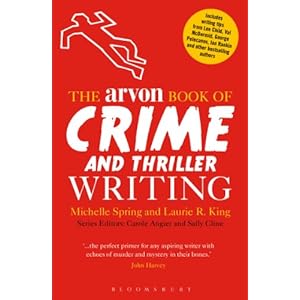
The Arvon Book of Crime and Thriller Writing by Michelle Spring and Laurie R. King

Write a Bestselling Thriller: A Teach Yourself Creative Writing Guide by Matthew Branton

How to Write a Thriller by Scott Mariani

Writing the Thriller Film: The Terror Within (Michael Wiese Productions) by Neill D. Hicks

Writing for Emotional Impact: Advanced Dramatic Techniques to Attract, Engage, and Fascinate the Reader from Beginning to End by Karl Iglesias

Writing a Thriller by André Jute


“HOW TO WRITE A MYSTERY NOVEL,” from Amazon, list with links:

How to Write a Damn Good Mystery: A Practical Step-by-Step Guide from Inspiration to Finished Manuscript by James N. Frey

Writing and Selling Your Mystery Novel
Writing and Selling Your Mystery Novel by Hallie Ephron

Don't Murder Your Mystery [Agatha Award for Best Nonfiction Book] by Chris Roerden (2006)


Writing Mysteries by Sue Grafton (2002)

The Elements of Mystery Fiction: Writing the Modern Whodunit by William G Tapply

How to Write a Mystery by Larry Beinhart

How to Write Killer Historical Mysteries: The Art and Adventure of Sleuthing Through the Past by Kathy Lynn Emerson

Youdunit Whodunit! How to Write Mysteries by Nicola Furlong (2009)

Mystery Writing in a Nutshell by John McAleer, Andrew McAleer and Edward D. Hoch

How to Write Killer Fiction: The Funhouse of Mystery & the Roller Coaster of Suspense by Carolyn Wheat
How to Write a Dick: A Guide for Writing Fictional Sleuths from a Couple of Real-Life Sleuths by Shaun Kaufman and Colleen Collins

Breaking Into The Mystery Short Story Market: It's No Crime! by Brendan DuBois

Write Good or Die by Scott Nicholson, Gayle Lynds, Kevin J. Anderson and M.J. Rose


“WRITING CRIME FICTION,” from Amazon, list with links:

Police Procedure & Investigation: A Guide for Writers (Howdunit)Police Procedure and Investigation: A Guide for Writers (Howdunit) by Lee Lofland

Writing Crime Fiction by Naomi Hirahara, Max Allan Collins, Stephen Gallagher and Dave Zeltserman

The Crime Interviews Volume One: Best-selling Authors Talk About Writing Crime Fiction by Len Wanner and Louise Welsh

Crime Writing Tips For Beginners by Kelvin Jones

The Crime Interviews Volume Three: Best-selling Authors Talk About Writing Crime Fiction by Len Wanner and William McIlvanney

Meet a Jerk, Get to Work, How to Write Villains and the Occasional Hero by Jaqueline Girdner and Ronald Hudson

More Forensics and Fiction: Crime Writers Morbidly Curious Questions Expertly Answered (Marder and Mayhem)
More Forensics and Fiction: Crime Writers Morbidly Curious Questions Expertly Answered (Murder and Mayhem) by Douglas P. Lyle

The Oxford Companion to Crime and Mystery Writing by Rosemary Herbert, Catherine Aird, John M. Reilly and Susan Oleksiw

Crime Fiction (The New Critical Idiom) by John Scaggs

Writing a Killer Thriller (An Editor's Guide to Writing Compelling Fiction) by Jodie Renner

The Writer's Complete Crime Reference Book by Martin Roth

The Cambridge Companion to American Crime Fiction (Cambridge Companions to Literature) by Catherine Ross Nickerson

The Crime Writer's Reference Guide: 1001 Tips for Writing the Perfect Murder by Martin Roth (2003)
Now Write! Mysteries: Suspense, Crime, Thriller, and Other Mystery Fiction Exercises from Today's Best Writers and Teachers by Sherry Ellis and Laurie Lamson

The Crime Writer by Gregg Hurwitz

Forensics For Dummies by Douglas P. Lyle

The Arvon Book of Crime and Thriller Writing
Howdunit Forensics by D. P. Lyle

The Arvon Book of Crime and Thriller Writing by Michelle Spring and Laurie R. King

Body Trauma: A Writer's Guide to Wounds and Injuries (Get It Write) by David W. Page

The Criminal Mind by Katherine Ramsland

The Crime Writer's Handbook (Allison & Busby Writers' Guides) by Douglas Wynn (2004)
(5 stars, 1 customer review)

Teach Yourself Writing Crime Fiction by Lesley Adamson

Crime Writers Reference Guide by Martin Roth

The Crime Interviews Volume Two: Best-selling Authors Talk About Writing Crime Fiction by Len Wanner and Ian Rankin

FBI Handbook of Crime Scene Forensics by Federal Bureau of Investigation (2012)

Writing Crime Novels by John Paxton Sheriff


Writing Bestselling True Crime and Suspense: Break into the Exciting and Profitable Field of Book, Screenplay, and Television (Writing Guides) by Tom Byrnes

Writing Crime and Suspense Fiction: And Getting Published (Teach Yourself Series) by Lesley Grant-Adamson

How to Write Crime by Marele Day

How to Write True Crime That Sells by Gera-Lind Kolarik and Delores Kennedy

Writing Crime Fiction (Writing Handbooks) by Henry Reymond Fitzwalter Keating

Scene of the Crime: A Writer's Guide to Crime Scene Investigation (Howdunit Series) by Anne Wingate (1992) (av. 4.5 stars, 14 customer reviews)

Amateur Detectives: A Writer's Guide to How Private Citizens Solve Criminal Cases (Howdunit Writing) by Elaine Raco Chase and Anne Wingate (1996) (av. 3.5 stars, 6 reviews)

Police Procedural: A Writer's Guide to the Police and How They Work (Howdunit) by Russell L. Bintliff (Sep 1993) (av. 3.5 stars, 9 customer reviews)

Armed and Dangerous: A Writer's Guide to Weapons (Howdunit Writing) by Michael Newton (Aug 1990) (av. 3 stars, 9 customer reviews)

Deadly Doses: A Writer's Guide to Poisons (Howdunit Writing) by Serita Deborah Stevens and Anne Klarner


Also:

BBC: Writing Crime Fiction A master-class held by crime fiction authors Minette Walters and Mark Billingham in March 2004.

Raymond Chandler, The Simple Art of Murder

Writers and readers: Do you have any good craft or resource books to add, for crime fiction writers? Or any opinions on any of the titles listed here? Any you've found particularly useful? Please let us know in the comments below. Thanks!

Jodie Jodie Renner, a freelance fiction editor specializing in thrillers and other fast-paced fiction, has published two books (& e-books) to date in her series, An Editor’s Guide to Writing Compelling  Fiction: Writing a Killer Thriller and Style that Sizzles & Pacing for Power, both in e-book & print. Upcoming book: Immerse the Readers in Your Story World. For more info, please visit Jodie’s author website or editor website, or find her on Facebook or Twitter, and read her blog posts on The Kill Zone and Resources for WritersTo subscribe to Jodie’s "Resources for Writers" newsletter please click on this link.


Monday, October 10, 2011

Heightening the Suspense, Part II


by Jodie Renner, editor & author 

Techniques for Building Suspense

As I mentioned in Part I of this article, all genres of fiction need some suspense, to keep the reader interested and turning the pages. And of course, you’ll need to amp up the suspense a lot more if you’re writing a fast-paced, nail-biting page-turner.
After revealing your intriguing story question and showing your inciting incident, you can continue to build suspense throughout your story by using a number of techniques, such as:

-      building the sense of danger slowly

-      sprinkling in some foreshadowing (teasing) as you go along

-      withholding information (revealing critical info bit by bit)

-      using a tense mood and fast pacing

-      adding ominous details to your setting (environment, weather, etc.)

-      using compelling, vivid sensory imagery to bring your story world alive

-      adding time pressures (a ticking clock) for your protagonist

-      piling on new obstacles and complications that get in his/her way

-      narrating the story through several different viewpoints

-      giving the protagonist some inner conflict and tough decisions

-      introducing a few surprise plot twists

-      writing in some cliff-hanger scene and chapter endings

-      creating a riveting, “close call” ending

Some “big-picture” techniques for writing suspense

-      First, make your readers care about your protagonist, by creating a likeable, appealing, strong, smart and resourceful but vulnerable character. If readers haven’t bonded with your main character, they won’t become emotionally invested in what happens to him or her.


-      Start gradually, and let it build. When writing suspense, start slowly and subtly — give yourself somewhere to build. As Hallie Ephron says, “If you pull out all the stops at the beginning, you’ll have nowhere to go; worse still, your reader will turn numb to the nuance you are trying to create.”

-      Create a mood of unease, by showing the main character feeling tense or uneasy, or by showing some of the bad guy’s thoughts and intentions. Maybe, instead of anxious, your heroine is oblivious, but because we’ve just been in the viewpoint of the villain, we know the danger that’s about to threaten her.


-      Use the setting to create suspense. To describe the surroundings of the character in jeopardy, use vivid details and sensory imagery that reflect or add to his angst or fears, and bring to life the dangerous situations he’s confronting. (More specifics on this in Part III.) 

-      Foreshadow trouble to come. To pique the reader’s interest and keep her reading, drop hints here and there about dangers lurking ahead.

-      Pile on the problems and continue to raise the stakes. A complacent hero is a boring hero. Keep challenging him, to amp up the plot and build a character arc in which circumstances force him to be stronger, cleverer, and more resourceful, in order to survive and vanquish evil.

-      Use delay and subterfuge: Either we know something the hero doesn’t, or the narrator-protagonist has crucial info he’s revealing little by little, doling out to others gradually — the clever author’s way of keeping us on our toes, anxious and questioning, eager to keep reading to find out more.

-      Use multiple viewpoints, especially that of the villain. This way the reader finds out critical information the protagonist doesn’t know, things we want to warn her about! And getting into the head of the bad guy(s) always enriches the story. 

-      Write in cliff-hangers.  Jessica Page Morrell advises us, “To amp up suspense, orchestrate your scene and chapter endings so they don’t wind down, but instead keep the reader hanging. …endings are the perfect places to create cliff-hangers, revelations, and surprises.” But do vary your chapter endings. 

-      Create a few plot twists. Readers are surprised and delighted when the events take a turn they never expected. 

-      Add in difficult decisions and inner conflict. These will not only make your plot more suspenseful, they will also make your protagonist more complex, vulnerable, and interesting.

Part III of this series covers some specific techniques for ratcheting up the suspense in your thriller or other crime fiction.

Resources:
Hallie Ephron, The Everything Guide to Writing Your First Novel Jack M. Bickham, The 38 Most Common Fiction Writing Mistakes
Jessica Page Morrell, Thanks, But This Isn’t For Us

Jodie Renner, a freelance fiction editor specializing in thrillers and other fast-paced fiction, has published two books to date in her series, An Editor’s Guide to Writing Compelling Fiction: WRITING A KILLER THRILLER and STYLE THAT SIZZLES & PACING FOR POWER. Both titles are available in e-book and paperback.
For more info, please visit Jodie’s author website or editor website, or find her on Facebook or Twitter.


Monday, June 20, 2011

Writing a Killer Thriller, Part III

by Jodie Renner
More techniques for writing a compelling suspense-thriller…or any other page-turner.
In Part I of this series, I passed along some tips for creating a compelling opening, complex characters, and a tight point of view. In Part II, I discussed creating a riveting plot with lots of conflict and suspense and a tight, to-the-point writing style. This final post in this series covers tension, dialogue, pacing, passion, and crafting a satisfying ending.
Put tension on every page.  
This applies to all fiction, but even more so for thrillers. As Jack Bickham says, “Virtually all the high points of most stories involve conflict. It’s the fuel that makes fiction go. Nothing is more exciting and involving.”
Bickham continues, “In fiction, the best times for the writer—and reader—are when the story’s main character is in the worst trouble. Let your character relax, feel happy and content, and be worried about nothing, and your story dies. Pour on all sorts of woes so your poor character is thoroughly miserable and in the deepest kind of trouble, and your story perks right up—along with your reader’s interest.
          “The moral: Although most of us do everything we can to avoid trouble in real life, we must do the opposite as writers of fiction. We must seek out ways to add trouble to our characters’ lives, putting just as much pressure on them as we can. For it’s from plot trouble that reader interest comes.”
In his chapter called “Tension All the Time,” Donald Maass emphasizes giving your protagonist (and other characters) conflicting emotions and inner conflict.

All dialogue needs tension, too.
As Ingermanson and Economy say, “Dialogue is war! Every dialogue should be a controlled conflict between at least two of the characters with opposing agendas. The main purpose of dialogue is to advance the conflict of the story.” So definitely leave out the “How are you? I’m fine. And you?” blah-blah-blah, and cut to the chase. Unless of course you’re trying to show seething resentment or subtle tension boiling up from under surface politeness. As Donald Maass says, “Conflict in dialogue can be as polite as poison, or as messy as hatchets. The approach is up to you. The important thing is to get away from ambling chit-chat and get right to the desire of two speakers to defeat each other.” So follow James N. Frey’s advice: “Decide you will have fresh, snappy dialogue and not a single line of conversation.”

Vary the pacing.
Although thrillers are generally fast-paced, it’s important to slow down the pacing from time to time, to give your readers a break. As Jessica Page Morrell says, “because readers need to put down a book from time to time, and because pacing can’t be as relentless as a runaway train, you need to bring down the temperature and tension in a story at intervals. A win for your character, as well as a slower or interlude scene, provides the pauses and quieter moments needed.”

Give your scenes conflict, intensity and intrigue.
Start and end your chapters and scenes with questions and intrigue. James N. Frey’s advice is to end each scene or section of dramatic narrative with a bridge, a story question to carry the reader to the next one.
Every scene, according to James Scott Bell, needs a degree of intensity. A moving force in the scene is trying to make something happen. Opposition or obstacles are keeping the POV character from meeting his objective. And the outcome is often not entirely satisfactory. In fact, Bell advises us, “Design your scenes, for the most part, so the lead is in a worse position after the scene is over.” This will keep the reader reading to find out how the protagonist tackles the new challenges and survives her new predicament.

Put passion into your writing.
Donald Maass, in The Fire in Fiction, feels that the key ingredient to a page-turner is passion. “What do I mean by passion? … A passionate author has us in her grip. Passionate fiction is not bogged down, wandering, low in tension, or beset by the many bugbears of by-the-numbers novel writing, like stereotypical characters, predictable plots, cliché-ridden prose, churning exposition, buried dialogue, and so on.[…] When the purpose of every word is urgent, the story crackles, connects, weaves, and falls together in wondrous ways.”
          How to develop that passion as a writer? Maass believes in learning from others. “Everything we need in order to understand the techniques of passion lies within the covers of novels that you will currently find on the shelves.”

Create a thrilling, satisfying climax.
Frey points out, “In almost all damn good thrillers, the hero is nearly killed in the climax, but then manages to kill or capture the villain and to foil his evil plot. Audiences find this motif satisfying….” An effective, satisfying climax has a surprise or two, good prevails over evil, and often the hero discovers something about himself or gains insight into the human condition. Don’t disappoint your readers by having a nebulous, wishy-washy, or tragic ending. Leave that to literary fiction, not your killer thriller!
 
Resources:
James Scott Bell, Revision and Self-Editing
James N. Frey, How to Write a Damn Good Thriller  
Donald Maass, The Fire in Fiction
David Morrell, The Successful Novelist
Jessica Page Morrell, Thanks, But This Isn’t for Us


Jodie Renner, a freelance fiction editor specializing in thrillers and other fast-paced fiction, has published two books to date in her series, An Editor’s Guide to Writing Compelling Fiction: WRITING A KILLER THRILLER and STYLE THAT SIZZLES & PACING FOR POWER (Silver Medalist in the FAPA Book Awards, 2013). Both titles are available in e-book and paperback.
For more info, please visit Jodie’s author website or editor website, or find her on Facebook or Twitter.