Showing posts with label police procedurals. Show all posts

Monday, February 18, 2013

Dangerous Ivory Towers

From the Mary Higgins Clark awards short-list:

Dead Scared (Lacey Flint #2) by S.J. Bolton (Minotaur hardcover, 5 June 2012).

Detective Constable Lacey Flint has just recovered from the injuries she suffered apprehending a Jack the Ripper copycat (Now You See Me, 2011).   Although assigned to a task force on serious crimes against women, Detective Inspector Mark Joesbury, with whom she worked on the Ripper case, has asked her superiors to let her go undercover as a Cambridge psychology student.

At first, Flint is reluctant, apart from her strong attraction to the very attractive Joesbury (much is made of his "turquoise eyes"), she doesn't feel emotionally prepared to immerse herself in another difficult case.  But once she understands that they are investigating a rash of apparent student suicides, and sees the results, both successful and not, she agrees.

The suspicions were first raised by Dr. Evi Oliver, a counsellor at the university clinic who had expressed her concerns to a former Cambridge connection, Joesbury's colleague DI Dana Tulloch.
Lacey's assignment is to pose as Dr. Oliver's research assistant Laura Farrow, and is installed in St. John's College in the room where the most recent victim had lived.

This is a complex story.  Though told primarily in the first-person from Lacey's point of view, the short chapters also focus on other characters in third-person narrative, and jumps around in time.

This very dark psychological thriller is utterly consuming and difficult to put down.  Be warned, it may not be a wise choice for bedtime reading.


FTC Full Disclosure:  I borrowed this book from my local library.

Monday, January 21, 2013

Investigating the Police

Watching the Dark (An Inspector Banks novel) by Peter Robinson (William Morrow hardcover, 8 January 2013).

The first Inspector Banks novel, Gallows View, was originally released in 1987, and the timeline of the books has followed the timeline of reality. 

Alan Banks has gone from a happily married detective living in a small town with his wife and two young children to a divorced Detective Chief Inspector living alone in a cottage on the moors.

Here, Banks is called in to investigate the murder of a fellow policeman, Detective Inspector Bill Quinn.  Quinn was recuperating at St. Peter's Police Treatment Centre, which happens to be located within Banks' jurisdiction. 

Quinn was walking in grounds of the Centre in the late evening, presumably indulging in a cigarette, when he was shot with an arrow from a crossbow. 

Since Quinn was a policeman, an officer from Professional Standards, Joanna Passero, is brought in to work with Banks on the case.  As when Annie Cabbot (now a member of Banks' team) shadowed him representing Professional Standards in Aftermath, Banks is not pleased about his temporary companion.

But they soon become aware of the possibility that Quinn might have been a crooked cop.  Although his superiors seem convinced that this is true, Banks is not, and does his best to prove he's right.

Peter Robinson is a master of Story, and with Watching the Dark he has created another well-constructed, engrossing mystery tale.  Banks has grown not only older, but more introspective over the years, and the reader shares his point of view for much of the novel. 

As one who's been reading the series since the very beginning, I can't say for certain that it's easy to jump in this far into the series.  Starting with this book, however, will take away the pleasure of experiencing Alan Banks' development as a detective and a person during the span of 25 years.


FTC full disclosure:  Many thanks to the publisher for a review copy of the book.  

Monday, November 5, 2012

RESOURCES FOR CRIME WRITERS - BOOKS

by Jodie Renner, freelance editor


To continue my series on resources for crime writers, here's a list of craft and other resource books for writers of thrillers, mysteries, and other crime fiction. For a list of organizations, conferences, and some blogs related to crime fiction, see my recent post, Some Great Resources for Crime Fiction Writers and Readers.


BOOKS ON WRITING THRILLERS, MYSTERIES, AND OTHER CRIME FICTION:

“HOW TO WRITE A THRILLER,” from Amazon, list with links:

How to Write a Damn Good Thriller: A Step-by-Step Guide for Novelists and Screenwriters by James N. Frey

Elements of Fiction Writing - Conflict and Suspense by James Scott Bell

Writing a Killer Thriller (An Editor's Guide to Writing Compelling Fiction) by Jodie Renner

Writing the Thriller by Trish Macdonald Skillman 

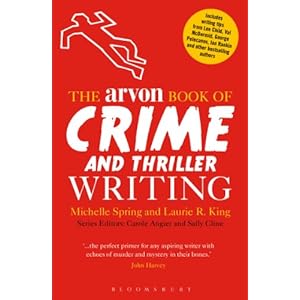
The Arvon Book of Crime and Thriller Writing by Michelle Spring and Laurie R. King

Write a Bestselling Thriller: A Teach Yourself Creative Writing Guide by Matthew Branton

How to Write a Thriller by Scott Mariani

Writing the Thriller Film: The Terror Within (Michael Wiese Productions) by Neill D. Hicks

Writing for Emotional Impact: Advanced Dramatic Techniques to Attract, Engage, and Fascinate the Reader from Beginning to End by Karl Iglesias

Writing a Thriller by André Jute


“HOW TO WRITE A MYSTERY NOVEL,” from Amazon, list with links:

How to Write a Damn Good Mystery: A Practical Step-by-Step Guide from Inspiration to Finished Manuscript by James N. Frey

Writing and Selling Your Mystery Novel
Writing and Selling Your Mystery Novel by Hallie Ephron

Don't Murder Your Mystery [Agatha Award for Best Nonfiction Book] by Chris Roerden (2006)


Writing Mysteries by Sue Grafton (2002)

The Elements of Mystery Fiction: Writing the Modern Whodunit by William G Tapply

How to Write a Mystery by Larry Beinhart

How to Write Killer Historical Mysteries: The Art and Adventure of Sleuthing Through the Past by Kathy Lynn Emerson

Youdunit Whodunit! How to Write Mysteries by Nicola Furlong (2009)

Mystery Writing in a Nutshell by John McAleer, Andrew McAleer and Edward D. Hoch

How to Write Killer Fiction: The Funhouse of Mystery & the Roller Coaster of Suspense by Carolyn Wheat
How to Write a Dick: A Guide for Writing Fictional Sleuths from a Couple of Real-Life Sleuths by Shaun Kaufman and Colleen Collins

Breaking Into The Mystery Short Story Market: It's No Crime! by Brendan DuBois

Write Good or Die by Scott Nicholson, Gayle Lynds, Kevin J. Anderson and M.J. Rose


“WRITING CRIME FICTION,” from Amazon, list with links:

Police Procedure & Investigation: A Guide for Writers (Howdunit)Police Procedure and Investigation: A Guide for Writers (Howdunit) by Lee Lofland

Writing Crime Fiction by Naomi Hirahara, Max Allan Collins, Stephen Gallagher and Dave Zeltserman

The Crime Interviews Volume One: Best-selling Authors Talk About Writing Crime Fiction by Len Wanner and Louise Welsh

Crime Writing Tips For Beginners by Kelvin Jones

The Crime Interviews Volume Three: Best-selling Authors Talk About Writing Crime Fiction by Len Wanner and William McIlvanney

Meet a Jerk, Get to Work, How to Write Villains and the Occasional Hero by Jaqueline Girdner and Ronald Hudson

More Forensics and Fiction: Crime Writers Morbidly Curious Questions Expertly Answered (Marder and Mayhem)
More Forensics and Fiction: Crime Writers Morbidly Curious Questions Expertly Answered (Murder and Mayhem) by Douglas P. Lyle

The Oxford Companion to Crime and Mystery Writing by Rosemary Herbert, Catherine Aird, John M. Reilly and Susan Oleksiw

Crime Fiction (The New Critical Idiom) by John Scaggs

Writing a Killer Thriller (An Editor's Guide to Writing Compelling Fiction) by Jodie Renner

The Writer's Complete Crime Reference Book by Martin Roth

The Cambridge Companion to American Crime Fiction (Cambridge Companions to Literature) by Catherine Ross Nickerson

The Crime Writer's Reference Guide: 1001 Tips for Writing the Perfect Murder by Martin Roth (2003)
Now Write! Mysteries: Suspense, Crime, Thriller, and Other Mystery Fiction Exercises from Today's Best Writers and Teachers by Sherry Ellis and Laurie Lamson

The Crime Writer by Gregg Hurwitz

Forensics For Dummies by Douglas P. Lyle

The Arvon Book of Crime and Thriller Writing
Howdunit Forensics by D. P. Lyle

The Arvon Book of Crime and Thriller Writing by Michelle Spring and Laurie R. King

Body Trauma: A Writer's Guide to Wounds and Injuries (Get It Write) by David W. Page

The Criminal Mind by Katherine Ramsland

The Crime Writer's Handbook (Allison & Busby Writers' Guides) by Douglas Wynn (2004)
(5 stars, 1 customer review)

Teach Yourself Writing Crime Fiction by Lesley Adamson

Crime Writers Reference Guide by Martin Roth

The Crime Interviews Volume Two: Best-selling Authors Talk About Writing Crime Fiction by Len Wanner and Ian Rankin

FBI Handbook of Crime Scene Forensics by Federal Bureau of Investigation (2012)

Writing Crime Novels by John Paxton Sheriff


Writing Bestselling True Crime and Suspense: Break into the Exciting and Profitable Field of Book, Screenplay, and Television (Writing Guides) by Tom Byrnes

Writing Crime and Suspense Fiction: And Getting Published (Teach Yourself Series) by Lesley Grant-Adamson

How to Write Crime by Marele Day

How to Write True Crime That Sells by Gera-Lind Kolarik and Delores Kennedy

Writing Crime Fiction (Writing Handbooks) by Henry Reymond Fitzwalter Keating

Scene of the Crime: A Writer's Guide to Crime Scene Investigation (Howdunit Series) by Anne Wingate (1992) (av. 4.5 stars, 14 customer reviews)

Amateur Detectives: A Writer's Guide to How Private Citizens Solve Criminal Cases (Howdunit Writing) by Elaine Raco Chase and Anne Wingate (1996) (av. 3.5 stars, 6 reviews)

Police Procedural: A Writer's Guide to the Police and How They Work (Howdunit) by Russell L. Bintliff (Sep 1993) (av. 3.5 stars, 9 customer reviews)

Armed and Dangerous: A Writer's Guide to Weapons (Howdunit Writing) by Michael Newton (Aug 1990) (av. 3 stars, 9 customer reviews)

Deadly Doses: A Writer's Guide to Poisons (Howdunit Writing) by Serita Deborah Stevens and Anne Klarner


Also:

BBC: Writing Crime Fiction A master-class held by crime fiction authors Minette Walters and Mark Billingham in March 2004.

Raymond Chandler, The Simple Art of Murder

Writers and readers: Do you have any good craft or resource books to add, for crime fiction writers? Or any opinions on any of the titles listed here? Any you've found particularly useful? Please let us know in the comments below. Thanks!

Jodie Jodie Renner, a freelance fiction editor specializing in thrillers and other fast-paced fiction, has published two books (& e-books) to date in her series, An Editor’s Guide to Writing Compelling  Fiction: Writing a Killer Thriller and Style that Sizzles & Pacing for Power, both in e-book & print. Upcoming book: Immerse the Readers in Your Story World. For more info, please visit Jodie’s author website or editor website, or find her on Facebook or Twitter, and read her blog posts on The Kill Zone and Resources for WritersTo subscribe to Jodie’s "Resources for Writers" newsletter please click on this link.