Showing posts with label writing a mystery. Show all posts

Wednesday, June 19, 2013

Rules and breaking them

by Jenny Hilborne
Author of mysteries and thrillers

Someone once said (or wrote somewhere) that there are only so many plausible plot lines for writing mysteries and thrillers. When I'm watching TV, I see truth in that statement. Mysteries can be formulaic with similar and overused plot lines.

A while ago, I came across a list of mystery writing "rules" on another blog post, where one of the rules was to "not reveal the bad guy too early on, or the reader will have no reason to continue reading." In this same list of "rules", the writer was also advised to not wait too long for the big reveal, or the reader will feel cheated. It's confusing and a challenge for the mystery writer. Following "rules" can make a book or a movie predictable. I've read plenty of comments about predictability in various negative reviews left by readers.

As a mystery/thriller reader, as well as a writer, I enjoy pitting my wits against the detective and trying to solve the crime first. I also enjoy the satisfaction of seeing the bad guy get his comeuppance. However, I also enjoy reading books by writers who break the "rules" and tell me upfront who the bad guy is, or dare to write their book with mixed 1st and 3rd person points of view. Harlan Coban does this brilliantly.

At my book events, I ask mystery readers what kinds of mysteries they like. Some are clear in their answer and name the sub genre or the authors they enjoy. Others aren't as aware of the sub genres that exist within the mystery/thriller genre, which opens the door for a great discussion. For me, and a lot of readers I talk to at events, the most important part of a mystery is the plot. It has to be plausible and contain lots of fast moving action.

When I wrote Stone Cold, I had the plot in mind, and the sub plot, but I wanted to include chapters in the killer's point of view. I wanted to try something different and reveal the killer's identity early on in the book. This goes against the "rules" I've read for writing mystery, but perhaps not for writing suspense, or a thriller.

The reviews, so far, have been mixed. Some readers I talk to believe if you know who the bad guy is upfront there is no mystery. Knowing who the villain is early on is one of the differences between a mystery, and a suspense or a thriller. Stone Cold is a psychological thriller. It delves into the motivations of each of the characters. It is not a mystery and the detective is not the main character. Not everyone likes it (I knew that would be the case going in).

When we know the bad guy upfront, a book (and a movie) can still be loaded with tension and suspense. It lies partly in the chase; how will the villain be captured? Will he be captured? As one reviewer for Stone Cold wrote: "Justice is a strange commodity and it isn't always served."

Psychology is a fascinating subject. Psychological thrillers are always filled with tension. It isn't always what a villain does that's so shocking, but why they do it. What makes them behave this way? How many lives will be put at risk when they take the law into their own hands? The 'why?' was likely the most fascinating aspect of the Jodie Arias trial. We know upfront what she did. Viewers found it riveting to watch the trial. We all wanted to know why.

Villains have different motivations. Maybe Jodie Arias is plain evil, but not all villains are. When a villain has redeeming qualities, it causes conflict. In fiction, the villain is not always placed in the book to create hurdles for the hero/heroine. In Stone Cold, there are three villains, all with different motivations, and each one provokes a different level of either sympathy or abhorrence in the reader, necessary for the story.

An interesting villain should be able to fool readers into believing there is an element of good in their character. Their true intentions, and the motivations behind them, often lay hidden until much later. This creates complex layers to the story and more suspense, even when we know their identity early on. The hidden traits of the villain are still a mystery. When we know his identity upfront, we can see more easily that he is a skilled and cunning liar, and we can see his determination. He may not always win, but he will test the hero/heroine.  

Readers: how do you feel about knowing the identity of the villain early on in a thriller? Do you find the chase compelling?

Writers: do you follow the "rules" when writing mysteries or thrillers?


Monday, November 5, 2012

RESOURCES FOR CRIME WRITERS - BOOKS

by Jodie Renner, freelance editor


To continue my series on resources for crime writers, here's a list of craft and other resource books for writers of thrillers, mysteries, and other crime fiction. For a list of organizations, conferences, and some blogs related to crime fiction, see my recent post, Some Great Resources for Crime Fiction Writers and Readers.


BOOKS ON WRITING THRILLERS, MYSTERIES, AND OTHER CRIME FICTION:

“HOW TO WRITE A THRILLER,” from Amazon, list with links:

How to Write a Damn Good Thriller: A Step-by-Step Guide for Novelists and Screenwriters by James N. Frey

Elements of Fiction Writing - Conflict and Suspense by James Scott Bell

Writing a Killer Thriller (An Editor's Guide to Writing Compelling Fiction) by Jodie Renner

Writing the Thriller by Trish Macdonald Skillman 

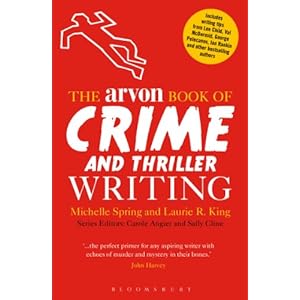
The Arvon Book of Crime and Thriller Writing by Michelle Spring and Laurie R. King

Write a Bestselling Thriller: A Teach Yourself Creative Writing Guide by Matthew Branton

How to Write a Thriller by Scott Mariani

Writing the Thriller Film: The Terror Within (Michael Wiese Productions) by Neill D. Hicks

Writing for Emotional Impact: Advanced Dramatic Techniques to Attract, Engage, and Fascinate the Reader from Beginning to End by Karl Iglesias

Writing a Thriller by André Jute


“HOW TO WRITE A MYSTERY NOVEL,” from Amazon, list with links:

How to Write a Damn Good Mystery: A Practical Step-by-Step Guide from Inspiration to Finished Manuscript by James N. Frey

Writing and Selling Your Mystery Novel
Writing and Selling Your Mystery Novel by Hallie Ephron

Don't Murder Your Mystery [Agatha Award for Best Nonfiction Book] by Chris Roerden (2006)


Writing Mysteries by Sue Grafton (2002)

The Elements of Mystery Fiction: Writing the Modern Whodunit by William G Tapply

How to Write a Mystery by Larry Beinhart

How to Write Killer Historical Mysteries: The Art and Adventure of Sleuthing Through the Past by Kathy Lynn Emerson

Youdunit Whodunit! How to Write Mysteries by Nicola Furlong (2009)

Mystery Writing in a Nutshell by John McAleer, Andrew McAleer and Edward D. Hoch

How to Write Killer Fiction: The Funhouse of Mystery & the Roller Coaster of Suspense by Carolyn Wheat
How to Write a Dick: A Guide for Writing Fictional Sleuths from a Couple of Real-Life Sleuths by Shaun Kaufman and Colleen Collins

Breaking Into The Mystery Short Story Market: It's No Crime! by Brendan DuBois

Write Good or Die by Scott Nicholson, Gayle Lynds, Kevin J. Anderson and M.J. Rose


“WRITING CRIME FICTION,” from Amazon, list with links:

Police Procedure & Investigation: A Guide for Writers (Howdunit)Police Procedure and Investigation: A Guide for Writers (Howdunit) by Lee Lofland

Writing Crime Fiction by Naomi Hirahara, Max Allan Collins, Stephen Gallagher and Dave Zeltserman

The Crime Interviews Volume One: Best-selling Authors Talk About Writing Crime Fiction by Len Wanner and Louise Welsh

Crime Writing Tips For Beginners by Kelvin Jones

The Crime Interviews Volume Three: Best-selling Authors Talk About Writing Crime Fiction by Len Wanner and William McIlvanney

Meet a Jerk, Get to Work, How to Write Villains and the Occasional Hero by Jaqueline Girdner and Ronald Hudson

More Forensics and Fiction: Crime Writers Morbidly Curious Questions Expertly Answered (Marder and Mayhem)
More Forensics and Fiction: Crime Writers Morbidly Curious Questions Expertly Answered (Murder and Mayhem) by Douglas P. Lyle

The Oxford Companion to Crime and Mystery Writing by Rosemary Herbert, Catherine Aird, John M. Reilly and Susan Oleksiw

Crime Fiction (The New Critical Idiom) by John Scaggs

Writing a Killer Thriller (An Editor's Guide to Writing Compelling Fiction) by Jodie Renner

The Writer's Complete Crime Reference Book by Martin Roth

The Cambridge Companion to American Crime Fiction (Cambridge Companions to Literature) by Catherine Ross Nickerson

The Crime Writer's Reference Guide: 1001 Tips for Writing the Perfect Murder by Martin Roth (2003)
Now Write! Mysteries: Suspense, Crime, Thriller, and Other Mystery Fiction Exercises from Today's Best Writers and Teachers by Sherry Ellis and Laurie Lamson

The Crime Writer by Gregg Hurwitz

Forensics For Dummies by Douglas P. Lyle

The Arvon Book of Crime and Thriller Writing
Howdunit Forensics by D. P. Lyle

The Arvon Book of Crime and Thriller Writing by Michelle Spring and Laurie R. King

Body Trauma: A Writer's Guide to Wounds and Injuries (Get It Write) by David W. Page

The Criminal Mind by Katherine Ramsland

The Crime Writer's Handbook (Allison & Busby Writers' Guides) by Douglas Wynn (2004)
(5 stars, 1 customer review)

Teach Yourself Writing Crime Fiction by Lesley Adamson

Crime Writers Reference Guide by Martin Roth

The Crime Interviews Volume Two: Best-selling Authors Talk About Writing Crime Fiction by Len Wanner and Ian Rankin

FBI Handbook of Crime Scene Forensics by Federal Bureau of Investigation (2012)

Writing Crime Novels by John Paxton Sheriff


Writing Bestselling True Crime and Suspense: Break into the Exciting and Profitable Field of Book, Screenplay, and Television (Writing Guides) by Tom Byrnes

Writing Crime and Suspense Fiction: And Getting Published (Teach Yourself Series) by Lesley Grant-Adamson

How to Write Crime by Marele Day

How to Write True Crime That Sells by Gera-Lind Kolarik and Delores Kennedy

Writing Crime Fiction (Writing Handbooks) by Henry Reymond Fitzwalter Keating

Scene of the Crime: A Writer's Guide to Crime Scene Investigation (Howdunit Series) by Anne Wingate (1992) (av. 4.5 stars, 14 customer reviews)

Amateur Detectives: A Writer's Guide to How Private Citizens Solve Criminal Cases (Howdunit Writing) by Elaine Raco Chase and Anne Wingate (1996) (av. 3.5 stars, 6 reviews)

Police Procedural: A Writer's Guide to the Police and How They Work (Howdunit) by Russell L. Bintliff (Sep 1993) (av. 3.5 stars, 9 customer reviews)

Armed and Dangerous: A Writer's Guide to Weapons (Howdunit Writing) by Michael Newton (Aug 1990) (av. 3 stars, 9 customer reviews)

Deadly Doses: A Writer's Guide to Poisons (Howdunit Writing) by Serita Deborah Stevens and Anne Klarner


Also:

BBC: Writing Crime Fiction A master-class held by crime fiction authors Minette Walters and Mark Billingham in March 2004.

Raymond Chandler, The Simple Art of Murder

Writers and readers: Do you have any good craft or resource books to add, for crime fiction writers? Or any opinions on any of the titles listed here? Any you've found particularly useful? Please let us know in the comments below. Thanks!

Jodie Jodie Renner, a freelance fiction editor specializing in thrillers and other fast-paced fiction, has published two books (& e-books) to date in her series, An Editor’s Guide to Writing Compelling  Fiction: Writing a Killer Thriller and Style that Sizzles & Pacing for Power, both in e-book & print. Upcoming book: Immerse the Readers in Your Story World. For more info, please visit Jodie’s author website or editor website, or find her on Facebook or Twitter, and read her blog posts on The Kill Zone and Resources for WritersTo subscribe to Jodie’s "Resources for Writers" newsletter please click on this link.