Showing posts with label freelance editors. Show all posts

Sunday, December 8, 2013

10 Tips for Attracting a Top-Notch Freelance Editor for Your Novel

a section of Jodie's reference library
by Jodie Renner, independent fiction editor and craft-of-writing author

With so many authors self-publishing these days, the best independent editors are in high demand, so if you’re looking for a knowledgeable, experienced professional editor to help you make your fiction manuscript the best it can be – and improve your overall writing skills in the process – be sure to take some care with how you seek out and approach them.

Due to the high volume of requests, sought-after freelance editors turn down many more writer clients than they can accept, so it’s important to make a good first impression. 

First, make sure your manuscript isn't still in rough draft. Try to find time to hone your craft (see my to-the-point editor's guides to writing compelling fiction), then go over the manuscript a few times to spark up the characters, raise the stakes, add conflict, tension, and intrigue, pick up the pace, and tighten the writing.

Next, do your research and look for editors with good credentials and reviews, who edit mainly fiction and read and edit your specific genre. Google “freelance editors, mysteries” or whatever, or go through an editors' association like EFA or EAC.

Then read through the editors' websites to find out about their services, process and requirements. What kinds of problems/issues do they look for? If it’s only grammar and spelling, you can get an English teacher friend to do the same, for a lot less money or even free. To make the most of working with a professional, choose someone who first looks for other, more important possible issues, such as a shaky premise, a boring plot, cardboard characters, confusing viewpoints, stilted dialogue, insufficient tension, inconsistencies, slow pacing, plot holes, info dumps, showing instead of telling, and convoluted or too-formal phrasing.

You need an editor who can ferret out big-picture issues and help you with all the various techniques that, when ignored or botched, can sink a novel, and when flagged and addressed, can turn a mediocre or good novel into a real page-turner that sells and garners great reviews. 

Once you’ve determined that the editor is up on current fiction techniques and industry expectations, be sure to read and follow their submission instructions. On my website, for example, I specifically request the following from potential clients: the genre, total word count, first 15-20 pages, 10 pages from somewhere in the middle, a brief synopsis (a few paragraphs to half a page), and a brief description of each of the main characters. 

Without this information, I have no idea whether we’d be a good fit and I’d be the best editor for you. I can’t assess the level of work required to bring your manuscript up to industry standards or whether your story would fire my passions so I can give it the zeal and commitment it deserves. Nor can I provide you with an estimate of my fees without doing a sample edit or reading several pages to see what's involved. The quality of writing and the storytelling skills vary hugely from one manuscript to another, so of course the amount of work (time and effort) – therefore, cost of editing – will also vary hugely. 

Here are 10 tips for attracting a top-notch, in-demand editor for your fiction and getting the best possible edit or critique for your manuscript: 

1. Search for experienced, proficient editors who mainly edit fiction and who also read and edit your genre. Most nonfiction editors are unaware of critical techniques such as point of view and showing instead of telling. And an editor who reads only romances and cozy mysteries isn’t in the best position and mindset to help you add tension, conflict, suspense and intrigue to your thriller, for example.

2. Check their testimonials/reviews and contact some of the authors mentioned to discuss the process with that editor.

3. Peruse the editor’s website to find out about their editing process and the services they offer before contacting them. Do your homework, rather than just contacting the editor and expecting them to explain all about their process and services to you, a potential client whose work they haven’t seen and may not want or be able to take on.

4. Follow their submission requirements and provide as much information as possible about your book. If you just contact them and say “How much do you charge to edit a book?” there’s a good chance you may receive no response or a quick rejection.

5. Indicate why you’ve contacted them in particular – perhaps you noticed they edit your genre, you’ve heard good things about them, an author you know recommended them, or you’re impressed by their credentials and testimonials. Show that you’ve done your research and have concluded that they are your best choice/fit. 

6. Be open-minded about the possible state of your manuscript. Even if you're an accomplished nonfiction writer, if you're relatively new at writing fiction, you may be unaware of issues in your writing style or fiction techniques that appear amateurish or get in the way of reader enjoyment. Your story may still need some or a lot of big-picture advice, even developmental editing, as well as content and stylistic editing, then rewriting/revising before it’s ready for the final copyediting stage.

An experienced editor will be able to tell quite quickly what level your story is at in terms of the editing process and where they should begin. So if you want a final product that can compete in today’s marketplace, it’s important not to be adamant that it “only needs a light final copyedit or proofread.” 

7. Tight deadlines do not produce the best results. Proficient editors are often booked weeks or months in advance, and some juggle more than one manuscript at a time, so start contacting editors well before your manuscript is ready, and leave ample time for the process once it’s begun. If you tell the editor you’re under a tight deadline and need the whole 90K edited and ready to publish within a month, don’t be surprised if they turn it down, especially if it needs a lot of work, including checking over all your subsequent revisions!

8. Don’t forget your social skills. A “Hi, hope you had a good weekend” or “You come highly recommended” can go a long way. And if you do start working with an editor, for a positive, mutually beneficial working relationship, be sure to continue to add those little friendly or appreciative notes. [Editors should also follow this advice, of course!]

9. The writer-editor relationship requires commitment on both sides. Be sure to express your willingness to apply yourself and do any recommended revisions and even consider deleting or rewriting weak scenes. If you tell the editor you don’t have time to revise those scenes to make them stronger and more compelling, it speaks volumes about your work ethic and motivation and the ultimate success of your project, and can be discouraging to the editor, who may feel that she cares more about your story than you do.

10. Get a sample edit or hire the editor to work with you on a chapter or two first. Maybe go on a 20- or 50-page "date" with a prospective editor. That way you can see how that editor handles your work, and he/she can see how you respond to their suggestions and edits.

Good luck with this very important step in your self-publishing process!

Writers – do you have any questions or suggestions?

Editors – do you have any tips to add for writers who are seeking out an editor?  


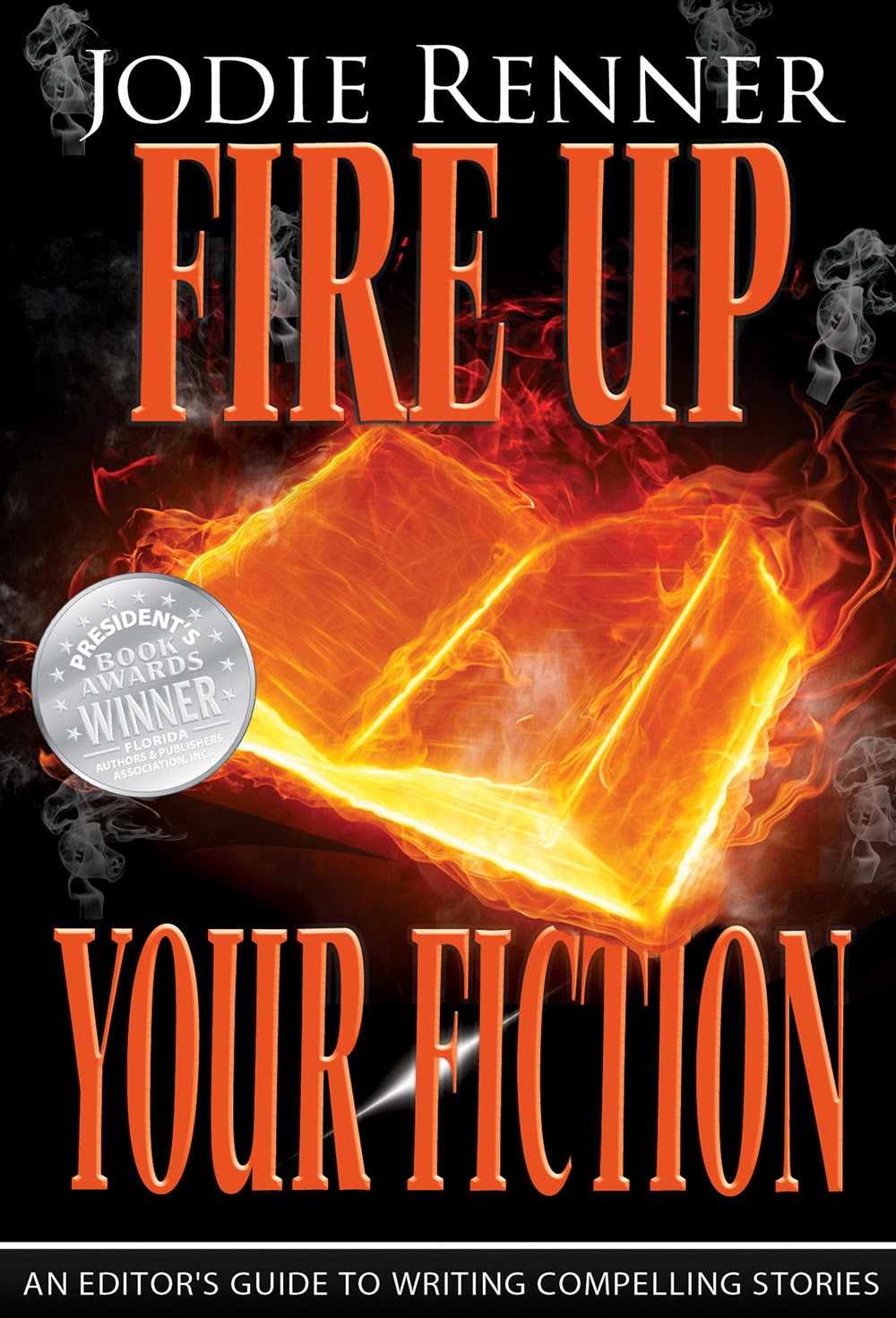
Jodie has published two books to date in her series, An Editor’s Guide to Writing Compelling Fiction: Writing a Killer Thriller and Fire up Your Fiction (Style That Sizzles & Pacing for Power), which has won two book awards so far. Look for he third book in the series, out soon. For more info, please visit Jodie’s author website or editor website, her other blogs, Resources for Writers and The Kill Zone, or find her on Facebook, Twitter, and Google+. And sign up for her newsletter.

 
.

Sunday, March 3, 2013

Chatting with Thriller Authors Joe Moore and Lynn Sholes, Pt. II


Interview by Jodie Renner of the co-authors of The Blade and other thrillers.

See yesterday's Part I – The Challenges and Rewards of Co-Authoring a Novel.                                  

Part II – HONING YOUR CRAFT and INDIE PUBLISHING
JR: Learning to write compelling fiction of the caliber you two accomplish must take years of study and practice – as well as talent, of course! Do either of you ever go back and read your earliest writings?  What’s your reaction?
Lynn: Yuck. Yes. When I first decided to take writing seriously, I wrote a book called TALISMAN ROSE, mostly to see if I could sustain about 100,000 words. I wrote it on a typewriter, which convinced me to get a computer and printer. Well, I discovered that I could write my way through 100,000 words. But that manuscript rests in a box I never intend to show anyone, high in the closet. Every time I write a book, I learn something new. Sometimes I look back in horror and slap my forehead asking myself, Did you really do that?

JR: Did you have any mentors who helped you learn your craft?
Lynn: Hundreds.  Let me explain. One day my husband commented on how many books I have on shelves and suggested I get rid of some of them.  I asked him to follow me, and I led him out to the garage and asked him to look at all the stuff (probably called it junk) he had—all the drills and wrenches, saws, screwdrivers, etc. and politely suggested that he clear out some of that. He was mortified. “But those are my tools,” he said. I answered, “Exactly. That’s what my books are to me. My tools.” There are tons of times I have had a scene in my head but have had no personal experience related to what I wanted to write—like a fistfight, or a car chase, or holding someone I loved in my arms as they bled out and died.  That’s when I go to my shelves and see how other authors handled that kind of scene.  I study the passages for sentence structure, rhythm, word choice, punctuation—all things related to the craft the author used.  I read as many as I can find.  That builds my repertoire that I pick and choose from when I write that scene I had in my head.  Essentially, I have the cream of the crop writers as my mentors and they are available 24/7.

JR: Back to your most recent thriller, THE BLADE – as I was editing it, I could really visualize it as a box-office hit movie. As I mentioned in Part I, I really loved your characters Maxine Decker and Kenny Gates. And Reverend Applewhite was so creepy! If it was made into a movie, who would you choose to play Maxine, Kenny and Applewhite?
Joe: I see Naomi Watts as Maxine, Jude Law as Kenny, and Brian Cox as Applewhite.
Lynn: Maxine –Julianna Moore, Kenny – Hugh Jackman, Applewhite – Tommy Lee Jones or William H. Macy?

JR: You two have published a lot of novels! And they’re selling very well. Do you have any advice you’d give to writers trying to break into the industry?
Joe: There are no shortcuts. No silver bullets. No secret handshakes. Just write the best book you can and once you’re done, find an experienced freelance editor who specializes in your genre, like Jodie Renner, to go over it with a fine-toothed comb while you start planning the next one.
JR: Thanks, Joe! And I agree about the importance of finding an editor who specializes in your genre. A nonfiction editor or someone who doesn’t even read your genre for pleasure is not a good choice to help you fine-tune and polish your novel to captivate readers and garner great reviews.

JR: Joe, as you mentioned in your recent post on The Kill Zone blog, this is your first venture into indie publishing. Joe and Lynn, what are some of the advantages and disadvantages of going the indie route? Do you find that authors are doing more and more of the work that publishers used to do?
Joe: With the advent of indie publishing, writers have become a self-contained business and must handle most or all of the facets of sales and marketing. It takes away from writing time, but it’s also liberating and fulfilling. And with publishing The Blade ourselves, we enjoyed the direct contact and ongoing back-and-forth communication with you as our editor.
Lynn: I have found that more is expected from writers now than when my first book came out in 1991, especially in the marketing and promotion arenas. But the entire publishing industry has gone through tremendous change.

JR: And it’s continuing to change. I find more and more of my clients are choosing to publish their novels themselves, and are enjoying the control they have over the process – not to mention more frequent payments! Personally, I love that I can go in and update my e-books on Amazon-Kindle, and in 12 hours or less, the new version is up there for sale!

Thanks for dropping by Crime Fiction Collective, Lynn and Joe. Readers are in for a real treat with this fast-paced roller-coaster ride! Kudos to you both on collaborating together to create a stellar novel! I enjoyed playing a small part in the final editing.
And I can’t wait to see what you two come up with next…

Readers and writers - Do you have any questions for Lynn and Joe?
 
Lynn Sholes & Joe Moore are the international bestselling authors of THE GRAIL CONSPIRACY (#1 Amazon Kindle bestseller), THE LAST SECRET, THE HADES PROJECT, THE 731 LEGACY, THE PHOENIX APOSTLES (#1 Amazon Kindle bestseller), and their latest, THE BLADE. Their thrillers have been translated into 24 languages including Chinese, Russian and Greek. Visit them at: http://www.sholesmoore.com.
 

Jodie Renner is a freelance fiction editor specializing in thrillers and other crime fiction, and she also writes craft-of-fiction articles and books. Jodie’s website: www.JodieRennerEditing.com. Jodie’s books: Writing a Killer Thriller and Style that Sizzles & Pacing for Power.
 

Sunday, March 11, 2012

It’s All About the Writing

by Jodie Renner, freelance editor
There's a lot of very good info/advice out there on self-publishing and promoting your book, including several excellent blog posts here on CFC. But first, make sure your book is ready for the critics: the readers and reviewers. I see too many aspiring authors whipping off a book, then rushing to send it to agents or self-publish it on Amazon, and then promoting it like crazy on Facebook, Twitter, blogs and wherever else, when what they really needed to do was spend more time and effort producing a quality story first. This race to publish prematurely can be incredibly damaging to your career and your reputation as a writer.

Want to sell more books? Write them well! Don’t shoot yourself in the foot and jeopardize — or completely ruin — your reputation as a novelist by rushing to self-pub or send off a first — or even second — draft. Develop your craft by taking courses or workshops, joining a critique group, and reading how-to books and articles on effective fiction-writing techniques. Then apply what you’ve learned to ratchet up your story. Go over your whole manuscript again, fine-tuning, smoothing out any clunky writing or overly wordy spots, finding just the right word, and amping up the characterization, tension and intrigue.

Then send it to a few trusted "beta" readers for their opinions, and incorporate any ideas that really resonate with you. Finally, use a freelance editor to find those plot flaws and inconsistencies, spots where it's lagging, and any amateurish techniques still lurking in the draft and to go over it with a fine-toothed comb, looking for grammatical, spelling and punctuation errors. (Or these two stages may be carried out by two different people, a content editor and a final copyeditor/proofreader.)


Kristen Lamb doesn’t mince words on this point in her recent blog post, “The Modern Author–A New Breed of Writer for the Digital Age of Publishing”: 

“We can’t put a shiny bow on a pile of literary dog poop and call it a rose. No amount of marketing is going to sell garbage. We have to learn to write good books. Notice I use the plural — books. We can't slave over one book forever making it perfect. I said we need to write good books, not perfect books.

"We also can’t toss junk out there and think promotion will make it a hit. Good books will always sell way more than crappy books. Not rocket science. We should always be learning as much as we can about our craft, our trade, our art. This is why I blog on craft and point you guys to the best teachers in the industry.”
http://warriorwriters.wordpress.com/author/warriorwriters/

“Okay,” you say, “but I can’t afford an editor.”

Is it worth it to hire a freelance editor for your novel before sending it to agents or publishing it? I asked several successfully published writer clients and friends their take on this. Here are their answers.


Andrew Kaufman, talented bestselling thriller writer and fellow founder of Crime Fiction Collective, has this to say on the subject:

“This is an extremely important point and one I can’t stress enough. It doesn’t matter how good a writer you think you are. After numerous rewrites of a manuscript (which is just as important), you are too familiar with your work and have lost all objectivity.

“An editor with a fresh and critical eye will bring things to your attention you never knew existed, both developmentally and in the line/copy editing. These are the people who will help bring a novel to the next level. I consider their work to be an invaluable part of the process.

“And for those who say they can’t afford to hire one — I say you can't afford not to. If you’re serious about selling your book, then this is a step you simply must take.”
~ Andrew E. Kaufman, Sept. 2011, author of While the Savage Sleeps and The Lion, The Lamb, The Hunted.
www.AndrewEKaufman.com 

And Andrew had this to add recently: “Another thing that comes to mind is that, with the extraordinary success of my most recent novel, The Lion, the Lamb, the Hunted, I’m getting more emails from authors asking what my secret is. I tell them there is no secret, that the single most important key to success is having a well-written, highly polished novel. Without that, all the promotion in the world won’t make a bit of difference. And you simply can’t get that by yourself. You need a professional. I’m not too proud to admit that, and you shouldn’t be,
either.” - Andrew E. Kaufman, March 7, 2012


I asked Allan Leverone, published thriller writer, what he thought about this topic. 

“As authors, it’s easy to get caught up in the excitement of our work, and it’s even easier to rush that work out before it’s ready. But in this day and age, when anyone with a computer and the time to string 80,000 words together can slap a price tag on his “book” and begin promoting, it’s even more critical to ensure your work is the highest quality it can possibly be. That means writing, rewriting, self-editing. And THEN working with a capable editor, one who is well-versed in your particular genre.

“And if you're reading this at the Crime Fiction Collective, you won't have to go far to find one. I was fortunate to work with editor Jodie Renner on my bestselling thriller, The Lonely Mile, and the result was a book far more suspenseful and page-turning than even I had thought possible. You worked hard on your book. Give it the best possible chance for success.”

~ AllanLeverone, Mar. 7, 2012, author of The Lonely Mile, StoneHouse Ink
“A taut crime drama full of twists and conspiracy”
www.allanleverone.com

One of my thriller-writer clients, Ian Walkley of Australia, tells me he wrote eight drafts of his novel No Remorse, before realizing he needed some objective input from professional editors. “Like many debut writers, I’d been to writing courses and read books about writing, but I was worried that a professional editor would cost me heaps and, to be honest, thought the editor might tell me my work was crap or make me rewrite the story.” 

At a writer’s conference, Ian met a professional editor whom he engaged to undertake a structural edit — advising on the structure of the book. “It was a good experience, and not as costly as I’d anticipated. The plot and scene structure were certainly improved to add suspense and pace. As a result of that, I hunted around for a copy editor.”

“I found several editors, including Jodie Renner, on Facebook, and I had them demonstrate their editing style with ten pages or so of my book. I contracted Jodie because she was thorough and I felt comfortable with her changes. I absolutely enjoyed the experience working with Jodie, who suggested numerous plot and character changes that improved the book. I certainly have a much better published novel because I used an editor.”  

~ Ian Walkley, March 2012, author of action-thriller,

Even editors need editing!

A few years ago, I edited a novel for a professional editor, Eve Paludan, and here’s what she said back then:

“I am a professional editor of scholarly work at a university but I hired Jodie Renner to edit my romantic suspense novel manuscript of 108,000 words. Just like a surgeon wouldn’t perform surgery on himself (or on his family), even a professional editor needs a second pair of sharp eyes to discern, deconstruct, suggest changes and help polish the language.

 “Your mother shouldn’t edit your work and neither should your best friend. Nor will spellchecking save your manuscript. So who should you hire to edit your work? I suggest choosing someone who doesn’t already love you, has stellar qualifications, and possesses a sharp eye and a true affection for your genre.


“Books about writing are helpful, and so are classes, but neither reveals what is wrong with your story, page by page, even line by line. A live professional editor like Jodie Renner has just the right one-on-one editorial style. […]
“It’s thrilling to experience the evolution of my novel manuscript and see both its strengths recognized and its weaknesses revealed, through Jodie’s eyes. Writing is a solitary endeavor but editing, for the eventual goal of professional publication, is a team effort between author and editor. This novel is the most important thing I’ve ever written. I trusted Jodie Renner with my huge manuscript and am happy to report, she’s worth every cent.”
– Eve Paludan, February 2010, author of The Man Who Fell from the Sky, (Angel Detectives, Case #1)  http://evepaludanbooks.com 


Related article: "Don't Shoot Yourself in the Foot" - on taking care with your query letter.

And then of course we need to search out good formatters and cover designers, to give the book that final polish. See LJ Sellers' excellent post, Invest in Your Own E-Book, here at CFC. Also, see Publishing Yourself, by Helen Ginger, on Blood-Red Pencil blogspot.

Readers and writers - what's your experience with all this? Expensive? Worth it? Is cutting corners before publishing worth the risk? And how do you feel when you buy an e-book and find errors on the first page? We'd love to hear your opinion on these issues.

Jodie Renner, a freelance fiction editor specializing in thrillers and other fast-paced fiction, has published two books to date in her series, An Editor’s Guide to Writing Compelling Fiction: WRITING A KILLER THRILLER and STYLE THAT SIZZLES & PACING FOR POWER (Silver Medalist in the FAPA Book Awards, 2013). Both titles are available in e-book and paperback.
For more info, please visit Jodie’s author website or editor website, or find her on Facebook or Twitter.

Monday, November 7, 2011

Cutting and Slashing is Not Always a Crime

by Allan Leverone, novelist

This is my second guest appearance at Crime Fiction Collective, and I’d like to thank Jodie Renner for giving me the opportunity to be here today, while she’s off on another trip. And what the hell, I didn’t put you guys out of business back in July, so what are the odds I’ll do so today?

If you’re a regular reader of Crime Fiction Collective, you know Jodie is a professional editor. As such, most of her posts are about writing and editing effective fiction, a subject near and dear to my heart as an author.

When I signed the contract with Medallion Press for publication of my first thriller, Final Vector, I was absolutely certain I had submitted to them a tight, suspenseful thriller. And I had. But going through the editing process with my editor at Medallion, Lorie Popp, was an eye-opening experience. Together we took a good book and made it outstanding.

I elected to approach a different Indie publisher, StoneHouse Ink, with my next thriller, The Lonely Mile, after hearing my friend, bestselling author Vincent Zandri, rave about how those folks at StoneHouse/StoneGate were doing everything right. But I knew I would only have one chance to impress them, and I couldn’t get out of my mind what a difference Lorie Popp had made with Final Vector over at Medallion. 

So I researched freelance editors, eventually approaching Jodie Renner, who specializes, as you know, in thrillers. Again, I felt I had written a tight, suspenseful book. And again, I had. But working with Jodie resulted in even tighter writing, a faster pace, and tenser, more suspenseful scenes, which allowed me to submit to StoneHouse a manuscript that would stand out against the many outstanding books being submitted by many outstanding authors.

It didn’t take long to receive an enthusiastic response from StoneHouse regarding my submission. I signed a contract for publication of The Lonely Mile in e-book form, and the novel was released in July, receiving virtually all outstanding reviews. The paperback edition was just released in October.

The most gratifying part of having worked with Jodie? When the manuscript went through the editing process at StoneHouse, it emerged virtually unchanged from the product she and I worked so hard on a few months prior, with the exception of a couple of scene changes to permit the book to better fit the target audience at StoneHouse.

With the onslaught of self-published books available now, thanks to the e-book revolution, I believe it is incumbent upon anyone interested in establishing a career as a professional novelist to produce the highest-quality work possible. It’s probably more important now than it was ten years ago. The moment an author gets branded as an amateur in this market, he’s done.

Is working with an editor easy? No. Ask any writer, and she’ll tell you letting go of those precious words she has worked so hard to create can be agonizing. But it’s also necessary. As the creator of the project, the author is far too invested in it to see the work objectively. The editor has no such investment in those words, and is (or should be) only interested in helping the author create the best possible product.

Is working with an editor cheap? Again, no. Freelance editors are in business to make money, just like any other professional. If your goal as an author is to rush your work into the marketplace in order to “make a killing” by selling an inferior product or a product not ready for prime time, good luck with that. You might make some money initially, but readers are not stupid, and they don’t appreciate being taken advantage of. You’ll find out pretty quickly the only killing being done is to your career. It’s going to be short-lived.

But if your goal as an author is to create quality work, which will stand the test of time and which readers will not feel cheated plunking their hard-earned money down to buy, the investment of time and money into professional editing is irreplaceable.

So there’s my rant for today. And to answer your question, no, Jodie did not have anything to do with this post! She gave me free rein and did not suggest any potential topics. I owe a lot to my positive editorial experience with Lorie at Medallion Press and with freelance editor Jodie Renner, and I thought this might be the perfect forum to express my gratitude and acknowledge how critical their help was in producing work of which I could be proud.


Allan Leverone is a three-time Derringer Award finalist, as well as a 2011 Pushcart Prize nominee. He is the author of the thrillers Final Vector and The Lonely Mile, as well as the novella Darkness Falls. His paranormal suspense novel, Paskagankee, will be released soon by StoneGate Ink.


Jodie Renner, a freelance fiction editor specializing in thrillers and other fast-paced fiction, has published two books to date in her series, An Editor’s Guide to Writing Compelling Fiction: WRITING A KILLER THRILLER and STYLE THAT SIZZLES & PACING FOR POWER. Both titles are available in e-book and paperback.
For more info, please visit Jodie’s author website or editor website, or find her on Facebook or Twitter.