Showing posts with label craft of writing. Show all posts

Sunday, March 4, 2012

Set up Your Story in the First Paragraphs


by Jodie Renner, editor, author, speaker    

I receive several first chapters (and synopses) every week as submissions for possibleediting, and I always read the first page. Some are clear and compelling and make me want to read more. But too often, two main problems emerge: Either the author spends too much time revving his engine with description or backstory before we even care (boring); or we’re plunged right into the story but have no idea where we are or what’s going on (confusing). 

There are three cardinal rules of successful novelists: 

1. Don’t bore your reader!

2. Don’t confuse your reader!   

3. Don’t annoy your reader!

I’ve discussed the negative effects of starting off too slowly, with too much description and/or backstory, in other articles (see the links at the end of this article). Today, I’ll focus on the other problem that can turn readers off — fuzzy beginnings. Sometimes I feel confused and frustrated, wondering who this character is — and is it the main character, or someone else? Also, where the heck is she? And what’s she doing, exactly? It’s frustrating not being able to form a mental picture of who it is and what’s going on, right from the start.

Your first paragraph and first page are absolutely critical! Not only do they need to hook your reader in quickly, set the tone for the rest of the book, and “show your stuff” in regards to your writing style, but the reader needs to be able to visualize your opening scene, the who, the where and the when, so they can relax and start enjoying the story. If they're confused, they’re going to start getting frustrated and could well put down your book. Readers want to be able to get into the story right away, not have to spend the first several pages — or more — trying to figure out what’s going on.

So try to work in the basics of the 4 W’s below in your first page — preferably within the first two or three paragraphs. Give the readers a quick snapshot of who, what, where and when, without going in to a great deal of detail yet. Give them just enough to get oriented so they’re not totally confused and can start enjoying the story.

Who? Whose story is it? Your protagonist should appear in the first paragraph; better yet, in the first sentence — in his/her point of view, of course! Don’t start out with someone else, then introduce your main character in chapter two, or even later in chapter one. Readers will have started emotionally investing in someone else who may be a minor character, then be disappointed and annoyed when they find out they’re not the person they’re supposed to be caring about!

What? What’s going on? What is he/she doing, exactly? Can the reader visualize the situation? If not, add a few details.

Where? Where is he/she? Overall setting — country, state/province, city/town; and if inside, inside where? An office building? A log cabin? At home? Which room? It can be really annoying for a reader to start reading dialogue and have no idea where the speakers are.

When? Is this story taking place in the present? The past? How far in the past? What season? What month? In the morning? Afternoon? Evening? Middle of the night?

Also, your first page is a kind of promise to your readers. Readers want to get a feel quickly for your writing style and the genre or your handling of the genre, so be sure that your first page reflects the overall tone, style, and voice of the novel, and even hints at aspects like the level of violence they can expect, etc. Then keep your promise by delivering for the rest of the novel!

Just as I was about to post this short article based on my own experiences reading, judging and editing fiction, I received the latest issue of Writer’s Digest magazine (March 2012), and serendipitously, noticed Steven James’ article, “5 Story Mistakes Even Good Writers Make.” In a sidebar, James discusses writing an effective first sentence, paragraph and page. His fifth point expresses my focus for this article.

Evaluate Your Hook:
With each story you start, always remember that an effective hook needs to do seven things:

1. Grab the readers’ attention

2. Introduce a character readers care about.

3. Set the story’s mood.

4. Establish the storyteller’s voice.

5. Orient readers to the world of the protagonist (and enable them to picture it).

6. Lock in the genre.

7. End in a way that is both surprising and satisfying.


See also, "Act First, Explain Later" on The Thrill Begins blogspot, and "Those Crucial First Five Pages" here at Crime Fiction Collective, both on writing an effective opening to your novel.

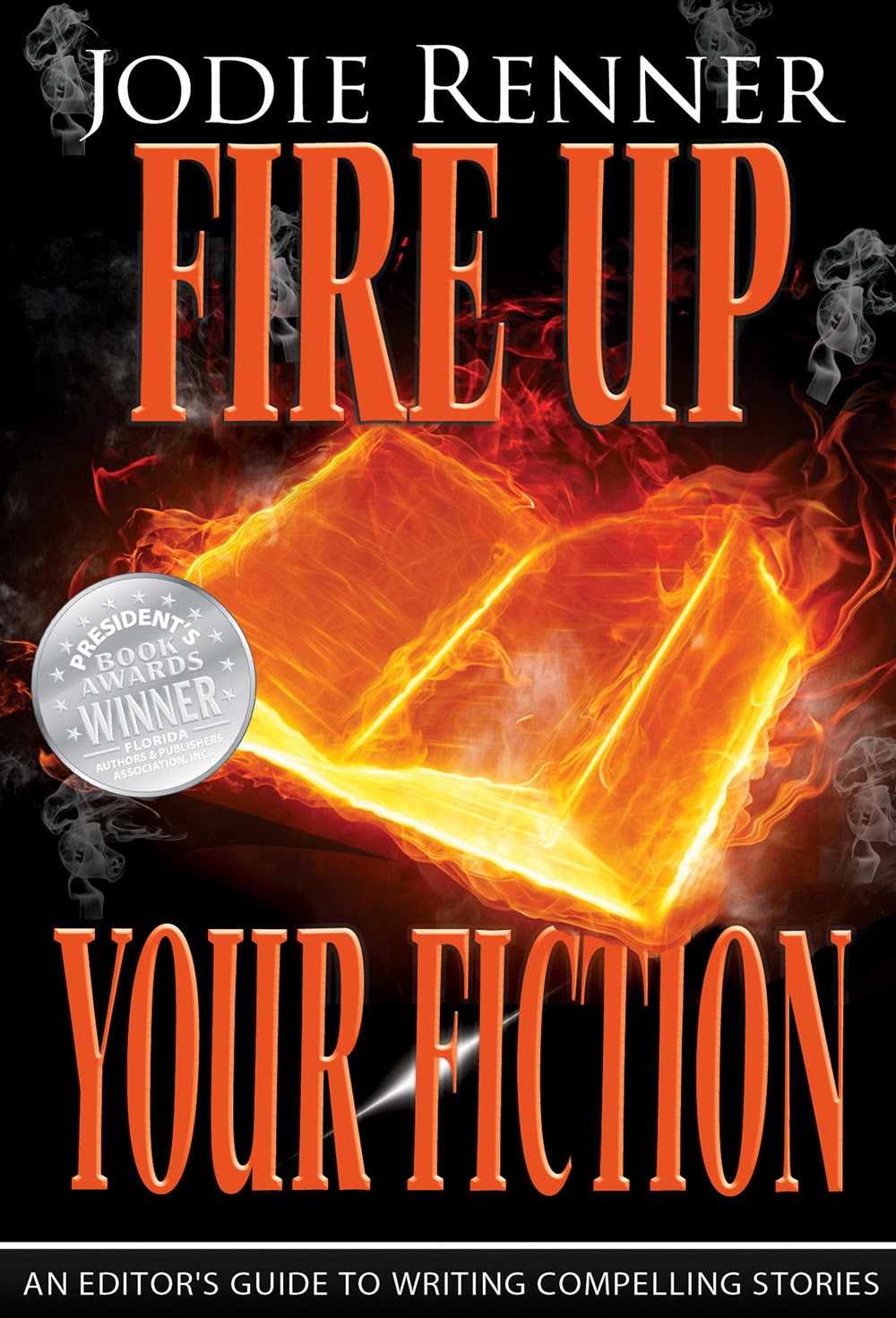
Jodie Renner is a freelance fiction editor and the award-winning author of three craft-of-writing guides in her series An Editor’s Guide to Writing Compelling Fiction: Captivate Your Readers, Fire up Your Fiction, and Writing a Killer Thriller, as well as two clickable time-saving e-resources, Quick Clicks: Spelling List and Quick Clicks: Word Usage. She has also organized two anthologies for charity, incl. Childhood Regained – Stories of Hope for Asian Child Workers. You can find Jodie at www.JodieRenner.com, www.JodieRennerEditing.com, her blog, http://jodierennerediting.blogspot.com/, and on Facebook and Twitter

Wednesday, November 23, 2011

Fighting the Enemy


By Andrew E. Kaufman


I'm currently in the throws of panic as I prepare for the upcoming release of my new psychological thriller, The Lion, the Lamb, the Hunted (Read: pulling out what little hair I have left and alternately banging my head up against the wall--it's not pretty). In doing that, I'm finding there aren't enough hours in the day to get everything done, so I'm reposting from my own blog. It's advice about writer's block, and it got quite a response when I first ran it, so I thought I might share it here, hoping to help my fellow authors.

For a writer, there's nothing more horrifying than staring at a blank screen and having nothing to say. This sort of thought-paralysis can not only slow you down; it can stop you dead in your tracks. But quite often, we unknowingly create the blocks that bind us, and once we acknowledge that, it's just a matter of getting out of our own way. I've learned to see writer's block as an indication of a bigger problem: a signpost telling me that I've strayed off course and need to get back on track. Instead of fighting it, I make friends with it and listen very closely. After that, the key is finding my center and taking control of my mind--rather than the other way around.

Here's how I get back into the flow when swimming in a sea of verbal-doubt:

What you resist, persists: trying to fight it just creates another layer of resistance, so the first thing to do is surrender to the fact that you have writer's block and simply allow it to "be".

Stop everything: here's one instance where being a quitter is a good thing. Quite often, writer's block is the product of over-thinking. Your best defense against an overactive mind is to stop it dead in its tracks. At this point, trying to continue can be pointless--it'll only create more mind clutter. I'm not talking days here; I'm about a few hours, if you can swing it.

Tune out, turn on: What's the first thing you do when your computer freezes? You restart. The same can work for your mind when it becomes overloaded: Do a mental reset. Step out of your mind and give it a chance to find a new perspective. Focusing on your breathing is the best way to halt the process. Research shows that when you direct all your attention on each breath you take, your thoughts ground to a halt. I usually close my eyes and count my breaths. If I find my thoughts wandering again, I direct my attention back to my breathing until my mind stops reeling.

Do something else: After cleaning the clutter from your head, move to something completely writing-unrelated: Watch a movie, read a book, take a walk, or play with your dogs. Here's one my editor suggests and swears by: clean your refrigerator. Anything other than writing will work. Quite often, this is where I notice my engine starting up again. My brain kicks into gear and the wheels start turning. Ever notice how some of the best ideas come when you're not thinking about writing? While you're driving? Taking a shower? Dreaming? These are the times when your mind is at ease and the pressure is off. You can induce the same state by finding a pleasant diversion.

Road Blocks: What about the times when it's not your mind that's fouling you up but instead, it's your story? I can't tell you the number of times I've written myself into a corner, only to discover I couldn't find my way out. For me, a roadblock is another signpost, one that's telling me I haven't done my research. Knowledge is power, and the more you know, the more you'll have at your disposal to get the story forward-moving again. I'm not just talking about going on the internet and Googling. This is a situation where human interaction is the key. Talk to one of your experts, maybe even explain your dilemma. You'd be amazed by how another perspective--especially a knowledgeable one--can bring on a flood of inspiration.

Here are a few other things you can try in your efforts to thwart writer's block:

Change your atmosphere, change your mind: Take your laptop outside or to a place you don't normally write, and try working it from there. Sometimes new surroundings are all it takes change your frame of mind.

Unplug: Checking your emails or dropping by Facebook may seem like good way to take a break, but it's also a distraction, one that will pull you out of your thoughts. Continuity is the key to free-flowing ideas. Interrupt that process and you're asking for trouble. Try turning off your router or unplugging your ethernet cord to eliminate the temptation.

Get the blood flowing: move your body and your mind will move right along with it. Blood is vital to all working organs, the brain included, and research shows it operates more efficiently when the flow is at its maximum. Exercise creates endorphins. Endorphins make the mind sharper.

Sleep! I know, you hear it all the time: get plenty of rest. However, studies show that a lack of sleep will dull your creative edge. Pulling that late night writing session may save time but in the long run, will only slow you down.

Write in the morning: Studies show it, and most writers will tell you that the best time to write is shortly after you wake up. The mind is its sharpest after a good night's sleep, and we're better connected with our subconscious patterns when we rise and shine. The end of the day can be a bad time for the mind because it gets more polluted as the hours wear on, not to mention, more exhausted. The hour later you stay up to write can be shifted into the morning hours.

One last thing: The need for perfection is a writer's worst enemy. Don't have such high standards on a first draft, and don't be afraid to produce "garbage". Just sit down and write--you can tweak it later. Getting the words flowing will get the mind moving as well. American poet William Stafford probably said it best:

"There is no such thing as writer's block for writers whose standards are low enough."

Happy writing, comrades!


Monday, August 29, 2011

Those Crucial First Five Pages


by Jodie Renner, editor, author, speaker 


Once you’ve finished the first draft of your novel, it’s time to go back and polish up your first few pages. Then later you can do a third—or tenth—rewrite of that all-important first few paragraphs to create the most enticing hook possible. For today, we’ll talk about the essential ingredients of the first five pages, as most agents and acquiring editors, and readers will stop reading by the fifth page—or sooner—if the story and characters don’t grab them by then.

Last February, I attended a workshop by literary agent Kristin Nelson at the San Miguel Writers’ Conference, in which she had attendees anonymously submit the first two pages of their novel. She started reading the submissions and stopped at the spot where she lost interest. In many instances it was after the first or second paragraph! Sometimes she made it almost to the end of the first page, and in one case, even halfway through the second page. Then she told us why that manuscript, as written, would be rejected. (Not a single one of those made it.)

In the latest issue of Writer’s Digest (Oct. 2011), Kristen gives four examples of submissions and where and why she stopped reading three of them (all on the first page): “too much dialogue,” “overuse of description,” and “lack of tension.” In her workshop, “lack of clear protagonist,” “unsympathetic protagonist,” “boring” and “confusing” were other reasons given.
After Ms. Nelson's workshop, I heard a lot of “If she’d only read a little further, she would have seen that…” or “That wasn’t fair. She didn’t give me a chance. How can she judge a manuscript by only reading one page?” Unfortunately, agents get tens of thousands of submissions a year, and if you don’t grab them within the first page or two, the sad reality is that your book will probably be rejected. And of course, as readers, most of us will read the back cover and maybe the first page, then decide based on that whether to buy the book or not.

 One of the main reasons agents, acquiring editors and readers will reject a book after reading the first few pages is that they’re confused. They need to get a picture right away about whose story it is, why we should care about that person, and roughly where and when the story is taking place. Once readers have a handle on the main character and the setting, they can relax and settle into the story world. Of course, you also have to spark their interest with a problem early on—put your protagonist in some hot water so the reader can sympathize with them and start rooting for them.

Whose story is it?

It’s important to start out the novel in the viewpoint of your protagonist, as the first person the readers read about is the person they start identifying with, and they’ll feel cheated if suddenly, after they’ve invested some time and effort into getting to know this person and bonding a bit with him, he suddenly turns out to be not someone they should be rooting for at all, but in fact the antagonist, whom they’re supposed to be hating, or worse yet, someone who gets killed off a little while later.

As Steve Berry, bestselling author and sought-after writing workshop leader, told a packed room of eager aspiring writers at Craftfest, part of Thrillerfest 2011 in New York, “Always start your book in the point of view of your protagonist.” I think this is excellent advice, as the readers—not to mention agents and acquiring editors—want to know right away whose story it is, who to start bonding with and cheering for.

Why should I care about this character, anyway?

Readers aren’t going to invest time reading a story about a character they don’t like or can’t identify with, so make sure your protagonist is likeable and sympathetic, to draw the readers in to identify with him or her. And make them well-rounded and complex, with hopes and fears, strengths and weaknesses, and inner conflict. And of course have them confronted with a problem—an inciting incident—within the first few pages, as conflict is what drives fiction forward. A perfect character with an ideal life is both annoying and boring—not a formula for compelling fiction!

Where and when is the action taking place?

Without drowning us in long descriptive passages right at the beginning, give the readers a few hints very early on—definitely on the first page—of the setting of your story: Contemporary? Past? Future? Country/Culture? Urban/rural/wilderness? And so on. Don’t confuse and frustrate your readers by making them wonder where on earth all this is happening, and whether it’s in the present or some other time.

Why should I read this story?

Show your stuff in your first five pages or so. Draw the reader (or agent or editor) in with a great first scene, well-written, with interesting, complex characters, some intriguing action, and compelling, natural-sounding dialogue. Include your inciting incident and initial conflict, and hint at greater problems to come. Introduce or hint at a worthy adversary—a cunning villain or attractive but maddening/annoying possible love interest. And write your first pages in the same tone, style and voice you’ll be using for your novel, so the readers will have a good idea of what they’ll be getting into. And of course, continue in this same tone (suspenseful, humorous, serious, romantic, etc.) for the rest of the novel, so the reader won’t feel cheated or misled.

But don’t get bogged down trying to perfect your opening pages in the early stages – wait until you’ve got all or most of your first draft written. By then, you’ll be “in the groove” and you’ll know your character and his/her problems a lot better, so this part will flow so much more easily.

© Jodie Renner, August 2011

Jodie Renner, a freelance fiction editor specializing in thrillers and other fast-paced fiction, has published two books to date in her series, An Editor’s Guide to Writing Compelling Fiction: WRITING A KILLER THRILLER and STYLE THAT SIZZLES & PACING FOR POWER. Both titles are available in e-book and paperback.

For more info, please visit Jodie’s author website or editor website, or find her on Facebook or Twitter.


Wednesday, August 3, 2011

Do you Want to be Rich or do You Want to be Happy?

By Andrew E. Kaufman

Confession time.

When I’m not busy being a control enthusiast, I tend to be a little suspicious of things. Well, not just a little, I guess. A lot.

So when my debut novel, While the Savage Sleeps, went to number one on Amazon, I thought something had to be wrong, that it was a mistake, that there was a ghost in the machine, that…well, something. I mean, passing up Nora Roberts and Stephen King didn’t just seem surreal—it seemed damned near impossible.

The truth was, it did all of those things, and in addition to that, the book remained on the bestsellers list for the year that followed, at which point I knew the machine wasn’t broken.

But something else was.

Because once the euphoria dissipated, I began to panic. It suddenly dawned on me that I needed to write another book, and fast. Not only that, but I needed to write a damned good book, one that was better than the first. After all, my readers were waiting, and I was scared they’d compare my next novel to the first. There were also the sales to consider. Could I keep the momentum going while I worked on the next one? Could I hold on to my readers? Would they forget about me? Being an author with only one book to my name, these seemed like valid concerns.

It appeared my dawning had blossomed into a full-blown obsess-fest, and it wasn’t the least bit pretty. I spent the next year second-guessing myself into a frenzy. Nothing I wrote seemed good enough, and it always came back to one central theme: that I was turning out crap, that the first book was better, that my success was a flash in the pan, a one-time fluke. The readers were anxiously awaiting my next book, and there I was, losing self confidence and beating myself to a pulp.

Then, a revelation—well, not really that, more of a self-initiated kick in the pants—and a question: Do you want to be rich, or do you want to be happy?

I realized I’d become so caught up in the success of my first book that in that process, I allowed my reality to become drastically skewed. My priorities got all mixed up.

See, here’s the thing: I don’t write just to make sales. It's not about the money. I write because I have to. I mean I really have to. For me, writing is like breathing, and life without it wouldn’t be life at all—it would be something less than. It’s all about the journey I begin each time I look at that fresh, blank page.

I'd somehow forgotten that.

Don’t get me wrong. I love sharing my work with the world, love connecting with my readers—and putting food on the table and gas in my tank are definitely priorities. But that's about survival, not about why I write. I write because it’s an essential part of who I am, because there’s this raging fire inside me that I can’t put out. I think if you follow your fire, your passion, then the rest will fall into place naturally. That’s what happened with my first book. There were no expectations at the time, just me and my words, and that, I believe, is why the novel found its own success. Because my passion came out through my words.

Once I got on track, I felt an enormous shift within me. The words began to flow, andsurprisemy second novel was born, one that I know is better than my first.

So tell me, gentle readers: What about you? Money? Happiness? Or a little bit of both?

Monday, June 20, 2011

Writing a Killer Thriller, Part III

by Jodie Renner
More techniques for writing a compelling suspense-thriller…or any other page-turner.
In Part I of this series, I passed along some tips for creating a compelling opening, complex characters, and a tight point of view. In Part II, I discussed creating a riveting plot with lots of conflict and suspense and a tight, to-the-point writing style. This final post in this series covers tension, dialogue, pacing, passion, and crafting a satisfying ending.
Put tension on every page.  
This applies to all fiction, but even more so for thrillers. As Jack Bickham says, “Virtually all the high points of most stories involve conflict. It’s the fuel that makes fiction go. Nothing is more exciting and involving.”
Bickham continues, “In fiction, the best times for the writer—and reader—are when the story’s main character is in the worst trouble. Let your character relax, feel happy and content, and be worried about nothing, and your story dies. Pour on all sorts of woes so your poor character is thoroughly miserable and in the deepest kind of trouble, and your story perks right up—along with your reader’s interest.
          “The moral: Although most of us do everything we can to avoid trouble in real life, we must do the opposite as writers of fiction. We must seek out ways to add trouble to our characters’ lives, putting just as much pressure on them as we can. For it’s from plot trouble that reader interest comes.”
In his chapter called “Tension All the Time,” Donald Maass emphasizes giving your protagonist (and other characters) conflicting emotions and inner conflict.

All dialogue needs tension, too.
As Ingermanson and Economy say, “Dialogue is war! Every dialogue should be a controlled conflict between at least two of the characters with opposing agendas. The main purpose of dialogue is to advance the conflict of the story.” So definitely leave out the “How are you? I’m fine. And you?” blah-blah-blah, and cut to the chase. Unless of course you’re trying to show seething resentment or subtle tension boiling up from under surface politeness. As Donald Maass says, “Conflict in dialogue can be as polite as poison, or as messy as hatchets. The approach is up to you. The important thing is to get away from ambling chit-chat and get right to the desire of two speakers to defeat each other.” So follow James N. Frey’s advice: “Decide you will have fresh, snappy dialogue and not a single line of conversation.”

Vary the pacing.
Although thrillers are generally fast-paced, it’s important to slow down the pacing from time to time, to give your readers a break. As Jessica Page Morrell says, “because readers need to put down a book from time to time, and because pacing can’t be as relentless as a runaway train, you need to bring down the temperature and tension in a story at intervals. A win for your character, as well as a slower or interlude scene, provides the pauses and quieter moments needed.”

Give your scenes conflict, intensity and intrigue.
Start and end your chapters and scenes with questions and intrigue. James N. Frey’s advice is to end each scene or section of dramatic narrative with a bridge, a story question to carry the reader to the next one.
Every scene, according to James Scott Bell, needs a degree of intensity. A moving force in the scene is trying to make something happen. Opposition or obstacles are keeping the POV character from meeting his objective. And the outcome is often not entirely satisfactory. In fact, Bell advises us, “Design your scenes, for the most part, so the lead is in a worse position after the scene is over.” This will keep the reader reading to find out how the protagonist tackles the new challenges and survives her new predicament.

Put passion into your writing.
Donald Maass, in The Fire in Fiction, feels that the key ingredient to a page-turner is passion. “What do I mean by passion? … A passionate author has us in her grip. Passionate fiction is not bogged down, wandering, low in tension, or beset by the many bugbears of by-the-numbers novel writing, like stereotypical characters, predictable plots, cliché-ridden prose, churning exposition, buried dialogue, and so on.[…] When the purpose of every word is urgent, the story crackles, connects, weaves, and falls together in wondrous ways.”
          How to develop that passion as a writer? Maass believes in learning from others. “Everything we need in order to understand the techniques of passion lies within the covers of novels that you will currently find on the shelves.”

Create a thrilling, satisfying climax.
Frey points out, “In almost all damn good thrillers, the hero is nearly killed in the climax, but then manages to kill or capture the villain and to foil his evil plot. Audiences find this motif satisfying….” An effective, satisfying climax has a surprise or two, good prevails over evil, and often the hero discovers something about himself or gains insight into the human condition. Don’t disappoint your readers by having a nebulous, wishy-washy, or tragic ending. Leave that to literary fiction, not your killer thriller!
 
Resources:
James Scott Bell, Revision and Self-Editing
James N. Frey, How to Write a Damn Good Thriller  
Donald Maass, The Fire in Fiction
David Morrell, The Successful Novelist
Jessica Page Morrell, Thanks, But This Isn’t for Us


Jodie Renner, a freelance fiction editor specializing in thrillers and other fast-paced fiction, has published two books to date in her series, An Editor’s Guide to Writing Compelling Fiction: WRITING A KILLER THRILLER and STYLE THAT SIZZLES & PACING FOR POWER (Silver Medalist in the FAPA Book Awards, 2013). Both titles are available in e-book and paperback.
For more info, please visit Jodie’s author website or editor website, or find her on Facebook or Twitter.