by Jodie Renner, editor, author, speaker
 I receive several first chapters (and synopses) every week as submissions for possibleediting, and I always read the first page. Some are clear and compelling and make me want to read more. But too often, two main problems emerge: Either the author spends too much time revving his engine with description or backstory before we even care (boring); or we’re plunged right into the story but have no idea where we are or what’s going on (confusing).
There are three cardinal rules of successful novelists:
1. Don’t bore your reader!
2. Don’t confuse your reader!
3. Don’t annoy your reader!
I’ve discussed the negative effects of starting off too slowly, with too much description and/or backstory, in other articles (see the links at the end of this article). Today, I’ll focus on the other problem that can turn readers off — fuzzy beginnings. Sometimes I feel confused and frustrated, wondering who this character is — and is it the main character, or someone else? Also, where the heck is she? And what’s she doing, exactly? It’s frustrating not being able to form a mental picture of who it is and what’s going on, right from the start.
Your first paragraph and first page are absolutely critical! Not only do they need to hook your reader in quickly, set the tone for the rest of the book, and “show your stuff” in regards to your writing style, but the reader needs to be able to visualize your opening scene, the who, the where and the when, so they can relax and start enjoying the story. If they're confused, they’re going to start getting frustrated and could well put down your book. Readers want to be able to get into the story right away, not have to spend the first several pages — or more — trying to figure out what’s going on.
So try to work in the basics of the 4 W’s below in your first page — preferably within the first two or three paragraphs. Give the readers a quick snapshot of who, what, where and when, without going in to a great deal of detail yet. Give them just enough to get oriented so they’re not totally confused and can start enjoying the story.
Who? Whose story is it? Your protagonist should appear in the first paragraph; better yet, in the first sentence — in his/her point of view, of course! Don’t start out with someone else, then introduce your main character in chapter two, or even later in chapter one. Readers will have started emotionally investing in someone else who may be a minor character, then be disappointed and annoyed when they find out they’re not the person they’re supposed to be caring about!
What? What’s going on? What is he/she doing, exactly? Can the reader visualize the situation? If not, add a few details.
Where? Where is he/she? Overall setting — country, state/province, city/town; and if inside, inside where? An office building? A log cabin? At home? Which room? It can be really annoying for a reader to start reading dialogue and have no idea where the speakers are.
When? Is this story taking place in the present? The past? How far in the past? What season? What month? In the morning? Afternoon? Evening? Middle of the night?
Also, your first page is a kind of promise to your readers. Readers want to get a feel quickly for your writing style and the genre or your handling of the genre, so be sure that your first page reflects the overall tone, style, and voice of the novel, and even hints at aspects like the level of violence they can expect, etc. Then keep your promise by delivering for the rest of the novel!
Just as I was about to post this short article based on my own experiences reading, judging and editing fiction, I received the latest issue of Writer’s Digest magazine (March 2012), and serendipitously, noticed Steven James’ article, “5 Story Mistakes Even Good Writers Make.” In a sidebar, James discusses writing an effective first sentence, paragraph and page. His fifth point expresses my focus for this article.
Evaluate Your Hook:
With each story you start, always remember that an effective hook needs to do seven things:
1. Grab the readers’ attention
2. Introduce a character readers care about.
3. Set the story’s mood.
4. Establish the storyteller’s voice.
5. Orient readers to the world of the protagonist (and enable them to picture it).
6. Lock in the genre.
7. End in a way that is both surprising and satisfying.
See also, "Act First, Explain Later" on The Thrill Begins blogspot, and "Those Crucial First Five Pages" here at Crime Fiction Collective, both on writing an effective opening to your novel.

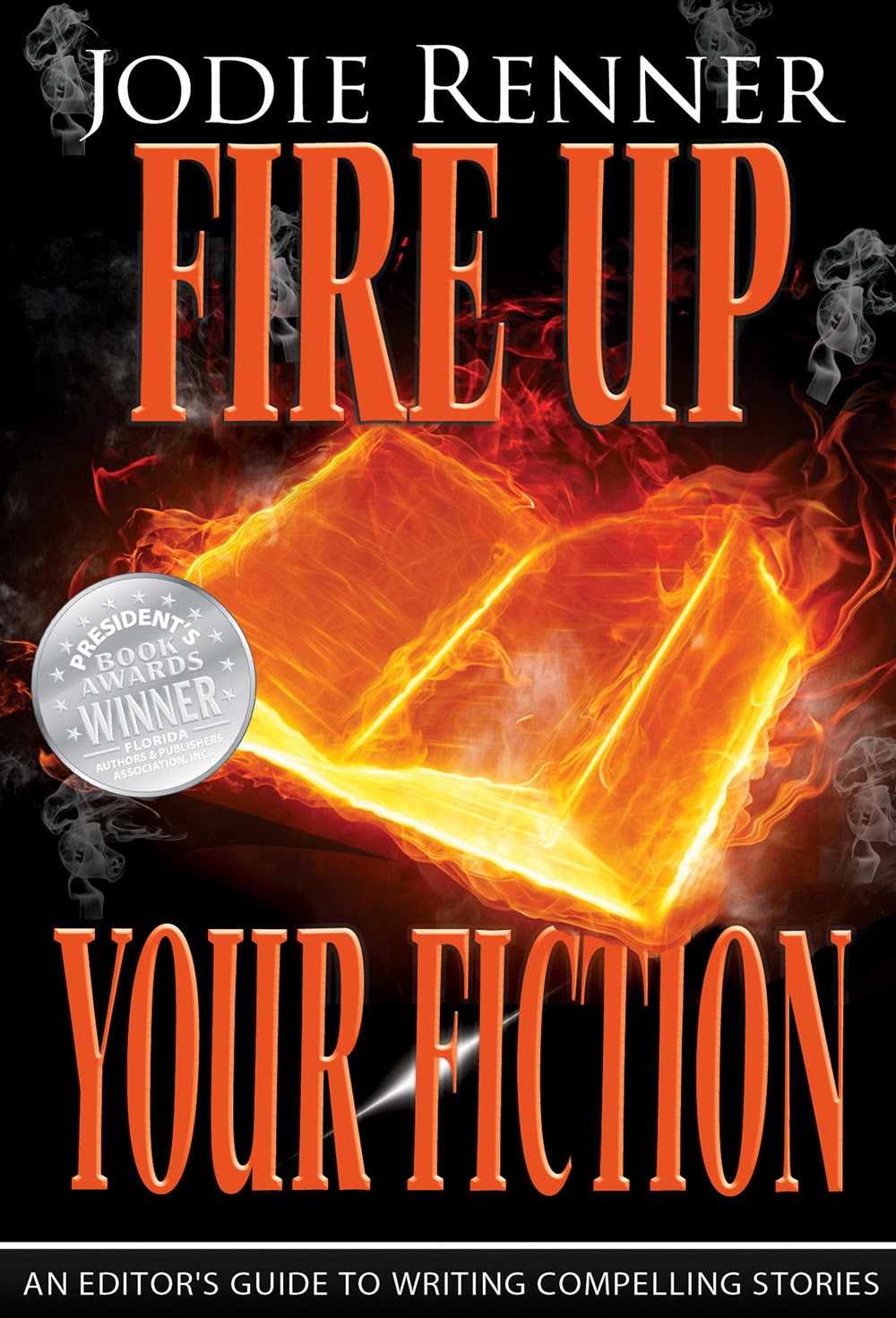
 Jodie Renner is a freelance fiction editor
and the award-winning author of three craft-of-writing guides in her series An
Editor’s Guide to Writing Compelling Fiction: Captivate
Your Readers, Fire
up Your Fiction, and Writing
a Killer Thriller, as well as two clickable time-saving e-resources, Quick
Clicks: Spelling List and Quick
Clicks: Word Usage. She has also organized two anthologies for charity, incl. Childhood
Regained – Stories of Hope for Asian Child Workers. You can find Jodie at www.JodieRenner.com, www.JodieRennerEditing.com, her blog, http://jodierennerediting.blogspot.com/, and on Facebook and Twitter.
Jodie Renner is a freelance fiction editor
and the award-winning author of three craft-of-writing guides in her series An
Editor’s Guide to Writing Compelling Fiction: Captivate
Your Readers, Fire
up Your Fiction, and Writing
a Killer Thriller, as well as two clickable time-saving e-resources, Quick
Clicks: Spelling List and Quick
Clicks: Word Usage. She has also organized two anthologies for charity, incl. Childhood
Regained – Stories of Hope for Asian Child Workers. You can find Jodie at www.JodieRenner.com, www.JodieRennerEditing.com, her blog, http://jodierennerediting.blogspot.com/, and on Facebook and Twitter.