Tuesday, February 11, 2014

"Loved your Book, but I'll Pass on the Free Copies!"

by A.M. Khalifa, thriller writer, Google+


Imagine you walk out of the cinema raving about how much you enjoyed the movie, only to find the director or even producer of the film walking up to you, thanking you for your vocal praise, and proposing something along the following:

“Given how much you've enjoyed my film, I'd like to offer you ten free tickets to give to your friends and family. People who you think may enjoy this film as much as you did.”

How would you react? I know what I would do, I would grab the opportunity. Free tickets, right?

For the oddest reason, the same principle doesn't seem to apply to books. Every time a reader has given me a particularly glowing review of my debut novel, Terminal Rage, and I've connected with them offering free copies to spread the love, they’ve balked at the suggestion. Even friends and acquaintances. It’s almost as if there’s something inherently dirty about evangelizing on behalf of a book, but it’s okay to do for a film or other content types.

My friend the talented writer and blogger Scott Whitmore says "there is a subtle difference between reviewing and promoting. I don’t mind reviewing a  book, but when you give me copies to hand out, now I’m part of your PR organization. Many may think: I really loved your book, and I said it in my review, but it isn't my job to physically move copies of it for you.”


Scott is on to something here, but I think it's also about the writer giving out the freebies. Or the perceived experience of the writer. If Lee Childs or Cormac McCarthy were to offer his readers free books for their contacts, I know I wouldn't dream of saying anything but a resounding yes, and then brag about it for the rest of my life.

With new writers, the psychology at work may be different. Perhaps the reader is unsure whether their taste is really on the money. Loving an indie book doesn't mean others will too, and if you promote it aggressively, only to discover that other people aren't as keen about it, you could risk your reputations as a taste maker. Whereas any odd book by an established writer seems like a safer bet, a great book by an unknown author is still laden with potential risk. The risk of being labeled as a lousy literary connoisseur among your peers.

But here is where it gets more interesting. I've found that without my intervention or offers of free books, readers who loved my novel eventually end up promoting it and recommending it to others, and coming back to tell me what they've done. What the hell?

As a new writer, selling books is buried way down on your list of priorities compared to your number one goal: to be read by as many people as possible. So giving away books left, right and center at a loss seems like a viable proposition to gain traction. That is until you realize it doesn't always work like that.

What if by giving away free books I am depriving readers of the challenge of getting their friends and family to get vested in their taste and vote with their money? It’s one thing to give someone a free book you've read and enjoyed, but a totally different challenge to recommend a book and ensure that it’s purchased, based on your good word. And maybe readers also feel cheated to have paid for the book, when the author is willing to give it away.

As much as being read is important, it seems that trying to trip-wire the basic principles of demand and supply may not be such a fancy proposal. What do you think?

Writers, do you find giving free copies to satisfied readers demystifies you as an author and somehow cheapens your brand? How about you, readers, is my analysis of the psychology of recommending books somehow accurate?

Sign up to my newsletter below to get:

 exclusive free fiction
 writing tips
 publishing insight
 Hollywood for writers: exciting insight on the film adaptation of Terminal Rage as it happens
 counter-terrorism scoops and analysis
 book giveaways and competitions

* indicates required field


My sizzling-hot #bestseller short story, The Jewish Neighbor is on sale for 99 cents on Amazon.


A.M. Khalifa's critically acclaimed debut novel, Terminal Rage, was recently described by Publishers Weekly as "dizzying, intricate, and entertaining."  He lives in Rome, Los Angeles, and Sydney, sometimes at the same time.

The ebook version of Terminal Rage is now on sale for $0.99 on Amazon.


Monday, February 10, 2014

The Devil's Key

The Kill Order (Sydney Fitzpatrick #5) by Robin Burcell (HarperCollins mass market, 31 December 2013).

Reviewed by Marlyn Beebe.

The Devil's Key is a list of numbers.  An apparently random list of numbers that is actually a computer code that, if found and used, poses a threat to the political and financial security of the U.S., and perhaps even that of the entire world.

Bo Brewer, a young computer technician who buys and resells used copy machines comes across a group that had been used in a government office, and unintentionally disposed of without clearing all the hard drives. Out of sheer curiosity he copies them, and discovers that one has a page with nothing but a list of seemingly random numbers.  As a computer geek, he assumes it's some sort of code, and becomes obsessed with deciphering it.

He shows it to his friend Piper, who happens to have an eidetic memory.  While she's in the apartment above his shop, two men come in and kill him.  Meanwhile, Piper is spirited away by someone who turns out to be FBI agent Zachary Griffin, who is in the early stages of a relationship with Sydney Fitzpatrick.

Sydney had worked in the office the copiers had come from, and might have a copy of the Key.

The situation is made even more complicated by the fact that Sydney's father had been involved in the theft of The Devil's Key twenty years earlier, and had been killed as a result.  One of the investigating officers in the case had been Zach Griffin, who may or may not have fired the lethal bullet.

This complex, fast-paced thriller captures the reader and is very difficult to put down.  Unlike many tales of this sort, the characters are well-developed and have actual Relationships, Personalities and Baggage.  Lots of baggage.

It helps to have read the earlier books in the series, but it's not a necessity.  If you haven't read the first four Sydney Fitzpatrick novels, I can almost guarantee you will find them after you finish this one.  And you won't regret it.


FTC Full Disclosure:  Many thanks to HarperCollins and Edelweiss for providing an e-galley for me to read and review.

Friday, February 7, 2014

When Famous Author Promos Backfire

A conversation between Peg Brantley and L.J. Sellers

L.J.: You mentioned in our last conversation how much you liked Michael Connelly’s Mickey Haller series, and it reminded me that I’d recently encountered something surprising with that series. A promotional website posted a link on my Facebook page to the author’s short story, The Switchblade. (Which was odd and made me wonder if his publisher had hired them.)

More important, I went to Amazon to check out the short story and discovered that it has almost all one-star reviews. I was stunned! I read several, and they all have the same complaints: The story doesn’t have a real conclusion, and the ebook serves mostly as a promotion for Connelly’s next book, The Gods of Guilt. Both the short story and the novel are selling well, so was it effective? And even so, was it worth alienating some readers?

Peg: My guess would be no, soooo not worth it. I have become a huge fan of Michael Connelly and have to wonder what his publisher was thinking. By the way, while I’ve read a lot of mixed reviews on sites like DorothyL and For Mystery Addicts about The Gods of Guilt, but I enjoyed it.

But Connelly isn’t the only author who might be suffering repercussions from this new marketing tactic. I recently downloaded what I thought was a short story by Dean Koontz, another of my favorites. I was completely turned off when at some point (it was moving rather slowly for a short story) I figured out it was simply a marketing promotion for his next book. I never finished it. And it still leaves a bitter taste in my mouth.

L.J.: Readers hate that! Which makes me wonder whether the author knew what his publisher planned and if he had any say in the matter. I like to think that he didn’t and that he’s not happy about the situation. I know that publishers sometimes encourage (pressure?) authors to write short stories as between-book promos. And sometimes they want their authors to participate in new programs and formats.

Thomas & Mercer asked me to publish my last Jackson story as a serial because they were launching the new program and needed material for it. But it was my choice and I said no, that I would rather wait for a traditional release because that's what my readers expected and I didn't want to alienate even a few. Other publishers don’t give their authors as much control, which is why I would never sign with anyone but Amazon.

Peg: As you know I’m self-published and love the control it gives me. I establish content and cover and price and marketing. It isn’t always easy, but I don’t ever have to risk a publisher who is so focused on the bottom line they forget the reader. The future. The next book. If I have a win, it’s all mine, but so are my losses. I’ve watched you and others with Amazon and know they’d be my first choice as a publisher if I ever wanted to have a foot in both camps. I can’t see Amazon ever doing something that would be such a career game-changer without the full support of an author. Kudos to both them and you regarding the serial program.

L.J.: After I saw the one-star reviews with comments that said they would never buy another Connelly book, I thought, He should leave his publisher and go indie. Connelley has so many readers and so much clout that he could sign a deal with Ingram to get his self-pubbed print books into stores and make more money both in print and digital. If he had only his own profit to worry about—and not be concerned about Hatchette’s bottom line—he could be very successful as an indie and never have to participate in gimmicky promotions that piss off readers.

Peg: I totally agree! But I’m betting he has another consideration: What about his agent? Those bonds get sticky. I know they do. Maybe that’s another discussion?

L.J.: Lots of indie and hybrid authors have agents, who often secure foreign rights or negotiate contracts with new-age publishers and distributors. But with Connelly's Harry Bosch series finally debuting on Amazon Prime, maybe the author will feel empowered to make a break from his legacy publisher (Hachette). Maybe Amazon Publishing will be able to lure him away.

Readers: What do you think about these promotions? Has it made you drop an author?
Writers: How do you make short stories work as a promotion for your other books?

Thursday, February 6, 2014

It's A Crime


Welcome Guest Blogger, Jim Stevens

I’m thrilled to introduce our guest blogger today, Jim Stevens, a fellow author who writes humorous mysteries. I have a lot of respect for anyone who can write “funny stuff” and his are truly funny. It is difficult to read an excerpt from any page in one of his books and not smile, and in many places I laughed out loud.

In addition to his Richard Sherlock Whodunit Series, he wrote a book called Whupped (no mystery here), which is my personal favorite. The language is a little rough in that one, so if you have tender ears, stick to his mysteries.

Jim Stevens was born in the East, grew up in the West, schooled in the Northwest, and spent twenty-three winters in the Midwest. He has been an advertising copywriter, playwright, filmmaker, stand-up comedian, and television producer.

Teresa Burrell
Author, Attorney, Advocate


It’s A Crime

It’s downright criminal; there are so many crimes for readers to choose from.

Yesterday, I was trying to come up with excuses to avoid working on my latest Richard Sherlock Whodunit. I do this quite often when I’m stuck, can’t find the right word, or it’s really nice outside and I’m sitting at this computer without an original thought in my head. I Googled away, and guess what I find: TOO MANY DARN DETECTIVE BOOKS OUT THERE. Do you realize there are kid, adult, teenage, tweener, and senior citizen detectives? There are housewives, divorced wives, divorced husbands, shrinks, psychologists, marriage counselors, medical examiners, nosy neighbors, dog sitters, and even writers (who write about other writers solving crimes) figuring out whodidit, howtheydidit, and whytheydidit. There are blind detectives, detectives missing limbs, detectives with diseases, deaf detectives, there’s even a series about an overweight female detective who tries new diets while solving murder cases. What’s next, a detective who figures it all out even though he’s in a coma?

I think someone should impose a moratorium on the writing and creation of all new detective characters. Why? Because we don’t need any more, there’s plenty out there already. Any more will just muck up the muck even further and make it harder and harder to find the good ones, like the ones I’ve written.


Jim Stevens


We know Jim is joking, but he he is certainly correct about all the different sleuths we encounter in mysteries. What is the most unusual mystery series character that you have ever read? Or have written? Or have thought about writing?


Wednesday, February 5, 2014

Do You Really Need An Agent?


By Andrew E. Kaufman, author of psychological thrillers

Opinions seem to vary, and of course, I’ve got one, too.

Before signing a publishing deal with Thomas & Mercer and 47North, I didn’t have a literary agent. Not by choice—it was because virtually nobody wanted me. I’d submitted and submitted, but the boomerang boilerplates kept flying back at me.

Then I sold a lot of books, and suddenly the agents were flying at me.

At that point, I questioned whether representation was actually necessary. I mean, I was doing pretty well going solo, so my prevailing thought was, “Why now? Why would I give someone fifteen percent of my hard-earned money?”

I struggled long and hard over that before finally signing with Scott Miller, Executive Vice President at Trident Media Group. The reason? There were several.

As an independent author, there would have been no purpose in having an agent unless I was trying to handle foreign rights or other deals (more on that later!). That said, I was looking for an opportunity to take my career to the next level. At the time, I felt Amazon Publishing could help me in that respect, and having an agent seemed like a step I could not afford to skip, because I’d never been through any sort of “traditional” publishing process, and I reasoned that it would be smart to protect myself.

Looking back now, I absolutely believe I made the right decision, because Scott has been instrumental in assuring me a safe and profitable journey.

Here’s how:

Negotiating the deal
I’m not saying you can’t do this yourself, but a smart agent is skilled in the art of negotiation, and they understand subtleties in contract language that the average author just doesn’t. Besides having a good grasp on a fair asking price for advances and royalties, the agent also knows how to deal with publishers in getting what you deserve. Not having this sort of experience, I felt confident (and relieved) allowing Scott to do this work for me.

Advocating
His job was far from being over once I signed the deal—in fact, it had only just begun. An agent is your representative, your voice, but most important, your ally. It’s a journey you take together. When there are bumps along the way, he steps in and smoothes things over, making the ride a lot easier. Whenever I have a concern, I immediately go to my agent. He gives advice, and because he’s represented so many authors, that advice is based on solid experience. I listen to my trusted agent before making decisions, and then it’s often his job to carry them out. In other words, I get to sit back and relax. If I’ve got a concern about the way things are going, he steps in and speaks to the people involved. In other words, I let him do his job so that I can do mine. I am not alone in managing what is now my business, and that’s immeasurably comforting.


Profit
An agent gets a percentage of everything you earn. Some may see this as a downfall, but I see it as a win-win. Bottom line: the more money I make, the more he does, so we both have the same interests. And I don’t mind making him work for his money. I’m a slave driver. (Kidding! Kidding!)

Scams
Here’s a cautionary tale: While still an independent author, I was offered a publishing deal for the German rights to one of my books, which I hastily accepted. It’s been more than a year, and I still haven’t received a penny. While I’ve attempted to contact this rat bastard thief on numerous occasions, he’s refused to respond. In short, I got shafted by a man who continues to sell my work and make a 100-percent profit at it. Even worse, I have no recourse, because even if I wanted to sue him (which would give me delight beyond measure), I’d have to go to Austria in order to do it. I didn’t know that, but he probably did. I’m sure Austria is beautiful, but I’m not really interested in taking a combination vacation/sue-the-jerk trip at the moment.

The lesson? If I’d had an agent at the time, this never would have happened.

There is no rule that says you need to have representation. If you plan to remain indie, if you’re a skilled negotiator who has extensive experience working with publishers, and if you know a lot about foreign rights deals, then by all means, go for it. 

If not, consider otherwise. Fifteen percent isn’t a high price to pay to have someone constantly watching your back. 


Andrew E. Kaufman's new psychological thriller,
Darkness & Shadows, has been touted 
by New York Times Bestselling author
Jessica Park as,"A story about damage
and survival, about the past and the 
future, and about facing the truth.
behind the pain." 


Tuesday, February 4, 2014

When do you find the time to write?

Sheila Lowe, MS, mystery writer and forensic handwriting analyst


People ask me this question all the time and it drives me crazy (believe me, that’s a short ride). Next time, I’m going to respond by asking, “What do you do for a living?” And when they tell me, I’ll give them a knowing look and ask, “When do you find the time to do that?” I’d like to think there would be dawning understanding on their face, but that’s probably unrealistic. Unless they are an entrepreneur or in the creative arts, people in general don’t seem to understand that what we as writers do is work and “finding time” for it is not an option, it’s a necessity like any 9-5 job.
I’m lucky to have two careers. Handwriting analysis and forensic handwriting examination still pay most of my bills and probably will always be my day job, but I’m working toward fiction writing taking on a bigger share of the financial burden. So looking at January, which was without question, the busiest month I have ever had, work-wise (praise the handwriting gods!), it’s true that I did not get much time for my latest wip. Court dates cannot be postponed because I want to write the last chapter. And when a woman has an urgent need to know about the potential for danger in the handwriting of a guy she’s seeing, it’s hard for me to say, “no, you’ll have to wait.” Priorities have to be set, and sometimes, when there's not a strict deadline, writing has to wait. But there is always time for it.

An e-newsletter I get had an article whose title suggested it could help one find time to write. I decided that the best way for me was to use the time I would have spent reading the article. That’s a drop in the bucket compared to the amount of time I spend daily on emails and Internet. I’ve already disciplined myself by not leaving Facebook open all the time. I now check in from time to time and post a lot less. See--priorities. For anyone serious about their writing—ie, trying to make a living by writing books—it cannot be a matter of “when do you find the time?” There must be time.

On an unrelated note, I’m posting my new photo with this entry. Last week in connection with an interview I did for the Daily Express, a UK newspaper, they sent out a photographer. He took 234 photos. This was the one I liked. Seemed to have that serious, sort of wistful mystery writer look that will work on a book jacket. Of course, it’s not the one the Express used. Why do newspapers always pick the worst photos? Oh, never mind. That’s a subject for another blog.

Monday, February 3, 2014

Indie Publishing – Lessons Learned & Still Learning

by Jodie Renner, editor, author, speaker

Once we take the plunge to self-publish our books, it's the start of a never-ending learning process as we try to keep on top of new developments and learn through trial and error. Mainly, we all want to avoid (too many) negative reviews and sell lots of books, right? And find the time to promote while writing the next book!

Still trying to decide which route to go? Check out my blog post, Pros, Cons, & Steps for Publishing Your Own Book on Amazon.

I published my first book myself on Amazon in July 2012, and it’s been a steep learning curve since then. Here are some tips I’ve learned from working with other authors and writing & publishing my own nonfiction books, which other newbie indie publishers can learn from, and some pitfalls to avoid. And a few relatively new initiatives you might want to try.

~ Get your book critiqued and edited before publishing. Get some savvy reader friends to tell you where it excited and intrigued them and where it dragged. Then revise and get a professional critique and/or edit. Even editors need an editor.

~ Get your book properly formatted before publishing it. Weird formatting is annoying to readers.

~ Get a professional cover design and some opinions on it before publishing. I’ve seen some really awful or just blah cover designs on Amazon that have to be hurting sales. Post two or three possible cover designs on Facebook or your blog and get readers to vote on which one they like best. That also involves readers and creates anticipation for the book, both pluses.  

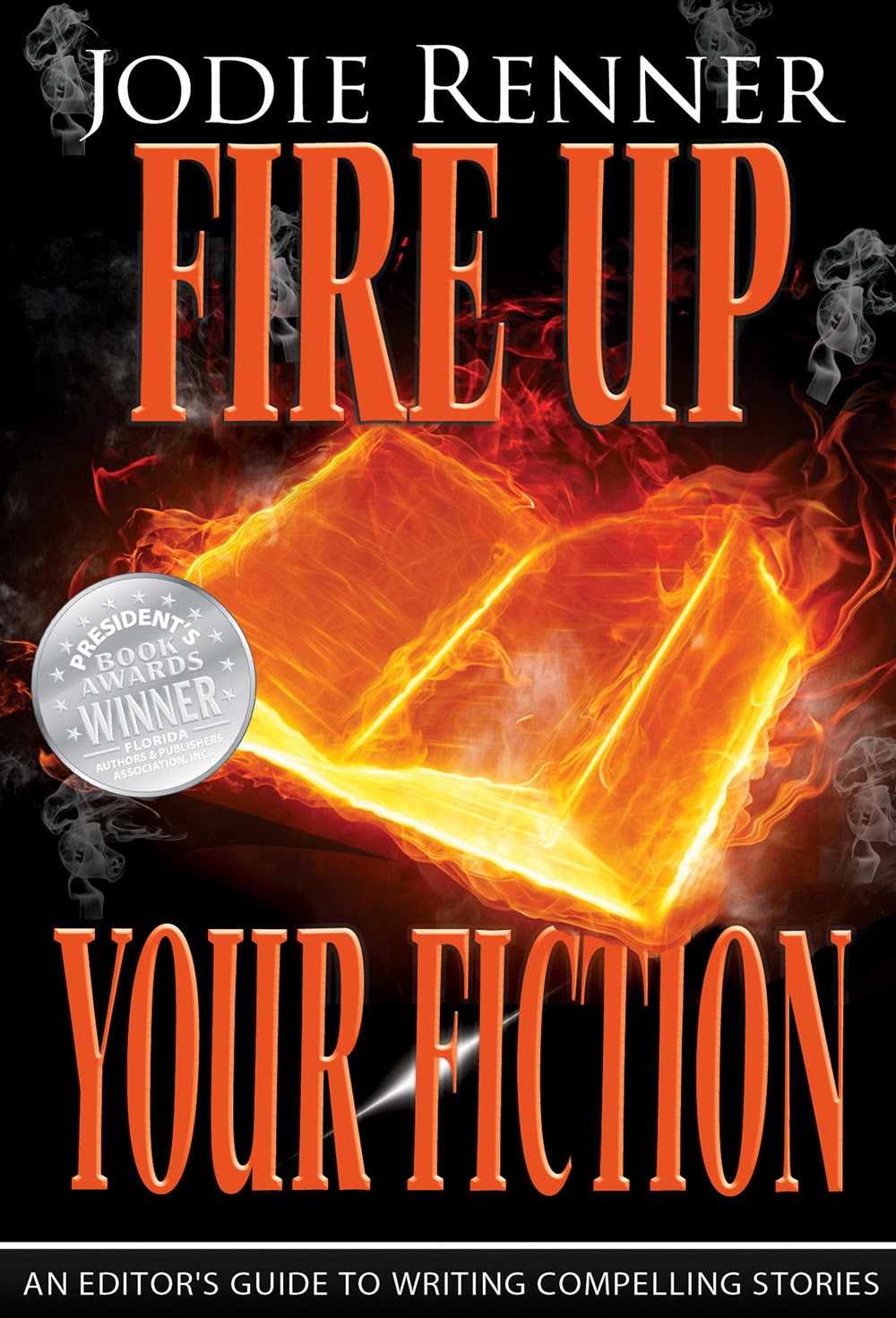
~ Be sure your title grabs readers and also tells them what your book is about (especially important for nonfiction). I've recently decided I should have chosen a different title for my Style That Sizzles & Pacing for Power, as I don’t think it immediately tells a potential reader what the book is about. So after the book has been out for almost a year and a half, I’ve decided to change the title to Fire up Your Fiction (thanks to John Kurtze for suggesting I take that from the title of my recent blog post, “Fire up Your Fiction with Foreshadowing”). I’m keeping the same cover design and also making it very clear in the first few pages that it’s the same book. I hope I
get to keep all my great reviews on Amazon (64, average of 4.8 stars) with the new title! Not to mention the two awards this book has received.
To learn from that mistake of mine, take your time choosing just the right title before publishing. Brainstorm a lot of possibilities and run them past trusted, savvy friends.  

~ To change the title of a book that's already published on Amazon, don't create a new listing. Just go into your existing book and click on "Change book details" and change the title there. That way you get to keep all your reviews and links! (I added this point later after I made the mistake of creating a new listing on Amazon-Kindle and they told me I couldn't transfer the reviews because the two books had different titles. So I changed the title in the existing listing, then deleted the new one I'd created, to avoid confusion. And of course the fact that it's the same book, just with a different title, is noted in the description and on the back cover and in the first pages, inside the book!

~ Get your own “real” ISBN for your books, rather than a CreateSpace-assigned ISBN. Because I’m changing the title of my Style That Sizzles book, I need to get a new ISBN for it. But for several other very good reasons, notably increased distribution and visibility offered by the IBPA and IngramSpark (more below), I need a universally accepted ISBN, not the limited free one CreateSpace assigns. So now I have to go through that whole process again and wait for the new ISBN before I can re-release my book under the new title.

~ To save time and money, try to  have your self-published e-books and print books formatted in a form that is editable by you. Because chances are high that you and/or your readers will find at least a few typos, inconsistencies, or other errors. This means you may need to learn more about formatting.

~ If you revise and improve your published book, notify Amazon right away. If you request it, they’ll send out an email to everyone who bought the original (slightly flawed) e-book, and those people can all upload the revised version instantly and for free. I got busy and didn’t do that last June when I did a substantial revision of my first e-book, Writing a Killer Thriller, adding lots of original stuff and expanding the book by almost 4 times, so I still received a few “outdated” negative reviews after that, based on the original version. 

~ Ignore any negative reviews you receive, especially on Goodreads! Fortunately, I haven’t personally had any bad experiences around this, but I’ve certainly heard of authors being raked over the coals by readers after they responded to negative reviews – even one unfortunate one going viral a year or two ago. Do not respond to negative reviews by readers!

~ Joining Amazon KDP can really help sales of your e-books, as they do a lot of free promoting and marketing for you. See my post on that HERE.

~ If your book is revised, edited, polished, and getting great reviews, consider entering it in some book contests. Here’s a long, detailed list of Book Contests for Indie Authors. Since there are so many to choose from, it’s probably best to pass on the ones that cost over $70 per title, unless you feel the status would be worth it. And I’d go for the ones that provide a written review, from which you can take quotes to share on your website, blog, and on social media. Or just learn from. I’ve won two awards (FAPA & Writer's Digest) for my Style That Sizzles & Pacing for Power (soon to be retitled Fire up Your Fiction), and those awards have definitely increased my sales.


~ Consider joining the Independent Book Publishers Association (IBPA). I just recently heard about them from someone at the SDSU Writers’ Conference in San Diego, where I presented two workshops. After I got home, I checked out their website and decided to join. It looks to me like I’ll be getting a lot of benefits for the $129 annual fee, more than I’ve gotten from any other editors’ or writers’ group memberships. The IBPA Benefits Handbook they sent me is 56 pages long and includes education, support, and discounts on book awards, digital and print publishing, distribution, and marketing.

From their website: “As the largest not-for-profit trade association in the industry, the Independent Book Publishers Association (IBPA) advances the professional interests of authors and independent publishers in the U.S. and around the world. The Independent Book Publishers Association’s (IBPA’s) mission is to advocate for, support, and educate our members and to improve the standards of independent publishing. In addition to longstanding cooperative marketing and education programs, IBPA delivers valuable discounts and networking opportunities to members.”

~ Consider registering your book(s) with IngramSpark, which looks really beneficial for increasing the distribution of both print and e-copies of your books. Costs $49 for both ($37.50 for IBPA members). I’m in the process of registering with them for my Sizzles book, but need to wait for my new ISBN before I can complete the process (which is taking longer because I’m Canadian). Of course, that means the e-book will no longer be in the Amazon KDP program, so will lose those benefits... Maybe I should see if I can just do the print book on IngramSpark, and keep the e-book on KDP...? So much to learn, so little time!

“IngramSpark is Ingram Content Group’s new Publish-on-Demand platform that enables the delivery of content worldwide to readers in print and electronic formats. The service, which is tailored to the specific needs of the small independent publisher, streamlines the sales, account setup, content management, and customer support activities through a self-service, online platform. It’s free to set up an account.” 

~ A new distribution service for indie authors to check out. I’m also thinking about enrolling one of my books in the new IndieReader In-Store (IRIS) program, “the first indie (Author) to indie (Bookstore) distribution service,” for more visibility and increased distribution and sales. This recent initiative was discussed recently here at CFC. Just another option to consider... And let’s see if anyone else jumps in to offer something similar for indie authors.

~ Finally, there are a lot of websites that promote indie books. So many the list could be its own blog post!

Have any of you had experiences to share about Amazon, Smashwords, Lightning Source, Goodreads, book contests, IBPA, IngramSpark, or the IndieReader IRIS program? Or any other initiatives for publishing, distributing, or marketing independently published books? Can you share your wisdom with the rest of us struggling along the path to self-publishing enlightenment and increased sales? Any tips gratefully accepted!


Jodie Renner has published two books to date in her series, An Editor’s Guide to Writing Compelling Fiction: Writing a Killer Thriller and Fire up Your Fiction (formerly titled Style That Sizzles & Pacing for Power), which has won two awards to date. Her third book in the series will be out soon. For more info, please visit Jodie’s author website or editor website, her other blogs, Resources for Writers and The Kill Zone, or find her on Facebook, Twitter, and Google+. To be the first to hear when Jodie's next book is out and to receive links to valuable, timely blog posts, sign up for her newsletter here.