Monday, November 12, 2012

Red Herrings Stink

A guest post by Nancy Springer.

I’m not sure I really am a mystery writer. Up until I received my first Edgar, I thought I was a generic novelist interested in crime. I don’t plot, I don’t murder a character before chapter three, and I don’t plant red herrings. As far as I’m concerned, the less my fiction resembles a fox hunt, the better.

Fox hunt?


Well, you know how we refer to traditional mystery writing: Sleuth hounds sniffing out the trail of the criminal, but led astray by red herrings. That’s fox hunt imagery. In many a jolly good British fox hunt, a prankster dragged a red herring across the fields, because the odor of the smoked fish was so strong it would almost certainly throw the hounds off the track.

Contemplating overdressed people on expensive horses galloping behind a pack of dogs, Oscar Wilde dubbed fox hunting “the unspeakable in full pursuit of the inedible,” thus begging the question: why? Why kill a fox? I have often wondered similarly, why the first body, the second body, and the third body?

I prefer to write crime fiction that is corpse-optional, about missing persons, abduction, stalkers, family secrets, bad guys poaching endangered animals or other environmental crimes. There are many non-cadaverous alternatives to murder, and they occur to me naturally enough when I try to write a mystery novel, as opposed to a fox hunt. I consider plotty plots with red herrings to be egregiously deceptive. Instead, I try for an original, character-driven work, a well-crafted narrative with no need for artifice. I say fences, foxes, red fish, forget it.

Why? Because a fox hunt is essentially an old-fashioned, frivolous pursuit, and so is the contrived murder mystery. Many of us, self included, enjoy a good the-butler-did-it, but today’s world, crime is no game. Nor, I think, do we want it to be. In today’s atmosphere of bad news, domestic abuse, drug trafficking, violence in the schools, and worse, I think there’s a need to acknowledge that villainy is not a cozy, orchestrated logic problem; evil is here, now, and it is messy. I think we need to write honest no-tricks mystery. Red herrings stink.


Nancy Springer has written fifty novels for adults, young adults and children, in genres that include mythic fantasy, contemporary fiction, magical realism, horror, and mystery -- although she did not realize she wrote mystery until she won the Edgar Allan Poe Award from the Mystery Writers of America two years in succession. Dark Lie is her first venture into adult suspense.
Born in New Jersey, Nancy Springer lived for many decades near Gettysburg, Pennsylvania, of Civil War fame, raising two children, writing, riding horseback, fishing, and birdwatching. In 2007 she surprised her friends and herself by moving with her second husband to an isolated area of the Florida panhandle, where the birdwatching is spectacular and where, when fishing, she occasionally catches an alligator.


A review of Dark Lie is posted on Stuff and Nonsense today.  I'm also giving away a copy of Dark Lie, courtesy of The Penguin Group.  Please stop by and comment to enter!

Friday, November 9, 2012

Say Hello to Our New Blogger: Tom Schreck

Tom and Wilber
Our forensic specialist has left us, but Tom Schreck—author, boxing official, psychologist, professor, and Basset Hound rescuer—will be taking his spot. I've known Tom since my first Bouchercon in 2008 and he's one of the nicest people in the business. We were both with the small press that shall not be named, and now we're both Thomas & Mercer authors, and it's been fun to be on a parallel journey with him through this publishing world.

Tom writes the fast-paced Duffy Dombroski mysteries, which Publisher Weekly calls “fresh, intense, and funny” and he has a new standalone thriller, Getting Dunn. There are more interesting details about him in his bio at the bottom so don’t skip it. But here’s a snapshot of Tom in his own words.

L.J.: You’re a man of diverse talents, but seriously, how did you move from boxing to writing mysteries? 

Tom: Actually, I didn’t move at all. I’m still an active boxing judge. This past month was maybe busiest ever doing title fights. I did four world title fights and was on HBO twice and Showtime once in just a few short weeks. I just wish I could do my book covers or website in face paint so when the camera hit me I’d get some free promo time.

My main character is a social worker during the day and a pro fighter at night. Most pro boxers make very little money and have to have day gigs. Duffy isn’t world class, he’s what’s known in the trade as a “professional opponent.” That means he can fight but he’s sent in to lose to the best up-and -coming fighters.

I thought having a fighter who was there for the vulnerable ghetto people on his caseload would be an interesting protagonist. He’s sort of an amateur sleuth with an edge, a chip on his shoulder and a pretty good hook.

As for my own boxing—I still get in the ring but I’m very selective with who I let punch me in the face these days.

L.J.: Where do you fall in this new, messy publishing world? Indie, legacy, or a little of both?

Tom: Right now I’m in the “all of the above” category. I have two books with Thomas & Mercer, I have an indie short story collection, and I just got my rights back for my three previous Duffy books. They are going to be published cooperatively through the literary agency that reps me, The Irene Goodman Agency.

I, like most writers, have no idea what’s going to happen next but I’m thrilled at all the different places I’ve landed.

L.J. What can readers expect from you next?

Tom: I’m working on the fifth in the series that brings together the characters from my series with the characters from my standalone. It’s a fun but challenging project that keeps me getting up earlier and earlier to write. I still got the day gig as the communications director for a non-profit, and I teach college at night. Sometimes I get frustrated at how little time I have to write and other times I’m glad because my time management makes me get down to writing and not waste any time.

Bio: Tom Schreck is the author of five novels, including On the Ropes, TKO, Out Cold, The Vegas Knockout and Getting Dunn. He graduated from the University of Notre Dame and has a master's degree in psychology—and a black belt. He previously worked as the director of an inner-city drug clinic and today juggles several jobs: communications director for a program for people with disabilities, adjunct psychology professor, freelance writer, and world championship boxing official. He lives in Albany, New York, with his wife.

Publisher's Weekly calls the Duffy Series, "Fresh, intense and funny" and says, "Duffy delivers a knockout punch." Kirkus says they are "Refreshingly iconoclastic," and from Crimespree: "One of the five best books I read this year."

Read more about Tom on his blog or join him on Facebook and Twitter.

Thursday, November 8, 2012

Call me chicken.

By Gayle Carline

One thing all fiction writers must do is build tension in their stories. No matter the genre, the main character must have a goal and be thwarted at every turn from achieving that goal. The cop wants to catch the serial killer, but is given false leads. The sleuth opens a cabinet that holds an important clue, but is conked over the head with a teapot. The handsome cowboy is set to ask out the cute barmaid, but is told by her psycho-stalker roommate that she’s a lesbian.
 

It’s always something.
 

One of the things I have to do is put my P.I. in dangerous situations. I don’t like danger myself. I don’t walk down dark alleys, don’t snoop around where I’m not wanted, and have never been in a physical fight, unless you count the time my mare bit me and I smacked her with the hose. I don’t even open other people’s medicine cabinets when I’m visiting, unless I’m looking for dental floss to dig out that piece of overcooked brisket wedged in my molar.
 

Honest, that’s all I’m looking for.
 

If I made a horror movie, it would last exactly five minutes. When I heard the weird noise outside, I would not go out looking for the source, carrying a candle and wearing a negligee. For one thing I don’t own a negligee. What I would do is call 911, turn on all the lights, gather every weapon and sharp object in the house and barricade myself in the back bedroom. And… credits roll (police sirens in the background).
 

So putting Peri in the line of fire is not easy for me. I like Peri. I don’t want her to be injured or killed. But I’ve read armchair detective stories and I’m just not as interested in the action if the main character is not in the thick of things. Secondary characters in danger don’t get me as involved as when it’s happening to the protagonist. So Peri must go where I don’t want to tread.
 

Apart from my own fear, I confess, when I begin to write a scene where Peri is going down the dark alley or snooping around, I am actually afraid that the scene is going to get out of my control and Peri will be boxed into a corner with no escape. I have written plenty of scenes where I want them to go in one direction and my characters revolt and march off the opposite way. What if the danger doesn’t go the way I plan? What if the villain is a step ahead of her and she walks into an ambush?
 

I know what you’re thinking: just rewrite the scene. (Okay, you’re probably thinking I’m loony as a Toon, too, but let’s leave that for another post.)
 

I’d like to think I can rewrite the scene, but I can’t. I mean, I can, but the original version will haunt me. All the time that I spend revising that chapter so that she gets a phone call just before she opens the door, which delays her enough to figure out that she’s being set up, I’m still thinking: nice dream but I know she really walked straight into that gunfire.
 

So when I begin an action scene, I decide on the outcome first. Is Peri left unconscious? If she gets shot, where? Once I know how she will survive, then I imagine rewinding the scene and playing it backward, so to speak. This way, I can direct the action from the start so it ends my way.
 

After all, I can’t depend on my characters to do it for me.
 

So, writers, how do you thrust your characters into the line of fire? And readers, how much do you trust an author to take you to that edge without driving you over it?

Wednesday, November 7, 2012

Location

By Jenny Hilborne, author of mysteries and thrillers

Many writers juggle their writing career with other obligations; chores, family, and often a full time job. We are always distracted. For those of us lucky enough to work at our writing full time at home, the distractions still exist in the form of the mailman, telemarketers, noise from neighbors, missionaries knocking on the door. The list is not exhaustive. Then there's social media - possibly the biggest distraction of all, and far worse when you have all day to use it.

I need solitude and silence to focus, a place away from home and everyday distractions. A writers retreat. I've dreamed of it for ages. Last week, I went on such a retreat, although not alone. I was invited by my sister to spend a week in a remote part of Wales, with an ocean view. Couldn't get better than this, I decided, and went along. Here's the view I enjoyed.


I set up my writing desk at the dining table with the ocean in front of me. On my first 2 days, a ship was positioned right at the end of the rock jutting out from the mainland. I spent 2 days watching the water and wondering about the boat. Who was on it? What were they doing? I imagined pirates, spies, and fishermen. When a smaller boat sailed out and joined it, my imagination went wild. Hostages, loot? Who knew?

I'm sure it was nothing so interesting, but while my imagination was fired up by this view, my writing suffered. I actually found this view distracting; so beautiful I couldn't stop gazing out of the window. I might have done better looking out at the countryside, but I doubt it. I'm beginning to believe I might do my best work within the confines of four walls with no view to distract me.

What about you? What is your favorite writers retreat? Do you find the views distracting? Does it work to go in a group, or do you do better alone?

Tuesday, November 6, 2012

Bookstores to Authors: "Meh."

by L.J. Sellers, author of provocative mysteries & thrillers

I’ve read several articles lately about how bookstores—both chain and independents—refuse to carry books released by Amazon Publishing. As an author, I gave up on bookstores long ago, because with the exception of a few locals, they’ve never supported me. I understand that. Bookstores have physical limitations and can only stock so many items, most of which are published by large publishing houses.

But when they refuse to stock books by known bestselling authors or by celebrities like Penny Marshall—merchandise that certainly will produce a profit—it seems counterproductive, especially since many bookstores are struggling just to stay afloat.

There's another issue here. Bookstores’ support of traditional-only publishers also sends this broad message: “We don’t care whether authors make money.” The reason authors sign with Amazon Publishing is because it treats them with respect and offers generous terms that allow authors to make a living. Hundreds of other authors have also left Big Publishing to go indie because they want to be fairly compensated for their work (among other issues).

Based on my own experience with a small press, combined with everything I read and hear from authors who have signed big publishing contracts, it’s fair to say that traditional publishers offer such stingy terms that most novelists have to hold jobs in addition to writing just to survive. Only a handful of mega sellers make a real living from their work. So when bookstores support traditional-only publishers (and the old business model) and shun Amazon and indie authors, they’re displaying indifference toward authors, the very people who produce the content they profit from.

I can hear bookstore owners saying, “And when authors sign with Amazon, they’re displaying indifference toward bookstores.” True enough. But many authors who sign with Amazon have never been carried by bookstores and owe them no loyalty. And the bestselling authors who have been on store shelves in the past, then sign with Amazon for a better future, will still make more money even with the loss of physical sales. So they’re acting in their own self-interest and who can blame them?

Bookstores would probably make the same claim, but I question that. Refusing to stock one particular publisher’s books, even though those books will make money for the store, seems like a personal decision, made more out of spite than good business sense.

Because Amazon is not going away…but bookstores might.

Monday, November 5, 2012

RESOURCES FOR CRIME WRITERS - BOOKS

by Jodie Renner, freelance editor


To continue my series on resources for crime writers, here's a list of craft and other resource books for writers of thrillers, mysteries, and other crime fiction. For a list of organizations, conferences, and some blogs related to crime fiction, see my recent post, Some Great Resources for Crime Fiction Writers and Readers.


BOOKS ON WRITING THRILLERS, MYSTERIES, AND OTHER CRIME FICTION:

“HOW TO WRITE A THRILLER,” from Amazon, list with links:

How to Write a Damn Good Thriller: A Step-by-Step Guide for Novelists and Screenwriters by James N. Frey

Elements of Fiction Writing - Conflict and Suspense by James Scott Bell

Writing a Killer Thriller (An Editor's Guide to Writing Compelling Fiction) by Jodie Renner

Writing the Thriller by Trish Macdonald Skillman 

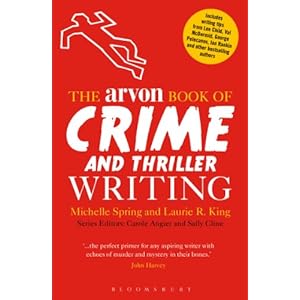
The Arvon Book of Crime and Thriller Writing by Michelle Spring and Laurie R. King

Write a Bestselling Thriller: A Teach Yourself Creative Writing Guide by Matthew Branton

How to Write a Thriller by Scott Mariani

Writing the Thriller Film: The Terror Within (Michael Wiese Productions) by Neill D. Hicks

Writing for Emotional Impact: Advanced Dramatic Techniques to Attract, Engage, and Fascinate the Reader from Beginning to End by Karl Iglesias

Writing a Thriller by André Jute


“HOW TO WRITE A MYSTERY NOVEL,” from Amazon, list with links:

How to Write a Damn Good Mystery: A Practical Step-by-Step Guide from Inspiration to Finished Manuscript by James N. Frey

Writing and Selling Your Mystery Novel
Writing and Selling Your Mystery Novel by Hallie Ephron

Don't Murder Your Mystery [Agatha Award for Best Nonfiction Book] by Chris Roerden (2006)


Writing Mysteries by Sue Grafton (2002)

The Elements of Mystery Fiction: Writing the Modern Whodunit by William G Tapply

How to Write a Mystery by Larry Beinhart

How to Write Killer Historical Mysteries: The Art and Adventure of Sleuthing Through the Past by Kathy Lynn Emerson

Youdunit Whodunit! How to Write Mysteries by Nicola Furlong (2009)

Mystery Writing in a Nutshell by John McAleer, Andrew McAleer and Edward D. Hoch

How to Write Killer Fiction: The Funhouse of Mystery & the Roller Coaster of Suspense by Carolyn Wheat
How to Write a Dick: A Guide for Writing Fictional Sleuths from a Couple of Real-Life Sleuths by Shaun Kaufman and Colleen Collins

Breaking Into The Mystery Short Story Market: It's No Crime! by Brendan DuBois

Write Good or Die by Scott Nicholson, Gayle Lynds, Kevin J. Anderson and M.J. Rose


“WRITING CRIME FICTION,” from Amazon, list with links:

Police Procedure & Investigation: A Guide for Writers (Howdunit)Police Procedure and Investigation: A Guide for Writers (Howdunit) by Lee Lofland

Writing Crime Fiction by Naomi Hirahara, Max Allan Collins, Stephen Gallagher and Dave Zeltserman

The Crime Interviews Volume One: Best-selling Authors Talk About Writing Crime Fiction by Len Wanner and Louise Welsh

Crime Writing Tips For Beginners by Kelvin Jones

The Crime Interviews Volume Three: Best-selling Authors Talk About Writing Crime Fiction by Len Wanner and William McIlvanney

Meet a Jerk, Get to Work, How to Write Villains and the Occasional Hero by Jaqueline Girdner and Ronald Hudson

More Forensics and Fiction: Crime Writers Morbidly Curious Questions Expertly Answered (Marder and Mayhem)
More Forensics and Fiction: Crime Writers Morbidly Curious Questions Expertly Answered (Murder and Mayhem) by Douglas P. Lyle

The Oxford Companion to Crime and Mystery Writing by Rosemary Herbert, Catherine Aird, John M. Reilly and Susan Oleksiw

Crime Fiction (The New Critical Idiom) by John Scaggs

Writing a Killer Thriller (An Editor's Guide to Writing Compelling Fiction) by Jodie Renner

The Writer's Complete Crime Reference Book by Martin Roth

The Cambridge Companion to American Crime Fiction (Cambridge Companions to Literature) by Catherine Ross Nickerson

The Crime Writer's Reference Guide: 1001 Tips for Writing the Perfect Murder by Martin Roth (2003)
Now Write! Mysteries: Suspense, Crime, Thriller, and Other Mystery Fiction Exercises from Today's Best Writers and Teachers by Sherry Ellis and Laurie Lamson

The Crime Writer by Gregg Hurwitz

Forensics For Dummies by Douglas P. Lyle

The Arvon Book of Crime and Thriller Writing
Howdunit Forensics by D. P. Lyle

The Arvon Book of Crime and Thriller Writing by Michelle Spring and Laurie R. King

Body Trauma: A Writer's Guide to Wounds and Injuries (Get It Write) by David W. Page

The Criminal Mind by Katherine Ramsland

The Crime Writer's Handbook (Allison & Busby Writers' Guides) by Douglas Wynn (2004)
(5 stars, 1 customer review)

Teach Yourself Writing Crime Fiction by Lesley Adamson

Crime Writers Reference Guide by Martin Roth

The Crime Interviews Volume Two: Best-selling Authors Talk About Writing Crime Fiction by Len Wanner and Ian Rankin

FBI Handbook of Crime Scene Forensics by Federal Bureau of Investigation (2012)

Writing Crime Novels by John Paxton Sheriff


Writing Bestselling True Crime and Suspense: Break into the Exciting and Profitable Field of Book, Screenplay, and Television (Writing Guides) by Tom Byrnes

Writing Crime and Suspense Fiction: And Getting Published (Teach Yourself Series) by Lesley Grant-Adamson

How to Write Crime by Marele Day

How to Write True Crime That Sells by Gera-Lind Kolarik and Delores Kennedy

Writing Crime Fiction (Writing Handbooks) by Henry Reymond Fitzwalter Keating

Scene of the Crime: A Writer's Guide to Crime Scene Investigation (Howdunit Series) by Anne Wingate (1992) (av. 4.5 stars, 14 customer reviews)

Amateur Detectives: A Writer's Guide to How Private Citizens Solve Criminal Cases (Howdunit Writing) by Elaine Raco Chase and Anne Wingate (1996) (av. 3.5 stars, 6 reviews)

Police Procedural: A Writer's Guide to the Police and How They Work (Howdunit) by Russell L. Bintliff (Sep 1993) (av. 3.5 stars, 9 customer reviews)

Armed and Dangerous: A Writer's Guide to Weapons (Howdunit Writing) by Michael Newton (Aug 1990) (av. 3 stars, 9 customer reviews)

Deadly Doses: A Writer's Guide to Poisons (Howdunit Writing) by Serita Deborah Stevens and Anne Klarner


Also:

BBC: Writing Crime Fiction A master-class held by crime fiction authors Minette Walters and Mark Billingham in March 2004.

Raymond Chandler, The Simple Art of Murder

Writers and readers: Do you have any good craft or resource books to add, for crime fiction writers? Or any opinions on any of the titles listed here? Any you've found particularly useful? Please let us know in the comments below. Thanks!

Jodie Jodie Renner, a freelance fiction editor specializing in thrillers and other fast-paced fiction, has published two books (& e-books) to date in her series, An Editor’s Guide to Writing Compelling  Fiction: Writing a Killer Thriller and Style that Sizzles & Pacing for Power, both in e-book & print. Upcoming book: Immerse the Readers in Your Story World. For more info, please visit Jodie’s author website or editor website, or find her on Facebook or Twitter, and read her blog posts on The Kill Zone and Resources for WritersTo subscribe to Jodie’s "Resources for Writers" newsletter please click on this link.


Friday, November 2, 2012

Back Cover Booty

By Peg Brantley


One of the most important marketing tools writers have is their back cover copy. That tiny piece of real estate is one more place where potential buyers will decide whether to move on to the next step (your first paragraph) or pass.

I suck at back cover copy. Which is why I'm writing this post—to try and learn something.

Here are a few of the do's and don'ts I uncovered in my search:

  • Identify the protagonist and core conflict;
  • Specify the setting;
  • Reference the genre;
  • Hook the reader with a hint of danger or risk;
  • No more than 125 words;
  • Avoid cliched genre jargon.

Can I just say how much this hasn't helped? 

I think my first two books are FAIL as they relate to their back cover copy. The second one is better, but still.

I've known this is a weakness of mine for a long time. Several months ago I printed out this back cover copy because I liked it:

Nola Cespedes, an ambitious young report at the "Time-Picayune," finally catches a break: an assignment to write her first full-length feature. While investigating her story, she also becomes fixated on the search for a missing tourist in the French Quarter. As Nola's work leads her into a violent criminal underworld, she's forced to face disturbing truths from her own past.

Vividly rendered in razor-sharp prose, this haunting thriller is a riveting journey of trust betrayed—and the courageous struggle to rebuild. Fast-paced, atmospheric, and with a knockout twist, Joy Castro's "Hell or High Water" features an unforgettable heroine as fascinating and multi-layered as New Orleans itself.

Other than the cliched genre jargon, I think this one meets the list. But the second paragraph, a kind of review, is what finally sells it for me. 

What about you? As a writer, how do you put this terribly important piece together?

As a reader, what kinds of things grab your attention and make you want to read more?

I'm looking for all the help I can get.

Thursday, November 1, 2012

Why You Should be Using Pinterest to Promote Your Book

by guest blogger Melissa Woodson

As the publishing industry has constricted in recent years, authors have taken on more and more responsibility for promoting and advertising their own books. The traditional image of the introverted writer has become less and less viable, as successful authors have had to make their presence known on sites like Facebook, Twitter and Pinterest. After all, the public isn’t likely to read your book if they don’t know it exists. And while traditional marketing and advertising often require a significant budget and specialized skills, social media is free and fairly easy to use. So why not get started with Pinterest?

What is Pinterest?

Pinterest is a social network built around virtual bulletin boards. Instead of a timeline like Twitter or Facebook, you have a bulletin board that you “pin” photos to. Each photo has a caption that you can use to explain and/or link to more information. Other users can follow your board, comment on your photos and so on. The site’s popularity stems from its visual appeal and intuitive design. It’s easy to use, and visually oriented people find it easy to communicate with. Now, I know what you’re thinking: “But I don’t write picture books!” And that’s exactly why you should use Pinterest.

Visual Storytelling on Pinterest

Today’s marketplace is over-saturated with high-definition, carefully composed, hyper-manipulative imagery. Selling something as unassuming and understated as a book can be challenging in this context, but Pinterest can help you to close the gap. Successful social media users don’t try very hard to sell their products. Instead, they use social media as an outlet for storytelling and community engagement. Telling the story of your book’s creation, your genesis as an author or the subject of your work are all great ways to use the site. You can also invite other users to take part in or respond to the story and begin the process of community building.

Pinterest for Marketing

By using a series of images—whether you create them yourself or cull them from other sites—to tell stories and build relationships may not sound like an author’s job. But it is a great way to entice 21st century readers away from their laptops and into the pages of your book. As you begin to build a community of engaged followers on Pinterest, they will begin to do the work of marketing your book for you. Just wait until fans begin creating boards dedicated to your work!


In today’s media environment, literary creators need to be particularly savvy when it comes to using 21st century marketing tactics. The fact that you managed to tell a 300-page story without any pictures doesn’t mean that you’ll be able to sell it without using any pictures. Pinterest is an intuitive and social way of using visual images that authors can capitalize on without learning specialized skills or raising funds to hire photographers or graphic designers. The opportunity is simply too good for any writer interested in commercial success to pass up.

Melissa Woodson is a social media and outreach coordinator for 2U Inc., a higher education company that helps top-tier universities bring their masters degree programs online. The online LL.M. degree offered through Washington University in St. Louis and the Masters of Public Administration from the University of North Carolina at Chapel Hill are among their partnered offerings. In her free time, she enjoys running, cooking, and making half-baked attempts at training her dog. Follow her on twitter @hungryhealthymj.