Wednesday, December 4, 2013

Are The Blacklist Writers Sexist?

by L.J. Sellers, author of provocative mysteries & thrillers

I’ve been watching The Blacklist because I’m a James Spader fan from way back. The show has a variety of plot-hole problems, which I mostly ignore because it's fast and engaging. But recently an episode irritated me so much, it made really dislike the character. But it’s not her fault, of course.

I’m talking about the episode in which the FBI’s secret location is attacked by a group of machine-gun wielding thugs who want to capture or kill Reddington. In one scene Agent Keen encounters an evildoer who has just murdered several agents—and she has seen the bodies. She demands that he drop his weapon, then punches him in the face. He conveniently falls down and she walks away. Without cuffing him or taking his weapon or anything. WTF?

First, it wasn’t rational human behavior. The bastard would have killed her in a heartbeat, so the only move to ensure survival is to shoot him dead. No conversation necessary. It also went against law enforcement training. They train for shooter/siege scenarios, and once they’ve determined the person in front of them isn’t an innocent bystander, which takes only a second, they shoot. Their job is to protect human beings—citizens or other law enforcement personnel—from imminent danger, and they are trained to shoot to kill in those circumstances. I've volunteered to practice with law enforcement groups in those scenarios, so I've seen the training. They even handcuff dead suspects.

I know Keen killed one of the invaders earlier, but she also waited and gave him too many chances, including standing way too damn close. Law enforcement training also teaches cops and agents to keep twenty feet back from an armed suspect until their weapon is on the ground and kicked away. (Which doesn't make for good video, I know.) Not only was the whole scene stupid and unreal, Agent Keen has been reprimanded for that kind of bullshit before.

 But she’s just a character, an actress doing her job. I blame the writers. More important, I think it’s sexist. Would they write that kind of crap for a male agent? I don’t think so. Male protagonists are allowed to shoot the bad guys. Sometimes, we see a male lead knock people out, take their weapons, and secure them somehow. But that’s usually in a milder one-on-one scenario. In the case of an assault on an FBI building with multiple shooters, with several agents already murdered, I don’t believe writers would have forced a male agent to act so weak and stupid.

I’m not going to give up on the show—because  I still love James Spader—but I am going to write the producers and let them know what I think. For the record, the female FBI agents in my stories would have shot the man dead, as would have I. What do you think? Was it sexist and stupid? Or just lazy and stupid?


Tuesday, December 3, 2013

Music and Writing: a Harmonious Match, or an Off-Pitch Proposition?

by A.M. Khalifa, thriller writer, Google+

Christof Unterberger, Austrian Cellist and Film Music Composer
You may not immediately associate music with fiction, but in my world, music plays an integral role. Often when I write particularly visual or emotional scenes I hear music in my mind. I also write better when I have music playing in the background. For instance, the soundtrack of the film Rush, as scored by Eric Clapton, is the perfect mood-setter when I am writing about fallen heroes, conflicted protagonists, or psychologically charged scenes. Music touches me on many levels and unclogs my creative pores. Other writers may find this process distracting, but listening to music while I write invites an additional dimension to what I create and amplifies the state of hypnosis that is creativity.

But it doesn't stop there. I have gone a step further to involve music in my writing.

I work in the film industry. My friend Christof Unterberger is a talented and successful film composer and cellist. He is also my musical partner in crime. Almost every project I have produced in the last six years has been touched and elevated by his music. As with any creative partnership, Christof is also interested in my writing.

When I started working on my debut novel Terminal Rage, Christof was only the second person after my wife to know about it and to read the synopsis. He started composing small vignettes, spontaneously and inspired only by the little he knew of the story. And he nailed it. The musical pieces he composed back then were so reflective of the essence of my thriller, and so sublime and cinematic, that I started listening to them as I was writing. As a result, my writing and writing regimen improved. My story inspired his music, and his music inspired my writing - cyclical and symbiotic creativity at its very best.

Now that Terminal Rage has been published and Christof has read it, we are doing something even more daring. We are composing a soundtrack for the book. One piece for every chapter. You can listen to the entire sequence here.

I believe we are breaking new ground with this derivative work, which we plan to sell as a companion product once all thirty-two chapters have been scored.

Here is the opening sequence of the Soundtrack, which sets the tone for the entire work:


And this piece is from an action-packed chapter in the book at the halfway mark. Notice how the music is layered and develops subtly:


Finally, here is a sample of a more emotional,  melancholic chapter towards the end:


What intrigues me about this process, is that people who've read the book connect emotionally with the music almost immediately. They appreciate it as a bonus and unexpected layer of the story that expands and enhances their experience with my work.

Mind you, Christof is a highly sought-after film composer, and time is his most precious commodity. Working on the "book" soundtrack of Terminal Rage is a labor of love for him that comes with no material benefit in the short run. He just fell in love with the story and decided to score some amazing music to it while we wait for the film version. Talking of which, can you guess who will score the music to the film adaptation of Terminal Rage, one day? I joke with Christof and say: Alexander Despalt of course!

As a new and independent writer, thinking out of the box and innovating ideas is an essential component of setting myself apart and building my brand. It's not enough to follow the script dictated by the archaic traditional publishing universe we have all inherited.

Readers: Do you hear music in your minds when you connect with a good story? And are you able to read with music in the background? Writers, what do you think of my literary musical experience: does it add value to a book?

As a special promotion for thriller and music aficionados, if you buy the paperback edition of Terminal Rage before January 1, 2014 and let me know about it on my site www.amkhalifa.com, you will find a copy of the Terminal Rage CD in your mailbox sometime early next year!


A.M. Khalifa, author of international thrillers, writes exhilarating, contemporary stories pulsating with life and unforgettable characters. His debut novel, Terminal Rage, is a layered thrill ride that moves seamlessly from inside a nerve-wracking hostage situation to far-flung locations across the world, challenging readers to stay ahead of its unpredictable plot.

The ebook version of Terminal Rage is now on sale for $2.99 on AmazonBarnes and Noble, and Kobo

Monday, December 2, 2013

Escaping the Past

The Wicked Girls by Alex Marwood (Penguin trade paperback, 30 July 2013.).

Reviewed by Marlyn Beebe.


The book opens with a scene set in 1986. A girl describes being in what appears to be a prison cell.  She describes herself as "small and alone and scared and confused", and mentions hearing someone named Bel screaming and crying for her mother.  At the end of this short prologue, we learn that Jade and Bel have killed someone named Chloe, and that there appears to be no doubt in anyone's mind about this.

Fast forward to the present day.

Amber Gordon, who works in the custodial department of  an amusement park called Funnland, stumbles across the dead body of a young woman in the hall of mirrors, not the first that season in the small English seaside town of Whitmouth.  Murmurs about serial killers have already been circulating.

Kirsty Lindsay is a freelance journalist who lives in Farnham, with her unemployed husband Jim and their two children.  She doesn't want to take the story about the Whitmouth murders, but since Jim hasn't been able to find a new job, she feels she has no choice. 

It soon becomes apparent that Amber and Kirsty were once Jade and Bel, though it takes some time before we learn which was which.  The story of how each got to where she is is told with flashbacks to 1986, the events of the present, and their own internal dialogues.

The tale is dark and disturbing, but at the same time compelling.  I had to take a break every few chapters, but there was no question that I would keep reading to the [very unexpected] ending.

Alex Marwood is a pseudonym of a successful British journalist, and The Wicked Girls is her debut thriller, although she has published four other novels under the pseudonym Serena Mackesy.


FTC Full Disclosure:  Many thanks to The Penguin Group for the Advance Reading Copy.

Friday, November 29, 2013

Boxed E-Book Sets: Easy to Set up – Big Potential!

Guest post by Ian Graham, thriller writer 

After a month-long march complete with heralding trumpets and marching pikemen carrying signs of sales, the calendar finally rests on Black Friday and the holiday shopping season has arrived. The internet is replete with advertisements for incredible bargains, and Amazon’s Kindle Store is no exception. Every season, entrepreneurial authors looking to lift their visibility and boost book sales come up with new and interesting ways to attract reader attention, and this year, more than any other, seems to be the year of the boxed set.

All over the Kindle-verse, sets featuring multiple books packaged together are popping up. Some sets feature two or more titles from a single author, while others feature titles by different authors, but with a common theme such as romance, crime, horror, or politics. Last month, Allan Leverone, Steven Konkoly, and I decided to have a go at our own boxed set, and the Black Ops Bundle, Volume 1 was born of our efforts. Jodie contacted me about sharing our book-bundling venture with CFC readers & writers.

As is true with any book project, the behind-the-scenes work is just as important as the final product. Here are some quick points to think about if you're considering taking this avenue yourself and a bit about what we’ve learned along the way.

1) How many authors will be involved?

Whether you already have a group of author friends you’re going to work with or you’re planning on approaching other authors, this should probably be one of the first things to be decided. When we first began talking about our boxed set, we decided that a small number of authors would be best. There are boxed sets available that have as many as nine authors featured, but the minimal amount of space allotted to each author on the cover design doesn't do much for any one individual in terms of visibility, and may, in fact, do a disservice to that author’s brand. Additionally, as with anything, the more people involved, the more opinions there will be on every step of the process, potentially making the planning and design phases very complicated. So, less is more.   

2) How will you price your boxed set?

Prices for boxed sets do not seem to go much higher than five or six dollars, with the emphasis on value. Many sets are priced much lower, several as low as .99. The more authors you have involved, the smaller each slice of the pie will become. Splitting royalties nine or ten different ways hardly seems worthwhile for any one individual, even if sales climb into the thousands. Of course, the reverse side of this is if you have multiple titles available and plan to feature older works by each author. In this case, perhaps the chance at gaining additional readership by being placed in a set with other authors is more important than profit. 

For the Black Ops Bundle, we decided to go with a middle price point of $3.99. This means a reader can purchase three well-reviewed, full-length novels for a little over a dollar each, which is an incredible value. Additionally, at this lower price, someone who has read one of the books featured in the set and liked it may not think too much about re-purchasing it for the other two books. In an effort to trip the all-important Amazon algorithms, we are planning several promotions throughout the month of December that will temporarily lower the price in the hopes of catching a larger profit from the increased visibility after the promotion ends. 

3) Who will handle the publishing of the set and take on the paperwork burden?

If you’re planning on only featuring books from one author, then this point doesn't really affect you, but if a multiple-author boxed set is what you have your eye on, this is vitally important. Combining products by multiple individuals means dealing with multiple individual businesses, each with their own tax liabilities. Unfortunately, Amazon does not have a feature that allows for multiple payees, so one person will have to publish the boxed set through their vendor account and take on the burden of paying the other authors involved. This means that the income from the boxed set, for tax purposes, will be placed on the publisher and whatever business entity they have set up.

If all authors involved live in the United States, this isn’t a particularly difficult issue. Once the publisher is decided upon, each author should submit an IRS Form W-9 to that person so they can be easily, and properly, identified when it comes time to file taxes. To avoid paying taxes on all of the income associated with the boxed set, the publisher will need to file a Form 1099 on each individual author, which will list the amount of money paid to that author and shift that amount from the publisher's income column to the expense column, and will make the individual author responsible for paying any taxes associated with that amount of money.

If you're not in the United States, or if you're dealing with authors located in more than one country, I would recommend seeking the advice of each country's taxing authority or a qualified professional accountant.

Authors, I hope you have found this post informative and helpful. Please take a moment to leave a comment and let me know.
Readers, I hope you'll check out the Black Ops Bundle, Volume 1, featuring three well-reviewed, full-length political thrillers.

Slán Abhaile!

Ian Graham is the author of one novel and two short story collections in the Black Shuck political thriller series featuring former IRA volunteer turned American patriot, Declan McIver. The first full-length novel in the series, VEIL OF CIVILITY, has received praise from professional reviewers in both North America and the United Kingdom, and was chosen as e-thriller.com’s Thriller of the Month for September 2013. To learn more about the Black Shuck thriller series or to connect with Ian, visit www.iangrahamthrillers.com.   

Thursday, November 28, 2013

Is Santa Killing Thanksgiving?


Today is the day our founding fathers set aside to give thanks for what we have. George Washington proclaimed this day a day for the people of this country to unite and be thankful. It has become a day where families make an effort to see one another and even though they often over-eat, they also have some wonderful traditions.

For many years Black Friday has been the big day to shop, but do we really want Black Thursday? Or Black Thanksgiving? Many stores have been traditionally closed on Thanksgiving Day allowing employees to spend time with their families. Last year Walmart, and several other large corporations, decided to start the sales earlier, tearing the employees away from their families. It also cuts the day short for the people who can’t afford to pay full price for those special gifts they want for their loved ones.


I realize the shopper has a choice to not give up Thanksgiving Day in order to take advantage of the big sales, but I personally find it a little disturbing that the stores are pushing the sales further and further into this day of giving thanks. For the last six or seven years my nieces (who have little ones) plan for weeks ahead and get the good deals. They have folders and charts that plot out exactly what the kids want and where they need to go to get the best deals. They get in line around midnight to wait for the stores to open. They bring blankets and lawn chairs and get ready for the big rush. We all join in and help. Some of us stand in line keeping them company or saving their place. Others bring hot chocolate and snacks. It has become another family event and the kids end up with a very bountiful Christmas.

Now my nieces have to make a choice: spend time with their family on Thanksgiving Day, or get the gifts for their children they couldn’t otherwise afford. They have chosen to give up “Black Thanksgiving,” but why should they have to? And what about the employees who don’t have a choice?

Is this just me, or do you think Santa is killing Thanksgiving? What do you think about the sales creeping into this special family holiday? 

Wednesday, November 27, 2013

Sexy on a Stick, or Broken and Flawed? How do you like them?

By Andrew E. Kaufman-Author of psychological thrillers
The tattooed, bad boy biker.
The sexy, iconic rock star.
The brooding detective with a tortured soul who always finds the killer.
Let’s face it, those characters are likeable and appealing, and they’ll always sell. It’s why we see them every day on TV, read about them in novels. If I’m going to be completely honest, I may or may not have even fantasized a time or two about being a few of them. Maybe even pondered the idea of changing my name to Chance, Shane, or Luke.
But those characters have never felt very real to me; in fact, other than their tough exteriors and chiseled jawlines, there’s not much else I remember about them.
When I sat down to create Patrick, the protagonist in my bestselling psychological thriller, The Lion, the Lamb, the Hunted (and its newly released sequel, Darkness & Shadows), I was hoping to break the hero mold. I didn’t necessarily want perfect—I wanted perfectly flawed.  I wanted a hero who was not your everyday hero.
So how did I do it? I went against the thriller grain and broke some rules.
What I ended up with was a very un-Hollywood male lead who could still be appealing. After stripping down the tough exterior you often see with typical heroes, I allowed Patrick’s emotional vulnerability to not only be blatantly exposed, but to help tell the story and drive the plot. Yes, he’s a victim of a horribly tragic and abusive childhood, but he refuses to remain that way. He’s not out to save the world—he’s desperately trying to save himself.
To further his depth and complexity, Patrick suffers from OCD. He’s a journalist obsessed with making lists, consisting of the same words over and over, page after page. His OCD is a coping tool used to survive his unthinkable childhood. Instead of experiencing his pain associated with the abuse, he instead learned to list it. The problem? What saved him then, haunts him now.
But that wasn’t enough for me. More damage, more layers, more angst. More! I gave Patrick a disease where even the slightest cut can make him bleed to death. While this makes for some great and terrifying action scenes, it’s also a powerful metaphor that runs through these books: his childhood has left him emotionally scarred and afraid of being broken open. With his blood disease, he’s as susceptible on the outside as he is on the inside.
And last, but certainly not least—because he’s never had it—Patrick wants desperately to be loved. And he wants to give love. This is his journey in life, and much like everyone else, he has to find himself first.
Typical? Well, not so much, I guess, when you consider the gold standard for some fictional heroes--but I wasn't going for the standard. I was going for flawed. I was going for vulnerable. 
I suppose it was only after I’d completed the first book, that I became a bit worried about how Patrick might be seen by readers who were hoping for a more archetypal male lead, but I write from instinct, not logic. Was it a risk? Sure, but I'm a firm believer in taking them when instincts dictate, and it seemed to have worked. But even today, I still have difficulty breaking him down and capturing his appeal.
So for balance, I looked for a female point of view. My friend and fellow author, Jessica Park, had this to say:
“Look, I’ve read about the hot, perfect, studly leads. In your books, you give us a character, Patrick, with all his raw, emotional, tortured pain. And you also give us Patrick as a hopeful, determined, insightful, and beautiful person. Female readers fall in love with him because of his willingness to examine his own damage, to tear apart his years of hurt, and to battle against the past so he can find a better future for himself. It’s in his pain, and in his fight, that we see meaningful bravery and strength. That makes for powerful, intoxicating reading. And that also makes us want to scoop up that hottie and take him home with us.”
Authors and readers:  How do you like your heroes? Tough as nails? Sexy on a stick? Metrosexual? Self-actualized? Really, there is no right or wrong, and when I think about it, maybe we actually need them all.
Happy Thanksgiving,  everyone!

Tuesday, November 26, 2013

Guest Blogger, Jill Amadio talks about her new book, Digging Too Deep

How many authors base all or, more likely, part of their fictional characters on relatives, friends, business colleagues, and law enforcement authorities?  Even someone sitting at an outdoor café can be grist for the mill. Perhaps the old gent at the next table owes his nervous tick to World War II;  maybe the pretty woman sitting alone keeps checking her watch incessantly because a lover is late.

One of my own favorite character studies was as close to home as you could get: my mother. A Brit, as I am, who lived in Cornwall and other small seaside towns all her life, she had the most curiosity about everything than anyone else I’ve ever encountered. I remember most vividly her total embrace of and interest in everything American after she’d crossed the Big Pond for the first time to visit me and my family in Connecticut where we’d settled after living abroad.

Her first time here was during Thanksgiving week and she took to its festivities with great delight. She was intrigued by the Pilgrim figure candles I bought, the Thanksgiving tablecloth and napkins, the fall wreaths and bouquets, and the Great Turkey Feast. In fact, when she left she filled a small suitcase with many of these items. She intended to hold her own Thanksgiving back home each year, no matter the irony.

While I didn’t steal many of my mother’s traits, the truth is that Tosca Trevant, the amateur sleuth in my debut mystery, Digging Too Deep, is - surprise –  a Brit. A gossip columnist, she’d discovered a scandal at Buckingham Palace and is rudely hustled out of London practically by royal order and forced to live with her twenty-six year old daughter in Newport Beach, California. Tosca is not quite as thrilled with the local culture as my mother had been. No nearby teashops and the one she finds doesn’t warm the pot first; her leather miniskirt from her Carnaby Street era evokes remarks, and she waits impatiently each day for a nice, long drizzle, brolly and wellies ready at the front door. For lack of royals to write about in her new environment she decides one day to weed the unkempt rock garden belonging to her neighbor, a renowned music professor.

During her digging, accompanied by mild cussing in Cornish, she unearths skeletal remains. Aha! A chance to be promoted from gossip columnist to crime reporter and return in triumph to England. Sunny California be damned. The story takes off from there and the investigating begins. Tosca’s own curiosity knows no bounds. She and her sidekick, a retired Secret Service agent and geologist who harbors his own secret, uncover coded music clues and more murders.

As can be imagined, my research into classical music, geology, bones and other matters was extensive. I even cajoled Rhys Bowen and her Welsh heritage into checking out how to pronounce a couple of Cornish expressions. Cornish and Welsh are similar and among the six Celtic languages. I also found a Professor of Cornish in Redruth, Cornwall who provided me with a list of rather strange swear words. When he’s not teaching he’s a fierce defender of the Duchy of Cornwall and hopes to see it someday freed from Great Britain. Shades of America! On the cover of Digging Too Deep I pay tribute to his fight by including a flag of Cornwall, a white cross on a black background.

As for Thanksgiving, I experienced my first one in Westport, CT  and went whole hog with décor and food. At turns mystified and fascinated, my mother couldn’t understand why we accompanied the turkey with cranberries and demanded to be told the entire history of the meal. To her, fruits were strictly for pies. Mixing sweet and savory used to be considered almost pagan. In fact, in the UK many people eat pancakes without syrup. While times have changed, of course, my character, Tosca, still clings to a few British habits including brewing her own Cornish mead from medieval recipes. She foists the result upon reluctant neighbors and that’s how she comes to meet the murderer.

As for me, I feel blessed to live in America, and wish everyone a wonderful Thanksgiving and the reading of many mysteries. 

Sunday, November 24, 2013

Thanks, Amazon, for Promoting My Books for Free!

Jodie's backyard today.
by Jodie Renner, editor & author

Follow Jodie on Twitter.

I can’t afford a publicist, and I'm too busy to do a lot of marketing and promoting of my two books, so I’m really glad I self-published on Amazon, as they’re doing a great job of promoting my books for free.

Amazon, today's leader in book publishing and sales, has a few policies that can be annoying for authors. For example, their policy of highlighting negative reviews drives me up the wall. But overall, my book sales have benefitted far more from some of the other features Amazon provides for their authors & publishers. When it comes to marketing and promoting - and selling - books, they definitely know what they’re doing (far more than I do), so I feel like I have a savvy publicist looking out for me and helping me sell my books.

First, for you newbie authors considering self-publishing your first book, here’s a quick run-down:

- It’s free and easy to publish your e-book on Amazon – and fast (12 hours). But get it edited or at least proofread first, and if you don’t know much about formatting, get it formatted, too. And hire a professional to design your cover.

- If you price your e-book between $2.99 and $9.99, you get 70% royalties on every sale. If you price it above $9.99 or below $2.99, you get 35%. You can change the price any time you like, to offer discounts to boost sales.

For more detailed info on publishing your book on Amazon, see my article, “Pros, Cons, & Steps for Publishing Your Book on Amazon.”

Why I stay with Kindle Direct Publishing:

Earlier on, as an experiment, I made one of my books available on Smashwords and elsewhere, which meant I couldn’t enroll that book in KDP Select, so I lost the benefits of that. Unfortunately, I made very few sales through Smashwords, so it wasn't worth it. If your books are selling well through these other channels, then go for it. Since mine wasn’t, I went back to exclusivity with Amazon and Kindle (KDP Select), and am glad I did.

Here are some of the benefits of KDP Select:

- Lending program. Readers can “borrow” my books from the Kindle Owners Lending Library (KOLL), and I get around $2 for each borrow (fluctuates).

- Free Promos: I can offer the book for free, for up to 5 days for every 90 days.

- Kindle Countdown Deals. I can take advantage of the excellent Kindle Countdown Deals, where the e-book goes on sale for varying prices (chosen by me) for a specific period of time, decided by me, and Kindle shows readers the normal price and how many hours are left at each sale price. I decided to start my Style That Sizzles & Pacing for Power, with a regular price of $3.99, at .99 for 2 days, then $1.99 for 2 days, then $2.99 for 2 days, then back to the normal price. My sales rose significantly as a result of this countdown deal, as did my ranking on Amazon, for that period and a few days after it. And we get to maintain the 70% royalty during this promotion, even when the price goes below $2.99, which is great! And we can monitor sales in real time, to see how the book is selling at each price point.

And readers can check out the Kindle Countdown Deals website regularly, to see a categorized list of books that are discounted.

- Amazon’s Kindle Matchbook Program. If you purchase the print version, or have bought it at any time in the past, you can buy the e-book for a reduced price or even free.

- Amazon’s free promotions. Amazon promotes my book with various features, appearing under other similar books, such as “Customers who bought this item also bought,” “More items to consider,” and “Customers with Similar Searches Purchased” features, and also by their email promos of books, tailored to the kinds of books each customer has ordered in the past. Your book may also appear in Shopping Cart Recommendations, “Frequently Bought Together,” and many other places on the Amazon website.

- Audiobooks through ACX. Amazon has introduced some discounts for readers who purchase both the book and the audiobook. For more on this, see some recent posts here on CFC: "A Movie in My Head: The Fast-Growing World of Audiobooks" by Basil Sands, "Audiobooks Are Here to Stay (At Least for A While)," By Teresa Burrell, and "Listening vs. Reading" by Jenny Hilborne.

Kindle’s “WhisperSync for Voice and Immersion Reading” feature:

You can use ACX to produce a digital audiobook version of your book, and to enable your book for the new Whispersync for Voice functionality, which allows customers to switch seamlessly between reading the Kindle book and listening to the professionally-narrated audiobook across devices without losing their place. And customers with Kindle Fire HD devices can listen to the professional narration as the words of the e-book are highlighted on the screen. Both excellent features!

Also, when customers buy your Kindle book, they can purchase your audiobook at a discounted price.

And you can earn royalties of up to 90% on your audiobook when it’s created and distributed using ACX.

Overall, I'm so glad Amazon-Kindle is doing most of the heavy lifting for me, when it comes to marketing and promoting my books!

Writers and readers: Have I missed some features or programs provided by Amazon or Kindle?

Authors: Have you found it more advantageous to publish across several platforms, not just Amazon-Kindle? Or, how has Amazon helped your book sales? How about other initiatives that have boosted your sales? Share your success stories with us!

Related articles:

Basic Formatting of Your Manuscript

Pros, Cons, & Steps for Publishing Your Book on Amazon 


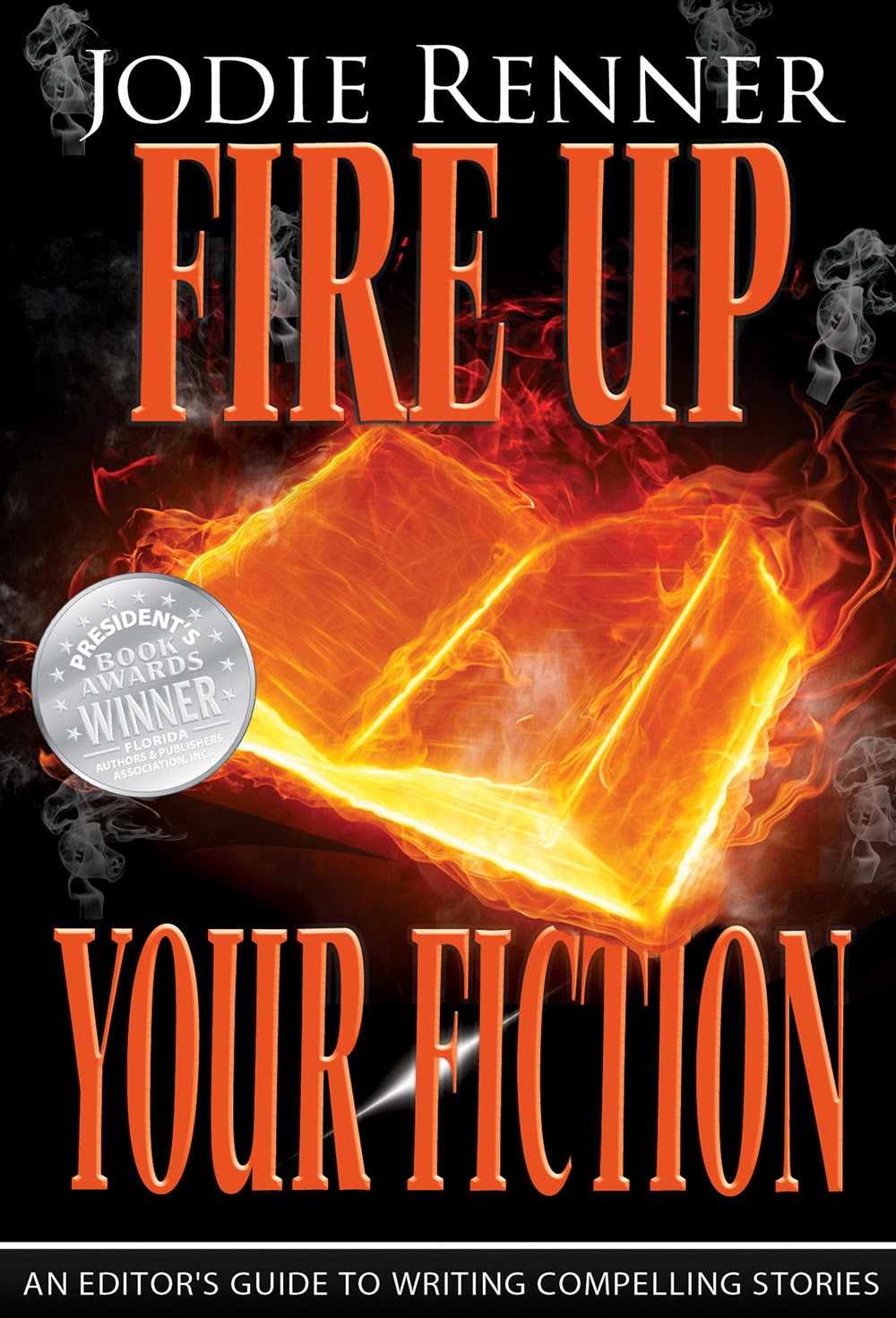
Jodie has published two books to date in her series, An Editor’s Guide to Writing Compelling Fiction: Writing a Killer Thriller and Fire up Your Fiction (Style That Sizzles & Pacing for Power), which has won two book awards so far. Look for the third book in the series, out soon. For more info, please visit Jodie’s author website or editor website, her other blogs, Resources for Writers and The Kill Zone, or find her on Facebook, Twitter, and Google+. And sign up for her newsletter.  
.