Showing posts with label reviews. Show all posts

Friday, September 20, 2013

Do You Want to Give A Shout Out for a Favorite Author?


By Peg Brantley
Evocative Characters. Intriguing Crime. Compelling Stories.


Most of our readers simply enjoy our books, and really in the end that's quite good enough. But sometimes readers would love to know how they can support us and get the word out.

Here are a few ideas:


★ Write a review for Amazon, Goodreads, Barnes and Noble, DorothyL, For Mystery Addicts, your local library’s website, or any other online review site. It doesn't have to be detailed. Just what you liked.


★ Talk about the book on social media sites. Twitter, Facebook… you know what I mean.


★ Blog about it.


★ Ask your local library to order a copy of the book.


★ Donate a book to your local dentist, doctor, or hairdresser to put in the waiting room.


★ If you’re part of a group, even a group that's not about reading, tell them about the book.


★ Suggest the book to your book club, if applicable. Most of us would be happy to attend a book club in person if possible, or Skype.


★ “Like” the book on Amazon.


★ Direct people to our website.


★ Write a review for your local newspaper.


★ Purchase copies to give away as Christmas and birthday gifts.


★ Pin the cover or other pictures to Pinterest.


★ Share your favorite quotes from the book online. If you purchase an e-book, highlight your favorite quotes. (Personally, I get a kick out of these even though I'm not sure they contribute to any sales.)


★ Suggest the book on reading forums, like those you can find on Goodreads.


★ Make a video about the book and upload it to YouTube or Vimeo.


Can you think of any other way a reader can help spread the word? (Thinking hard about this as my next book is about a month away from release. October 22nd, October 22nd, October 22nd…)


I'm currently in NYC enjoying a brief getaway. If I don't respond quickly to your comments, you'll know why—I'm either at MOMA or Ground Zero.

Thursday, May 30, 2013

The Language of Reviews

by L.J. Sellers, author of provocative mysteries & thrillers

Odd thought of the day: What exactly does it mean when readers say in reviews, "You won't be disappointed," or something similar. I get that sometimes lately, and I see it in a lot of reviews for other authors. 

I understand and appreciate that the phrase is meant to be positive. In fact, it could be part of a terrific review. But sometimes the line worries me, because it feels like a euphemism for "This book is okay. You won't be disappointed, but you might not be impressed either." The absence of a negative is not quite the same as a positive.

The feeling could just be misinterpretation or paranoia on my part. I suspect that authors like myself with ten or more books published hear it more than new authors with just a few. It could be that readers who stick with a favorite author for a long time start to worry that eventually the author will disappoint them—because it's inevitable that eventually it will happen. Believe me, as a reader, I know!

So when someone is reading my tenth or eleventh book and they get to the end, they might be thinking "Great! She wrote another story that didn't disappoint me." Then that thinking/language becomes part of the review or feedback or blurb.

Of course, I'd like to do better than just not disappoint my readers. I'd like to thrill them, mystify them, and make them think—among other things. I'm also grateful for every reader who has stuck with me through ten books...and for some, two additional unpublished manuscripts.

So I'm not complaining, just musing out loud and trying to understand.

Readers/reviewers: Do you use this phrase? What do you mean by it? Does the meaning varying depending on your expectations of the author?

Writers: How do you feel about this response to your work? Am I the only one who worries that it's not quite a compliment?


Sunday, May 19, 2013

Revise and Republish?

The Increasing Fluidity of Books & Publishing

by Jodie Renner, fiction editor and craft-of-fiction writer   

If you’re an indie author with e-books on Amazon, have you revised and re-uploaded any of your e-books, in response to negative reviews or other feedback? Or even just to add improvements or additions you thought of yourself? I do, quite regularly. And it seems to me that many authors, including high-profile ones, who are receiving similar negative reviews for a book should be considering doing this. What do you think? 

With more and more authors publishing their own books as e-books, and even publishers releasing increasing numbers of e-books, which can be updated as often as the author/publisher chooses, how does that impact the content of the books? I’m thinking that using this privilege can’t help but improve the book, and the overall quality of e-books available.

Can and should we use reviews and other feedback to constantly (or occasionally) update or revise our books? Why or why not?

Would you or do you alter/tweak/revise/change your book because of many similar reviews?

And if you do revise your book because of negative reviews, what do you do about the fact that the reviews are still there, even though the issues have been addressed and hopefully fixed? Would you respond to the well-thought-out ones you felt had a good point and tell them you’ve made some changes based on their review?

And will more and more traditional publishers with digital imprints start tweaking their books based on informative, thoughtful reviews? Or on many negative reviews with basically the same objections? Will individual e-books then be in a constant state of flux, based on feedback and current trends?

I’ve heard of authors changing the ending to please a majority of readers who objected to the way their book ended. What about changing other aspects of a book that would require more extensive revisions? What if a lot of faithful followers found one of your protagonists too hard-edged or whiny or sarcastic or whatever? Would you go back to that book and tweak your characterization and their dialogue, etc. to make them more sympathetic and appealing? Or what if lots of readers complained about a major plot hole? Would you go in and fix it, in hopes of stopping the flood of bad reviews?

If your novel is solely an e-book at this stage, it’s quick and easy to upload a newer, better version after making the revisions. But then you have some people who have the original version and others who are buying the improved product. 

I’ve published two craft-of-fiction e-books on Amazon-Kindle (with more to come) and have updated and expanded both of them several times, which is a wonderful feature and option/privilege, I think, especially for writers who are still honing their craft and learning from their mistakes.

Since I published my first e-book, Writing a Killer Thriller, in July 2012, I’ve added two chapters
and revised the whole thing. In the last few days, I added another chapter and deleted one near the end that was too repetitive, a summary that basically reiterated points made in the rest of the book. I just republished this most recent version, and a new cover, and am working on two more new chapters for the book. This approach would have been unheard of ten years ago, but I’m grateful to have the control to be able to do this with my “learning” first book.

Then I’ll ask Amazon to notify earlier buyers so they can upgrade for free. I’m also publishing the new chapters on the blog of my new, author website, so people who’ve bought earlier versions of the e-book can just read the new chapters there. And I’m planning to publish the new, expanded version in print soon. And I assume I can keep the same title...?

(As an aside, when I first published this e-book, I enabled Digital Rights Management and have since been told that was a mistake so I didn’t do it with my second book. Does anyone know if there’s a way I can disable that? It doesn’t seem possible.)

And what about if your book is already in print? Say you’ve published with a POD house like CreateSpace, like I did, for my Style That Sizzles & Pacing for Power book (available as an e-book, too). Do you consider re-issuing a second edition? All my comments for Style that Sizzles have been positive (29 reviews to date, with an overall rating of 4.9 stars out of 5), but I’m considering publishing a newer, improved second edition. Am I getting carried away here? When do you say, “Enough, already,” and move on?

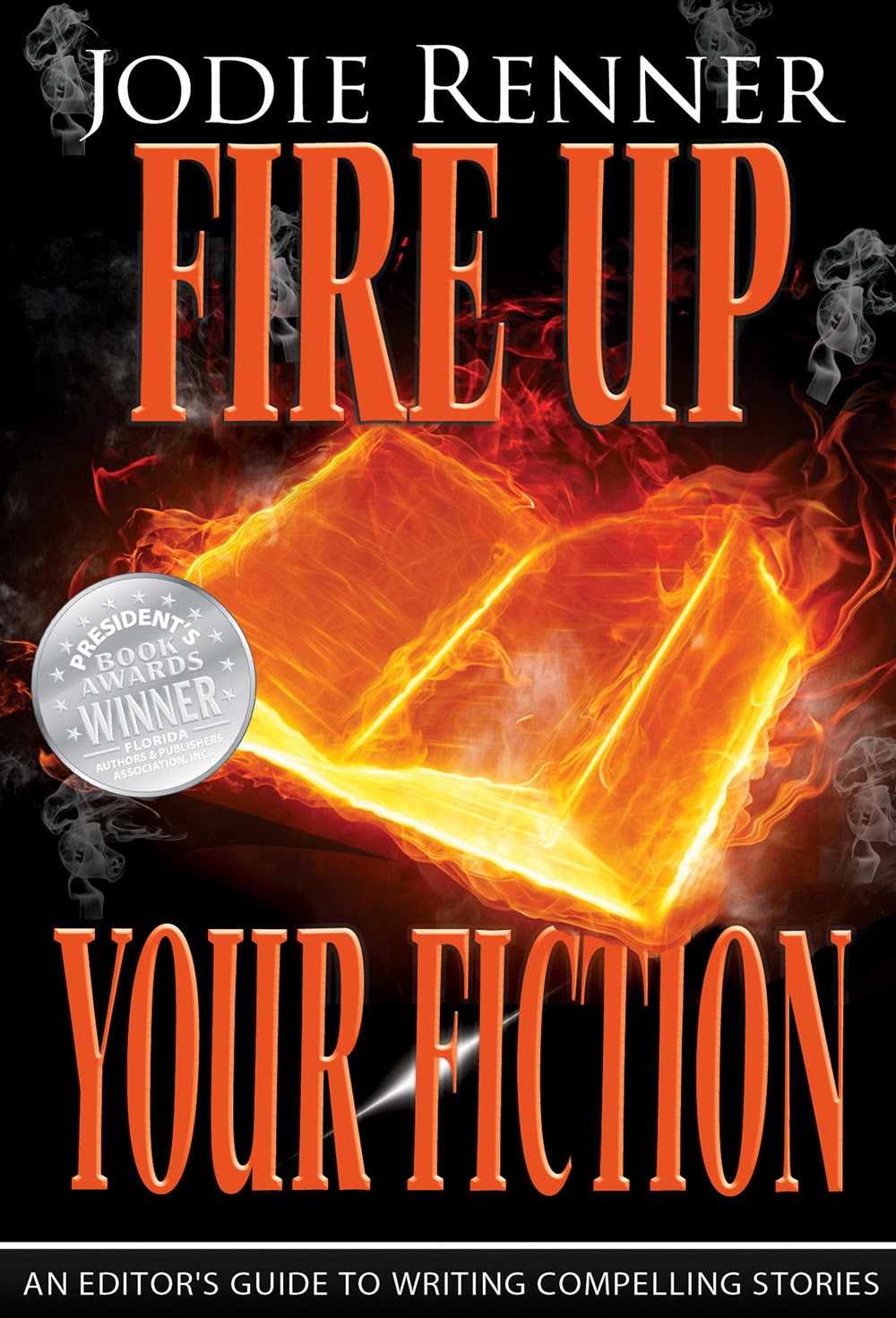
*Update, February 2014: I updated Style That Sizzles and retitled it Fire up Your Fiction.*

Writers - Do you revise your e-books to address issues that readers feel detract from the overall positive impact of the book?

Should we embrace increased reader involvement/interaction? Or would that just be opening a can of worms?

Readers & Reviewers - Do you appreciate it when writers revise based on your input? Do you enjoy the extra involvement of being a beta reader or active reviewer?

Do you even check back occasionally to see if writers have revised their book based on similar negative reviews by you and others? Would you like to see authors comment under your review if they've addressed your concerns?


Jodie Renner has published two books to date in her series, An Editor’s Guide to Writing Compelling Fiction: Writing a Killer Thriller and Fire up Your Fiction (Style That Sizzles & Pacing for Power), which has won two book awards so far. Look for the third book in the series, out soon. For more info, please visit Jodie’s author website or editor website, her other blogs, The Kill Zone and Resources for Writers, or find her on Facebook, Twitter, and Google+. And sign up for her newsletter.
.


Friday, March 29, 2013

Keep the Amazon Criticism Real

by L.J. Sellers, author of provocative mysteries & thrillers

I normally don't argue with anyone online. One, I don't have time, and two, I want everyone to like me. But last night I spent an hour countering some authors who were freaking out about Amazon buying Goodreads.

If they had posted rational, thoughtful ideas about why it might be a bad idea for Amazon to own all three of the book-related (book review) social media sites, I might have even agreed with them. However, they were throwing around the word monopoly and trashing Amazon as evil, so I felt compelled to respond.

First, Goodreads isn't a retail store, so monopoly isn't an issue. Second, all those authors sell their books on Amazon, and I would bet they make a good chunk of their income from Amazon sales, even if they're traditionally published. If they really hate Amazon, they should pull their books down from the retailer and never sign with a publisher that does business with Amazon. Back up your beliefs with your actions and money!

More important, any of the big players in the publishing marketplace (Penguin, Books-a-Million, Ingram) could have bought Goodreads. But they didn't. And Goodreads could have said no. But they didn't. If you want to be mad, why not focus your anger on the founders who sold out?

Amazon is a successful business because it makes smart moves. It also wants to connect readers with the right books. Honestly, it's the most customer-centric business I've ever encountered. When I talk with the people at Amazon Publishing, they discuss everything in terms of "the customer experience" and how they want every customer to have a good experience. It's embedded in the company culture.

What do I think will happen to Goodreads? Amazon will improve the interface and make it considerably easier to use. They'll create a way to use the site from Kindle, which will make book cataloging and reviewing easier. They'll make author pages better so I can update my books to show the new covers. For inside scoop, here's an interview with people from both companies.

Will the B&N buy buttons eventually go away? Probably. But B&N is already circling the drain… because they waited way too long to get into the e-reader business and overinvested in expensive retail space. Maybe B&N should have bought Goodreads long ago and eliminated Amazon's buy buttons. I'm sure everyone in publishing would have cheered.

PS: And this morning, Shelf Awareness writes: "In one fell swoop, Amazon, whose algorithms for recommending books have shown limited effectiveness, now owns one of the major tools built to address the problem [of discoverability] it created."

I call bullshit. Amazon did not create the problem of authors failing to get discovered. There just weren't enough bookshelves to stock and display the growing number of authors. And yes, the growth of e-readers shrank print book sales and the number of bookstores. But don't blame Amazon for creating a product readers love! Further, Amazon, with its infinite "book display" space and supportive algorithms, has successfully corrected the problem of discoverability for most authors. As I said, keep the criticism real.


Wednesday, December 5, 2012

Bad books hold value

By Jenny Hilborne, author of mysteries and thrillers

Most authors I know are voracious readers. We devour books and we feel cheated when we invest time and money only to be disappointed with our investment, especially when the book came highly recommended or has a slew of favorable reviews. It's like getting bad financial advice from a once trusted source. However, there is still value in "bad" books.

My experience with books creates a change in my mood, and it's far more noticeable after I finish a disappointing book. The last few novels I read lifted me out of the blah state the previous ones dumped me into and I started to compare the difference, see what tips I could learn from each of the books, good and bad, and determine what made some books great and others forgettable. 

The most important criteria of a mystery or thriller (for me) are a complex plot, compelling motive, and intriguing characters. The books I read were penned by respectable authors and the writing itself was fine. So, was the premise of the story. The problem I had was the writer's style. 

Lots of people rave about the TV show "Bones", based on Kathy Reich's character, Temperance Brennan. I've never watched it and I'd never read any of her work until 2 months ago, when I stumbled across one of her books in a phone booth 'library' in Britain. The blurb looked good and I settled in. I finished the book, and wondered why the show was so popular. 

The mystery seemed to be an afterthought, with the author's focus on educating the reader about her subject (forensic anthropology) rather than delivering an interesting story. The reader was required to have extensive knowledge of the human anatomy to understand much of what she wrote. I felt like I'd wandered into the wrong class and was forced to listen to the tutor ramble on about her subject. The story lacked suspense and I never got a sense of the southern charm of South Carolina. Perhaps the TV show is better than the books. Reich's is not the only author to bash the reader over the head with too much subject matter. Others do it with weapons. Too much detail makes the writing dull and slows the plot. It's indigestible to the reader.

I also read Taste of Fear by Jeremy Bates. I loved his first book, White Lies. Taste of Fear is about survival and is gripping from the beginning, with action, suspense, and danger. Bates focuses on developing the story, takes the reader on an intense trip, and fills the senses with smells, sounds and tastes. I still remember what this story is about. 

I'm sure writers make the most critical readers; however, for me fiction is escapism. It's supposed to entertain. In comparing my recent reads, I note how good books engage all the senses and good authors know when to withhold information. They take the reader on a journey, but they don't hold them hostage. Fiction is a way to learn. Writers have their unique style, but reading a lot of fiction helps shape our craft and develop/improve our own style. Well read authors make better authors. They learn what works, what doesn't, and take from the best and the worst. There is value to both. 


Friday, October 19, 2012

A Line in the Sand

by Peg Brantley


If you draw a line in the sand—over which you affirm you will not cross—where do you redraw it when a wave washes it away? Or when a jogger comes along and tramples it? Do you draw it in the same place or move it somewhere out of the way?

Integrity only means something when you stand strong. It's mist in the wind if you adjust your values because they become inconvenient. Keeping your integrity might mean you have to lose a few quick sales, or build your career a little slower than you'd like.

Here's what I've seen with many authors recently—traditional or indie:

A lot has been made lately about phony or paid reviews. Most of us were righteously indignant, and deservedly so. Some people unfortunately, simply wish they'd thought of it first. But that's only one piece of the game.

What about biographies? Is your biography dead-on, or have you played with reality a bit? I've heard it referred to as "permissive puffery" which to me is just another way of moving that line in the sand. Did you really make your living as a journalist or is the truth that your local hometown paper published two letters you wrote to the editor? Or that you were a star for your school newspaper?

How about calling yourself an award winning author because you came in second place in some obscure writing contest? (I have a framed certificate on my wall. Does that count?) I remember when I won that award, a friend told me I could now refer to myself as an award winning author. I think she meant it tongue-in-cheek, but it did make me wonder.

Then there's calling yourself a bestselling author because your book hit the top 100 of a free list, narrowed down by three or four categories? Are you serious? The NYT's Bestseller list has a few ethical issues of its own—don't compound it by adding yours.

Or review trading—explicit or implied. This was kind of a new one for me. No one actually came out and said "I'll give you a great review if you give me a great review", but the timing of their review and suddenly receiving their book made it hard not to hear those words. And when I wasn't crazy about their book? I sort of felt like I should somehow move to have their review taken down. It felt fake and sleazy.

To be perfectly honest, I asked a few readers who had given my first book a positive review to take a look at The Missings early in order to give it a nice bump at its launch. But I also spread that request out to others who may or may not have ever read my first book. One of my first 5-star reviews is from such a reader. Dishonest? Unethical? Lacking in integrity? I don't think those were any different than publishers sending out ARCs to try and get that same bump.

Writers, what about you? Have you seen things that made you shake your head? Were you ever tempted?

Readers, especially readers… have you begun to see through some of this stuff? Does it make you doubt everything?


Peg Brantley was never a journalist or a screenwriter or a sought after speaker. Although Amazon might say she has some bestselling books, she's still trying to reach that mark. Yes, she did receive second place in a writing contest once and even an honorable mention in another… but award winning? Net yet. RED TIDE rose as high as number two one time when she happened to look at the list. That was a kick. It didn't last.


Friday, September 21, 2012

The Biggest Single Mistake

By Peg Brantley


I'm stoked. My second book will be published next month if all goes according to plan.

The Missings will have been written, self-edited, beta-read, edited again and then edited once more as a pre-edit edit, then professionally edited, then proofread. Then it will be formatted for both ebooks and paperback.


It has a great cover. (I love this cover!) There are even some readers who are waiting for it.

That's all it needs, right?

I've been thinking about this, and I've come up with what I think is the single biggest mistake indie authors make on the business side of their books. And I'm pretty sure I know it's true because I'm sooooo tempted to make the same mistake.

We get too damned anxious to publish.

We all know about the pipeline involved with traditional publishing: that long and seemingly Endless Wait for your book to finally become available. One of the pluses for doing everything yourself is to be able to be more immediate with readers; more immediate with your career.

But we miss some things—some important things—if we rush too fast. These are a couple of the things a traditional publisher would be working to put in place during the Endless Wait.

Since I just published my first novel, I know these items might be more difficult with a debut novel, but for a second? I think they're imperative, and should be done before publication:


  • Line up some reviewers—preferably reviewers who read and liked your previous book—and have those reviews ready to go;
  • Ask at least one published author (in your genre) who outranks you in terms of sales and readers, to endorse your new book;
  • Line up some advance readers who are willing to help you hit the floor running with some Amazon reviews, blog reviews, list reviews, tweets, Facebook, etc.

The hard part is letting your book that is ready sit for a week or two longer in order to get these other plans in place. But a week or two is a whole lot better than a year, don't you think?

The exception to this line of thought might be the author out there who is publishing his or her eighth or  ninth or eleventh book—they're a known quantity and might not need the bump from reviews and endorsements.

But for those of us in the early stages of the game? You've taken the time to do everything right up until the book is ready to publish. You've fed it, nurtured it, educated it and clothed it. Now make sure it has the support system and social contacts it will need to rise above the millions of other books that are out there.

Writers, what other things do you think help impact the success of a well-written book?

Readers, what helps pull you toward a relatively new author?


Peg Brantley's debut thriller, RED TIDE, has found it way into the hands of more than 30,000 readers in the six months since its publication. THE MISSINGS, a police procedural, will be available in October.

Thursday, August 23, 2012

Do Reviews Matter?

A guest post by author Jordyn Redwood


Now that I am a published author, the whole world of reviewing and what it actually means has been an interest of mine.

Do you trust reviewers? Does it influence your decision to buy a book?

First, let me give my pre-published-just-a-reader point of view. I can say reviews really didn't matter me. I didn't read them unless the book was published by a well known author and poorly reviewed. I don't know. Maybe it's like when we slow down to look at the carnage from a car accident.

When I got my e-reader, I began to look more at reviews. I didn't want to junk up my reader with poorly written books that I wouldn't read through the first couple of chapters.

I found myself suspicious of reviews that were under twenty and all five star. I mean, to me that felt like family and close friends and were they really giving an unbiased review? Hard to know. If the novel had over thirty or so reviews and had a distribution amongst all the stars but most were four and five stars with a few one, two, and three stars—I was more likely to download it.

Then I began to realize there is a trust issue between the buyer and those who review. There was an interesting column by author Mike Duran that focused on this issue where he hypothesized that those who reviewed Christian books were softer and more favorable toward certain publishers’ books so it wouldn’t hurt their chances of someday being published by that particular house. You can read his thoughts here.

After I was published, I was not one of those authors who couldn't read the reviews—though I did find myself mostly focusing on Amazon and Goodreads for my primary perusing.

My now I'm-published-but-still-mostly-unknown-author viewpoint concerning reviews is as follows.

1. Reviews are important for newer authors who are building a readership. This is one of those Catch 22 situations of getting people to review your novel who don't know you by perhaps offering them a free book and hoping they follow through. Perhaps 50% of the people who received review copies of Proof actually have thus far followed through with a review. The reason I do think it's valuable in this phase of the author's life is to help with that word of mouth spread. If you look at a debut novel that's gotten over 100 favorable reviews—WOW, a lot of people are loving that book and I know it would influence me to buy the novel too.

2. Reviews from well respected sites do help book sales. Proof, my debut medical-crime thriller, got a starred review from Library Journal and I know that has definitely influenced sales.

3. Reviews don't help me decide to buy books from authors I regularly follow. For me, Dean Koontz, is my most favorite author. Do I 100% love everything he's written—no. But, what I've learned from reading Dean through his lifetime of writing books is that there are definitely highs and lows to the writer's life but I know a prolific author has it in them to produce good stories.

4. Reviews help evaluate the competition. There is one particular author who was a debut novelist that released her book the same time Proof released. She has over 100 reviews and the reason I've been reading them is to see what it is in her novel that is resonating with readers. That can help me have market awareness.

5.  I also need to review books. This is becoming more apparent to me that it helps people determine what kind of author I might be by what I like to read. A couple of people who have sent me letters have mentioned this specifically.

What are your thoughts on reviews? Helpful? Trustworthy? Do they influence your decision to buy books particularly from a newer author?


Jordyn Redwood is a pediatric ER nurse by day, suspense novelist by night. She hosts Redwood’s Medical Edge, a blog devoted to helping contemporary and historical authors write medically accurate fiction. Her debut novel, Proofgarnered a starred review from Library Journal and has been endorsed by the likes of Dr. Richard Mabry, Lynette Eason, and Mike Dellosso to name a few. You can connect with Jordyn via her website at www.jordynredwood.net


Dr. Lilly Reeves is a young, accomplished ER physician with her whole life ahead of her. But that life instantly changes when she becomes the fifth victim of a serial rapist. Believing it's the only way to recover her reputation and secure peace for herself, Lilly sets out to find--and punish--her assailant. Sporting a mysterious tattoo and unusually colored eyes, the rapist should be easy to identify. He even leaves what police would consider solid evidence. But when Lilly believes she has found him, DNA testing clears him as a suspect. How can she prove he is guilty, if science says he is not?

Tuesday, February 7, 2012

A Review, A Review, My Kingdom for a Review...

By:  Kimberly Hitchens is the founder and owner of Booknook.biz, an ebook production company that has produced books for over 500 authors and imprints. 

(This article is a reprint from the Booknook.biz website)

As many of you know, I have long touted the amazing Jenny Blake Spreadsheet as a detailed roadmap to self-published success, coupled with the Locke book.  For those  of you who missed my proselytizing on the subject, the discussion of the Blake Spreadsheet was discussed by the ubiquitous Seth Godin on his Domino Project website, here:  http://www.thedominoproject.com/2011/06/a-spreadsheet-for-the-self-published.html which I wrote about in my following month's newsletter.  If you haven't read the newsletter, the articles on my website or Jenny's own site (http://www.lifeaftercollege.org/), you should check her out, and more importantly, download and use that damn spreadsheet, folks!

However, one topic that keeps arising, both in the various writer's groups to which I belong, and the KDP fora (forums) is the inability to score reviews.  Last year, we posted some articles with review links, and I thought listing them again might prove useful.

Below is a list of networks and otherwise useful sites, which provide book and ebook publishing news, commentary, reader and writer forums, and reviews or features that can be submitted by anyone and everyone. These sites are helpful tools in your navigating of networking, enabling you to more quickly find popular and/or effective blogs for review, and in stocking up on voluntary reader reviews for your book, which often make landing a big-time blogger review more likely.

Websites are listed by Alexa ranking, which rates blogs according to traffic and therefore popularity.
  • -http://www.amazon.com 17: A website on which consumers can buy, sell, and review books and ebooks... as well as pretty much everything else.
  • -http://www.goodreads.com 1,009: A network/forum focusing on readers, featuring book recommendations, book clubs, trivia games, and giveaways.
  • -http://www.mobileread.com 7,885: A forum for e-reading, featuring e-book and e-reader recommendations and news.
  • -http://www.Librarything.com 8,066: A personal book cataloger, allowing readers to catalog books from Amazon, Library of Congress, and 690 other world libraries, and to find new books based on what others have read with similar tastes.
  • -http://www.kindleboards.com 15,928: A forum in which members can "feel free to talk about anything and everything related to Kindle!"
  • -http://www.absolutewrite.com 20,898: A bulletin featuring newsworthy deadline information for commercial authors and forums for writers.
  • -http://forum.writersdigest.com 32,083: News and forums for writers on how to write better and how to get published.
  • -http://www.sellingbooks.com/ 72,365: A guide to writing, publishing, and marketing books and ebooks. (Not a review site, per se; but worth reading & subscribing to, really!)
  • -http://www.authonomy.com 77,981: A networking community for writers, readers, and publishers developed by HarperCollins.
  • -http://www.Redroom.com 121,918: A network connecting published authors, aspiring writers, readers, publishers, agents, associations, students, and researchers.
  • -http://kindlenationdaily.com/ 127,724: A site that catalogs free kindle books, gives kindle tips, and provides related news and commentary. It features "books of the week" by genre and price.
  • -http://www.nookboards.com/forum 150,145: A forum featuring the Barnes and Noble nook.
  • -http://www.selfpublishingreview.com/ 175,292: An online magazine devoted to legitimizing self-publishing: news, book reviews, publisher reviews, interviews, opinion, how-to's, and a social network for writers.
  • -http://www.webook.com 178,015 :"Writing community for writers, readers, and literary agents: Submit works, read and rate writings."
  • -http://www.writingforums.org 205,616: A network of discussion forums and site announcements for creative writers, featuring contests and author interviews.
  • -http://www.writersbeat.com 374,125: A forum for writers only, featuring  discussions on the writing craft, marketing ideas, and enabling posts for critique from fellow writers.
  • -http://kindlereader.blogspot.com 1,729,177:  An Amazon.com affiliate blog run by a librarian that features kindle books that cost $4.99 or less. It is designed to be "a time-saving menu of reading choices," as opposed to a review site.
  • -http://indiebooksblog.blogspot.com/ 3,758,915: A blog that features (not reviews) independent writers' books. Follow the directions to submit a book: http://indiebooksblog.blogspot.com/p/get-featured.html
  • -http://indiebookman.com/ 22,641,246: "A meeting ground for the Indie Publishing Revolution blogging all things of interest to self publishers, indie presses, guerrilla book marketers and other soldiers of the revolution." (check out his blog radio shows)
Next blog:  more review sites and other goodies. 

In the meantime, as a shortcut CHEATSHEET to understanding all those tedious "how-to" posts on Social Media, we thought you might like this:  http://www.ecademy.com/node.php?id=174046

Happy writing, all!


Friday, April 29, 2011

Book Promotion and Reader Trust

by L.J. Sellers

Authors may feel pressured to invent new ways to promote their work, but unfortunately, some tactics are less ethical than others. We’ve all heard complaints from readers about five-star reviews written by the author’s family, but now some novelists have taken Amazon-ranking manipulation to a new level by gifting books to readers.

What’s wrong with giving away books? Nothing, in theory. I’ve given away hundreds of copies of my novels, both print and digital. But when an author gifts a book through Amazon, the transaction counts as a sale, and a lot of sales all at once can push a book higher in the rankings. Better visibility then results in more sales. I understand the motivation to do this, yet it strikes me as deceptive. The practice leads readers to purchase the book based on the assumption that many other readers have already done so. If readers knew the author was the main buyer of those copies, they might make a different decision.

So what is ethical and what is not? Having a friend or two read your book and post good reviews on various forums seems fine. For myself, I rarely solicit reviews, I’ve never asked anyone to post a review they didn’t fully support, and none of my family members have ever posted reviews of my novels. (At least not that I know about. If they’re posting anonymously, it might explain a few things. :) But having friends post five-star reviews of a book they didn’t read or didn’t like is not okay. Directly giving away copies of your books in any format is great promotion and lots of fun, but buying your own books to manipulate rankings is probably not a good idea.

As a guideline, I believe anything that would make a reader feel manipulated or lied to should be avoided. A lot of book promotion falls into a huge gray area of social networking and doesn’t have clear boundaries. For example, it's typically okay to talk about your books if someone else brings them up, but readers hate it when writers sidetrack a discussion to talk about their own novels. They get annoyed when writers anonymously start discussions about their work. Writers can openly start discussions about their work...if they've been participating in the forum long enough to make friends. It's a delicate social balance.

Some readers have become super sensitive to this trend. Last month, a reader started a thread about my Jackson books, just because she loved the series and wanted to share her discovery. Another forum participant immediately assumed I, or someone connected to me, had initiated the thread. I’ve never done that and the participant had no reason to believe I would, but clearly, enough authors engage in that sort of thing to make all of us look bad. I was delighted when other participants defended both me and my series, but the incident made me aware that writers as a group are developing a problem with reader trust.

Here’s another gray area: When is it okay to add someone to your email database? I’ve always assumed that if readers contact me about my novels or enter a contest to win a book, they'll expect me to add them to my newsletter file. Once they receive my mailing, which only goes out to announce new releases, they can immediately unsubscribe. Yet, this is not a clear area, and some readers may not want to be emailed without explicit permission. I’m still grappling with the ethics of this tactic.

This subject could be endless, so I’ll only bring up one more point. Writers who use Facebook and Twitter to exclusively promote their work do themselves more harm than good. It’s spam. Sending people you don’t really know invitations to read your work is also spam.

I’m not perfect, and I’ve made mistakes along the way. This post is intended to not only encourage authors to be ethical in their promotion but also to let readers know their trust is important to me.

Readers: What else do you consider annoying or unethical?
Writers: What has been your experience with these situations?

L.J. Sellers writes the bestselling Detective Jackson mysteries and standalone thrillers