Showing posts with label e-books. Show all posts

Sunday, May 19, 2013

Revise and Republish?

The Increasing Fluidity of Books & Publishing

by Jodie Renner, fiction editor and craft-of-fiction writer   

If you’re an indie author with e-books on Amazon, have you revised and re-uploaded any of your e-books, in response to negative reviews or other feedback? Or even just to add improvements or additions you thought of yourself? I do, quite regularly. And it seems to me that many authors, including high-profile ones, who are receiving similar negative reviews for a book should be considering doing this. What do you think? 

With more and more authors publishing their own books as e-books, and even publishers releasing increasing numbers of e-books, which can be updated as often as the author/publisher chooses, how does that impact the content of the books? I’m thinking that using this privilege can’t help but improve the book, and the overall quality of e-books available.

Can and should we use reviews and other feedback to constantly (or occasionally) update or revise our books? Why or why not?

Would you or do you alter/tweak/revise/change your book because of many similar reviews?

And if you do revise your book because of negative reviews, what do you do about the fact that the reviews are still there, even though the issues have been addressed and hopefully fixed? Would you respond to the well-thought-out ones you felt had a good point and tell them you’ve made some changes based on their review?

And will more and more traditional publishers with digital imprints start tweaking their books based on informative, thoughtful reviews? Or on many negative reviews with basically the same objections? Will individual e-books then be in a constant state of flux, based on feedback and current trends?

I’ve heard of authors changing the ending to please a majority of readers who objected to the way their book ended. What about changing other aspects of a book that would require more extensive revisions? What if a lot of faithful followers found one of your protagonists too hard-edged or whiny or sarcastic or whatever? Would you go back to that book and tweak your characterization and their dialogue, etc. to make them more sympathetic and appealing? Or what if lots of readers complained about a major plot hole? Would you go in and fix it, in hopes of stopping the flood of bad reviews?

If your novel is solely an e-book at this stage, it’s quick and easy to upload a newer, better version after making the revisions. But then you have some people who have the original version and others who are buying the improved product. 

I’ve published two craft-of-fiction e-books on Amazon-Kindle (with more to come) and have updated and expanded both of them several times, which is a wonderful feature and option/privilege, I think, especially for writers who are still honing their craft and learning from their mistakes.

Since I published my first e-book, Writing a Killer Thriller, in July 2012, I’ve added two chapters
and revised the whole thing. In the last few days, I added another chapter and deleted one near the end that was too repetitive, a summary that basically reiterated points made in the rest of the book. I just republished this most recent version, and a new cover, and am working on two more new chapters for the book. This approach would have been unheard of ten years ago, but I’m grateful to have the control to be able to do this with my “learning” first book.

Then I’ll ask Amazon to notify earlier buyers so they can upgrade for free. I’m also publishing the new chapters on the blog of my new, author website, so people who’ve bought earlier versions of the e-book can just read the new chapters there. And I’m planning to publish the new, expanded version in print soon. And I assume I can keep the same title...?

(As an aside, when I first published this e-book, I enabled Digital Rights Management and have since been told that was a mistake so I didn’t do it with my second book. Does anyone know if there’s a way I can disable that? It doesn’t seem possible.)

And what about if your book is already in print? Say you’ve published with a POD house like CreateSpace, like I did, for my Style That Sizzles & Pacing for Power book (available as an e-book, too). Do you consider re-issuing a second edition? All my comments for Style that Sizzles have been positive (29 reviews to date, with an overall rating of 4.9 stars out of 5), but I’m considering publishing a newer, improved second edition. Am I getting carried away here? When do you say, “Enough, already,” and move on?

*Update, February 2014: I updated Style That Sizzles and retitled it Fire up Your Fiction.*

Writers - Do you revise your e-books to address issues that readers feel detract from the overall positive impact of the book?

Should we embrace increased reader involvement/interaction? Or would that just be opening a can of worms?

Readers & Reviewers - Do you appreciate it when writers revise based on your input? Do you enjoy the extra involvement of being a beta reader or active reviewer?

Do you even check back occasionally to see if writers have revised their book based on similar negative reviews by you and others? Would you like to see authors comment under your review if they've addressed your concerns?
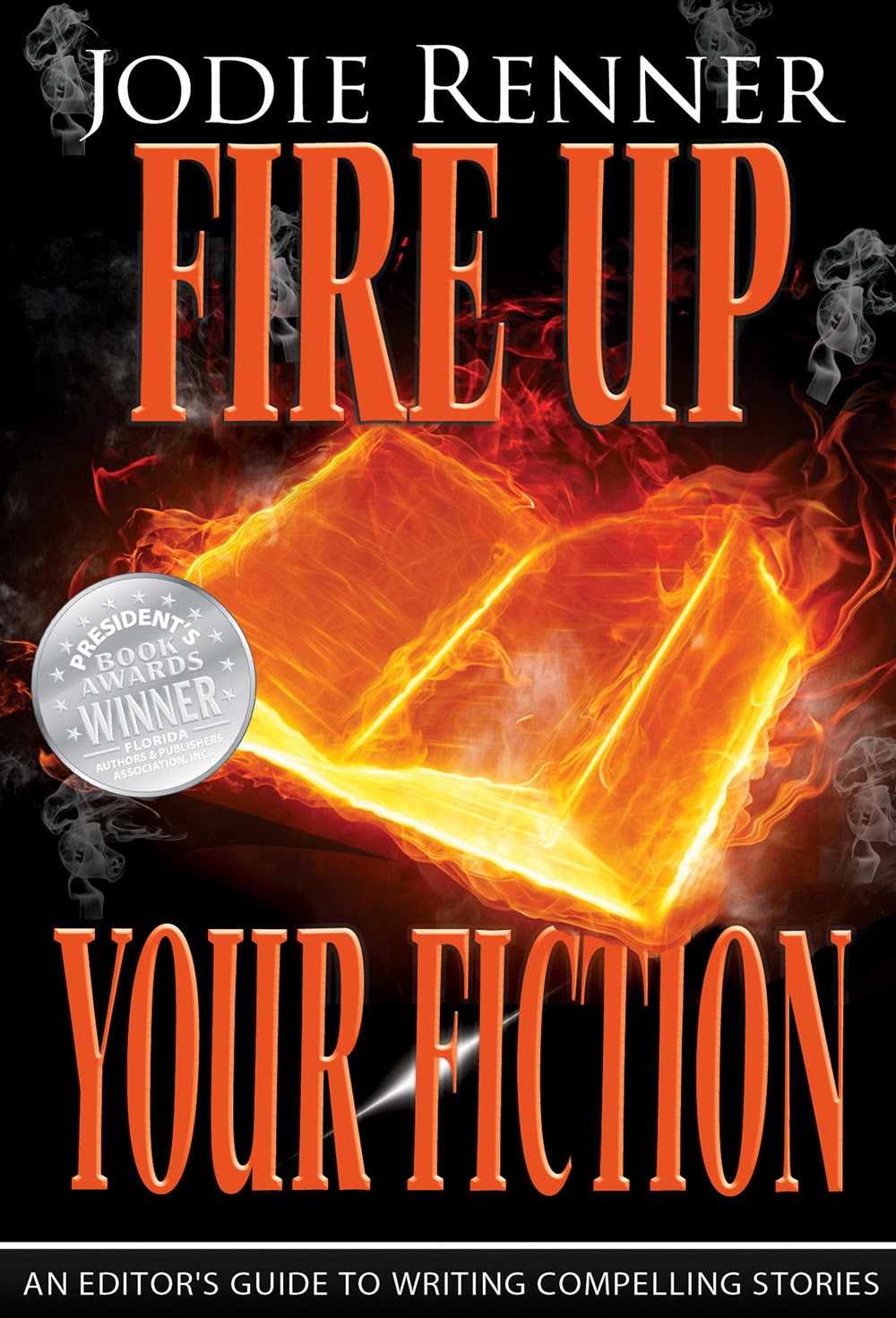


Jodie Renner has published two books to date in her series, An Editor’s Guide to Writing Compelling Fiction: Writing a Killer Thriller and Fire up Your Fiction (Style That Sizzles & Pacing for Power), which has won two book awards so far. Look for the third book in the series, out soon. For more info, please visit Jodie’s author website or editor website, her other blogs, The Kill Zone and Resources for Writers, or find her on Facebook, Twitter, and Google+. And sign up for her newsletter.
.


Wednesday, January 9, 2013

What does the Print Media Have Against E-books?

By Andrew E. Kaufman

I read a recent Wall Street Journal article that quite honestly had me scratching my head. In reading it, one might think e-books are nothing more than a passing fad, destined to play a supporting role to paper books.

The article was titled: Don’t Burn your Book—Print Is Here to Stay. With the subtitle: The e-book had its moment, but sales are slowing. It cited a Pew survey, but when I looked it up, this was their headline: E-book Reading Jumps; Print Book Reading Declines.

It seemed the WSJ was stating the exact opposite of what the study was saying. The contradiction made me curious, so I kept reading, and the more I compared the two, the more puzzled I became.

The WSJ story says:
"How attached are Americans to old-fashioned books? Just look at the results of a Pew Research Center survey released last month. The report showed that the percentage of adults who have read an e-book rose modestly over the past year, from 16% to 23%."
And here’s what that Pew study actually says:
"The population of e-book readers is growing. In the past year, the number of those who read e-books increased from 16% of all Americans ages 16 and older to 23%. At the same time, the number of those who read printed books in the previous 12 months fell from 72% of the population ages 16 and older to 67%"
The WSJ goes on to say:
"A 2012 survey by Bowker Market Research revealed that just 16% of Americans have actually purchased an e-book and that a whopping 59% say they have "no interest" in buying one."
That one startled me. I’d never heard such a thing. Then I looked closer and realized they were talking about all Americans. Since most people in this country don’t buy books in general, it would make sense that more than half would have no interest in buying an e-book. But it would seem that if they’d asked actual readers that question, those results might not be quite-so-whopping. So in reality, these numbers are pretty meaningless.

And there was this:
"Purchases of e-readers are actually shrinking, as consumers opt instead for multipurpose tablets. It may be that e-books, rather than replacing printed books, will ultimately serve a role more like that of audio books—a complement to traditional reading, not a substitute."
Does the WSJ not realize that those "multipurpose tablets" actually have e-readers built into them? It would be kind of like saying, “Nobody buys tomatoes anymore, but salads are on the rise.”

It’s not the first time I’ve seen a story like this with a distinct bias against the e-book industry. I remember reading one recently (also in the WSJ) that spoke of Amazon’s “Struggle to crack publishing”. It painted a dismal picture by citing their poor sales. The only problem was, their theory was based solely on Amazon’s print book revenue, completely ignoring their Kindle sales, which are outselling the former. Also overlooked was the fact that many brick-and-mortar bookstores refuse to carry Amazon titles.

I’ve read articles from other traditional print media publications that appear to have the same slant, and it made me wonder why so many of them seem anti-e-book.

One popular theory is that these ostensibly unbalanced representations are fueled by Amazon’s threat over the marketplace. Many retailers have reacted in a similar manner. Target and Walmart announced they would no longer sell the Kindle e-readers in their stores (although they continue to carry devices from other companies such as Barnes & Noble's Nook). A New York Times article states that Target Executives sent out a memo to their vendors stating:
"What we aren’t willing to do is let online-only retailers use our brick-and-mortar stores as a showroom for their products and undercut our prices.”
Is it possible an industry that's struggling to survive in the digital age might be reacting in much the same manner? Of course, I don’t claim to know the answer. I can only guess. 

What do you think?

Wednesday, October 31, 2012

Should I query agents or self-publish?

By Andrew E. Kaufman, author of psychological thrillers

As soon as I started selling a lot of books, I also started getting a lot of emails from other authors, and one of the most frequently asked questions (besides "what’s your secret?") was whether they should self-publish or query agents.

I’m never quite sure how to answer that question, because it seems like an extremely personal choice--kind of like, “Should I go to college or try a trade school?” Only a qualified counselor can help answer that question, and they need a lot of information to help you make an informed decision.

Besides, what’s right for one person certainly isn’t right for the next, and I always feel hesitant to give advice when it seems so subjective. I don’t know an author’s circumstances, so it’s difficult to help them decide. I’m not an expert; I’m just another author, and all I can really do is speak from my own experience, which really is just one perspective of many.

But having said that, I did learn a few things along the way, and I’m always happy and willing to talk about them, because I know how frustrating and heartbreaking it can be to have something you’re proud of and then struggle to find others who will feel the same enthusiasm.

First, there are some questions you should ask yourself, ones I asked too, that helped me choose my own path. Here are a few of them:

What stage are you at in your process?

Have you already gone the querying route and found little success? If so, self-publishing may very well be a good option.

I tried for traditional publishing at first, because back then it was the only option available. I wanted more than anything to find an agent and publisher, but after receiving hundreds of rejections, I gave up. Then, once e-publishing (specifically, the advent of the Kindle) came along, I decided to try that. 

Within a few years, I was selling a lot of books, making a nice living, and most important, was doing what I loved. Even better, I was the one in control. It was a great feeling, and suddenly having a publisher didn’t seem to matter much at all. 

As it turned out, I was eventually approached by agents asking if I was interested in representation and ended up going with one of them. So in the long-run I ended up exactly where I'd been trying to go in the first place—I just found a different door. 

How important is it to have a publisher’s name behind your work instead of your own?

Once I found success as an author (which incidentally, is a relative word, and in my opinion, should be defined by much more than sales) I realized that having a publisher’s name behind my work paled in comparison to the strides I was making on my own. Were there people still snubbing their noses at me? Absolutely. Did it bother me? Not so much because I knew I was achieving exactly what my “legitimate” counterparts were. I was just doing it in a different way.

For some, it’s still important to be associated with a traditional publisher, but I believe that’s quickly changing, and eventually, it won’t much matter. For me, getting my books into readers' hands was all I wanted, and now I'm doing that.

Are you willing to give up certain things?

If you go the traditional route you will make sacrifices—at least if you’re just starting out—and depending on which publisher you go with, the degree will vary. For one, you won’t have as much creative control over your work. Largely speaking, most traditional publishers have the final word over the content of your work (including your cover). As an indie author, it’s all up to you. For some, that's a big bonus.

Same thing goes for your profit margin. Being an indie author gives you far more leeway in this area. KDP currently offers a 70% profit on gross sales (for books $2.99 and up). Being with a traditional publisher will likely get you far less.
For some, this is extremely important. For others, not so much. So you should ask yourself how much control you’re willing to hand over to a publisher, and even more important, understand the terms of your agreement before you sign with them.

Can an agent help you reach your goals?

First of all, what are your goals? This was a question I struggled with before making my decision to finally work with an agent. When mine approached me, my first question was, how will I benefit from this relationship? His answer was that he wanted to help take my career to the next level, which made sense because that was also my own goal. Right now, he manages the foreign, audio, and television/film rights for my work, as well as those for U.S. publishing. I’ve recently signed a lucrative deal, which I hope—at least from my perspective—will indeed take my career to the next level.

The thing to keep in mind is that whatever decision you do make, you should be fully aware that this industry is changing at breakneck speed, and you have to think on your feet. What works for me—or anyone else—is likely going to change sooner rather than later. Do I think going indie is a great way to go? Absolutely. Do I think it’s a way to open doors that were previously closed off? You bet.

Do I think it’s the best route for you?

That’s for you to decide.

Andrew E. Kaufman is the author of The Lion, the Lamb, the Hunted and While the Savage Sleeps, both Amazon top 100 bestsellers this year. His books are the most borrowed, independently published books in the Kindle Owners' Lending Library, and his combined sales have reached well into the six-figure mark. He is represented by Scott Miller, Executive Vice President of Trident Media Group in New York. For more info about his work, please visit his website at: www.andrewekaufman.com


Monday, September 24, 2012

Some Great Resources for Kindle Authors & Readers


by Jodie Renner, editor, author, speaker
As an editor and a new Kindle author, I'm always on the lookout for resources for me and my clients. I just discovered a great new website for e-book authors and readers. This site looks like a gold mine for both Kindle readers and writers who publish on Kindle.

Scroll down for links to other great sites for Kindle authors.

The Kindle Book Review reviews and features e-books. They also have a “Freebies” page, with daily alerts, and they feature Kindle books by talented authors who have at least 10 reviews with a 4.0-star rating or better. According to their home page, they strive to be a filter for readers, weeding out Kindle books with poor reviews.

They have separate pages for novels under various genres, like Horror/Suspense, Literary Fiction, Romance, Sci-Fi & Fantasy, Thrillers & Mysteries, and Young Adult.

They also offer a Best Indie Book Contest, and you can advertise your e-book with them, for a fee.
 
In addition, they have an excellent "Author Resources" page, with lists of links to many other sites where you can promote your Kindle book.

Author Resources:


Great Websites for Marketing & Connecting with Readers:


Places to Promote Your Freebie Days:


Get Reviewed:

Tweet Hashtags “#” and Twitter Folks to Help Promote Your Freebie:


  • #kindle #kindlefire #ebooks #FREE #mustread #goodreads #greatreads #freeebooks #Kindlefreebooks
  • #AmazonPrime #Kindledeals #kindledeals
  • @FreeKindleStuff @FreeReadFeed @free_kindle @Freebookdeal @freebookpromos @frebooksy
  • @KindleBlaze @KindleBookBlast @KindleBookKing @KindleDaily @Kindlbookreview @digitalBKtoday
  • @KindleFireDept @KindleEbooksUK @KindleFreBook @KindleFreeBooks @KindleFreeStuff @KindleKing
  • @KindleSurprise @KindleUS @KindleUK @KindleDE @KindleES @Kindle_Max @kindle_mojo @Kindlefreebies
  • @Kindlestuff

If you know of other Twitter groups, Facebook pages, etc., please let us know in the comments.

Great Websites to Learn From:

Kindle Book Reviews also offers a short list of cover designers, formatters, and editors, as well as  advice for getting your book noticed and sold, including specifics on your book cover, book blurb, price point, marketing, reviews, and strategies for gaining the maximum sales through offering your book for free for short periods.

Website: http://www.thekindlebookreview.net/  Twitter: @Kindlbookreview

Readers and writers: If you know of other great e-book author or reader resources, please let us know in the comments! Thanks!


Jodie Renner, a freelance editor specializing in popular fiction, has published two books to date in her series, An Editor’s Guide to Writing Compelling Fiction: Writing a Killer Thriller and Style That Sizzles & Pacing for Power (soon to be re-titled Fire up Your Fiction), which won a Silver Medal in the FAPA Book Awards, 2013, and Honorable Mention in the Writer’s Digest Self-Published E-Book Awards, 2013. Upcoming title: Immerse the Readers in Your Story World. For more info, please visit Jodie’s author website or editor website, her blog, Resources for Writers, and find her on Facebook, Twitter, and Google+. Jodie also blogs alternate Mondays on The Kill Zone blog. Subscribe to Jodie’s newsletter here.  


Thursday, September 20, 2012

Is It Worth It to Create a Buzz in Print?

by Jen Blood, author of the Amazon-bestselling Erin Solomon mysteries

For the past year, I’ve done contract work for a local author’s cooperative here in the great state of Maine. The coop focuses on helping indie authors get their work published and distributed, offering services like book design, editing, printing, e-book formatting, marketing, and promotion. As a result, I’ve been in a unique position to watch indie publishing from an entirely different perspective than the one most common in the publishing world today: one where a great deal of emphasis is still placed on print books, while the majority of my online indie pals are firmly entrenched in the camp where digital is King.

Since I’m an indie author myself, these seemingly conflicting viewpoints have necessarily gotten me thinking: In this day and age, is there truly an advantage to the printed word, or are my cooperative cohorts clinging to a dying industry? To answer that question, I started crunching numbers, looking at stats, and talking to authors in both camps.

The first issue whether you're selling thousands of books every month or merely dozens, is the question of profitability. Since editing will be the same whether you’re going with digital or print, the next big cost to look at is book design. It used to be that designing print books was prohibitively more costly than it was to whip together an e-book for Kindle and Smashwords. Today, however, there are a proliferation of quality book designers who offer their services at surprisingly low rates—starting at as little as $100 and moving upward from there.

CreateSpace, Lulu, and a few of the other big-name POD publishers also provide free templates that are fairly simple to follow for the DIY indie looking to save a few bucks. So, unless you’re looking to create an aesthetically mind-blowing coffee table book, there isn’t a huge financial disparity between print and e-book design nowadays. As for book covers, I personally pay $99 for my cover through probookcovers.com; for an extra $30, my designer will do a high-res PDF of the full cover: front, back, and spine. As with just about everything else in this biz, the DIY option is cheaper and there are, of course, always more expensive options if you’re looking for something above and beyond. Either way, though, there’s not a big difference between coming up with a digital cover and the full print version.

That brings us to printing costs. Print on demand (POD) means that we indies are no longer stuck with a basement full of books because the only way we could get printing costs down enough to create a respectable profit margin was to order a print run of 500+ copies. Today, you can order as few as ten copies of your masterpiece and still be paying as little as $4.50 per book through CreateSpace for a full-length novel (including shipping).

My first novel, All the Blue-Eyed Angels, sells in print for $15, which means my profit is over ten bucks when someone buys a copy directly from me. As for shipping, with the exception of the books you’ll be purchasing to sell yourself, POD means that the publisher will handle the labor-intensive act of shipping your books, and the cost is passed on to the buyer.

To me, the bigger issue is what you plan on doing with them after the fact. Is it worth it to approach bookstores and libraries far and wide? What, exactly, does that do for the average author in today’s digital-centric world? I personally have taken the time to approach the local bookstores that know me, and they’ve been great about carrying my mysteries, promoting the series, and keeping me apprised when they’re running low on copies.

I’m asked frequently by locals here in my hometown which bookstores outside of the immediate area are carrying the novels, however, and I used to feel a little weird telling them that there were, in fact, none—like it somehow took some of my legitimacy away because I wasn’t shopping my titles around to every indie bookseller in the tri-county region. I stopped feeling badly about that, however, once I looked at the financial realities of placing my novels in bookstores.

Between time, travel expenses, the cost of creating and printing professional-looking sell sheets, and then factoring in a 40% standard bookstore discount, the reality is that I feel I’m better off investing a little bit of money in advertising or a little time in PR and selling more e-books that way, than I am spinning my wheels trying to convince bookstores to carry a couple of copies. I always have those sell sheets and a few extra copies handy when I’m traveling, of course, so that if I happen to be in or around a bookstore I haven’t approached before, it’s a simple matter.

 Otherwise, however,  I just can’t afford to make them a priority. So what, exactly, are print books good for? Paranormal suspense author Lisa Rayns notes, “Some people still only read print books and I also like to have hard copies. With the time you put into a novel, it’s nice to have something tangible to show for it.”

Beyond vanity, there’s the issue of having print copies for reviews and contests, many of which still don’t accept digital submissions. I’ve found opportunities to sell print copies at readings, signings, lectures, workshops, and seminars. I use them for giveaways, book club packages, donate them for raffles to local charitable events, and occasionally foist them on friends and family members as gifts.

What does this actually do for my profit margin overall? Not much. However, whenever I have an event at which print copies will be available, I invariably manage to get some PR from that event, which means more exposure and in turn more digital sales, not to mention more cool stuff to add to my portfolio and the media page on my website.

All of this leads back to the original question: Is it worth it to create a buzz for your books in print? While the answer will vary to some extent based on your goals as an author, I think at the end of the day it depends on just how much time and energy you’re expending to create that buzz in the first place. Signings, readings, book clubs, seminars, giveaways—these are all great opportunities to enhance name recognition and spread the word about your work, but in my mind it’s essential to strike a balance between these types of events and the online marketing necessary to maintain steady e-book sales.

Beyond that, it’s a matter of personal preference and comfort level: I have several friends who thrive on public appearances and face-to-face interaction with their readers and loathe time at the computer. I think those who can find a happy medium between the two—and still manage to eke out some time to actually write the next novel—will ultimately find the most success.

What do you think? If you’ve already published, did you choose to go with both digital and print copies? Have you tried the bookstore route? I’d love to hear what your experience has been in these changing times.

Jen Blood is a freelance journalist and editor, and author of the Amazon-bestselling Erin Solomon mysteries, ALL THE BLUE-EYED ANGELS and SINS OF THE FATHER. She runs the mystery book blog BloodWrites.com, and teaches seminars on social media and online marketing to indie authors from her home in midcoast Maine. Her third novel, the noir thriller MIDNIGHT LULLABY, will be released in December.

Wednesday, September 5, 2012

Ten Things to do if You Don't Want to Sell Your Book

By Andrew E. Kaufman

What does it take to sell a lot of books? In an industry that seems to change by the minute, I'm not sure anyone has the answer. I'm not sure I really do, either. But I do know what doesn't work. Here are a few of the biggies:

  1. Don’t hire an editor: That sounds really obvious, but it’s surprising how many skip the most important step in the process. Indie authors are often criticized for turning out substandard work, and in some cases, I have to agree. Not hiring a competent editor is one of the biggest reasons for low sales. Readers have become very savvy. Most read the samples, and most can spot poorly written work in a heartbeat. No matter how careful you might be, no matter how well you think you understand and implement the English language, you’re too familiar with your writing and have lost the objectivity necessary to turn out a polished manuscript. I often hear people complain that hiring an editor costs too much money, but you'll be wasting something far more valuable if you skip this step: your time. All the promotions in the world won’t make a bit of difference if you’re not turning out high-quality, professional work. 
  2. Don’t treat your writing as a full time job: Is selling a lot of books as important as having a social life? Sleep? More than likely, you’ll have to sacrifice both, maybe even more if you do this right. As competitive as things are, it’s become imperative to treat your writing career as second job if you already have one, a primary job if you don't. There’s an art to juggling writing and promoting, and time is an important part of that. I’ve yet to meet a bestselling author who says that getting there was effortless. 
  3. Don’t be persistent: Besides the rare exceptions, book sales won’t happen quickly—they might not even happen in a year or more; but that doesn’t mean it will never happen. This is a game of endurance and the ones who stay in it the longest (if they have a good product) are the ones who usually win. 
  4. Don’t enjoy what you do: If you don’t absolutely love what you’re doing, if you can’t wait to get back to writing, it will show not only in your ability to stay motivated but in the quality of your work. Passion is what drives us to success. It’s what keeps us from settling for Just Okay. You have to love doing this. 
  5. Don’t use the tools available to track and analyze your website traffic: 
Do you have a tracking system on your website and blog? If you don't, you're missing one of the best tools available for charting your progress and figuring out what does and doesn’t work. I use Statcounter.com. It’s free and it gives me more information than I’ll ever need, all in real time. I spend a lot of time analyzing my website traffic. One of the key features I use is the “Visitor Paths” section. It tells me where people come from (which of my promotions are working, which aren’t), how long they stay (overall effectiveness of my website), and where they go after they leave (did they follow the link to Amazon for my book? If not, we have a problem). It’s a great tool for figuring out which promotional tools to keep, which to toss.
    6. Be obnoxious as possible while promoting your book: I’m often horrified at the lengths some will go to in order to sell their books. I also wonder if they realize they’re repelling instead of attracting. Shoving your book down people’s throats makes them gag, or at the very least, want to ignore you. Be relevant, not intrusive. Give readers credit and let them figure out who you are on their own. Do not post a link to your book on other people’s Facebook threads or time lines unless they grant you permission. Do not follow people on Twitter, and then when they follow back, send them a “BUY MY BOOK BUY MY BOOK” message. It's icky.
    7. Don’t get to know your readers. Understand that every successful author builds his or her audience one reader at a time. It can be through word of mouth (which you have minimal of control over) or it can be through getting to know every reader you can, every chance you get (something you have a lot of control over). Take time to answer every email. Be gracious and kind. Say thank you so often that you feel like a broken record. And most important: realize that the readers owe you nothing and that you owe them everything. 

Before and after. 'Nuff said?
        8.  Don’t have a great cover, quality    formatting, or great synopsis: The best advice I ever got was from Indie Phenomenon, Amanda Hocking. She told me (with much nicer words) to lose the cover for While the Savage Sleeps, that it was amateurish and holding me back. And she was absolutely right: I created it myself, and it was horrid. I had to use Google to find the abomination, and when I did, I was horrified/nauseated to see it’s still out there. My only defense (and it’s a weak one) is that this was in the early days when most of us didn’t really know what we were doing. Hire a good artist and don’t settle until you are in love with your cover. It will make all the difference in the world.  Same goes for formatting. Hire a professional who knows what they’re doing. A poorly formatted book is a guaranteed return or bad review. Pay the extra money. Your work is worth it. About your synopsis: it must sing. This is one of the first things readers look at when deciding whether or not to purchase your book. Keep it simple, but make sure it draws them in immediately, then doesn’t let go. 

9.  Don’t use social media properly and to your advantage: I hear this all the time: social media doesn’t sell books. I agree; it doesn’t if you don’t use it properly. The key to using it successfully is to engage people, not hammer them over the head. I spend a lot of time on Facebook. When I talk about my books, I try to keep it relevant and not out-of-the-blue. I discuss my writing process, interesting and funny things that happen along the way. I do occasionally post promotions, but it’s a very small percentage of my total output. I also post other things about my life. Regarding Facebook book releases, most people I talk to find them really irritating. One of the problems is, as soon as an invite comes, the emails begin pouring in for every post and continue to do so unless you shut them off. I tried them myself in the early days but didn't find them helpful where book sales were concerned.
10. Don’t treat this as a business: It is one, and like any business, it takes money to make money. Invest in your business. Understand your industry. Pay attention to trends. If you’re selling widgets, you should probably have a good understanding about everything there is to know about the market, including the latest news and developments.

Andrew E. Kaufman is the author of The Lion, the Lamb, the Hunted and While the Savage Sleeps, both Amazon top 100 bestsellers this year. His books are the most borrowed, independently published books in the Kindle Owners' Lending Library, and his combined sales have reached far beyond the 100,000 mark.


Wednesday, January 11, 2012

Have B&N Execs Gone Mad?

By CJ West

Last week Barnes and Noble issued a press release including results for the holiday sales season and an announcement that they are seeking to spin off the Nook business. Store sales rose 2.5% and digital content sales rose 113%. It doesn’t take a genius to see where this business is headed. So why is B&N getting ready to spin off the most strategic portion of their business?


The NY Times applauded B&N for the inroads they have made competing against Amazon for a share of the digital book market. They report that B&N has captured 30% of the digital book market and is seeking outside investment to help them compete against Amazon.

I agree with the Times that B&N has its hands full fighting Amazon and that it is good for the business to have another big player in the e-book market, so for the market as a whole, I think the B&N move is a good thing. Amazon has a history of flexing its muscle with publishers and authors. The KDP Select program, where Amazon asks for an exclusive on digital content in exchange for the opportunity to offer a book free to Kindle users, is certainly heavy handed if not anti-competitive.

The problem I see for B&N execs comes in once the two groups are split. B&N has invested heavily in the Nook and when future results begin coming in and there is strong growth in the Nook business and a steady decline (or modest growth) in the brick & mortar outlets, B&N will be forced to make another series of investment or cost-cutting choices and it is the brick & mortar outlets that will suffer.


We haven’t yet felt the long term impact of all those shiny e-readers given as gifts this Christmas—not to mention the many authors and bloggers giving e-readers as prizes—but you can bet those new users have already downloaded millions of e-books in the last two and a half weeks. When the weather gets warmer, those proud digital book owners will be out in parks and on beaches and they’ll become e-reader evangelists like the generations of Kindle owners before them.

To me this move looks like the beginning of the end for B&N stores.  Digital Book World reports that B&N continues to lose money online and off.  It may take 7 or 8 years for financial pressure to force stores to start closing, but B&N can’t overcome the economic disadvantage of selling a mass produced product at a cost higher than its most significant competitor.

Not only does it cost more to stock a book on store shelves, but in-store book buyers have little information to help them choose books. Online customers can click through scores of reviews and ratings, but giving in-store customers access to this information also lets them see how much more they are paying for the convenience of buying a physical book off the shelf.

It seems the only concrete competitive advantage stores have is the physical space to bring people together and I see only a few true indies making the most of that advantage.

It will be interesting to see how this plays out in the years to come. I for one am glad that my future doesn’t rest on the success of stories printed on paper.