Tuesday, September 10, 2013

Pacing and Marcus Sakey

by Tom Schreck, author of the Duffy Series

Have you ever read a mystery that should've been good but you just couldn't quite get into it?
Marcus and me at Bouchercon

It's like that lawnmower of mine that wouldn't work this morning--it starts and stops, it sputters, it kicks, it groans but it doesn't quite get the job done.

Then there are other books that make you keep turning the page. Maybe it's the short chapters or maybe it's the hint of suspension, but you keep losing sleep and staying up late at night.

There are also the books that try for that and they start to cry "Wolf!" at you. They feed you so many red herrings that you get mercury poisoning. Every chapter is the Hindenburg, the Titanic and Pearl Harbor rolled together. It can't sustain energy and it becomes tedious.

Good pacing doesn't shove you into a dark alley. It coaxes you, luring you with the promise of a pay off. It keeps you hungry without feeding you empty calories.

You know it when you read it. My buddy Marcus Sakey rocks it. His books suck you in and before you know it the plane has landed, you're sunburn or you missed the early and the late NFL games. His latest is Brilliance.

At the same time you don't feel cheated into a cheap outcome or a fake turn of events. His books feel organic in the way they build suspenseful pacing.

Don't go read a book on pacing. Go read Sakey.

Then curse when you can't do it as well as he does.

Sunday, September 8, 2013

Don't Insult Your Readers by Overexplaining

by Jodie Renner, editor, author, speaker
 Follow Jodie on Twitter

If you
want to write compelling fiction that sells (and who doesn’t?), when you’re revising, keep an eye (and ear) out for any repetitive sentences and passages and delete them. Resist the urge to explain a point to your readers or say the same thing several different ways, just to be sure they got it.

And if you “show” a character’s feelings (as is most powerful and immediate), no need to follow that up by “telling” readers how they felt, too. That’s overkill and comes across as patronizing. Today’s readers are sophisticated and savvy, so make your point, then move on.
Sure, go ahead and write more leisurely the first time through, exploring different ways to express various ideas or to show character reactions or motivations. But then later, save the doc in a new file and get out your red pen or hover your finger over your “Delete” key and start taking out all those “supporting phrases” that pile up and actually dilute the power of a single phrase or image that stands alone.

Repetition is redundant.
Whether you’re trying to set a mood with imagery, deepen characterization, or advance the plot with action or dialogue, it’s best to just say/show/describe it once—twice maximum—not three or four times.
You may think you’re emphasizing something by repeating it, but even if you say it in different words, the overall impact is diminished. A lot of my editing consists of flagging repetitions of ideas, words, or imagery. And I’m guilty of it myself in my own writing – even editors need editors!
Here’s an example, well-disguised from my editing, of saying basically the same thing three or four or five times within a paragraph.
Before:
Enraged by the CEO’s false accusations, Cheryl struggled to regain control of her emotions. She didn’t often lose her temper but when it happened, she found it difficult to calm down. She had never been so angry at any time in her professional career. Mr. Johnson had pushed her too far when he suggested that she could possibly be involved in stealing those confidential documents. Just thinking about what he said made her blood boil.
After:
Enraged by the CEO’s false accusations, Cheryl struggled to regain control of her emotions. How dare he suggest that she could be involved in stealing those confidential documents? Just thinking about it made her blood boil.
Paring the ideas in the “Before” paragraph down to the essentials increases the power of the message. Repeating it several times actually detracts from the message and dilutes it.
Often less is more, in the sense of having more impact.
RUE: Resist the Urge to Explain
“Resist the Urge to Explain” was coined by Renni Browne and Dave King in their book, Self-Editing for Fiction Writers. Basically, it’s about honing your fiction-writing skills so your dialogue, actions, and evocation of characters’ inner feelings and reactions come to life on the page. Resist the urge to add some clarifications afterward to explain what you meant.
Show, don’t tell:
Show us how the character is feeling or reacting. Then resist the urge to explain (tell) it afterward, just to be sure the reader got it:
Example:
“We will find out who you are. We have eyes and ears everywhere. You are not safe from us.” The click of the line disconnecting underlined the obvious menace of the cold tone and intimidating words of the caller.
What follows the quoted words is overexplaining. Don’t explain to the readers something they already know from reading it themselves. They’ll feel that you’re talking down to them.
This tendency to overexplain can show up in minor ways, like the examples below, where the last sentence in each is superfluous and should be taken out.
 
“You idiot!” she yelled, throwing the picture across the room. She was furious.
 
“You crack me up,” she said, laughing hysterically. Joel could be so funny.
 
She threw herself down on the bed and sobbed into the pillow. She felt miserable.
 
In each instance, the second sentence is not only unnecessary, it detracts from the message of the first. Also, the first sentence shows and the second sentence tells. When you explain emotions and reactions to the reader, it’s as if you’re covering your tracks, in case your initial description or dialogue didn’t show it well enough.
 
So resist the urge to describe (tell) how your character feels. Instead, dramatize (show) it for the reader with precise words and strong imagery.
Same thing with phrases like, “He banged loudly on the door,” or “She whispered softly,” or almost any other “he/she (verb) (-ly adverb). What they say plus their actions or inner reactions should make it clear how they’re feeling, so no need to add the -ly adverb.
 
Subtle is more sophisticated
Rather than stating the obvious, it’s more powerful to hint at it. Often best not to spell it out, especially if it has to do with a character’s inner thoughts or suppressed feelings. Subtext leaves the readers with more satisfaction that they’re successfully reading between the lines.
Don’t patronize your reader.
Readers and writers, do you have any ideas or examples to add?

To share this craft-of-writing article, please click on the buttons in the gray box below.


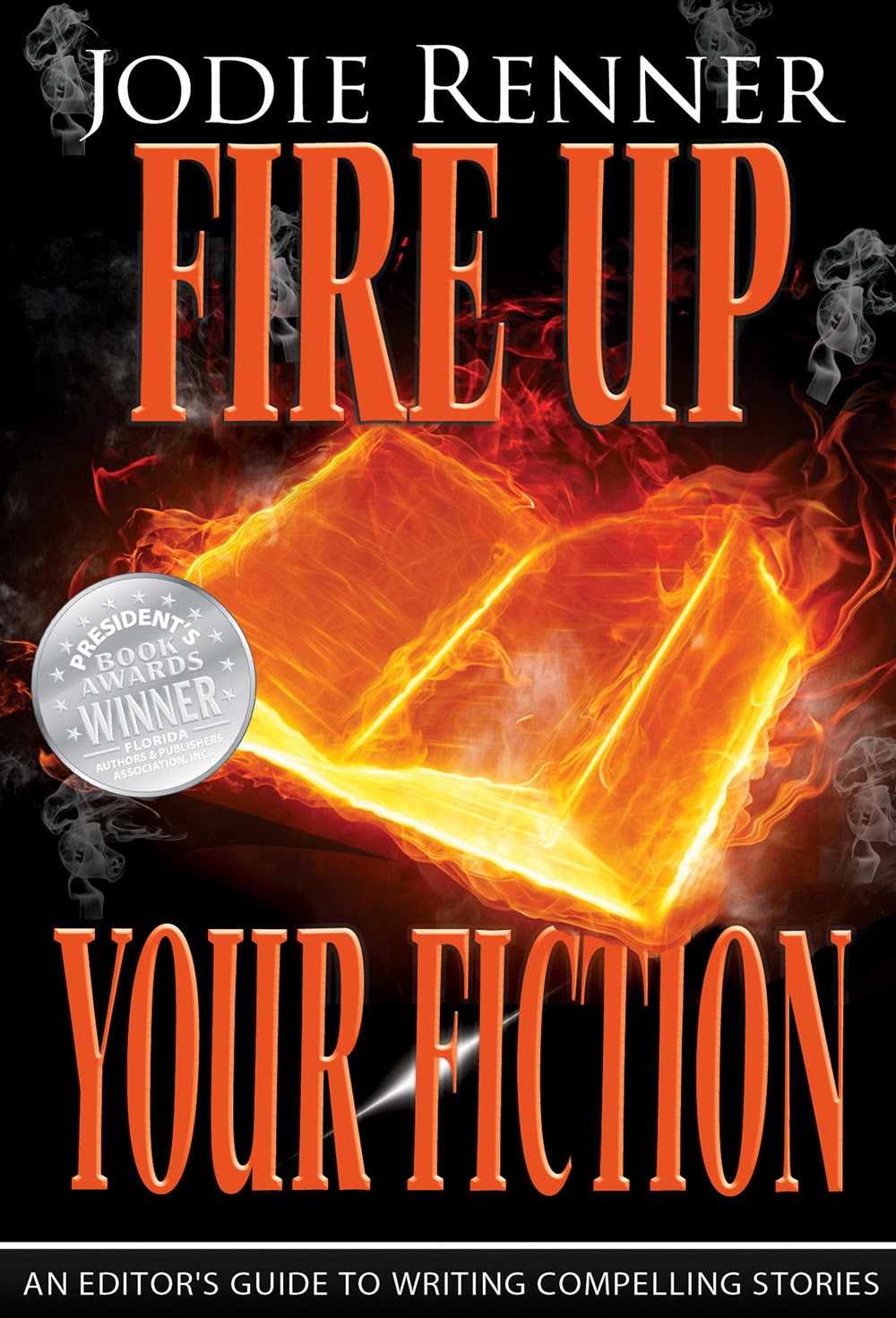
See my award-winning book Fire up Your Fiction (formerly Style That Sizzles & Pacing for Power) for lots of concrete ideas on paring down your fiction to reveal the powerful core.


Jodie has published two books to date in her series, An Editor’s Guide to Writing Compelling Fiction: Writing a Killer Thriller and Fire up Your Fiction (Style That Sizzles & Pacing for Power), which has won two book awards so far. Look for the third book in the series, out soon. For more info, please visit Jodie’s author website or editor website, her other blogs, Resources for Writers and The Kill Zone, or find her on Facebook, Twitter, and Google+. And sign up for her newsletter.


Friday, September 6, 2013

Stop the Spin Cycle!

by Peg Brantley
Evocative Characters. Intriguing Crime. Compelling Stories.

Aargh!!!!

There's so much spinning going on I'm surprised anyone is still standing.

Let me spin you a few:

FACT: I came in second place at a writing competition several years ago.
SPIN: Award winning author.


FACT: I've painted some half-way decent watercolors. (The logo for Bark Publishing, above, is one of mine.)
SPIN: Artist.

FACT: I received an Honorable Mention, an additional category established by the judges just for me, for a short story (available now through MY WEBSITE).
SPIN: Multi-award winning author.


FACT: My books have each achieved the #1 slot when they were available for free, and remained briefly in the stratosphere when they went back to full-price.
SPIN: Bestselling author.

FACT: I have been endorsed by bestselling authors, and big-time award nominated authors, plus I've read their stuff.
SPIN: Long-term mentors.

FACT: I was Head Girl at Dunstan Junior High (now Middle School).
SPIN: A successful career in politics.

FACT: I was on the school newspaper staff at Dunstan.
SPIN: A journalism background.

FACT: My books have received some nice reviews.
SPIN: Acclaimed writer.

FACT: I play the piano and actually own one.
SPIN: Accomplished musician.

How do I know there's a lot of spin going on? Truthfully, it's only a guess. But I know for a fact there's at least one author out there who has his/her washing machine permanently set to the spin cycle. On one hand, it's kind of clever and I'm sure he/she is selling more books because of the spin, but on the other I find it kind of sad he/she feels the truth isn't good enough. And if there's one, I'm betting there are more.

FACT: Today is my wedding anniversary. Thirty-three years of a great life.
SPIN: Nothing to spin here. I've been blessed.

What about you? Have you spied some spin?


Thursday, September 5, 2013

Do You Know How to be a Bestselling Author?


Prior to being published I was given a word of caution by a best-selling author. He said, “If you want to be an author, you better love to write.” 

So, I say, “Of course, I love to write. Why else would I do this?” 

He just smiled and said, “This business sucks.”

It wasn’t long before I realized what he was really trying to tell me. First of all, this is a business. If you want to write just for the love of writing, then don’t even try to get published. Because once you do, it all changes. This is true whether you self-publish or get picked up by a traditional publisher. You still have to market your books.

Ahh…marketing. So I figure there must be people in the real world (as opposed to the fiction world we writers live in) who know how to do that. There are. There are thousands, or maybe even millions, of books written on how to be a successful author. I think I’ve read about half of them. I picked up everything I could get my hands on that promised to show me how to be a “best seller” or “#1 on Amazon.” I stopped buying those when I realized that many of those “experts” were attempting to “become #1 on Amazon” by selling the rest of us a book on how to “become #1 on Amazon.” Now I won’t buy anyone’s book whose rank is lower than mine…duh!

There are many good books written and published that offer great tips for writing and for marketing. But the ones that offer a “too good to be true” solution, are probably just that. In fact, I just recently read a book called You Are the Logo, by Tom Adams. It’s not about authors per se, but about marketing your business. The man is brilliant and has been very successful (not necessarily as an author) but as a marketing consultant. Marketing is not easy. It requires constant attention and hard work. My advice to a new author would be, “If you want to be a published author, you better love to market.”

I hope I don’t sound bitter about the industry because I am not. Quite the opposite, actually. Being an author has been an incredible adventure for me. I have written four books that have been consistently in the top 100 “legal suspense” category for this entire year. Nor do I have a simple answer to the question in my title. If I did, I would be #1 every day. But I do know this: I love to write and just as importantly, I love to market. 

Writers, do you market your book? Do you enjoy it? Do you still love to write?

Readers, if you read a book and love it, do you help the author market it? Do you write a review when you love a book? All you have to do, is tell your friends about the book, maybe write a review now and then. It will keep your favorite author writing.

Teresa Burrell
Author of The Advocate Series
www.teresaburrell.com

Wednesday, September 4, 2013

Introducing…Kindle Matchbook.


By Andrew E. Kaufman, bestselling author of psychological thrillers

Amazon announced yesterday that, starting in October, readers who have bought paper books on their site will also be able to purchase the digital versions for a nominal fee through the new Kindle Matchbook promotional program (by the way, I love the name). Here’s how it works:
  1. The e-books will be sold at a discounted rate, typically, $2.99, $1.99, .99, or free.
  2. The offer is retroactive, which means it would apply to paper versions purchased as far back as 1995 when Amazon first went live selling books online.
  3. The e-books will only be available at a discounted price from publishers who enroll in the program.  So far, there are about 10-thousand of them, but I suspect that number will grow once Matchbook gets off the ground.

According to Amazon, the idea of bundling print and digital books has been one of the most requested features from customers.

Being a Thomas & Mercer and 47North author (which are Amazon imprints) I’m told my books will be included in the program. How do I feel about this?  Pretty good, actually, and here’s why:

My first concern is, and always will be, for the reader. Whatever is good for them is good for me, and this just makes sense. I want them to have access to my work in any format they like and in the most economical way possible.

Regardless of what some seem to think, paper is not dead.  My readers are constantly telling me that, while they love their Kindles, they also love their paper. Many also tell me they’ve gone on to buy paper versions of my books for their shelves. What I’m hoping is that, when my new release, Darkness & Shadows comes out next month, those readers will be able to buy both versions at a much more reasonable cost. And when you think about it, this could actually augment the life of paper books by driving up their sales and giving readers more incentive to purchase them.

And here's something else: with the price of e-books getting more and more competitive, this may drive some of those ridiculously expensive ones lower, something that, in my ever-so-humble opinion, needs to happen.

Using this feature will also, in essence, be like creating a digital backup for the books readers love. I know many people whose books are among their most treasured items. I also know ones who have lost their books to fires, floods, and other tragic circumstances. Those people can never lose their books because they’ll always be just a click away.

It’s great news for independent authors as well, because they too will have the option of enrolling in the program while earning the same royalty rates—so while they  normally wouldn’t get the usual 70% cut for books priced at $1.99 and lower, in this case, if the price is lowered through Matchbook, they still will. It also creates another opportunity to get their work out into more readers’ hands and gain extra exposure while still earning the generous royalty rate that KDP offers.

The downside? I’m not sure I see any—although it will be interesting to see how many legacy publishers jump on board. We can’t know for sure, but my sense is that this is a win-win for them as well.

Of course, already there are the pundits claiming this is just another way for Amazon to make more money. I don’t agree, and even if it were, to that I say: What successful business doesn’t?

What this actually sounds like to me is Amazon listening to their customers, something that, in my opinion, they do better than any other retailer in the country. And really, the bundling concept is nothing new to them—they’ve already been doing it with Immersion Reading, a feature that allows customers to buy the audio and e-book versions of a novel at a discounted price so they can listen and read at the same time.

So what do you think? Readers: Can you see yourself taking advantage of this program? And authors, do you feel this could be a benefit to your career?

Tuesday, September 3, 2013

Does a protagonist have to be miserable?

By Sheila Lowe, author and forensic handwriting expert

Everyone alive is flawed in some way or another. None of us gets to be an adult without experiencing a load of crap that we’ve had to deal with. But I’ve noticed an extra helping of flaw and misery for the protagonists of many books I read. From the descriptions on the daily list of free or low cost books from BookBub, I’m struck by how many unhappy ones there are: alcoholics, drug abusers, “nearing 40 and desperately unhappy;” murdered spouse; broken heart; fighting cancer; “one tragedy after another.” And then, of course, there’s the perennially unhappy Kay Scarpetta.

Trust me, I understand the importance of “tension on every page.” I clearly remember a workshop I attended given by big time agent Donald Maas, who told us that to be successful writers, we must make things as bad for our protagonist as they could possibly be. Then make it worse. Then make it even worse. In fact, he spent most of a day repeating that mantra: make it even worse.

That’s a tough assignment if you like your protagonist. Putting him or her in dangerous situations is hard enough, but killing off their friends, making them ill, blowing up their house etc., takes real dedication to the craft. Claudia Rose, the heroine of my Forensic Handwriting mysteries is an ordinary person who, through her work, is thrown into extraordinary circumstances where she is forced to dig deep for courage, fortitude, and the other admirable characteristics that get her through. She’s been through her share of losses and difficulties, and I take it personally (crying real tears) when something awful happens to her.

Alcoholism, drug abuse, and all that other unhappy stuff is an ongoing part of life for many people. And when done well, those challenges can provide an interesting dimension to a character. The key, I think, is to make sure s/he is struggling to overcome those problems while keeping a sense of humor, not taking himself (or herself) so seriously that the reader can’t relate to him. We need to see the character arc—over the book, or through the series. Otherwise, there’s a danger of disliking that character, which could mean putting down the book and never picking it up again—the bane of an author’s existence. And, speaking from my own POV, I’m too old and leisure time is too limited  to spend it with people I don’t like, even in books.

There’s no moral to this post. Just meandering in my mind, wondering whether any of you have had the same thoughts. I hope you all had a wonderful holiday weekend. I spent mine a bunch of mine fighting with Word (I’m a dyed-in-the-wool WordPerfect user).

Monday, September 2, 2013

Enjoy your Labor Day weekend!


Image credit: ivaleksa / 123RF Stock Photo

Friday, August 30, 2013

On the Lam: A Unique Event

by L.J. Sellers, author of provocative mysteries & thrillers

Last weekend I was in Seattle for a conference hosted by Thomas & Mercer that may be the first of its kind. Amazon paid for everything, including meals, leisure activities, and a schwag bag with a Paper White Kindle. (Nice suprise!)

But what was unique was the purpose: to simply say thank you to its authors. It wasn’t a reader convention to build sales, and it wasn’t a writing workshop to develop its authors. The event was simply a gathering of T&M authors so we could meet the Amazon team and socialize with each other. But more important, I heard over and over that the company appreciated me.

There were panels on Saturday, which were open to the public and attended by some local writers, but they were mostly about T&M authors sharing their publishing expertise and getting to know each other. The program started with a great panel about writing for television and movies with Lee Goldberg, Marcus Sakey, Greg Widen, and Johnny Shaw competing to tell the funniest stories. A hard act to follow!

But we did our best on the branding panel that came next with me, Barry Eisler, and Max Collins. That was another unique feature: more men than women. Most reader conventions I’ve attended are predominately female. But Saturday night, I had dinner with eight male authors (and Larry Kirshbaum, the president of Amazon Publishing). I’m sure other women writers had similar experiences of being outnumbered. Overall, Amazon made a great effort to ensure that we all met new people. I chatted with so many authors, it would be weird to name them all here.

Friday was the best day though. After a presentation at Amazon headquarters, we had lunch on the Argosy, then embarked on a cruise of Lake Washington. A beautiful day with perfect 75 degree weather. I got to hang out with J Carson Black, an online buddy I’d never met in person, as well as good friends Andrew Kaufman and Michelle Scott.

Then Friday night we had dinner at the Chihuly Garden and Glass, which had the most stunning display of blown glass I’ve ever seen. The meal itself was in a room made entirely of glass with a hanging glass sculpture running the length. A very special evening that I’m glad I dressed up for.

As an author, this weekend was the first time I ever felt like I was “somebody.” Yet that’s just ego, and it doesn’t really matter. What’s most important is what signing with T&M did for my career this year—introduce me to more readers than I ever dreamed of.