
 by Jodie Renner, editor,
author, speaker
by Jodie Renner, editor,
author, speakerFollow Jodie on Twitter
If you want to write compelling fiction that sells (and who doesn’t?), when you’re revising, keep an eye (and ear) out for any repetitive sentences and passages and delete them. Resist the urge to explain a point to your readers or say the same thing several different ways, just to be sure they got it.
And if you “show” a character’s feelings (as is most powerful and immediate), no need to follow that up by “telling” readers how they felt, too. That’s overkill and comes across as patronizing. Today’s readers are sophisticated and savvy, so make your point, then move on.
Sure, go ahead and write more leisurely the
first time through, exploring different ways to express various ideas or to show
character reactions or motivations. But then later, save the doc in a new file
and get out your red pen or hover your finger over your “Delete” key and start taking
out all those “supporting phrases” that pile up and actually dilute the power
of a single phrase or image that stands alone.
Repetition is redundant.
Repetition is redundant.
Whether you’re trying to set a mood with imagery,
deepen characterization, or advance the plot with action or dialogue, it’s best
to just say/show/describe it once—twice maximum—not three or four times.
You may think you’re emphasizing something
by repeating it, but even if you say it in different words, the overall impact
is diminished. A lot of my editing consists of flagging repetitions of ideas,
words, or imagery. And I’m guilty of it myself in my own writing – even editors
need editors!
Here’s an example, well-disguised from my
editing, of saying basically the same thing three or four or five times within
a paragraph.
Before:
Enraged by the CEO’s false accusations,
Cheryl struggled to regain control of her emotions. She didn’t often lose her
temper but when it happened, she found it difficult to calm down. She had never
been so angry at any time in her professional career. Mr. Johnson had pushed
her too far when he suggested that she could possibly be involved in stealing
those confidential documents. Just thinking about what he said made her blood
boil.
After:
Enraged by the CEO’s false accusations,
Cheryl struggled to regain control of her emotions. How dare he suggest that
she could be involved in stealing those confidential documents? Just thinking
about it made her blood boil.
Paring the ideas in the “Before” paragraph
down to the essentials increases the power of the message. Repeating it several
times actually detracts from the message and dilutes it.
Often less is more, in the sense of having
more impact.
RUE:
Resist the Urge to Explain
“Resist the Urge to Explain” was coined by
Renni Browne and Dave King in their book, Self-Editing
for Fiction Writers. Basically, it’s about honing your fiction-writing skills
so your dialogue, actions, and evocation of characters’ inner feelings and
reactions come to life on the page. Resist the urge to add some clarifications
afterward to explain what you meant.
Show,
don’t tell:
Show us how the character is feeling or
reacting. Then resist the urge to explain (tell) it afterward, just to be sure
the reader got it:
Example:
“We will find out who you are. We have eyes
and ears everywhere. You are not safe from us.” The click of the line
disconnecting underlined the obvious menace of the cold tone and intimidating
words of the caller.
What follows the quoted words is
overexplaining. Don’t explain to the readers something they already know from
reading it themselves. They’ll feel that you’re talking down to them.
This tendency to overexplain can show up in minor ways,
like the examples below, where the last sentence in each is superfluous and
should be taken out.
“You idiot!” she yelled, throwing the picture across the
room. She was furious.
“You crack me up,” she said, laughing hysterically.
Joel could be so funny.
She threw herself down on the bed and sobbed into the
pillow. She felt miserable.
In each instance, the second sentence is not only
unnecessary, it detracts from the message of the first. Also, the first
sentence shows and the second sentence tells. When you explain emotions and
reactions to the reader, it’s as if you’re covering your tracks, in case your
initial description or dialogue didn’t show it well enough.
So resist the urge to describe (tell) how
your character feels. Instead, dramatize (show) it for the reader with precise
words and strong imagery.
Same thing with phrases like, “He banged loudly on the
door,” or “She whispered softly,” or almost any other “he/she (verb) (-ly
adverb). What they say plus their actions or inner reactions should make it
clear how they’re feeling, so no need to add the -ly adverb.
Subtle
is more sophisticated
Rather than stating the obvious, it’s more
powerful to hint at it. Often best not to spell it out, especially if it has to
do with a character’s inner thoughts or suppressed feelings. Subtext leaves the
readers with more satisfaction that they’re successfully reading between the
lines.
Don’t patronize your reader.
Readers and writers, do you have any ideas or examples to add?
To share this craft-of-writing article, please click on the buttons in the gray box below.
To share this craft-of-writing article, please click on the buttons in the gray box below.
See my award-winning book Fire up Your Fiction (formerly Style That Sizzles & Pacing for Power) for lots of concrete ideas on
paring down your fiction to reveal the powerful core.

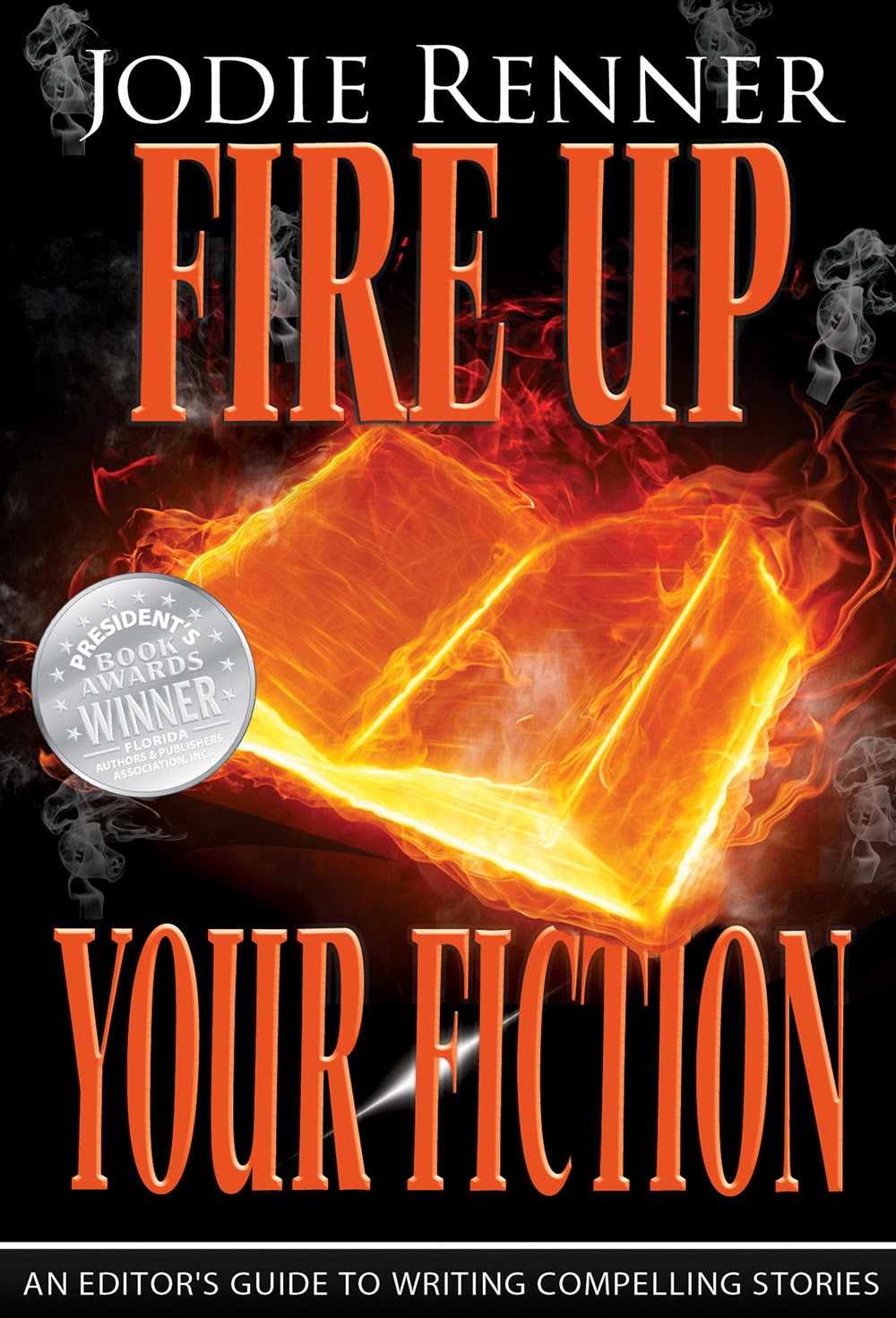 Jodie has published two books to date in her series, An Editor’s Guide to
Writing Compelling Fiction: Writing a Killer Thriller and
Fire up Your Fiction (Style That Sizzles & Pacing for Power), which has won
two book awards so far. Look for the third book in the series, out
soon. For more info, please visit Jodie’s author website or
editor website, her other blogs, Resources for Writers and
The Kill Zone, or
find her on Facebook, Twitter, and Google+.
And sign up for her newsletter.
Jodie has published two books to date in her series, An Editor’s Guide to
Writing Compelling Fiction: Writing a Killer Thriller and
Fire up Your Fiction (Style That Sizzles & Pacing for Power), which has won
two book awards so far. Look for the third book in the series, out
soon. For more info, please visit Jodie’s author website or
editor website, her other blogs, Resources for Writers and
The Kill Zone, or
find her on Facebook, Twitter, and Google+.
And sign up for her newsletter.