Showing posts with label fiction-writing advice. Show all posts

Sunday, June 16, 2013

Big-Picture Problems to Look for in Your Novel

New edition of e-book and in print today.
by Jodie Renner, editor & author

Has anyone told you your almost-done story is too long, confusing, or just doesn't grab them? Here are some typical “big-picture” weaknesses to watch out for in your novel and correct before publishing it or pitching it to an agent. These types of glaring gaffes in writing, pacing, plot, or structure will bog down your story and could sink your reputation as a novelist. Fortunately, they can all be remedied at the revision and self-editing stages.

~ Overwriting. Not enough self-editing.
Today’s bestselling thrillers are mostly between 70,000 and 90,000 words long. Unless you’re an absolutely brilliant writer, and experts in the business have told you so, if your manuscript is over 95,000 words long, it definitely needs tightening up.

~ Meandering writing – the main story question / problem is fuzzy or buried. 
What’s the protagonist’s main goal and fear, and his main problem? This should be obvious early on and be the overriding driving force behind your whole story. Don’t let it get lost in meandering writing, too much backstory, frequent info dumps, too many characters, too many subplots, and unrelated plot details. 

~ One unrelated thing after another happens.
Don’t get caught up in “and then, and then, and then,” with a bunch of sub-stories or episodes that aren’t related to each other and don’t directly tie in with the main plot problem and story question. Your events and scenes need to be connected by cause and effect. Each scene should impact the following scenes and complicate future events. 

~ Dog’s breakfast 
A common problem is too many characters crowding the scenes with no elbow room, and readers getting confused and frustrated trying to remember who’s who. Or maybe you have too many subplots that veer off in different directions and confuse the issue. Or a convoluted story where many issues or subplots don’t tie in with the main character and their overarching problem. 

~ The main character is flat, unsympathetic, predictable, or wishy-washy.
Readers want a protagonist they can bond with and root for. Create a lead character who is smart, likeable, and charismatic, but with inner conflict and a few flaws.

~ A thin plot
This is where the premise / story line is obscure, with all kinds of unrelated happenings and way too much yak-yak dialogue that doesn’t have enough tension, conflict, or purpose. Also, often the issues and stakes aren’t serious enough. Anything that doesn’t directly relate to your major story problem, develop your characters, or drive the story forward should be cut. 

~ A predictable story line
Write in some twists, surprises, reversals. When a character has to make a decision or her actions cause repercussions, brainstorm for all possible consequences and choose one readers won’t be expecting. Add in reversals here and there that force a change in goals, actions, reactions, or consequences. Don’t overdo this, though, and be sure your reversal makes sense and is in character, or your readers will feel manipulated or cheated.

~ Flat scenes
When scenes are boring, it’s because there’s not enough conflict, tension, suspense and intrigue. Make sure every page has characters interacting, with action, dialogue, conflict and tension. Every scene needs a focal point or a “hot spot” – its own mini-climax. Also, be sure to start scenes late and end early. And don’t tie everything up with a neat little bow at the end. End with the protagonist in more trouble (most of the time), or with a cliffhanger.

~ La-la land
Everybody’s getting along so well. What’s wrong with that? It’s great in real life, but in fiction it’s the kiss of death. Why? Because it’s boring. Conflict is what drives fiction forward and keeps readers turning the pages.

~ Overkill: Nonstop action
Unrelenting chases, explosions, and violence, with a constant break-neck pace, can numb readers. Vary your pacing, and write in some quieter moments here and there for variety and breathing space between high-action scenes.

~ Plot holes
Watch for those actions, events, character reactions, and other details that just don’t make sense for one reason or another. Look for any inconsistencies, illogical details, or discrepancies. Make sure all your story questions are answered at some point.

These types of gaffes are often difficult for the author to see, so this is where your critique group or beta readers can be invaluable, especially if you specifically ask them to flag anything that doesn’t make sense for any reason. 

~ A sagging middle 
It’s easy to get bogged down in the middle and turn it into a muddle. If you’re losing interest or inspiration, go back to where the story really grabbed you, and consider what came between that and the scene you’re at now. Can you oomph up, change, or delete the scenes in between? 

~ No noticeable character arc
With the exception of action-adventure or military stories, most compelling novels show the main character undergoing change, caused by the adversity they’ve gone through and the resources they had to pull out of themselves to overcome adversity. They’ve developed and matured, and are now more confident and hopefully happier, which is satisfying to readers. 

~ An unsatisfying ending
This can be caused by a number of factors, such as: 

– The protagonist succeeds through coincidence, an Act of God, or help from a minor character. He should attain his goal through his own resourcefulness, cleverness, determination, courage, and inner strength.

– The ending is tragic, and the protagonist is unhappy. Unsatisfying and disappointing. Leave that for literary fiction. Or if you must make her lose or suffer in one way, make her win/gain in another way.

– Ending is too predictable. Brainstorm for possible ways to add a surprise twist at the end.

– Logic flaws – the ending doesn’t really make sense given the details supplied earlier.

– Things wrap up too suddenly. Don’t be in a hurry to finish your story – make sure all the story questions are addressed and all the elements of the ending make sense.

– Things dribbling on for too long after the resolution. Know when to stop.

The fix: To remedy these kinds of gaffes, be sure to enlist some savvy beta readers who read popular novels in your genre. Then contact a well-respected freelance editor with good credentials and references to go over your manuscript.

Readers and writers – Can you think of any other big-picture errors to watch out for at the revision stage?
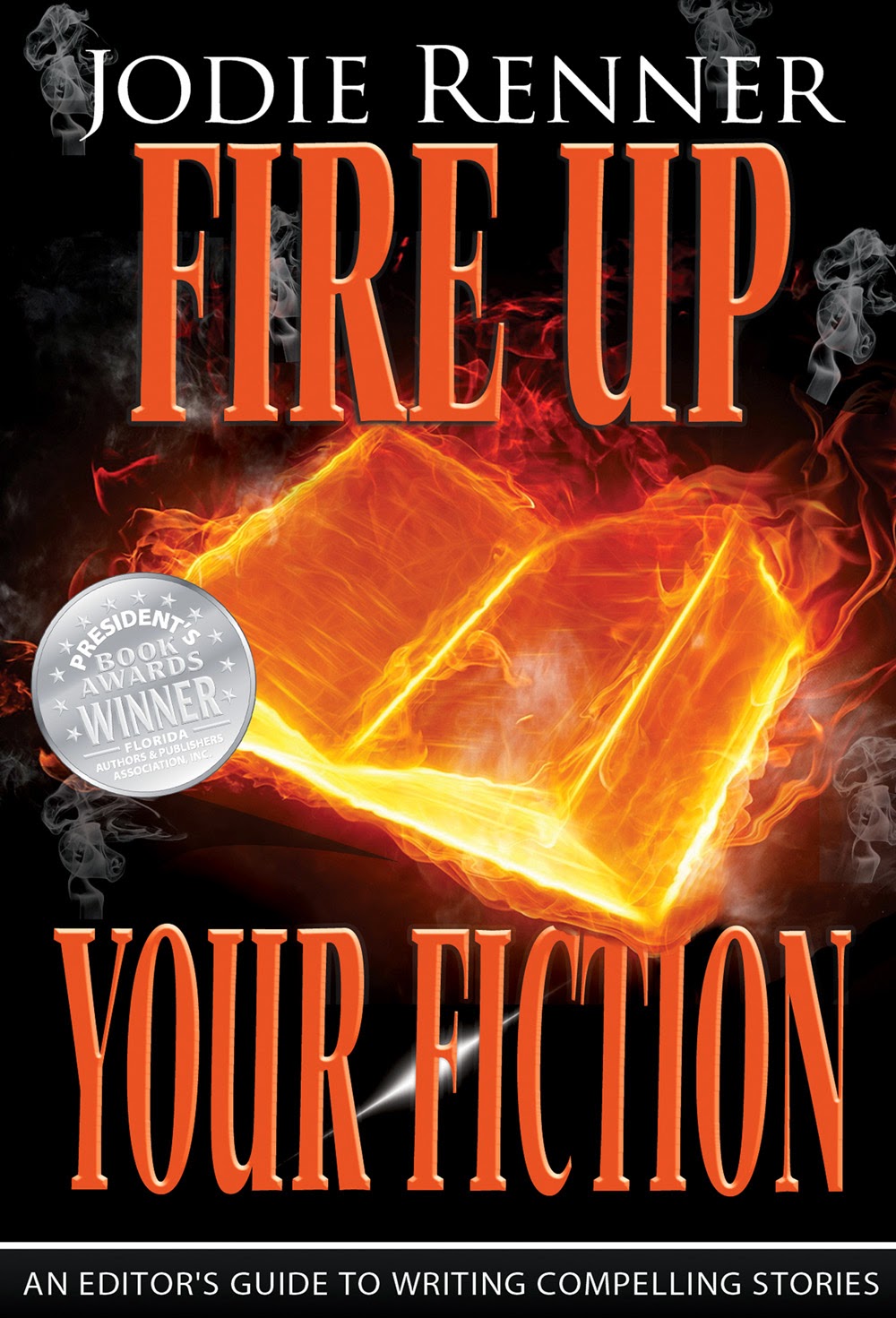


Jodie Renner has published two books to date in her series, An Editor’s Guide to Writing Compelling Fiction: Writing a Killer Thriller and Fire up Your Fiction (Style That Sizzles & Pacing for Power), which has won two book awards so far. Look for the third book in the series, out soon. For more info, please visit Jodie’s author website or editor website, her other blogs, The Kill Zone and Resources for Writers, or find her on Facebook, Twitter, and Google+. And sign up for her newsletter.


Sunday, January 13, 2013

Character Descriptions – Detailed or Sketchy?


by Jodie Renner, freelance fiction editor and craft writer

How do you feel about authors inserting detailed descriptions of each minor character as they come on the scene? To me, it seems artificial and contrived, and interrupts the story line. Or am I being too critical or picky, do you think?

I think it’s more natural and less intrusive to work the info in in smaller bits instead, as part of the ongoing action, not in a separate paragraph or cluster of descriptive sentences.

Even to suddenly stop the story to describe a main character in a paragraph or two seems unnatural and intrusive to me, but I don’t usually say so in my editing, as I don’t want to come across as some kind of strict, purist Nazi editor. But there again, I think it’s more sophisticated and organic to work in little details about the character as he/she is in action, interacting with others or whatever, rather than just stopping everything for a static description. To me, that’s the author stepping in to address the readers, and it shatters the illusion of being right there in the story world, just us and the characters.

Here’s an example, disguised, from a chapter in the middle of a thriller I edited (names, locale, and circumstances changed). All of the characters in this chapter appear in the book for the first and only time here. They’re important for this scene, but none reappear anywhere again in the book. Yet the author has chosen to describe each of these four characters in detail. I understand it more for the leader and POV character, but even then it seems like a bit of an interruption to me.

First, here’s the original scene, with character descriptions in bold.

The chapter opens:

Officer Lance Nakomoto of the CPD scanned his rearview mirror for the other unmarked car behind him. Both vehicles cruised the streets of Chicago in the dead of the night. 

Nakomoto was a tallish Asian man in his mid-forties with short spiky black hair. He had a kind, friendly face that didn’t immediately give away his real profession. His height and athletic build suggested a retired football player or a bodyguard.

[I left the above description (but changed here) because it was the POV character, even though I felt it was a bit of an interruption to the action and could have been pared down a bit, or the details spread out over several paragraphs.]

[…]

Nakomoto rang the doorbell of the suspect’s house and then stepped back. They waited. Nothing.

His partner and second-in-command, Peter Carson, looked through the window of the house. “The place has been trashed.” 

Carson was a hair shorter than Nakomoto, fair-skinned, with plump red lips and expressive green eyes. His head was shaved to mask his premature balding and he wore John Lennon glasses. Although he was five years younger than Nakomoto, he was softer around the edges and not quite as fit as his boss.

Nakomoto peered in and saw ripped couches, overturned furniture, broken lamps and smashed pictures. 

He turned to David Lewis, the third guy in the four-man team. “Climb that tree and see if you can get a look inside the second floor.” 

Lewis was in his early thirties, and at five feet seven inches, the shortest in the group. He had streaked brown hair, striking features, and a lean frame that was more agile than powerful. 

Lewis trotted over to the tall oak tree and started hoisting himself up.

Nakomoto had all the necessary warrants to search the premises and apprehend Dubrovnik if they found him, but for now they weren’t sure how many were inside or whether they were dead or alive, so they were proceeding with caution.

Nakomoto then turned to Juan Lopez, who at twenty-seven, was the rookie in the group. “Juan, go around the back and check it out.”

Juan Lopez had olive skin, puffed cheeks and a recently toned body. Nakomoto had seen Lopez’s college pictures and recognized the baby face, but was amazed at the transformation he'd gone through since then while getting in shape for the force.

A few minutes later, Lopez spoke quietly to Nakomoto on the radio. (And it continues.)


Here’s the same scene, after several revisions, with character descriptions bolded again:

Nakomoto rang the doorbell of the suspect’s house and then stepped back. They waited. Nothing.

His partner and second-in-command, Peter Carson, who had intense blue eyes and a shaved head, looked through the window of the house. “The place has been trashed.” 

Nakomoto peered in and saw ripped couches, overturned furniture, broken lamps and smashed pictures. 

He turned to David Lewis, the third guy in the four-man team. “Climb that tree and see if you can get a look inside the second floor.” 

Lewis, who was in his early thirties and short, with streaked brown hair and an agile, lean frame, trotted over to the tall oak tree and started hoisting himself up.

Nakomoto had all the necessary warrants to search the premises and apprehend Dovotnik if they found him, but for now they weren’t sure how many were inside or whether they were dead or alive, so they were proceeding with caution.

Nakomoto turned to Juan Lopez, the twenty-seven-year-old rookie in the group, who had olive skin, a baby face, and a recently toned body. “Juan, go around the back and check it out.” 

A few minutes later, Lopez spoke quietly to Nakomoto on the radio.


~ Readers, what do you think? Do you like detailed descriptions of characters, even minor characters? Or would you prefer a quick sketch and get on with the action?

~ Writers, which do you prefer? Do you have any tricks for working in details about characters without bringing the action to a halt while you describe them?


Jodie Renner, a freelance editor specializing in popular fiction, has published two books to date in her series, An Editor’s Guide to Writing Compelling Fiction: Writing a Killer Thriller and Style That Sizzles & Pacing for Power (soon to be re-titled Fire up Your Fiction), which won a Silver Medal in the FAPA Book Awards, 2013, and Honorable Mention in the Writer’s Digest Self-Published E-Book Awards, 2013. Upcoming title: Immerse the Readers in Your Story World. For more info, please visit Jodie’s author website or editor website, her blog, Resources for Writers, and find her on Facebook, Twitter, and Google+. Jodie also blogs alternate Mondays on The Kill Zone blog. Subscribe to Jodie’s newsletter here. 


Monday, August 27, 2012

It’s a Story, Not an Instruction Manual!

So don’t have body parts or eyes doing disembodied things.

by Jodie Renner, editor, author, speaker
 
 
Fiction writing is all about sucking your readers in and keeping them eagerly turning the pages to find out what happens next. Don’t put any roadblocks or speed bumps in their way. Here are some tips for keeping the story flowing, rather than bumping readers out of it by frustrating them, even subliminally.

Don’t get too technical about which hand or foot or….

Whether you’re writing an action scene or a love scene, it’s best not to get too technical or clinical about which hand or leg or finger or foot is doing what, unless it’s relevant or necessary for understanding.

Getting bogged down in details is distracting to the reader and can even be laughable or annoying. Of course we want to know what’s going on and how the characters are feeling, but we don’t need a highly detailed, anatomical description of every little gesture and movement.

Without getting too far into the bedroom, here’s kind of an extreme example of way too much detail, off the top of my head:

“He stroked her left forearm and wrist with his right index finger, while his left thumb brushed aside a strand of hair from her right eye and tucked it behind her right ear.” Barf! Gives a new meaning to TMI, doesn’t it? And if we were to move into the bedroom, there’s nothing that kills a love scene faster than detailed, clinical descriptions of exactly which of various appendages and other body parts are doing what, in what order, and how. Keep the instruction manuals out of the bedroom!

Similarly, in an action scene or a fight, unless we really need to know, for logistic reasons, which hand, arm, or leg is doing what, don’t bother specifying, as it slows down the action and can be distracting, even annoying.

And you don’t need to say that someone’s hand or finger pointed in a direction—what else do people normally point with? Instead of “She pointed her finger at the car,” Just say, “She pointed at the car.” And no need to write, “He gave her the paper he held in his hand.” Just make it, “He gave her the paper,” or “He handed her the paper.”

Here are some examples, altered and disguised, from various stories I’ve edited:

Before: “Look, Matt, take that left and we can come at them from the other side.” His partner's hands indicated a street off to the left. Officer McLeod turned the vehicle left and took off down the street.

After: “Look, Matt, take that left and we can come at them from the other side.” His partner pointed to a street off to the left. Officer McLeod turned left and took off down the street.

Or:

Before: His father yanked the earbuds out of Jeff’s ears with his left hand and grabbed his iPod with his right hand. “Listen to me when I’m talking to you!”

We don’t really need to know which hand is doing each action. Take out the unnecessary details and what is left is stronger:

After: His father yanked the earbuds out Jeff’s ears and grabbed his iPod. “Listen to me when I’m talking to you!”

Here’s another example:

Before: Andrew used his hands to frantically push the boxes away from the opening, then clambered through it.

There’s no need to specify that he used his hands – what else would he push the boxes away with?

After: Andrew frantically pushed the boxes away from the opening, then clambered through it.

Or this one:

Before: He looked quickly at Jack, who dropped his arm holding the gun and gave a purposeful glance first to his left and then his right. He looked back in their direction, stared fiercely for a moment, and began walking calmly, slowly, towards them.

After: He looked at Jack, who lowered the gun and glanced both ways. He glared back at them for a moment, then began walking slowly towards them.

And a final example:

Before: He had arrived at the vending machine and was punching the buttons on its front with an outstretched index finger when a voice from behind him broke him away from his thoughts.

Here we have way too much minute detail. What else would he be punching the buttons with besides his finger? And we don’t need to know which finger or that it’s outstretched, as everybody does it pretty much the same. And it’s a given that the buttons are on the front of the vending machine.

After: He was punching the buttons on the vending machine when a voice behind him broke into his thoughts.

It’s best to avoid having unnecessary details that just clutter up your prose.

And lastly, don’t have eyes doing impossible things:

These days, agents, editors and readers frown on oddly phrased sentences to express how someone is looking at someone else, like in these examples:

“His eyes bounced back and forth between them.” (boing, boing, boing)

“Her eyes shot daggers at him.” (Ow! Ow!)

“She dropped her eyes to the floor.” (splat!)

“Her eyes clung to his.” (like Velcro)

“He devoured her with his eyes.” (munch, munch)

“Her eyes darted across the room.” (speedy)

“His eyes followed her across the room.” (rolling?)

“Her eyes fell to her lap.” (cushioned fall)

It’s too easy for readers to form a comical mental picture of eyeballs popping out of someone’s head and doing strange things, and start thinking it’s some kind of parody. So it’s best to do a search for the words “eyes” in your story, and if they’re doing weird things, see if you can find a more subtle, natural way of expressing how the characters are looking at each other.

Readers and writers – do you have anything to add? Any awkward or comical phrases or expressions to share?
Copyright Jodie Renner, August 2012

Jodie Renner is a freelance fiction editor and the award-winning author of three craft-of-writing guides in her series An Editor’s Guide to Writing Compelling Fiction: Captivate Your Readers, Fire up Your Fiction, and Writing a Killer Thriller, as well as two clickable time-saving e-resources, Quick Clicks: Spelling List and Quick Clicks: Word Usage. She has also organized two anthologies for charity, incl. Childhood Regained – Stories of Hope for Asian Child Workers. You can find Jodie at www.JodieRenner.com, www.JodieRennerEditing.com, her blog, http://jodierennerediting.blogspot.com/, and on Facebook and Twitter.