
- Jodie Renner, editor and craft-of-fiction blogger and author
This list is excerpted from Leonard’s well-known article on writing, published July 16, 2001, in the New York Times and available in full here online.
 Leonard, as most of you know, is the author of gritty westerns, crime novels
and thrillers. Among his best-known
works are Get Shorty, Out of Sight, Freaky Deaky, Hombre, Mr. Majestyk and Rum Punch, which was filmed as Jackie Brown. Leonard’s short stories include ones that became
the films 3:10 to Yuma and The Tall T, as well as the current TV series on FX, Justified.
Leonard, as most of you know, is the author of gritty westerns, crime novels
and thrillers. Among his best-known
works are Get Shorty, Out of Sight, Freaky Deaky, Hombre, Mr. Majestyk and Rum Punch, which was filmed as Jackie Brown. Leonard’s short stories include ones that became
the films 3:10 to Yuma and The Tall T, as well as the current TV series on FX, Justified.Twenty-six of Leonard's novels and short stories have been adapted for the screen (nineteen as motion pictures and another seven as television programs).
(I’ve condensed Leonard’s explanations under each rule a bit, for the sake
of brevity.)
WRITERS
ON WRITING;
Easy on the Adverbs, Exclamation Points and Especially Hooptedoodle
by Elmore Leonard
These are rules I’ve picked up along the way to help me remain invisible when I’m writing a book, to help me show rather than tell what's taking place in the story. If you have a facility for language and imagery and the sound of your voice pleases you, invisibility is not what you are after, and you can skip the rules. Still, you might look them over.
1. Never open a book with weather.
If it's only to create atmosphere, and not a character's reaction to the weather, you don't want to go on too long. The reader is apt to leaf ahead looking for people.
2. Avoid prologues.
They can be annoying, especially a prologue following an introduction that comes after a foreword. But these are ordinarily found in nonfiction. A prologue in a novel is backstory, and you can drop it in anywhere you want.
3. Never use a verb other than “said” to carry dialogue.
The line of dialogue belongs to the character; the verb is the writer sticking his nose in. But said is far less intrusive than grumbled, gasped, cautioned, lied. I once noticed Mary McCarthy ending a line of dialogue with ''she asseverated,'' and had to stop reading to get the dictionary.
4. Never use an adverb to modify the verb “said”...
. . . he admonished gravely. To use an adverb this way (or almost any way) is a mortal sin. The writer is now exposing himself in earnest, using a word that distracts and can interrupt the rhythm of the exchange. I have a character in one of my books tell how she used to write historical romances “full of rape and adverbs.”
5. Keep your exclamation points under control.
You are allowed no more than two or three per 100,000 words of prose. If you have the knack of playing with exclaimers the way Tom Wolfe does, you can throw them in by the handful.
6. Never use the words “suddenly” or “all hell broke loose.”
This rule doesn’t require an explanation. I have noticed that writers who use “suddenly” tend to exercise less control in the application of exclamation points.
7. Use regional dialect, patois, sparingly.
Once you start spelling words in dialogue phonetically and loading the page with apostrophes, you won't be able to stop. Notice the way Annie Proulx captures the flavor of Wyoming voices in her book of short stories “Close Range.”
8. Avoid detailed descriptions of characters.
Which Steinbeck covered. In Ernest Hemingway's ''Hills Like White Elephants'' what do the ''American and the girl with him'' look like? ''She had taken off her hat and put it on the table.'' That's the only reference to a physical description in the story, and yet we see the couple and know them by their tones of voice, with not one adverb in sight.
9. Don’t go into great detail describing places and things.
Unless you're Margaret Atwood and can paint scenes with language or write landscapes in the style of Jim Harrison. But even if you're good at it, you don't want descriptions that bring the action, the flow of the story, to a standstill.
And finally:
10. Try to leave out the parts that readers tend to skip.
A rule that came to mind in 1983. Think of what you skip reading a novel: thick paragraphs of prose you can see have too many words in them. What the writer is doing, he's writing, perpetrating hooptedoodle, perhaps taking another shot at the weather, or has gone into the character's head, and the reader either knows what the guy's thinking or doesn't care. I'll bet you don't skip dialogue.
My most important rule is one that sums up the 10.
If it sounds like writing, I rewrite it.
Or, if proper usage gets in the way, it may have to go. I can't allow what we learned in English composition to disrupt the sound and rhythm of the narrative. It's my attempt to remain invisible, not distract the reader from the story with obvious writing. (Joseph Conrad said something about words getting in the way of what you want to say.)
If I write in scenes and always from the point of view of a particular character – the one whose view best brings the scene to life – I'm able to concentrate on the voices of the characters telling you who they are and how they feel about what they see and what's going on, and I’m nowhere in sight.
Easy on the Adverbs, Exclamation Points and Especially Hooptedoodle
by Elmore Leonard
These are rules I’ve picked up along the way to help me remain invisible when I’m writing a book, to help me show rather than tell what's taking place in the story. If you have a facility for language and imagery and the sound of your voice pleases you, invisibility is not what you are after, and you can skip the rules. Still, you might look them over.
1. Never open a book with weather.
If it's only to create atmosphere, and not a character's reaction to the weather, you don't want to go on too long. The reader is apt to leaf ahead looking for people.
2. Avoid prologues.
They can be annoying, especially a prologue following an introduction that comes after a foreword. But these are ordinarily found in nonfiction. A prologue in a novel is backstory, and you can drop it in anywhere you want.
3. Never use a verb other than “said” to carry dialogue.
The line of dialogue belongs to the character; the verb is the writer sticking his nose in. But said is far less intrusive than grumbled, gasped, cautioned, lied. I once noticed Mary McCarthy ending a line of dialogue with ''she asseverated,'' and had to stop reading to get the dictionary.
4. Never use an adverb to modify the verb “said”...
. . . he admonished gravely. To use an adverb this way (or almost any way) is a mortal sin. The writer is now exposing himself in earnest, using a word that distracts and can interrupt the rhythm of the exchange. I have a character in one of my books tell how she used to write historical romances “full of rape and adverbs.”
5. Keep your exclamation points under control.
You are allowed no more than two or three per 100,000 words of prose. If you have the knack of playing with exclaimers the way Tom Wolfe does, you can throw them in by the handful.
6. Never use the words “suddenly” or “all hell broke loose.”
This rule doesn’t require an explanation. I have noticed that writers who use “suddenly” tend to exercise less control in the application of exclamation points.
7. Use regional dialect, patois, sparingly.
Once you start spelling words in dialogue phonetically and loading the page with apostrophes, you won't be able to stop. Notice the way Annie Proulx captures the flavor of Wyoming voices in her book of short stories “Close Range.”
8. Avoid detailed descriptions of characters.
Which Steinbeck covered. In Ernest Hemingway's ''Hills Like White Elephants'' what do the ''American and the girl with him'' look like? ''She had taken off her hat and put it on the table.'' That's the only reference to a physical description in the story, and yet we see the couple and know them by their tones of voice, with not one adverb in sight.
9. Don’t go into great detail describing places and things.
Unless you're Margaret Atwood and can paint scenes with language or write landscapes in the style of Jim Harrison. But even if you're good at it, you don't want descriptions that bring the action, the flow of the story, to a standstill.
And finally:
10. Try to leave out the parts that readers tend to skip.
A rule that came to mind in 1983. Think of what you skip reading a novel: thick paragraphs of prose you can see have too many words in them. What the writer is doing, he's writing, perpetrating hooptedoodle, perhaps taking another shot at the weather, or has gone into the character's head, and the reader either knows what the guy's thinking or doesn't care. I'll bet you don't skip dialogue.
My most important rule is one that sums up the 10.
If it sounds like writing, I rewrite it.
Or, if proper usage gets in the way, it may have to go. I can't allow what we learned in English composition to disrupt the sound and rhythm of the narrative. It's my attempt to remain invisible, not distract the reader from the story with obvious writing. (Joseph Conrad said something about words getting in the way of what you want to say.)
If I write in scenes and always from the point of view of a particular character – the one whose view best brings the scene to life – I'm able to concentrate on the voices of the characters telling you who they are and how they feel about what they see and what's going on, and I’m nowhere in sight.
I especially love that last paragraph of Leonard's. Right on! - Jodie
Readers and writers - what do you think of Leonard's 10 "rules"?
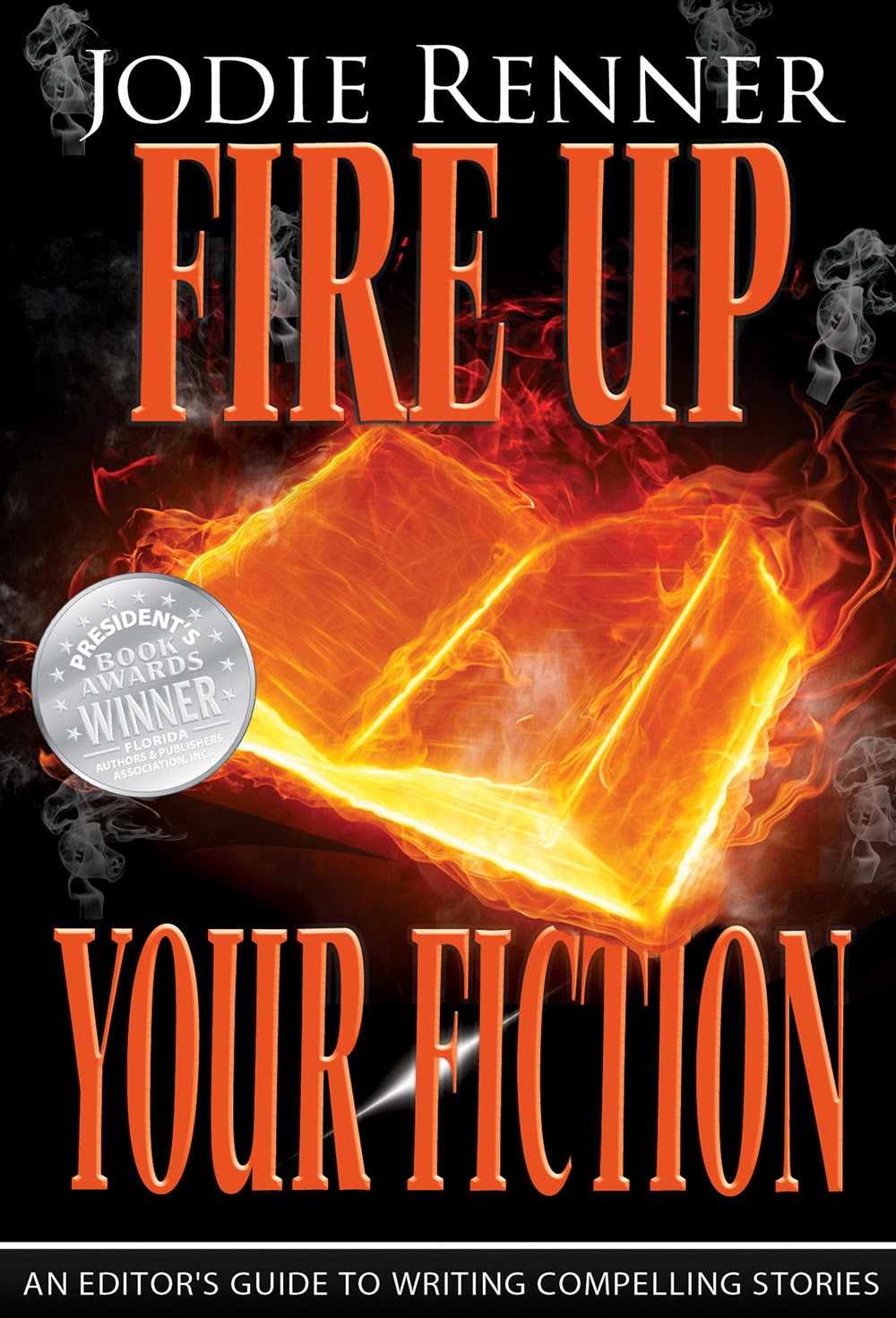
 Jodie Renner has published two books to
date in her series, An
Editor’s Guide to Writing Compelling Fiction: Writing a Killer Thriller
and Fire up Your
Fiction (Style That Sizzles & Pacing for
Power), which has
won two book awards so far. Look for the third book in the series, out soon.
For more info, please visit Jodie’s author website or
editor website,
her other blogs, The Kill Zone and Resources for Writers,
or find her on Facebook,
Twitter,
and Google+.
And sign up for her newsletter.
Jodie Renner has published two books to
date in her series, An
Editor’s Guide to Writing Compelling Fiction: Writing a Killer Thriller
and Fire up Your
Fiction (Style That Sizzles & Pacing for
Power), which has
won two book awards so far. Look for the third book in the series, out soon.
For more info, please visit Jodie’s author website or
editor website,
her other blogs, The Kill Zone and Resources for Writers,
or find her on Facebook,
Twitter,
and Google+.
And sign up for her newsletter.