Showing posts with label interviews. Show all posts

Friday, November 22, 2013

FBI 202 for Crime Fiction Writers: Interview with Scott Nelson, Part 2

by A.M. Khalifa, thriller writer, Google+


"The FBI has screwed up on occasion and folks seem to remember the bad things that happen more than the good things that occur daily."


On Tuesday, I ran the first part of my interview with Scott Nelson, the film industry’s leading technical expert on all matters FBI.  Mr. Nelson rose to head the FBI's public affairs office where he was instrumental in the creation of America’s Most Wanted, as well as convincing the filmmakers of the Silence of the Lambs to shoot on location at the FBI’s academy in Quantico, Virginia.

In this final segment of the interview, we expand the discussion beyond practical advice for crime fiction writers. He reflects on the times his life was in danger, his reputation as one of America's best door-shooters, and his work as one of the most sought after FBI technical experts in the film industry. Click here for part 1 of the interview.

A.M. Khalifa: Among your numerous accolades, you are also apparently one of America’s most accomplished door-shooters. What’s that all about?

SN: Well, I've been involved in more than one fugitive hunt and I've also provided advice to Hollywood about difficult door entries. Sometimes, the only way to get in is to breach the locking mechanism with bullets. But, this is definitely the last resort and often only under emergency conditions. In J. Edgar the movie, actors used Thompson Machine guns to blast their way into hoodlum hideouts, and frankly, the biggest problem we had there was clearing the set so no one was hit with hot .45 caliber Thompson Machine gun shells as they rapidly spit out the side of that deadly weapon. The Hollywood prop folks did the rest. And, they did it very well. Those scenes looked real to me even though I knew they were not.

AMK: Talking about guns, was your life ever at risk in the line of duty? 

SN: As a young Marine Captain in Vietnam I was lucky to survive. The biggest and toughest battle we fought was to re-take the historic city of Hue from the North Vietnamese Army who slaughtered thousands of residents and occupied the so-called Citadel there. I was wounded by fragments from an RPG rocket.

As a fairly new FBI Agent in Newark, N.J. - commonly referred to as the broken glass capital of the world - I was involved in a huge bank robbery shootout and hit in the face with lead from a bank robbers 9 mm. Fortunately, no FBI Agents were killed, although the bank robbers weren't so fortunate. One died; one was wounded 52 times; and one escaped injury by clinging to the underside of their getaway car. According to the Judge who tried the case in Federal court, the first shot which was fired by the bank robbers was like the splitting of an atom. All hell broke loose.

AMK: I'm glad you made it through. On a lighter note, you've worked with some top filmmakers. What can you tell us about those experiences?

SN: Filmmakers want to tell an appealing story, often with political and/or social overtones. And they want to do it well and be successful. They want the characters to be human, often with deep flaws that the public can recognize and identify with. They also want to be true to the facts - sometimes. The best filmmakers are able to meld fiction with fact and still deliver an appealing story. Plus, these top filmmakers are typically great story tellers with a sense of drama and context.

AMK: What if a filmmaker refuses to heed your technical advice, how do you resolve that? In other words, what happens when technical accuracy clashes with artistic vision?

SN: That is an interesting question, and a common occurrence. Unless it is a documentary, artistic vision usually wins out. And really that is to be expected in fictional pieces. Fact is, technical accuracy can be boring and difficult to sell.

AMK: Last time you said the notion the FBI is always prone to "screw over local law enforcement " is largely inaccurate. But I do know you have an even bigger pet peeve about how the FBI is depicted in popular culture.

SN: I think an even bigger misconception about the FBI is "that they spy on American Citizens." Not so. The FBI operates strictly within the Constitution, the Bill of Rights and the Rule of Law. True, they run complicated confidential undercover cases, do court authorized wire taps and often conduct surreptitious, sensitive investigations but they do so within the law and to protect the rights of all Americans. They always balance the intrusiveness of their investigations.

AMK: However, with recent revelations about the activities of the NSA, many people in America are arguably concerned whether all security agencies are indeed adhering to the law. Do you think members of the public have a hard time differentiating between one law enforcement agency and the other, and lump them all together as “the government”?

SN: I think many Americans recognize the FBI, but certainly they are fuzzy on the Bureau's investigative jurisdiction - over 350 different criminal violations - and the legal and administrative basis for their investigations. Plus, the FBI has screwed up on occasion and folks seem to remember the bad things that happen more than the good things that occur daily. I do think many folks confuse the various agencies and typically lump them all together. As I recall, there are approximately 19,000 local, state, and federal law enforcement agencies out there. And that doesn't include the intelligence agencies like NSA and CIA etc.

AMK: We spoke about the risk of copy-cat criminals getting inspired by fiction. Recently and after the Boston bombings, Rolling Stone magazine found out the hard way how the public feels about glorifying terrorists. Do you think the mass media is increasingly trying to blur the lines between good and evil?

SN: Yes I do, either consciously or subconsciously. First of all, Evil sells. Big time and that is what the public wants to see. And, evil often fits the media social view that criminals aren't really responsible for their actions and that our capitalistic system is in fact predatory and unfair to the less privileged. Therefore, the good guys deserve to be punished by the bad guys because this levels the playing field.

AMK: I know your work with your private firm and as a technical consultant for the entertainment industries allows you little time for one-on-one literary consultancy with writers. Would you make an exception for a particular project, and what would that be?

SN: Well, even though I find crime writing interesting, time and previous commitments have in the past made this a little difficult. However, I would make an exception for a particular project, time and interest allowing. I guess this would be on a case by case basis.

AMK: Finally, what book did you just finish reading, and what’s next on your reading list? 

SN: Funny you ask. I just finished your book Terminal Rage and also Charlie One Five - A Marine Company's Vietnam War by good friend and Marine Corps author Nick Warr. Like your book, Nick's latest offering is powerful and telling. Charlie One Five tells about a conflict where we never lost a battle but lost the war. And sadly many, many of America's best and brightest. 

From a personal perspective, I find my combat Marine Corps experience correlates with crime stories, particularly from the violent sides, and the dangerous leadership situations that occur during each and every young Marines combat experience. However, boring college text books are next on my list. I teach an ethics/law class next spring so I'm preparing for that course.


Readers: Do you like your FBI agents served nerdy and smart, or strong and infallible? And writers: What challenges do you face when depicting your law enforcement protagonists?

If you have any questions for Scott Nelson, please post them in the comments section below and I will field them and try to get Scott to answer as many of as possible.


A.M. Khalifa, author of international thrillers, writes exhilarating, contemporary stories pulsating with life and unforgettable characters. His debut novel, Terminal Rage, is a layered thrill ride that moves seamlessly from inside a nerve-wracking hostage situation to far-flung locations across the world, challenging readers to stay ahead of its unpredictable plot.

The ebook version of Terminal Rage is now on sale for $2.99 on Amazon, Barnes and Noble, and Kobo

Tuesday, November 19, 2013

FBI 101 for Crime Fiction Writers: Interview with Scott Nelson


by AM Khalifa, thriller writer, Google+


Scott Nelson is the film industry’s leading technical expert on all matters FBI. Most recently he was Clint Eastwood’s main point of reference on J. Edgar, the historic biopic of the FBI's founder. A former and highly decorated marine, Mr. Nelson rose to head the FBI's public affairs office where he was instrumental in the creation of America’s Most Wanted, as well as convincing the filmmakers of the Silence of the Lambs to shoot on location at the FBI’s academy in Quantico, Virginia.

I sat down with Scott for a coffee and a chat near Westlake Village in Southern California, where he now runs a global security and risk management firm. I wanted to glean some valuable advice for crime fiction writers. This is is the first of a two-part interview. Click here for part two.

AM Khalifa: During your time heading the FBI's public affairs office, did you ever work with crime fiction writers, and if so, what are they typically trying to research?

Scott Nelson: Yes. Typically crime fiction writers want to know how it works in the real world and then how those basic techniques and tactics can be tweaked to create more interest and more drama. Everyone is looking for that new story, and as times change that new story will always emerge. Plus, old stories can be retooled to present new facts and new views.

AMK: As an FBI insider, what is the number one misconstrued notion about the Bureau that you would like to set the record straight on here, once and for all?

SN: That the FBI always screws over the "locals" (local and state law enforcement). Simply not so. The Bureau works hand in glove with state and local officers and provides ongoing valuable training, research, services and support. In fact, many joint operations are run every day.

AMK: However, I think readers and viewers LOVE it when the smart, omnipotent FBI agent slights the incompetent locals and pulls rank and jurisdiction. They feel secure of a positive outcome when a favorably drawn FBI agent is involved. Do you agree?

SN: Yes, but likewise there is a tendency to show cops merely as doughnut eaters. And therefore, many cops - particularly suits in the front office - are quite defensive and constantly trying to prove their worth. I've been blown off on many occasions by locals who do resent the FBI and their own lot in life.

AMK: How accessible is the FBI as an organization to independent authors reaching out to it for technical information, and what specific mechanisms exist to deal with such requests?

SN: The FBI Office of Public Affairs, Washington D.C. and the Public Affairs Agents in the many field offices are very receptive to independent authors looking for technical information. The FBI is always trying to "tell their story" but the level of interaction and assistance will often depend on the topic, the legitimacy of the work, and the track record of the author. Usually there are some requests that can't be accommodated for a variety of reasons. That is where former FBI Agents come in. They may be useful.

AMK: What useful resources and tips for crime fiction writers seeking to research the FBI or FBI agents can you share with us?

SN: Talk to a real FBI Agent, and don't believe all you hear from the so-called crime experts. There is also a tremendous amount of online information available, including legitimate search warrants, interviews, organization charts, etc. I would definitely take advantage of this information. Much of what authors want to know has already been done. No sense re-inventing the wheel, although new and fresh perspectives are always welcome.

AMK: I've heard you describe the typical look and feel of an FBI agent. Do you think established contemporary novelists tend to get the FBI right in their narratives, or is there room for improvement?

SN: That's a good question. So, I'll ask one myself and then answer it. Do you think FBI Agents are super sleuths, pushy and nerdy? Well, some are but most are not. The Bureau is made up of thousands of men and women with varied occupations, skill sets, genders, and ethnicity. Doctors, lawyers, accountants, military officers, teachers, engineers, etc. are proud to call the FBI home. Real agents are real people with real problems and real accomplishments. Actually, they seek to serve and so they do. Although J. Edgar Hoover promoted the super G-Man, "can do no wrong" concept, which actually helped the FBI solve cases and still does, that view can be more fiction than fact.

AMK: Is the FBI concerned about crime writers inspiring copy cats? And if so, where do we draw the line between freedom of speech and social responsibility?

SN: Great question. Real is often boring, while blood, sex, color, violence and "I can't believe that happened" are often titillating and popular. And repeated. Salacious also sells. Deviants often get ideas from the media and because it is done once, they psychologically give themselves ethical permission to do it again. I do think the FBI is concerned about copy-cat crimes and we often see similar crimes following serious publicized incidents. That said, members of the public have a right to know and make up their own minds. Freedom of speech - not yelling fire in a crowded hall - is paramount. Social responsibility is also tremendously important. The balance between the two is personal, guided by ones ethics, existing laws and regulations, and just good common sense. Doing the right thing is actually black and white and a pretty easy thing for most of us. Writers included.

AMK: Many crime writers go through their careers without ever meeting real-life criminals. Do you think it would add any value for a crime writer to interact with some of the seriously bad people we tend to write about?

SN: Yes. Many stories are gleaned from interviews of crooks, deviants, and weirdos (whatever they are). Human motivation is a complicated thing, and understanding the motivations of seriously bad people can be insightful. Short of that, talking to some real FBI agents and conducting strong research are helpful.

AMK: Do you find your experience in law enforcement gives you an advantage in predicting unexpected twists and turns in a crime novel?

SN: Yes. Been there, done that helps a lot. On the other hand, that experience can sometimes restrict out-of-the-box thinking because frankly, many neat turns and twists are simply figments of some writers' imaginations.

AMK: Are there particular crime story lines you feel are not broached enough that would make for compelling fiction?

SN: My sense is that much of it has been covered in one way or another. But there is always more out there. High tech/cyber crime solving is always of interest as is the more basic terrorist crime fighter profile of an agent winning against great odds. Also, the FBI cracks big cases all the time and many of those offer good story-lines. In general, I think we all like the good over evil story where the disadvantaged crime fighter overcomes all odds to save America, often sacrificing his own life in the process.

AMK: What types of fiction genres and story lines appeal to you most and why?

SN: I listen to books on tape when time permits, often when I'm on the road. I did make a recent exception and read Terminal Rage.....guess that sounds familiar, huh? That story line appealed to me because it fronted a real character with real problems and a noble cause. Plus the good guy won. I must say that stories promoting right over wrong, the goodness of man, and the greatness of America, as opposed to glorifying evil, violence and man's darkness appeal to me.

AMK: Who are some of your favorite writers and your favorite books and films?

SN: My favorite writer is Ernest Hemingway - hardly a crime fiction writer - and I listen to The Old Man and the Sea over and over again as it depicts real life lessons of a good guy underdog overcoming great odds to accomplish something really worthy. As for crime films, my favorite is Silence of the Lambs, and my students always profile Hannibal Lecter in a Psycho Social Criminal Behavior graduate class I teach. We've also studied Clint Eastwood's J. Edgar, but unfortunately I think the writer for that movie was off-target in many respects. On the light side, I watch time and time again Scent of a Woman, Planes Trains and Automobiles, Good Morning Vietnam, Office Space and many other movies some might not actually classify as serious pieces.

Readers: Do you like your FBI agents served nerdy and smart, or strong and infallible?

Writers: What challenges do you face when depicting your law enforcement protagonists?

I send out a monthly newsletter with free fiction, intriguing interviews like this one, and insight on how a thriller novel like mine goes from the printed page to the silver screen. Join me on this amazing journey! Consider signing up as I also run cool competitions, give away free books (not just mine, but by authors I admire), and will protect your privacy and not share your email address with the widows of former Nigerian dictators, regardless of how much they offer me. Pinkie promise. Sign up, now!

AM Khalifa, author of international thrillers, writes exhilarating, contemporary stories pulsating with life and unforgettable characters. His debut novel, Terminal Rage, is a layered thrill ride that moves seamlessly from inside a nerve-wracking hostage situation to far-flung locations across the world, challenging readers to stay ahead of its unpredictable plot.

Thursday, August 9, 2012

Three Mistakes You Don't Want to Make

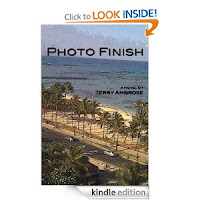
Guest post by journalist and novelist Terry Ambrose

Marketing. It’s the job authors dread most right after completing a manuscript. Why so much dread? Beyond the fact that it can be incredibly time-consuming, there’s also the issue of results. What worked? How well did it work? How can I get more people to know about me and my book?

About two years ago, I took on a freelance writing assignment with Examiner.com to write about fiction in San Diego. That assignment later expanded into my National Crime Fiction column. I cover everything in crime fiction from events to author interviews to book reviews. Now that I’ve just released my first mystery novel, I look back on my two years of doing author interviews and book reviews and recognize some common differences between those that make it and those that struggle for any recognition at all. Let’s take a look at those differences.

The first difference is also the biggest cliche around, and the reason many readers consider self-published books “second rate.” Most new authors rush their book to publication. They take the mantra of “write a great book” far too lightly and think that because their best friend or their mom loved it, it’s going to be a bestseller. Overstated, perhaps, but close to true. How does a new writer make sure he’s got a good book? Solving this problem couldn’t be simpler—or harder.

Have. People. Read. It.

If you’re really serious about writing a great book, you’ll spend money on a good editor. If you can’t afford an editor, find more readers. Beta readers, i.e., people who will read and give good feedback, are critical to seeing what works and what doesn’t in a novel. The readers who count are those who are distanced from you or who are practiced in giving writing feedback. Find readers who have a good eye for detail and who are, above all, honest. Do this by widening your circle of readers until you’ve found ten people who have no reason to tell you nice things. In all likelihood, those ten people will give you diverse opinions, but at least you’ll see patterns.

Second, before publishing, think about the very basics of marketing. These basics can be summed up in three little words (sorry, another cliche), “less is more.” A good tag line (or log line) is critical. For me, mine became “Hawaii, mystery, and trouble almost too hot to handle.” That tag line goes on every email I send out. I recently heard from a publisher who said that many of their authors don’t include tag lines in their outgoing emails. Is it any surprise that the publisher was complaining their authors weren’t selling?

An author interview can be a great tool to attract readers. It can also be incredibly boring. Here’s a secret from the other side of the book review fence. Do what you can to make the interviewer’s job easier. I know, this sounds self-serving, but if I interview an author or review their book and the author has taken steps to make my life easier, I’m very willing to cover them again. You can make that interviewer’s life easier simply by providing great answers to questions.

Here are two different answers to the question of “why did you write Photo Finish?” 1) I’ve always enjoyed writing and thought it would be fun to write a mystery about a skip tracer and a con artist. 2) Early in my career I was a skip tracer. I never had to steal a car myself, but came pretty close. I also learned that skip tracers and con artists are very similar—both can be great liars—and can create great stories.

If I’m reading those responses, I’m going to gloss over #1, but give answer #2 serious consideration for a full or partial quote.

When I do author interviews, I always ask for a short summary of the book. This short summary should be 25−50 words. What happens when I get one that’s 100-200 words? I start cutting. Just hope I don’t leave out the important stuff.

Preventing someone else from butchering your summary is to have three versions at the ready. Those summaries, in 25, 50, and 100-word versions, should be strong and to the point. Use powerful verbs, not lots of adjectives and adverbs. There are times when I feel as though I should be writing marketing materials for authors that I interview and, believe me, that does not make me want to deal with them again.

Then there’s the author bio. This should also be written in a couple of different lengths. I’ve had writers send me page long bios telling me more than I ever wanted to know about their history. In one case, I think I pulled one or two sentences, shortened those, and still felt like I had nothing of real importance to tell readers.

The third most basic mistake that I see made is that authors don’t have a website with their own domain name for reviewers or potential readers to go for information about them. Your domain name and website are your online business card. So, buy your domain name, they’re cheap, and make sure it’s easy to say and to remember.

I know, there’s really nothing new in this post. There are no magic solutions to help you skyrocket to the top of the sales charts. Believe me, if I knew those solutions, I’d use them first, share later. But, the problems I’ve mentioned here are not uncommon. Mix and match any way you like and the bottom line is always the same. These things happen far too often.

Every time an author does an interview, or someone offers to write a review of an author’s book, it’s an opportunity to increase that author’s name recognition. So the question becomes, how do you want people to remember you?

What do you think? Have you had a bad interview or review experience either as an author or a reader? Do you think that new authors do a good job of marketing, or not?

Find out more about Terry and his books here. 

Thursday, January 26, 2012

Why I Love Conventions

By C.J. West

Last weekend I visited the ALA Midwinter Meeting in Dallas as a volunteer for Mystery Day, several panel presentations by current mystery writers. This morning I was thinking about how energized I am when I come away from these meetings and wondered why.

For those of you who’ve never been to an ALA meeting, the exhibit floor displays everything from books, to furniture, to technology, hundreds of booths with hi tech displays offer anything you’d need to open a library save the bricks, mortar and plumbing. Major publishers display thousands of books, but very few authors have a presence. If you’re an author and you rent a booth at one of these shows, be prepared to give away lots of books. Publishers come with cases of them and offer them free by the hundreds.

My focus for the day was a room in the back corner, arranged with a stage and about 50 chairs for panel discussions.

You’d think I’d be tired of listening to panels by now. A few years ago I started going to conventions to meet people in the business. I was always that kid in school who followed the rules, so when I started attending conventions, I sat in the audience for panels, lots of panels. That's what's on the schedule during the day, so that's what I did. I’ve listened in on some great conversations and I’ve seen more than a few fall flat.

The success of a panel in my eyes comes down to two factors. A panel needs either a rock star or a fantastic moderator. A rock star needs no explanation. Certain writers like Tim Hallinan, Dennis Lehane, or Charlaine Harris can carry a panel no matter who is asking the questions. The only thing that can spoil a panel with a rock star is a newbie who hogs the conversation.


Absent a rock star, a moderator makes or breaks the panel. The irony is that the moderator does the most work by far and receives almost no credit whatsoever. Anyone can ask:

“What’s your writing process? Or schedule? Or office space?”

“Why is (insert main character name here) fun to write?”

“How much research do you do?”

Blah. Blah. Blah. Heard it all before.

I admit if you’ve never heard an author panel before, the answers would be interesting. After 50 times, not so much. 

I was really impressed at last year’s Bouchercon by the job Ruth Jordan and Judy Bobalik did coming up with unique ideas for panels. They helped the moderators and authors put on a brilliant show. A great panelist can also make a panel fun. JoAnna Slan told a story about a dead armadillo that she turned into a table lamp. I’d heard the story. I knew she was going to tell it. I still couldn’t help laughing.


But not every panel can have an armadillo-turned-table-lamp story. Even if it could, it’s important to have someone driving the ship on an interesting course the rest of the time.

A great moderator takes a topic and gives the writers fodder for thought. The discussion gets the writers to share great ideas about their latest book, the writing life, and society in general. It’s these ideas that inspire me when I get back to my desk.

So tell me, do you notice moderators ? Who’s your favorite?

Monday, July 25, 2011

Hardboiled: An Interview With Kelli Stanley

by Marlyn Beebe.

The delightful Kelli Stanley was kind enough to do a short interview with me.

Welcome, Kelli!
Kelli-Headshot1-685x1024


MB:It’s apparent that you love noir. How did that start?

KS: I think I was born with it. I’ve always loved the period from the 20s through the 40s, and somehow was drawn to the narrative rituals of noir and hardboiled crime fiction. When I was in third grade, I wrote a play about a gangster who is betrayed by a French girlfriend and is gunned down while trying to save her from Nazis. A little unusual for an eight year old, so I can only assume it’s genetic!

I still love the era—and I enjoy many of the noir style conventions, particularly in film—lush, black and white photography of rainy streets with neon is absolutely beautiful to me. But what I’ve tried to do with CITY OF DRAGONS and the Miranda Corbie series is to subvert the misogynistic machismo inherent in so much of the genre, as well as portray the period as it was—rather than how we wish it had been.

THE CURSE-MAKER and the ‘Roman noir’ series is more of an affectionate homage, with a hero who is strong but also sardonic—and very aware of his own weaknesses.

MB: Arcturus is a physician from the Ancient Roman era. How did you decide on the historical setting?

KS: The only common wisdom I knew about the writing business was to “write what you know.” And after long years of study for my BA and MA, what I knew was Greek and Roman culture, history and language. I didn’t want to go on for a Ph.D., so I closed my eyes and took a big chance and wrote a book. That was NOX DORMIENDA.

At the same time, I was more interested about the affects of Rome as an influence, a conquering nation, rather than writing about the city itself. I’m fascinated by the intersection of cultures, and how they influence one another. And I’ve always loved England. So the idea of Roman Britain seemed natural, particularly since it’s one of the provinces we have at least some idea about, thanks to Tacitus. He wrote a monograph extolling the virtues of his father in law—Agricola—who was governor in the late first century. Agricola is Arcturus’ patron, so developing this actual historical figure into a character was a lot of fun.

MB: Could you describe your research process?

KS: Well, it varies with the series. For the Miranda series, I surround myself with old newspapers, ephemera from the past, find bits of history that intrigue me to work into the books. CITY OF SECRETS takes place partly in Calistoga, and a post card of a particular “sanitarium”—that’s what they were called—was very inspirational in the direction of the book. I also pay visits to libraries, and absolutely devour photographs. My most valuable asset is a 1940 San Francisco Yellow Pages!

For the Roman noir books, I spend more time at home—unless I can afford a trip to England. I felt like I lived in Rome for several years, and have an intuitive understanding of the culture. I also have an extensive classics library and research books, though at times I need to buy specialized texts. For THE CURSE-MAKER, I expanded my books on magic and curses, and I always keep an eye out for the most recent research, especially since new archaeological discoveries tend to upend previous conjectures.

MB: You are neither male, nor a physician, nor an ancient Roman, but you write from Arcturus’ point of view. How do you get inside his head?

KS: LOL! I’m interested in people—I like people—and psychology, and characters tend to develop themselves. Before I ultimately earned my degree in Classics, I was a Drama major, and I approach writing like an actress … I am both in my characters’ heads and outside of them, just as when you’re on the stage, you’re in character enough to cry or scream or whatever you need to do, but enough yourself to be mindful of your cues and your marks. I am a very empathetic person, which makes it easy for me to identify with most people.

MB: You seem to spend a lot of time on the road. Do you enjoy that or is it just part of the job?

KS: One of the privileges of being published is to get to meet the people who’ve read and enjoyed your book! J It’s an absolute honor. If I could afford it, I’d travel more than I do now—ideally, I’d like a cross-country tour by car for about six weeks out of the year.

Plus, people inspire me, as does traveling itself. New experiences open up new brain synapses, new channels for creativity. I always come back from tours or a conference tired—because I also hold a day job—but excited and inspired!

MB:Thank you so much for sharing with me and my readers, Kelli. What’s up next?

KS: Thank you, Marlyn, for the wonderful interview questions and for being one of the mystery community’s librarian heroes!

I’m currently working on the third Miranda Corbie book, CITY OF GHOSTS, as well as a contemporary stand-alone thriller set in Humboldt County. CITY OF SECRETS—set three months after CITY OF DRAGONS—releases on September 13th, and the CITY OF DRAGONS paperback hits stands on August 30th. So I’ve got another book release—and another tour—coming up later this year. I’m looking forward to traveling in the fall!

Wednesday, May 11, 2011

I thought I only had to stick a microphone in his face

Superb interviewing is an art to be practiced. When it's done well writers can get telling little details that can be dropped into their writing like the perfect spice to highlight the best tastes of the  meal. That said, there are some tricks that writers can use to move them along in the right direction.

A colleague at the St. Paul Pioneer Press, where I worked as a reporter a while ago,  suggests that interviewers notice details about their subjects, then ask questions. For example, you may notice that the medical examiner you're interviewing wears a watch on each wrist. Two watches? Why?  You may learn the doc travels a lot and can't keep local time zones straight and wants to always call home before his daughter goes to bed. Or, the doc may be nuts about being on time and figures two watches will double his chance of punctuality. Or, one may have been a gift from someone important to him but it loses minutes and he relies on the other watch to tell accurate time. In any of those cases, you've got a personality quirk that can help you define the medical examiner in your mystery.

Then you've got to figure the best way to record those answers. Some writers use digital recorders, often built into their phones, while others go the good old fashioned paper and pen route. I think there are advantages and disadvantages to both.

When using a digital recorder writers can forget about taking actual notes and hone in on the subject instead, confident that the device will do all the work. That can be very effective if all goes as planned -- which it never does. I've done that a time or two, only to learn the recorder didn't work, or couldn't pick up the voices or got accidentally deleted. Then I don't have a scrap of reminder to tell me what the guy said.

With paper and pen writers don't have to worry about technical malfunction, but unless the writer takes shorthand some words are going to be lost. Besides, paper doesn't capture inflection or weird little turns of phrase that, again, can be descriptive details for a character. Some subjects get nervous when they see a pen scribbling across a page but seem to forget when a recorder is capturing their every ummm.

Myself, I like to use both. Paper is a good backup to the recorder, and vice versa. But to be honest, I try not to refer exactly to the notes/recording after the interview, although I tuck both away in my files in case I change my mind. Rather, I like to just let the subject's words marinate in my head for a while before I write. That way, the most important details seem to bubble up, while I forget the stuff that would clutter up my pages with non-telling detail. But that's just me. What method do you use?