Friday, August 9, 2013

Editing Nirvana

by Peg Brantley
Evocative Characters. Intriguing Crime. Compelling Stories.


I received my edits back from my editor, Peggy Hageman, Tuesday morning. (Peggy edited the Edgar nominated The Queen of Patpong by Timothy Hallinan. By way of clarification, we've both agreed that I'm not Tim, but that's another topic.) Receiving her edits was the good news. The bad news?

A two hour dental appointment followed by a three hour root canal with an endodontist who happened to have an opening that afternoon. Where is delayed medical attention when you want it?

My post on Facebook indicated that I'd rather be going through my edits. One commenter said:

Somehow the comparison of edits to dental work (i.e., pulling teeth) is rather appropriate.

She was kidding of course, but it made me want to talk about how much I love this part of the process.

Actually, there's not a bit of this writing schtick I hate, including marketing (although marketing is at the very bottom of my Love List). Each piece has elements of excitement and challenge. and each phase demands my attention, and sometimes blind faith.

This professional edit part is where a kind-of-okay story gets bigger and better. Where the flat places are fluffed up and the holes are fixed and the unsatisfactory bits are either made brilliant or they're cut. The incredible skill of one editor is going to bring my sweaty effort, currently wearing dirty and tattered workout clothes, to something ready to walk out on the dance floor wearing the sexiest gown on the planet.

My first book, Red Tide, was edited by Harvey Stanbrough. He was the perfect editor for that book. My second book, The Missings, was edited by blogmate Jodie Renner. She was the perfect editor for that book. I've been blessed to be able to find the right editor at the right time.


Readers, do you know how important an editor is?

Writers, do you love this part as much as I love it?

I swear I can hear the orchestra tuning up...

Thursday, August 8, 2013

Where do you Draw the Line?


My readers often ask me about the use of bad language in my books. I’ve done a lot of book signings at bookstores and I talk to many readers, and the one question I hear more often than any other is, “Does it have a lot of bad language in it?”

The concern is often not so much a prudish one, but rather that it detracts rather than adds to the story. I had one man tell me that he expects a writer should be able to come up with more creative words than he can hear every day on the streets. I tend to agree, although there are times when the situation just calls for it and without it, the scene loses authenticity. For instance, I had a scene in my first book where a hardcore methamphetamine user had just lost her children in court. She wasn’t about to say, “Oh, piddle-sticks!” So she said something a little more down to earth.

I try to avoid any political or religious comments, unless they are really relevant to the story line. I have one line in one of my books where I mention a political party and for that I have received an inordinate number of comments. I was quite surprised since it’s not like it was meant to offend anyone. It merely developed the character. 

What do you think? Does it bother you when you see a lot of offensive words in a book? How much is too much? I guess the real question is how much do you do to not offend your readers?  Do you know your audience and do you try to write in a way that will keep them, or do you just write and let the chips fall?

Teresa Burrell
Author of The Advocate Series

http://www.teresaburrell.com

Wednesday, August 7, 2013

Narration is the Viewpoint Character's Thoughts!

by Jodie Renner, editor & author

To bring your characters and story alive on the page and engage readers, immersing them in your fictive world, be sure your narration of any given scene is colored by the mood, attitudes, and personality of the viewpoint character for that scene, who is directly experiencing his/her environment, and is expressed in their words, rather than stepping in as the author to explain or describe things to the readers in neutral language.

I'm discussing this topic over at The Kill Zone blog today. Here's the beginning and a link to the rest. To enter the draw for a free e-copy of one of my books, please leave a comment under the post on The Kill Zone and mention which book you'd prefer. Thanks!

Developing a Strong Third-Person Voice

There’ve been some great articles here on The Kill Zone and elsewhere about “voice” in fiction and how to develop an authentic, compelling voice that readers will love. To me, the key is in recognizing that voice in fiction is – or should be – inseparable from the words, thoughts, attitudes, and reactions of your main character. For example, some strong, unique voices that sweep us immediately into the character’s world and the fictive dream, are Huck’s in Huckleberry Finn, Holden Caulfield’s in Catcher in the Rye, Stephanie Plum’s in Janet Evanovich’s series, Scout’s in To Kill a Mockingbird, and Katniss’s in The Hunger Games.

These novels are all written in the first person, so of course it’s a lot easier for the author to immerse us in the character’s attitudes and world-view – especially with such great characters! But I think we can create and maintain an equally strong, appealing voice in third-person, too, if we take a tip from first-person POV and keep all of the narration for each scene firmly in the viewpoint of the main character for that scene...

For the rest of this article, please click HERE.


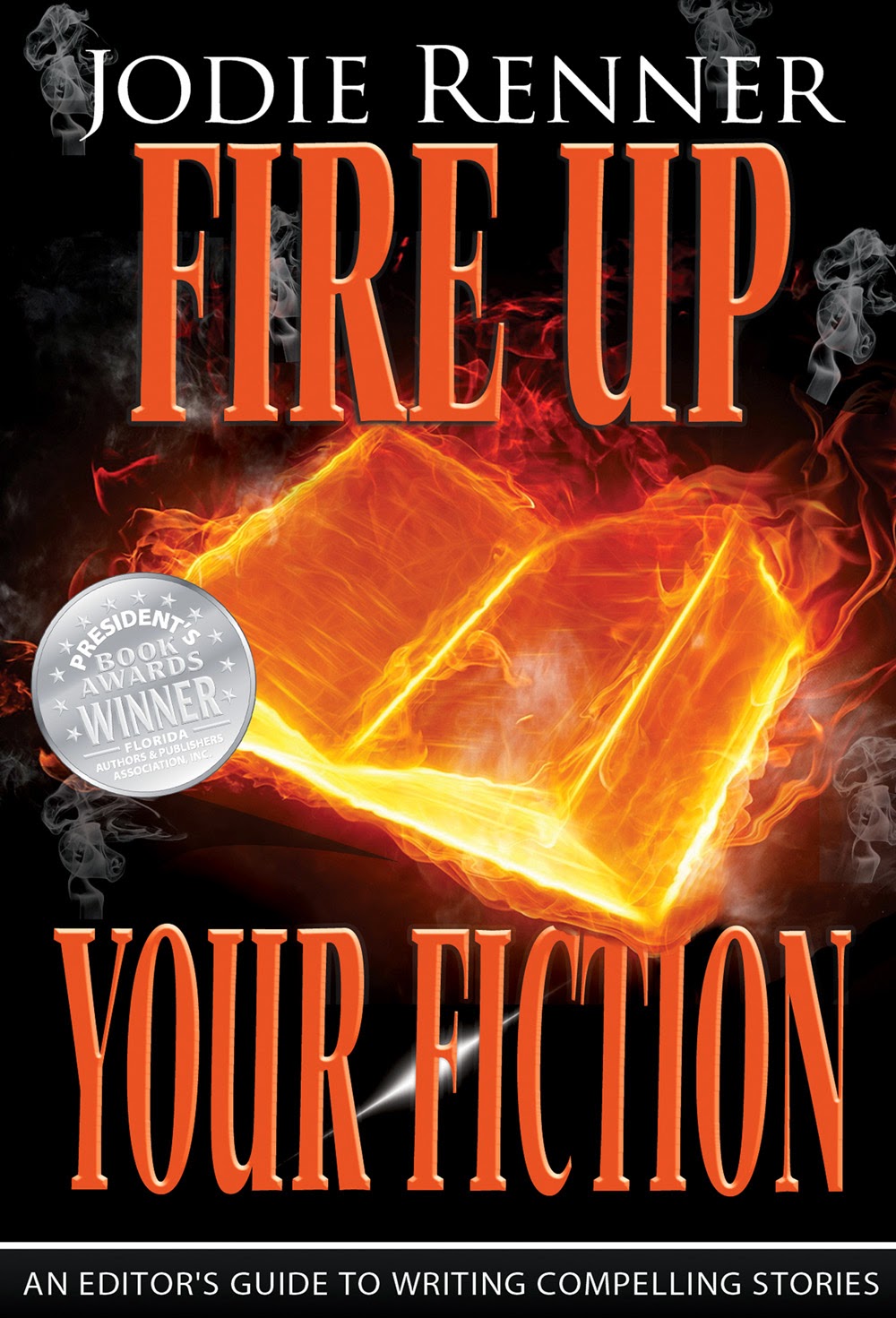
Jodie Renner has published two books to date in her series, An Editor’s Guide to Writing Compelling Fiction: Writing a Killer Thriller and Fire up Your Fiction (Style That Sizzles & Pacing for Power), which has won two book awards so far. Look for the third book in the series, out soon. For more info, please visit Jodie’s author website or editor website, her other blogs, The Kill Zone and Resources for Writers, or find her on Facebook, Twitter, and Google+. And sign up for her newsletter.
.

Monday, August 5, 2013

The Big Dilemma - One author’s experience with book signings

By Sheila Lowe, forensic handwriting analyst and mystery author

When my first book came out in 1999 I was over the moon. I was being published by MacMillan, one of the big guys! They were going to tell everyone about The Complete Idiot’s Guide to Handwriting Analysis, weren’t they? After hitting their 12 week deadline with 400+ pages of timeless prose, I could sit back and rake in the bucks, right? Okay, I know that any published author reading this is already laughing his/her socks off, cause that ain’t the way it works, boys and girls.

Nobody told me I was supposed to do my own marketing, but it didn’t take long to recognize that any publicity was going to come through me, myself, and I. So I started calling bookstores and setting up signings. The first one was at Bookstar in Studio City, California. If only they could all be like that one!

Bookstar is located in what used to be a theater. Arriving on the night of the signing, I found my name, if not in lights, on a big marquee on Ventura Boulevard. I felt like a movie star! Unfortunately, my then-husband had forgotten his camera, so the big moment was not immortalized. But I quickly forgot my pique when we found 30 people waiting for me to speak. There was a film crew, too, for the evening news. I was pretty much flying by the end of that night.

I thought I could expect that kind of reception at every signing. Ah, dream on, new author, dream on. In fact, the further afield I went, I was often lucky to have an audience of five or six. After a 3 hour drive to Palm Springs one Sunday, I found myself seated at a table with no signage and the only people who stopped to talk wanted to know where the bathroom was.

By the time Poison Pen, the first book in my Forensic Handwriting Mysteries series was published in 2007 I’d hired a publicist. That was no guarantee of success.

Can you sleep on a plane? I can’t. Ever. We arrived in Providence, RI at 11:00 a.m after flying across country all night. When I marched up to Jason, the young man in charge at the (big name store at) Crystal Mall in Waterford, CT and announced that I was there for my book signing, his deer in the headlights look told me something was awry. He was unaware of my event and the person who had arranged it had been out for a week. After a hurried search, he found my books and set up a table at the door to the mall, which was virtually empty. The one book I sold that day was to an eight-year-old boy Jason had sent over. I thought the kinky sex references and violence in Poison Pen might be a little over his head, but luckily, he wanted the book to give to his mom for Mother’s Day. Jason felt badly and promised to put my books on a Staff Picks table and promote them, and that made the afternoon worthwhile.

Taking the Acela Express train to the next stop, we walked out of Penn Station and a young man ran up, frantically flapping his hands. “Where can I find the police? Quick! I need to find the police!” Welcome to New York. My then-husband grew up in Brooklyn, but even he was unable to meet the challenge of getting a cab to stop, so thanking the gods of wheeled travel bags we walked the fifteen blocks to our hotel. Luckily the weather was perfect and we didn’t have to step in too many weird-looking puddles. Besides, it was great research for book three, Dead Write.

Philadelphia was a mixed bag. One bookseller told me, “We don’t have any of your books. Someone called about a month ago, but we don’t have them.” But the Bryn Mawr Barnes and Noble was very well prepared. A great bunch of people turned out to welcome me, and there was plenty of ink in the local papers.

DC, Arlington, Tucson, the trip went on, but I won’t. I had a point in writing all this, but I think I lost it along the way. Oh, yes, marketing, which is far too big a topic to cover in one blog entry. But when it comes to book signings, experience has taught me a lot about what works (for me) and what doesn’t. For example, I am happy to mail bookmarks to booksellers anywhere, but I no longer spend thousands of dollars traveling to signings unless I’m attending a conference in the same city.

I’ve also learned that just as important as meeting readers and fans at these events is to get to know the booksellers, particularly at independent bookstores, where there is probably less staff turnover than the big box stores. If they like you, the booksellers will hand sell your books to their customers. And giving a talk about what your character does (mine is a forensic handwriting expert) offers people who might not otherwise have heard of you a reason to come out and listen. And if they like you, they will buy your books.

Of course, now that I’ve gone indy with my new book, What She Saw, which is currently in a Kindle-only edition--http://www.amazon.com/dp/B00E3P0C6K--I’m starting over, learning how to market an e-book. Any tips welcomed.

Digging for Clues

Artifact (A Jaya Jones Treasure Hunt Mystery) by Gigi Pandian (Henery Press* trade paperback, 6 August 2013).

Jaya Jones returns home late one night after a gig playing tabla at an Indian restaurant one night, and discovers that she has received a package from a former boyfriend, Rupert Chadwick.  Their relationship had ended more than a year earlier when Jaya left London after finishing the research for her doctorate in history.

The package contains a ruby bracelet and a note asking her to take care of the artifact, and that all would be explained if she called him.  But a day earlier, Jaya had read of Rupert's death in a car accident, which must have occurred shortly after he shipped the package to her.

Stunned, but curious about the piece, which appears to be authentic and valuable.  Armed with a photo of the bracelet, she goes to visit an old family friend who happens to be a professor of South Asian art history.  He refers her to one of his graduate students, Lane Peters who is, he says an expert on Indian jewelry.

While Lane is researching the bracelet, Jaya makes arrangements to go to Scotland, where Rupert had been working on an archaeological dig, and where, presumably, he found the bracelet.  After an eventful couple of days, she heads to the airport, where she finds that Lane is on the same flight as she is.  Jaya is not pleased; she's not sure if she can trust him or not, but she finally agrees to work cooperatively.

This an academic mystery that's informative but not pedantic, with just a bit of romance thrown in.  Jaya is a strong, intelligent protagonist, and I look forward to seeing more of her.


 Gigi Pandian is the child of cultural anthropologists from New Mexico and the southern tip of India. After being dragged around the world during her childhood, she tried to escape her fate when she left a PhD program for art school. But adventurous academic characters wouldn’t stay out of her head. Thus was born the Jaya Jones Treasure Hunt Mystery Series. The first book in the series, Artifact, was awarded a Malice Domestic Grant. The second book in the series,  Pirate Vishnu, will be released in February 2014.
Readers who sign up for Gigi's newsletter at www.gigipandian.com will receive  an exclusive Halloween-themed Jaya Jones short story in October.


FTC Full Disclosure:  I purchased the self-published edition of this novel at Left Coast Crime 2013.

*Artifact was originally self-published in 2012, but is being re-released by Henery Press tomorrow.)

Friday, August 2, 2013

The Author Hookup Trend

by L.J. Sellers, author of provocative mysteries & thrillers

Janet Evanovich and Lee Goldberg, J.T. Ellison and Catherine Coulter, our own dear friends Drew Kaufman and A.K. Alexander (Michelle Scott)—everywhere you look, authors are teaming up.

The trend seems more prevalent than ever, and I suspect it’s because authors are operating more independently now and because they have to work so hard to reach new readers. Collaborating with another writer brings a whole new readership to each partner, at least for that story or series, and hopefully with spillover to other works.

I never thought I could work that closely with someone. I don’t even have a writing group because it feels too collaborative. Of course, I count on my beta readers (and editor) for feedback, but that’s after I’ve nailed down the main story.

But I was approached recently by a friend about doing a collaboration, and I surprised myself by being receptive to the idea. Now that I have an FBI agent with her own series, a collaboration that brings Agent Dallas together with another established protag seems like a productive idea.

The other author has a kickass male FBI character and large readership of men, so the project could bring male readers into my Jackson series or, more likely, the series I’ve started with Agent Dallas.

We’re already brainstorming a plot, and I’d love to tell you who the other author is. But I worry that it might not pan out. We each have our own series we’re committed to, and we each have family responsibilities that may take precedence over a secondary writing project. But I want to do this and I hope we can make it work.

Ever since I decided to self-publish my newest story (with Agent Dallas), I’ve been getting my head back into indie mode and the marketing creativity it requires. It’s work, but it’s also fun and challenging, and this collaboration seems like a good way to expand my comfort zone and my readership.

What do you think? Have you collaborated with another author? Do you read books that are collaborations? Am I crazy?

Thursday, August 1, 2013

Why can't I ever take the easy road?

By Gayle Carline
Author of Mysteries and More!

Whoever said timing is everything deserves to be my next murder victim, because he's right and I hate him for it.

While I was writing From the Horse's Mouth, I was thinking about what kind of adventure to send my series character, Peri, to chase. I'm not a cookie-cutter author, so I had to have something happening in her personal life that would collide with her professional one.

That's the way Peri rolls.

I couldn't think of a damn thing, but I did get an idea for a mystery with new characters. Horse shows are interesting places, because everything looks healthy and happy on the outside, and there is a web of backstabbing and illegal practices underneath. Not in my barn, but I've heard rumors.

So I decided to not only write a standalone mystery, set at an AQHA horse show in Burbank, but to throw in some romantic suspense. Mostly this was because I wanted the heroine in this book to be kind of the anti-Peri. She's younger, a sleuth, and unattached. 'Unattached' is the code word for let's hook her up with someone.

(Between you and me, I also kept thinking of cowboys, which fueled the whole romance thing.)

NOW THEN, I could have made it a straightforward mystery with a dash of romance between my sleuth and a handsome cowboy. But NOOOOO, that would be too easy. That would enable me to actually write this book in a timely fashion. Why would I want that, when instead, I could give the cowboy a rival, set up an entire herd of murder suspects, let everyone think the murderer is one person, then reveal it to be another one in a spectacular twist?

Are there no drugs I can take for this desire to be difficult?

I currently have two strong rivals for Willie's affections - such strong men that I don't know how she will chose one of them. I also have a crime with a dozen suspects to corral. In addition, I'm getting the sneaking suspicion that "romantic suspense" as a genre comes with a set of rules I haven't read.

Hey, I read all the directions on every gizmo in our house. Is there a Big Book of Genre Guidelines out there to download to my Kindle?

Oh, and to make it interesting, I'm halfway through writing this book and I suddenly figured out what to do with Peri next. Had I waited, I'd be writing another Peri book. Now I keep chasing her story out of my brain so I can finish this one.

In honor of my penchant for swimming upstream (holding a bowling ball), here's a little Jim Croce song that sums up my life:


Anyone else feel this way?

Wednesday, July 31, 2013

It's worth spending the time

By Jenny Hilborne
Author of psychological mysteries and thrillers

Title is a big deal, maybe more important than the cover. Just like newspaper headlines, it has to have the power to grab attention. Choosing a good book title is difficult and it takes a lot of time.

As I remain undecided about the title for my upcoming suspense, I wonder how many other authors struggle with choosing their titles. How much attention do readers give to a title? Often when I've read a good book, I'll remember bits about the plot, perhaps not the characters, but I'll always remember the title.

A purchase could be based on a title alone, especially if it's a cool or intriguing one. I'm trying to remember if I've ever bought a book based on the title alone, but I'm sure I've certainly picked one up. I see it happen at book festivals, when a potential reader sees a book on a table that catches their eye and comments on the title. An interesting title gets the book in their hands. A great title offers the promise of a terrific story.

Some authors find it difficult to work on an untitled project - myself included, and we spend far too long analyzing labels instead of writing. When I think of titles for my work, I try to come up with key words in the story. If any jump out at me, they go on the possible list. In two or three words (I prefer short titles), I have to convey what the general story is about. It's not easy.

Putting on music, having a glass of wine, dimming the lights....none of this works for me when choosing a title for my books. Not even staring at the ocean. For my work in progress, I've put it out for a vote - and still can't decide. Maybe I'm overthinking it and if I forget about it for a while, the right title will come to me. That's the plan for now. While I was hunting around the web for ideas on creating a compelling title, I stumbled across a blog post by Michael Hyatt using the acronym PINC, which stands for Promise, Intrigue, Need, Content. Hyatt's post includes some good info. For anyone interested in reading it, I've included the link:

http://michaelhyatt.com/four-strategies-for-creating-titles-that-jump-off-the-page.html

In his blog post, Hyatt states great titles do one or more of PINC: make a promise, create intrigue, identify a need, or state the content. This helps. I've noticed when I buy books, I'm drawn to the intrigue part of PINC, to the titles that raise questions in my mind; what's this book about? I think he's right that a title goes a long way towards making or breaking a book's success and it is worth spending the time to come up with the right one.

Readers: do you ever buy books based on title alone?
Authors: Do you change your title as your story develops? How do you know when you've found the right one?